Starmer's Oval Office Diplomacy Rescues England-Mexico From FIFA Schedule Chaos
A prime ministerial intervention over a six-hour weather delay reveals FIFA's logistical fragility and the political weight of women's football.
When Geopolitics Meets Meteorology
It takes a particular brand of bureaucratic incompetence to turn a weather forecast into an international diplomatic incident. Yet FIFA nearly managed exactly that. The governing body had quietly prepared to move the upcoming Mexico-England fixture forward by six hours, citing a forecast of thunderstorms over the venue. The logistical stress on traveling fans, broadcast schedules, and team preparations: apparently an afterthought. Enter Keir Starmer.
The British Prime Minister's direct intervention to block the wholesale rescheduling of a major international football match is an extraordinary footnote in the sport's history. It underscores a bizarre modern reality: the operational decisions of an oft-criticized FIFA administration now carry weight significant enough to trigger governmental alarm. A six-hour shift does not merely nudge a kickoff time; it detonates the economic and logistical ecosystem surrounding the match.
A prime ministerial intervention over a weather delay is not merely about football. It is about protecting a national asset.
The Anatomy of a Logistical Nightmare
Consider the mechanics of abruptly moving a marquee international fixture by a quarter of a day. For the traveling England supporters, the mathematics are brutal. Airlines do not offer wholesale refunds for inexplicable FIFA whimsy. Hotels cannot be reclaimed. Matchday travel plans, engineered to the minute to navigate foreign transit systems, become instantly obsolete.
The broadcast implications are similarly catastrophic. Global television networks hold fixed programming windows worth hundreds of millions in advertising inventory. A sudden shift to an earlier window risks colliding with alternative live sport, rolling news, and pre-contracted obligations.
The Tactical Disruption
Stripping away the commercial wreckage leaves a profound competitive imbalance. Elite football teams operate on meticulously calibrated 48-to-72-hour circadian rhythms. Pre-match meals, sleep cycles, and targeted activation warm-ups are sequenced to peak at the exact kickoff minute.
A six-hour negative shift forcibly advances this entire biological and tactical schedule. Players are asked to peak at chronological hours their bodies reject. The starting XI essentially plays in the metabolic equivalent of mid-afternoon while psychologically preparing for an evening fixture. The team that adapts faster to circadian chaos secures an unearned, non-footballing advantage.
FIFA's Crisis of Competence
This entire fiasco exposes a familiar organizational hubris. The forecast of thunderstorms is not a sudden, unpredictable geological event. Meteorological modeling for specific geographical coordinates is available days in advance, not mere hours before a global broadcast window.
FIFA's apparent willingness to spring a near-half-day schedule change onto teams, fans, and broadcasters points to a systemic failure of proactive planning. The governing body seemingly defaulted to a crude survival protocol rather than executing a pre-fabricated stadium contingency plan.
The traditional operational checklist for severe weather encompasses:
- Pre-emptive stadium drainage assessments to verify pitch playability
- Contingency broadcast windows negotiated with rights holders long before matchday
- Early communication protocols with traveling fan embassies
- Phased, short-delay options rather than wholesale time jumps
None of these mature operational safeguards appear to have been utilized here.
The Residual Schedule Damage
Even if the storm hits precisely as predicted, forcing a massive fixture shift creates immense downstream damage. Moving the Mexico-England game forward compresses the recovery window for both squads. International football already demands relentless physical output within condensed tournament structures.
The teams are not playing in a localized vacuum. Subsequent fixtures rely on the established calendar. A sudden advancement strips away crucial recovery hours and travel buffers. The team advancing out of this fixture does so with a compromised physical baseline, carrying a deficit directly into their next assignment.
The Political Football
Keir Starmer's intervention is a calculated political maneuver as much as a sporting defense. The optics of a British Prime Minister directly engaging FIFA to protect the Lionesses' schedule reflects the immense cultural and political capital of the women's game in the UK.
The England women's team is no longer a secondary sporting concern. They are a massive national flagship. Their schedule stability is a domestic economic event. Protecting the traveling fans is protecting a core demographic. Protecting broadcast windows safeguards corporate revenues.
FIFA technically holds sovereign operational control over its own tournaments. However, that sovereignty exists only through a fragile consent of participating nations. When a governing body fumbles basic logistics, national governments are increasingly willing to bypass protocol and exert leverage.
A Precedent for Future Intervention
The Starmer intervention establishes a fascinating new paradigm in sports governance. The threshold for governmental involvement in football administration has been permanently lowered. Future scheduling conflicts will now be filtered through a political lens.
National federations observing this saga will learn a critical lesson: escalating operational disputes to head-of-government level is a viable tactic. A simple meteorological alert, poorly handled by a governing body, nearly triggered a cross-border political standoff.
The Bottom Line
Player welfare was marketed as an afterthought. Fans were treated as lottery ticket holders rather than paying stakeholders. The entire controversy was born from operational rigidity.
Diplomatic intervention in football scheduling is conceptually absurd and entirely necessary. FIFA consistently manufactures crises through procedural apathy. Until the governing body modernizes its crisis planning, the sport will rely more on the intervention of prime ministers than the competence of its own administrators. The sport demands genuine institutional foresight.
Editorial Integrity
This is an original SportPulse article written by our editorial team. All content is independently researched, written, and reviewed by our writers and editors before publication. We do not publish copied, aggregated, or syndicated content.
SportPulse is committed to original sports journalism. Read our editorial policy or contact us with any questions.
More Like This
All football
Lions Rookie Terrion Arnold Named Primary Conspirator in Kidnapping Arrest
Detroit's first-round pick faces shocking felony charges in Tampa, threatening to derail a promising career and a franchise's defensive rebuild.

England's Amputee World Cup Squad Cannot Afford to Reach Mexico
The FA funds six para teams but not amputee football, leaving a Nations League-winning side scrambling for £50,000.
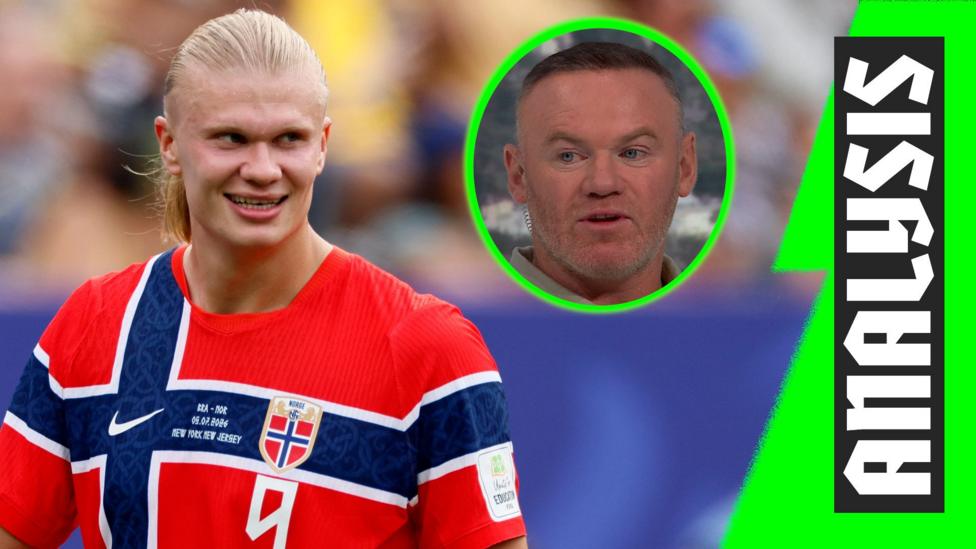
Haaland's Inside Knowledge Gives Norway Tactical Edge Over England
Erling Haaland's intimate understanding of Manchester City teammates could be Norway's decisive tactical weapon against England.