The Art of Anarchy: Can Anyone Stop These World Cup Predators?
A defender’s deep dive into the psychological and tactical chess match required to neutralize Messi, Mbappe, Haaland, and Kane.
The pristine, manicured turf of Qatar is set to become a slaughterhouse. We are not talking about a clash of styles or a battle of formations. We are talking about the presence of four apex predators whose very existence in the tournament turns every defensive game plan into a prayer. Lionel Messi, Kylian Mbappe, Erling Haaland, and Harry Kane are not just in form; they are weaponizing form itself, arriving with a terrifying blend of momentum, fitness, and cold-eyed precision.
The question isn't if they will score, but how a defender can possibly slow the bleeding before it becomes a hemorrhage. To find answers, you don't look at a whiteboard covered in arrows. You look into the psychology of a duel that lasts 90 minutes but is decided in a single, violent second. For a center-back, standing across from these four is not a physical challenge first; it’s a mental siege.
The Space-Time Paradox of Messi
Stopping Lionel Messi in 2022 is a different riddle than stopping him in 2012. The explosive, slaloming runs that covered 40 yards have been replaced by something far more dangerous: calculated walking. Modern Messi dissects you while standing still. He drifts into the right half-space, and for a defender, this is the moment of maximum terror.
The instinct screams to step out, to close the distance. That is the trap. The second you vacate the defensive line to engage, you create a gap, and his left foot becomes a surgical instrument. The ball doesn't just travel to the far post; it’s delivered with a trajectory that mocks the goalkeeper’s positioning.
The Dribbling Myth
Defenders must abandon the idea of tackling him outright. You defend Messi by defending the pass to Messi. Midfielders must shadow him without the ball, forcing him to drop so deep he receives it facing his own goal. If he gets the ball with his body open and his head up, the duel is already lost. The only recourse is a staggered zonal shield: one man to contain, a second to cover the cut inside, knowing that he will likely glide past both if the timing is a millisecond off.
"You don't play against his feet. You play against his eyes. The moment he looks at the far post and you don't adjust your hips, the ball is already gone."
The Kinetic Storm: Handling Mbappe and Haaland
If Messi is a silent assassin, Kylian Mbappe and Erling Haaland are natural disasters. They are the physical manifestation of modern football’s obsession with transition speed, yet they require completely opposite defensive blueprints. The mistake casual observers make is grouping them together as "fast and strong." The reality for a defender is a brutal distinction: you fear Mbappe in front of you, but you fear Haaland behind you.
Mbappe: The Frontal Assault
Mbappe's heat map is a lie. He starts wide left, but his danger zone is the left channel, driving at the penalty area. Defending him in a back four is a suicide mission if you don't have a full-back willing to sacrifice his attacking instincts. The key is the angle of approach.
- You cannot dive in. He has a center of gravity so low at high speed that he changes direction without braking.
- You must curve your run to force him outside. Show him the touchline, even if it means conceding a cross.
- The cover defender must preempt the cut-back pass. 70% of his assists come from pulling the ball back to the penalty spot.
If you stand square and try to match his sprint, he will nutmeg you or win a penalty because he shifts the ball at the exact moment your foot plants. The battle is won in the first five yards of his reception. Deny the turn, and you turn a cheetah into a kitten.
Haaland: The Ghost in the Box
Haaland is a biomechanical anomaly. At 6'4", he moves like a player who should generate power from a static position, yet his most lethal attribute is a stuttering, floating movement that leaves defenders invisible. To stop him, you stop the cross, not the finisher. If the ball gets driven low and hard across the six-yard box, you are dead. Haaland doesn't chase the ball; he attacks the space where the ball will be.
You must physically anchor yourself into his body before the delivery. A common tactic is to position the striker in an offside trap, but Haaland’s timing of his curved runs from the blind side of the center-back is perfect. The Norwegian forces a defender to abandon zonal marking and go full man-to-man, which then destroys the entire shape of the defensive unit. He is the greatest structural disruptor in the game simply because you are terrified to leave him alone for a single second.
The Harry Kane Dilemma: The False 9 Trap
Harry Kane is arguably the most difficult assignment on this list for a pure center-back because he refuses to stay in one place. He is a world-class No.9 with the brain of a No.10. The classic "stopper" defender who is only comfortable in aerial duels gets humiliated by Kane.
If you follow him into midfield, he spins and sends a 60-yard diagonal ball to the opposite winger, and you are stranded. If you stay in the defensive line, he drops off, receives the ball unmarked, and turns to face the goal, where his distribution is as lethal as a through-ball specialist.
The solution is a team-wide decision, not an individual one. The defensive midfield must be conditioned to pass him on. When Kane drops, the center-back stays, and the holding midfielder sprints back into the gap to block the lane to the striker’s right foot. You force him to play backwards. You must make him a volume passer, not a killer passer. In the box, the danger is the reverse psychology. Kane often stops his run to lose a marker who anticipates a near-post dart. You defend him by watching the ball, ignoring his body feints, and attacking the flight of the cross before it enters his orbit.
The Collective Solution: Accepting the Scar
No defender at this World Cup will pocket these four for an entire match. The modern pitch is too big, and VAR has stripped away the dark arts of shirt-pulling and the late nudge that used to balance the scales. Stopping them requires what coaches call "the sacrifice phase."
- Against Messi, the winger must become a second full-back.
- Against Mbappe, the defensive line must drop five meters deeper than comfortable, accepting sustained pressure to prevent the ball over the top.
- Against Haaland, the double pivot must block the vertical lane to his feet, ignoring the free man on the flank.
- Against Kane, the striker must become the first defender, pressing to prevent the long line-splitting pass.
If a team sits in a mid-block against these players, they will be destroyed. The only way to survive is a low block executed with perfect concentration and a high line executed with suicidal bravery. Anything in between is a graveyard. Success won’t be measured by a clean sheet, but by forcing these predators onto their weaker foot in moments where the Expected Goals value drops below 0.1. In this tournament, that is the definition of a victory.
Editorial Integrity
This is an original SportPulse article written by our editorial team. All content is independently researched, written, and reviewed by our writers and editors before publication. We do not publish copied, aggregated, or syndicated content.
SportPulse is committed to original sports journalism. Read our editorial policy or contact us with any questions.
More Like This
All Football
BBC Launches World Cup Predictor, Win Signed Ball
BBC Sport's new predictor game offers a signed football to the most accurate forecaster.

Sunderland Stun Chelsea to End 53-Year European Exile
Sunderland defeated Chelsea to secure Europa League qualification for the first time in 53 years, ending a historic drought.
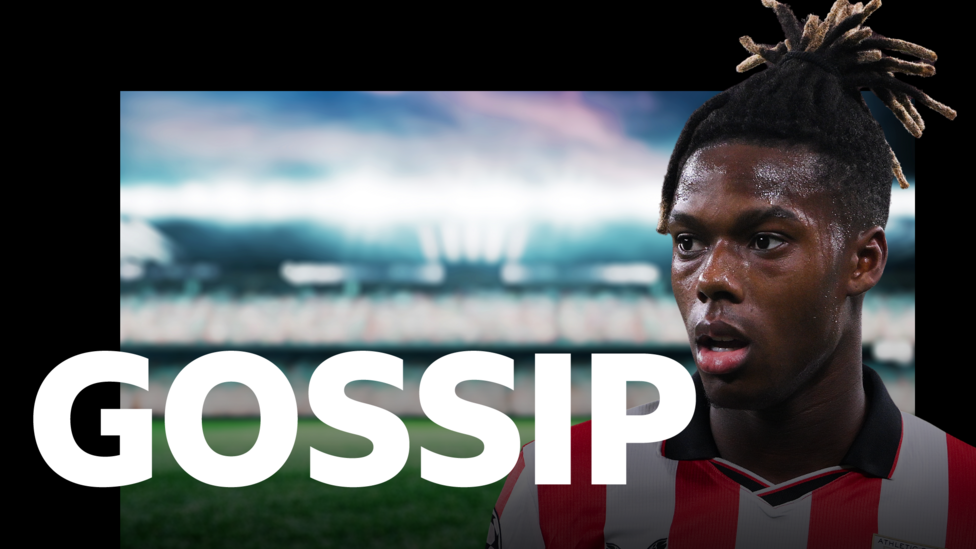
Arsenal Chase Williams, Juve Target Martinez, PSG Want Olise
Arsenal pursue Nico Williams, Juventus open Martinez talks, and PSG target Olise in a hectic transfer roundup.