The Bigger, Louder, More Divisive World Cup Is Coming
The expanded 2026 World Cup promises spectacle on the pitch but controversy off it at an unprecedented scale.
Football's Biggest Gamble
The 2026 FIFA World Cup is shaping up to be the most ambitious, most expensive, and most politically charged edition in the tournament's 96-year history. Three host nations. 48 teams. 104 matches stretched across 16 cities from Vancouver to Mexico City. On paper, it reads like a celebration of football's global reach. In practice, it is generating as many headaches as headlines.
FIFA's decision to expand from 32 to 48 teams was sold as a democratizing move, a way to give smaller footballing nations their moment on the world's biggest stage. But the ripple effects are enormous. The tournament now runs for 39 days, up from the typical 28. Squad sizes have ballooned. Travel demands on players and fans have multiplied in ways previous World Cups never required.
Whatever angle you take, one thing is clear: this World Cup will be defined as much by what happens away from the pitch as on it.
The Expansion Problem
Let's start with the football itself. Adding 16 extra teams sounds inclusive until you examine the competitive dilution it risks creating. The group stage now features 12 groups of four, with the top two and eight best third-placed teams advancing. That means 32 of 48 nations progress from the group phase. Two out of three. The margins for failure are paper-thin.
Critics argue this fundamentally changes the jeopardy that makes the group stage so compelling. When Algeria in 2014 or South Korea in 2002 produced iconic moments, the threat of elimination was real and raw. If nearly everyone advances, do the early matches carry the same weight?
There is a counterargument. Nations like Iceland at Euro 2016 proved that newcomers can electrify a tournament. More participants could mean more underdog stories, more global eyeballs, more federations investing in development. FIFA is banking on that hope.
The expanded format also produces a bloated knockout bracket. The round of 32 is a new addition, essentially adding an entire extra elimination round. For broadcasters and sponsors, that means more content. For players already navigating an absurdly congested calendar, it means more minutes, more fatigue, and a higher injury risk in a season that never seems to end.
The Logistical Nightmare
No World Cup has ever been spread across such a vast geographical footprint. The United States alone is 18 times the size of Qatar, the 2022 host. Mexico City to Vancouver is roughly 4,000 kilometers. Flights between venues will be measured in hours, not minutes.
For teams drawn into groups with matches in different regions, the travel burden becomes a genuine competitive factor. Imagine a side playing in New York, then flying to Los Angeles, then back to Dallas inside nine days. Jet lag, fatigue, disrupted training schedules. The host nations and teams based in geographically clustered groups will enjoy a structural advantage others simply won't have.
Fan logistics are equally daunting. Supporters who traditionally follow their team through a World Cup now face the reality of transcontinental flights, wildly varying accommodation costs, and a visa process that many will find prohibitive. The 2022 Qatar tournament was criticized for its compact structure, but at least fans could attend multiple matches in a single day. That luxury disappears entirely in 2026.
Then there is the infrastructure. Building out 16 host stadiums across three countries requires coordination on a scale FIFA has never attempted. Several venues are NFL stadiums that need temporary pitch conversions. Grass quality has been a persistent concern in American football stadiums, as 2024 Copa América matches demonstrated when pitches in Atlanta and other cities drew heavy criticism from players and coaches alike.
Politics at Every Turn
The 2026 World Cup arrives at a moment of deep political tension across North America. Immigration enforcement under the current U.S. administration has raised questions about whether fans from certain nations will feel safe traveling to matches. Reports of visitors being detained at borders, regardless of documentation status, have circulated widely. FIFA has faced pressure to address accessibility concerns, but the organization's track record on holding host nations accountable is not exactly sterling.
Mexico's involvement adds its own layer. The country's ongoing security challenges, particularly in certain host regions, remain a concern that organizers have had to address. Canada, the most politically stable of the three hosts, is the quietest partner in the arrangement but faces its own logistical challenges around venue readiness.
The tournament also arrives on the heels of Qatar 2022, which set a new precedent for World Cup controversy. Migrant worker deaths, LGBTQ+ rights, the sheer absurdity of a winter World Cup in a desert nation. That tournament forced a global conversation about what FIFA is willing to overlook in pursuit of spectacle. North America 2026 is a different kind of contentious, but the throughline is the same: politics and football are inseparable, and FIFA's insistence on pretending otherwise rings hollow.
There is also the looming specter of the 2034 World Cup in Saudi Arabia, already awarded through a process many viewed as predetermined. The 2026 tournament will inevitably be measured against that backdrop, with critics asking whether FIFA learned anything from the Qatar backlash or simply found new ways to generate the same cycle of controversy.
The Commercial Equation
FIFA projects record revenues for the 2026 cycle, with estimates exceeding $11 billion. The expanded format alone guarantees 40 additional matches, each one a broadcast slot, a sponsorship vehicle, a ticketing opportunity. The North American market, the largest untapped football audience among traditional World Cup host regions, represents a goldmine.
But commercial ambition comes with risk. Ticket prices are expected to reach historic highs, particularly for knockout matches held in premium venues like MetLife Stadium in New Jersey or AT&T Stadium in Dallas. The average American sports fan may attend a match out of curiosity, but FIFA needs the global football supporter, the one who travels across oceans, to carry the atmosphere. Pricing those fans out of the equation would be a self-inflicted wound.
Broadcasters have already locked in massive deals. Fox Sports holds the U.S. English-language rights. The expectation is that the 2026 tournament will shatter viewership records, with matches scheduled across time zones designed to maximize global reach. Whether the product on the field justifies those numbers depends largely on whether the expanded format delivers drama or monotony.
What It Means
The 2026 World Cup is a high-stakes experiment on every level. FIFA is betting that bigger means better, that more teams and more cities and more matches will translate into more revenue and more global engagement. The football purist worries about dilution. The logistics expert sees chaos. The political observer sees a tournament entangled in forces far beyond the sport.
What is undeniable is the scale. 48 nations competing across three countries over 39 days will produce moments no previous World Cup could. The question is whether those moments come despite the structure, not because of it. Whether the world's biggest sporting event can survive being stretched further than it has ever been stretched before.
The whistle hasn't kicked off yet. The arguments have.
Editorial Integrity
This is an original SportPulse article written by our editorial team. All content is independently researched, written, and reviewed by our writers and editors before publication. We do not publish copied, aggregated, or syndicated content.
SportPulse is committed to original sports journalism. Read our editorial policy or contact us with any questions.
More Like This
All football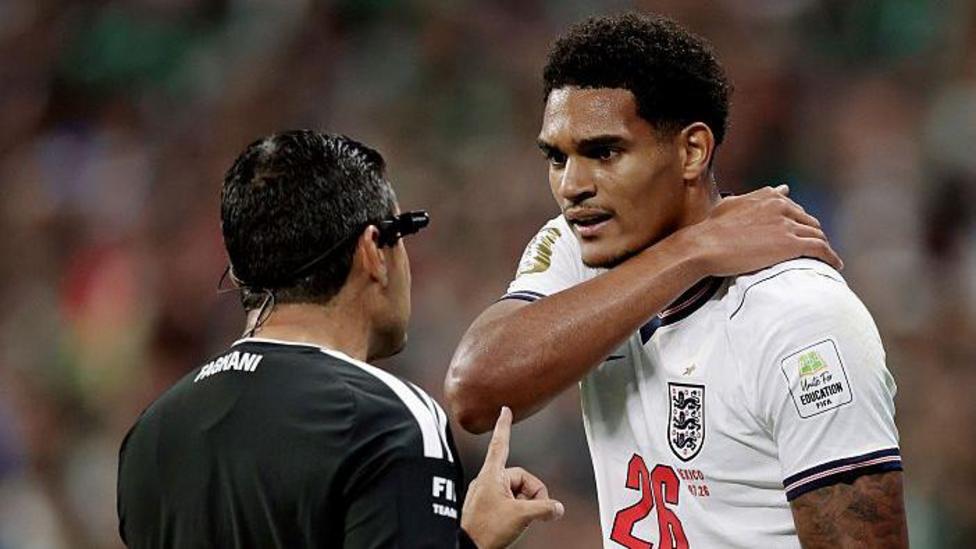
Quansah Red Card Sparks FA Appeal Debate Amid Tactical Fallout
England's defensive structure unravels after Quansah's dismissal, forcing Southgate into emergency tactical recalibration against Mexico.
Klopp Returns to German Football: A Tactical Rebuild of a Broken System
Jürgen Klopp's agreement to take over Germany promises a heavy-metal rebuild of a national team broken since the Paraguay exit.

33.5 Million and Counting: USMNT's World Cup Drama Rewrites American Soccer History
The USMNT's win over Bosnia shattered viewership records, outpacing NBA Finals and Sunday Night Football on American soil.