Switzerland Top Group B as Both Sides March Into the Last 32
Switzerland's win over co-hosts Canada seals top spot and sends both nations into a historic expanded knockout stage.
A Group Stage With a Different Kind of Stakes
There was a time when a group-stage loss at the World Cup meant packing your bags. That era is over.
Switzerland took care of business against co-hosts Canada to claim top spot in Group B, but the real story here is the bigger one: both teams are through to the last 32. In a World Cup that has rewritten the rulebook on what qualification looks like, this result delivered the cleanest possible outcome. The Swiss get the group winners' reward. Canada, despite the defeat, survive.
For anyone still adjusting to the new reality, this is the expanded World Cup in action. Forty-eight teams. Twelve groups of four. The top two from each group advance, joined by the eight best third-placed finishers. The math is forgiving, and on this occasion, it flattered both sides.
But make no mistake. Switzerland did not stumble into first place. They earned it.
The Swiss Machine Grinds On
If there is one national team in world football that refuses to be interesting and simultaneously refuses to go away, it is Switzerland.
The Swiss have now qualified for every World Cup since 2006. That is six consecutive tournaments, a streak that puts them alongside nations with far grander reputations and far larger populations. They have 56,000 square kilometres of Alpine territory and roughly 8.8 million people, and yet they keep turning up, keep competing, keep advancing.
Topping Group B fits the pattern perfectly. Switzerland are the team that does not dazzle but does not wilt. They are structurally disciplined, tactically flexible, and mentally unshakeable in the group phase. Think of their 2022 Qatar campaign, where they navigated a group containing Brazil, Serbia, and Cameroon to reach the knockouts. Think of their Euro 2020 run, where they stunned France on penalties in the round of 16.
This is not a fluke. This is a footballing culture that has learned how to win when it matters.
What Topping the Group Actually Means
Finishing first in a World Cup group is not just a vanity metric. It determines the knockout bracket, the opponent, and the path forward.
As Group B winners, Switzerland will face a third-placed finisher from another group in the round of 32. On paper, that is the most favourable draw available. It means avoiding the heavyweight clashes that second-placed teams often stumble into. In an expanded 48-team tournament, where the bracket can be labyrinthine, securing that top seed is a genuine competitive advantage.
"The group stage is about positioning. You don't win the World Cup here, but you can lose it." — a sentiment shared by coaches across the tournament.
Switzerland understood the assignment.
Canada's Bittersweet Survival
Here is the uncomfortable question for Canadian football: is simply advancing enough?
The co-hosts entered this tournament carrying the weight of a nation that poured billions of dollars into infrastructure, stadiums, and preparation. Canada's last World Cup outing, at Qatar 2022, ended with zero wins, zero points, and three defeats in Group F. The performances were spirited but ultimately fruitless. Alphonso Davies scored the country's first-ever World Cup goal against Croatia, but the team left empty-handed.
Fast forward to 2026. Canada are playing on home soil, in front of their own fans, with the experience of Qatar behind them. A loss to Switzerland stings, no question. But they are through. The knockout rounds await. For a football federation that has spent decades in the wilderness, fighting for relevance in a country dominated by ice hockey and Canadian football, this is not nothing.
The question is what they do with it.
The Co-Host Paradox
Hosting a World Cup is supposed to be an advantage. Familiar surroundings, partisan crowds, zero jet lag. But history tells us co-hosts and hosts live with a particular kind of pressure that can be both fuel and poison.
South Korea in 2002 rode it to the semi-finals. South Africa in 2010 crashed out in the group stage. Qatar in 2022 became the first host nation to lose their opening match and were eliminated with a game to spare.
Canada's path, so far, sits somewhere between those extremes. They survived. They advanced. But the performance against Switzerland will raise questions about whether this team has the ceiling to compete beyond the round of 32.
Transfer Intel: The Business of the Expanded World Cup
Behind the Format.
The shift from 32 to 48 teams was FIFA's most consequential structural change since the tournament went to its modern format in 1998. The stated goal was global inclusion. The unstated goal was revenue.
More teams means more matches. The 2026 World Cup features 104 games across the tournament, up from 64 in previous editions. That is a 62.5% increase in content for broadcasters, sponsors, and host cities. More group games mean more television windows. More knockout rounds mean more high-stakes inventory.
For nations like Canada, the expanded format is a lifeline. In the old 32-team structure, advancing from a group containing a European heavyweight would have been considerably more precarious. The new math offers a safety net: you can lose a match and still progress. Whether that dilutes the drama or democratizes the spectacle depends entirely on your perspective.
For FIFA, the answer is simple: more football means more money. The 2026 tournament is projected to generate over $11 billion in revenue, dwarfing Qatar's $7.5 billion. Group B's result, where both teams advance comfortably, is exactly the kind of outcome the format was designed to produce.
The Bigger Picture for Group B
Let's zoom out. Switzerland top the group. Canada advance in second. Two teams from a four-team pool move on, and the conversation shifts immediately to knockout-round matchups.
The Swiss will be pleased. Topping the group and avoiding a second-place finish means a theoretically softer bracket, more time to prepare, and the psychological boost of dominance. They controlled what they could control.
Canada will tell themselves a different story. They will frame the Switzerland loss as a lesson, not a verdict. They will point to their progress from 2022, where they left Qatar with nothing, and contrast it with 2026, where they leave the group stage with a knockout fixture to prepare for. And they will be right to do so.
But the knockout rounds are a different beast entirely. The margins shrink. The opposition sharpens. The forgiving math of the group stage gives way to the brutal binary of elimination football.
What Comes Next
Switzerland will fancy their chances against a third-placed opponent. Their record in knockout rounds is not spectacular, but their record of being in knockout rounds is excellent. They have the experience, the structure, and the composure to make a deep run.
Canada face a tougher road. Depending on the draw, they could meet a group winner in the round of 32, a prospect that will test their resilience. The home crowd will be there. The energy will be there. The question is whether the quality matches the occasion.
For now, both nations can celebrate a shared achievement: survival in the world's biggest tournament. Switzerland did it with authority. Canada did it the harder way. Both are still standing.
In a 48-team World Cup, that might be the most important statistic of all.
Editorial Integrity
This is an original SportPulse article written by our editorial team. All content is independently researched, written, and reviewed by our writers and editors before publication. We do not publish copied, aggregated, or syndicated content.
SportPulse is committed to original sports journalism. Read our editorial policy or contact us with any questions.
More Like This
All football
DeChambeau Penalized: Two Shots Gone at Royal Birkdale
Bryson DeChambeau's Open bid suffers a crushing two-shot penalty on a chaotic evening at Royal Birkdale.
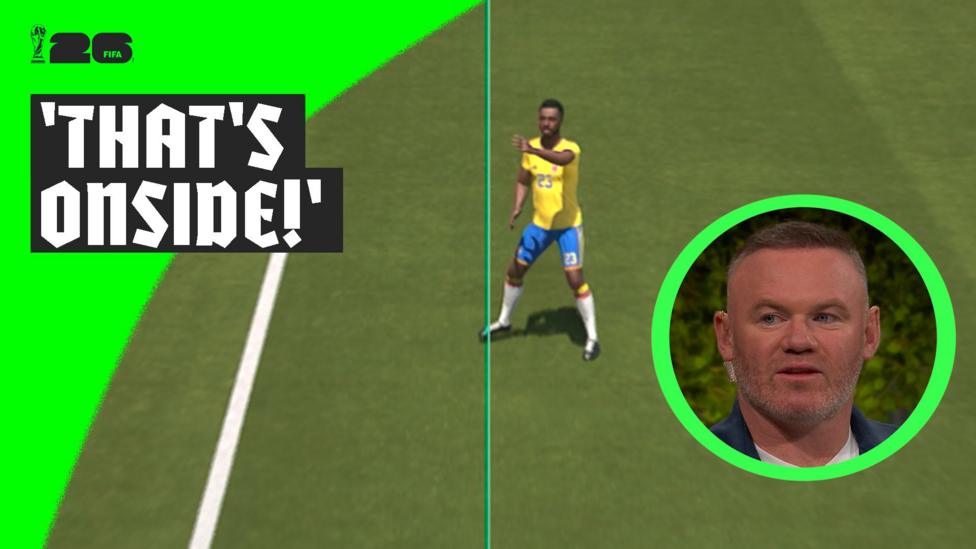
A Toe Offside: VAR's Millimetre Problem Threatens to Undermine the World Cup
Davinson Sanchez's disallowed goal against Portugal reignites the debate over VAR's marginal offside calls at the World Cup.
France Prove the Steel Behind the Showboating as World Cup 2026 Field Thins
France showed grit beyond their flair to survive Paraguay's physical test, answering how they handle intimidation when the knockout pressure peaks.