The Tactical Evolution of Modern Football: Why Positional Play Is Winning Everything
From Guardiola's Barcelona to Arteta's Arsenal, the thread of positional play runs through two decades of tactical dominance.
When Pep Guardiola walked into the Barcelona dressing room in the summer of 2008, he carried with him a set of ideas that would fundamentally reshape how the sport is played. The principles were not new; they traced back to Johan Cruyff's total football and Arrigo Sacchi's pressing revolution. But Guardiola synthesized them into something coherent, ruthless, and, for a generation of coaches who followed, irresistible.
Seventeen years later, positional play (or juego de posicion) has become the dominant tactical framework in elite football. Every Champions League finalist in the last five years has employed some variant of it. The question is no longer whether it works, but why it continues to evolve faster than the systems designed to counter it.
The Core Principles
At its heart, positional play is about creating and exploiting superiorities: numerical (more players in a zone), qualitative (better players in a zone), and positional (players between the lines). The pitch is divided into five vertical lanes and three horizontal zones. Players must maintain width and depth to stretch the opposition, but remain close enough to combine.
- Third-man combinations: The ball rarely travels directly to the target. Instead, it passes through an intermediary who releases it first-time, breaking the opponent's pressing structure.
- Rest defence: While attacking, at least three players remain behind the ball to prevent counter-attacks. This is non-negotiable.
- Controlled tempo: Possession is not an end in itself. It is a tool to manipulate the opponent's shape, creating gaps that can be exploited with a sudden change of pace.
- Positional rotations: Players interchange within their zone but never abandon the structural balance of the team.
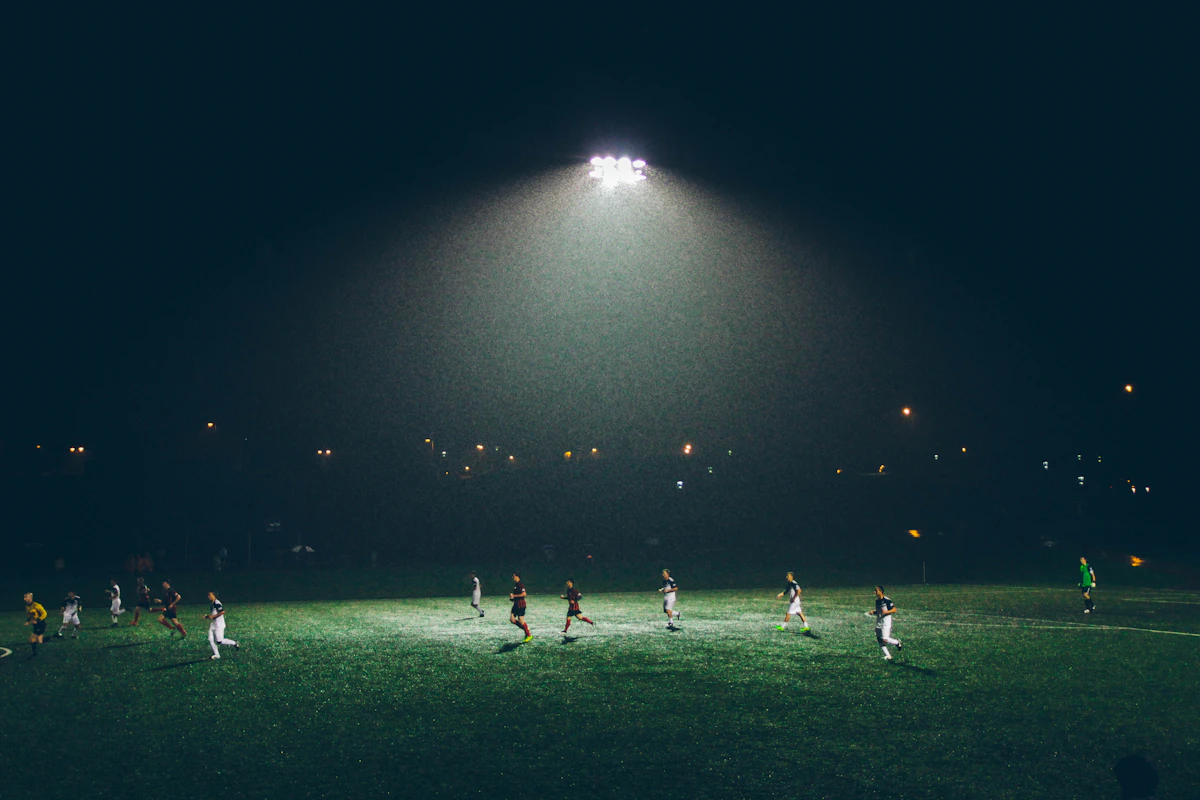
Positional play demands that every player understands not just their role, but the roles of the teammates around them. Training sessions focus on spatial relationships, not just individual technique.
The Arteta Extension
Mikel Arteta, who served as Guardiola's assistant at Manchester City before taking the Arsenal job in 2019, has added his own layer to the framework. Where Guardiola's teams tend to control through patience, Arsenal's version is more direct in its verticality. The Gunners look to progress the ball through the thirds faster, using the half-spaces as corridors rather than gathering zones.
Arteta's innovation lies in what analysts call "pre-set triggers": specific positional shapes that, once achieved, automatically trigger a penetrating pass or a run. This removes the decision-making delay that traditional positional play sometimes suffers from in the final third.
"We don't wait for the perfect moment. We build the shape that creates the moment." — Mikel Arteta
Why Counters Keep Failing
The obvious counter to positional play is a deep, compact low block combined with rapid transitions. Teams like Atletico Madrid and, more recently, Inter Milan have shown this can be effective in isolated matches. But over a league season, the data tells a different story.
A study of the last five Premier League seasons shows that teams averaging over 55% possession finish in the top four 78% of the time. The reason is structural: positional play teams control territory even when they don't control the ball. Their pressing triggers and rest-defence shape mean that even turnovers happen in zones where they can immediately recover.
The Pressing Trap
Counter-attacking teams face a dilemma. If they sit too deep, they concede the midfield entirely and face a siege of chances. If they press higher, they leave space behind the defensive line, exactly what positional play is designed to exploit. It's a lose-lose proposition that only exceptional individual defending or goalkeeping can resolve over 90 minutes.
What Comes Next
The next evolution is already underway. Coaches like Roberto De Zerbi and Xabi Alonso are experimenting with what might be called "asymmetric positional play," where the structure on the left side of the pitch differs deliberately from the right. This creates confusion for opponents who try to press in a symmetrical manner.
Meanwhile, the integration of data analytics into tactical planning is accelerating. Teams now use tracking data to measure "positional discipline" in real time, giving coaches quantifiable metrics for concepts that were once purely intuitive. The marriage of Cruyff's ideas with modern technology suggests that positional play has not yet reached its ceiling.
For the neutral fan, this is golden age football. The game has never been more tactically sophisticated, more physically demanding, or more beautiful to watch. And the ideas that a young Guardiola brought from the pitches of Catalonia continue to shape every match you see at the highest level.
Editorial Integrity
This is an original SportPulse article written by our editorial team. All content is independently researched, written, and reviewed by our writers and editors before publication. We do not publish copied, aggregated, or syndicated content.
SportPulse is committed to original sports journalism. Read our editorial policy or contact us with any questions.
More Like This
All Football
BBC Sport Brings World Cup 2026 to Your Lock Screen
BBC Sport launches live match updates for World Cup 2026, delivering your team's score directly to your phone lock screen.

Arsenal's Title: A Visceral High That Scars and Heals
The Gunners' long-awaited Premier League crown delivered a flood of emotion, from flare smoke to tears, proving sport's unique power to bond and transform.

Next Generation 2025: The Premier League's Best First-Year Scholars Revealed
The Guardian's annual Next Generation list names the top young talent at each Premier League club for 2025.