Tar Heels in the Bay: RJ Davis Shines, Powell Struggles, Ryan Waits
Three former UNC guards navigated the California Summer League with wildly different results, and Vegas will judge them all.
The Audition Truth
Chase Center glows under the San Francisco fog, a shimmering cathedral of Bay Area hoops. But the crowd inside is sparse, the atmosphere closer to an open scrimmage than a meaningful contest.
This is the California Summer League, where basketball dreams get measured in minutes and plus/minus ratings. It is not about winning or losing. It is about surviving.
For three former North Carolina Tar Heels, the California circuit was a pressure-cooker of opportunity, a trying-out ground before the cameras and stakes get cranked up in Las Vegas. The early returns range from incandescent to deeply uncomfortable.
Summer League basketball strips away the glamour and leaves the desperation visible. Everyone on the floor is playing for an invite. A roster spot. A two-way deal. Even a G League lifeline that keeps the NBA door cracked open for when injuries inevitably strike during the long winter.
The California League wrapped up Monday. The verdicts are in.
RJ Davis and the Art of the Bounceback
The San Antonio Spurs went winless in the California Summer League, which sounds like a disaster but is completely irrelevant to the individual stories unfolding within those losses.
RJ Davis was the Tar Heel story of the week.
Playing for his second Summer League stint after a run with the Lakers last year, Davis embraced the bench role in his first two outings and then demanded the starting spot with his play. The trajectory of his three games tells a story of adaptability.
In the opener, Davis scored 15 points in 18 minutes off the bench. He was deadly from beyond the arc, connecting on three of five three-point attempts. He dished three assists without a single turnover. That clean ledger powered a team-best +16 plus/minus rating.
Then came the stinker. In_GAME two, Davis managed just two points in 21 minutes. His shooting collapsed entirely. He missed all five of his three-point attempts. He committed three turnovers alongside four assists. It was the kind of performance that buries careers in the G League treadmill.
But Davis responded. That is what mattered.
Promoted to the starting lineup for game three, Davis dropped 18 points in 29 minutes. He only hit two of seven threes, but he attacked the rim with purpose and once again led the Spurs in plus/minus with a +11. The jumper wobbled. The motor roared.
When you strip away the emotions, RJ's California tape shows an undersized guard who refuses to disappear. That plus/minus consistency is real currency.
For a guard whose NBA viability depends entirely on offensive efficiency and decision-making, that ability to self-correct is his most important trait. Vegas will test whether that consistency was real or a mirage.
By the Numbers: RJ Davis in California
- 35 total points across three games
- 5-of-12 from three-point range in the opener and finale combined
- +16 plus/minus in game one, the best mark on the Spurs
- 0 turnovers in his first outing before committing six across the next two
- 29 minutes earned in the starting role for the finale
When the Jumper Abandons You
Drake Powell entered this summer with a different kind of pressure entirely. Unlike Davis and Cormac Ryan, Powell isn't fighting for a professional foothold.
He already has one.
The Brooklyn Nets first-round pick from the previous year, Powell is a rostered player whose license to play in Las Vegas is guaranteed. Second-year development is your goal. The California League was supposed to be a sweep of rust and rhythm-building.
It was anything but.
Powell played in two of Brooklyn's three games for undisclosed reasons. In those two appearances, his stat line reads like a shooter's nightmare.
One field goal on 17 attempts.
0-for-9 from three-point range.
Those numbers are staggering. Not bad. Staggering. It is the kind of cold streak that sends shooters to dark rooms and sports psychologists.
But buried underneath the offensive rubble were signs of a basketball player still contributing. Powell grabbed 12 rebounds across his two appearances, a meaningful contribution from the wing position. The problem was the five turnovers that offset the board work.
Here is the charitable read: Powell is a 19-year-old in his second taste of Summer League, still learning the speed and physicality of the professional game. The Nets invested a first-round pick in his frame and defensive instincts, not his shooting percentage in July.
Here is the uncomfortable read: A 5.9% shooting rate in any professional setting, even a Wild West Summer League environment, sets off alarms.
The Nets need him to rediscover his shot in Vegas. Not next season. Now. Confidence is fragile, and a prolonged slump can metastasize.
Cormac Ryan's Waiting Game
Of the three Tar Heels in California, Cormac Ryan faced the most unusual week.
Ryan is a Summer League veteran, playing in his third consecutive circuit and his second straight with the Milwaukee Bucks. He was the old head in the locker room, the guy who has navigated this chaos before.
He only played once.
Ryan started Milwaukee's opening game and delivered a genuinely strong performance. He scored 13 points in 19 minutes, displaying the same combo-guard efficiency he flashed at Chapel Hill. The Bucks then sat him for the next two games for undisclosed reasons.
That is where the story gets interesting.
The Bucks are a franchise in full transformation, having traded away their franchise cornerstone and pivot. A team rebuilding its identity needs cheap, versatile guards who can shoot and handle. Ryan fits that profile perfectly.
His lone appearance showed enough to warrant more looks.
Cormac is the kind of player every transitioning team needs: low-maintenance, skilled, and ready when his number is called. The question is if Milwaukee hears the phone ring more often in Vegas.
The Las Vegas Crucible
The California League is the preamble. Las Vegas is the examination.
Every NBA front office sets up camp on the Strip for the main Summer League event. More scouts, more executives, more cameras, more pressure. The gym is louder, the lights are brighter, and every possession feels like it carries more weight.
For RJ Davis, Vegas is a chance to prove his game-three surge was the real version, not the game-two horror show.
For Drake Powell, Las Vegas represents a mental test as much as a physical one. Can a first-round pick shake off a 1-for-17 California funk and rediscover the stroke that made his name?
For Cormac Ryan, the question isn't about readiness. It's about opportunity. Will the Bucks give him the runway to prove he belongs on a roster in transition?
What's Next
All three Tar Heels will continue their summer auditions in Las Vegas this week.
Davis needs to shoot with more consistency from the perimeter while maintaining his aggressive plus/minus mindset. The Spurs are a developing team with a clear need for backcourt depth, and a strong Vegas showing could turn a training-camp invite into something more substantial.
Powell's priorities are entirely psychological. The Nets need their young wing to shoot the ball without hesitation, but he must also cut down on turnovers and translate his rebounding_activity into transition opportunities.
Ryan's box score in Vegas will depend entirely on whether the Bucks give him the minutes. His track record suggests the skill hasn't eroded. The opportunity is the variable.
The California chapter is closed. The Las Vegas crucible awaits. Three Tar Heels. Three paths. One chance to prove they belong.
Editorial Integrity
This is an original SportPulse article written by our editorial team. All content is independently researched, written, and reviewed by our writers and editors before publication. We do not publish copied, aggregated, or syndicated content.
SportPulse is committed to original sports journalism. Read our editorial policy or contact us with any questions.
More Like This
All basketball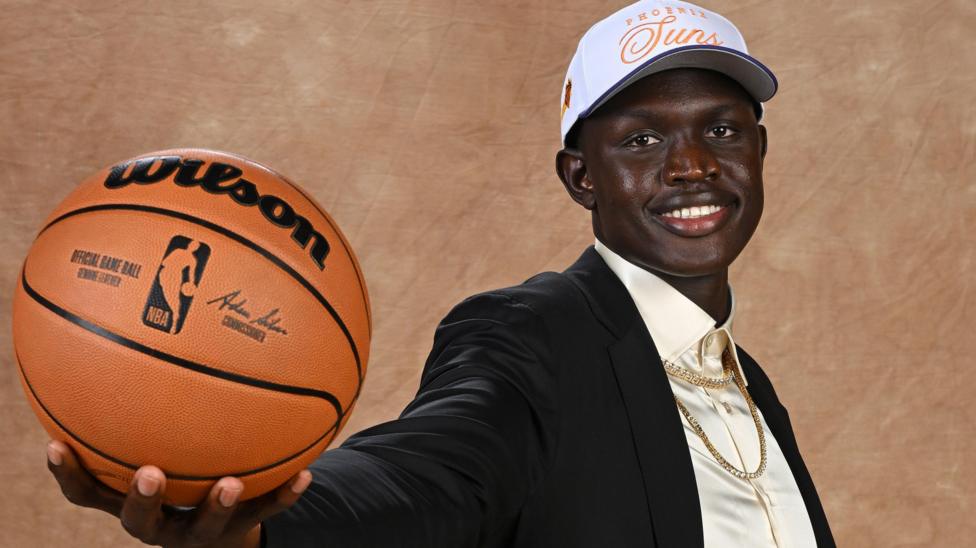
From South Sudan's Ashes to Phoenix: Khaman Maluach's Unthinkable Rise
A civil war refugee who touched a basketball at 13 is now the Phoenix Suns' 10th overall pick and a symbol of basketball's global future.

How One Phone Call Landed Anfernee Simons in Philadelphia
Jameer Nelson called Simons' parents. That personal touch flipped the Sixers' entire pitch and reshaped their backcourt.
Heat Accidentally Post LeBron James Introductory Video Before Decision
Miami Heat jumped the gun with a LeBron James introductory press conference video on YouTube before he committed.