Tartan Army Conquers America: Scotland's Fans Steal the World Cup Spotlight
Scotland's traveling supporters have become the World Cup's most beloved export, turning American stadiums into Highland cathedrals.
A Love Story Written in Blue Face Paint
Billy Gilmour once described playing for Scotland as carrying the weight of a nation on his shoulders. In Miami, under a sun that could melt asphalt, he doesn't have to carry it alone. The Tartan Army has arrived in America, and they've turned every ballpark, every street corner, every stadium concourse into a raucous corner of Edinburgh or Glasgow.
The warmth towards Scotland's supporters during this World Cup burns hotter than the Florida sun itself. That's not hyperbole. It's a phenomenon that has rewritten the script of what traveling football support looks like on the global stage.
From Hampden to Miami
Scotland's relationship with the World Cup has always been complicated. Heartbreak and near-misses define the history. Generations of Scottish supporters have watched other nations celebrate while they nursed pints in disappointment. But qualification for this tournament — hosted across the United States, Canada, and Mexico — felt different. It felt earned in a way that previous campaigns hadn't.
Nowhere is that sense of occasion more palpable than in the stands. The Tartan Army didn't just book flights. They orchestrated an invasion — one characterized by kilts, bagpipes, impromptu ceilidhs in parking lots, and an infectious hospitality that has won over American hosts who had no idea what they were witnessing.
"We've had World Cups in Brazil, Russia, Qatar. But I've never seen a fanbase make the host country fall in love with them like this," noted one FIFA cultural liaison.
The scenes in Miami have been emblematic. Scottish supporters filling bars on Ocean Drive, teaching bemused locals the words to Flower of Scotland, and somehow sourcing the ingredients for a mince and tattie hot dog — a gloriously unhinged fusion of Scottish comfort food and American ballpark cuisine that has become the unofficial snack of Scotland's World Cup campaign.
The Gilmour Factor
Central to the narrative on the pitch is Billy Gilmour, the silky midfielder whose career trajectory has mirrored Scotland's own resurgence. Once the prodigious teenager who broke through at Chelsea, Gilmour has matured into the metronome of Scotland's midfield — the player who dictates tempo, who makes the difficult pass look routine, who gives this team its identity.
His presence in America has added a layer of star power that Scotland squads of recent decades have lacked. Gilmour doesn't just play football. He conducts it. And the Tartan Army's devotion to him borders on the religious. Chants bearing his name echo through every stadium Scotland plays in, carried by thousands of voices that have crossed an ocean to be heard.
But Gilmour's importance extends beyond aesthetics. He represents the bridge between Scotland's painful past at major tournaments and a genuine belief that this squad can compete. The fans sense it. The energy they bring is not just about spectacle. It's about conviction.
What the Numbers Tell Us About Scotland's Midfield Engine
- Gilmour has maintained a pass completion rate above 90% in competitive internationals over the past two seasons
- He averages 3.1 progressive passes per 90 minutes, placing him among the elite midfielders at this World Cup
- Scotland's win rate in matches Gilmour starts is significantly higher than without him in the squad
America Didn't Expect This
Here's the part nobody predicted. American fans, accustomed to the boisterous atmospheres of NFL tailgates and college football Saturdays, have been genuinely charmed. The Tartan Army's reputation precedes them, but reputation and reality are different things.
In Miami, local supporters have described the Scottish contingent as the friendliest visiting fans they've encountered. There are stories of Scottish fans buying rounds for strangers, of impromptu football matches breaking out in parks between Tartan Army members and local kids, of buskers being handed bagpipes and told to have a go.
This isn't accidental. The Tartan Army's ethos has always been about joy over hostility. While other fanbases travel with edge and menace, Scotland's supporters travel with open arms and open wallets. It's a philosophy that dates back decades, codified in the unwritten rules of Scottish traveling support: be generous, be loud, be kind.
The World Cup in America has amplified that ethos on the grandest possible stage.
The Cultural Collision Nobody Knew They Needed
What's emerged in Florida and across the host cities is something genuinely unexpected — a cultural exchange that transcends football. Scottish fans are learning about American sports culture. American fans are discovering the raw emotional power of international football. And somewhere in the middle, over pints and hot dogs and shared disbelief at the spectacle of it all, connections are being forged.
The mince and tattie hot dog might sound like a gimmick. It's anything but. It's a metaphor for what this tournament has produced: a fusion of traditions, a willingness to embrace the unfamiliar, and proof that football's power lies not just in what happens on the pitch but in what happens when strangers share a moment.
Local food vendors in Miami have reportedly added the Scottish-American creation to their permanent menus. That's the Tartan Army's influence — cultural ambassadors who arrived with scarves and left an imprint on the culinary landscape.
The Bigger Picture for Scottish Football
Scotland's presence at this World Cup carries significance that extends far beyond the tournament itself. The Scottish Football Association has long argued that qualification for major events transforms the sport's profile domestically. Youth registration numbers spike. Commercial interest intensifies. The national team becomes a vehicle for national identity in a way that club football, for all its passion, cannot replicate.
The scenes in America validate that argument. Images of the Tartan Army have circulated globally, generating coverage that money simply cannot buy. Sponsors take notice. Broadcasters take notice. And crucially, young Scottish players watching from home take notice.
If Billy Gilmour's generation represents Scotland's footballing future, the Tartan Army's performance in America represents its emotional future — proof that Scotland belongs on this stage, that the wait was worth it, and that the next qualification campaign carries an expectation born not of hope but of experience.
What Comes Next
The tournament will end. Flights will be booked home. The kilts will be folded away and the face paint scrubbed clean. But something has shifted.
Scotland's supporters have demonstrated that the World Cup isn't just a competition for 26-man squads and tactical analysts. It's a celebration of football's ability to move people across continents, to turn strangers into family, and to remind the world why this sport matters.
For Gilmour and his teammates, the mission remains clear — compete, progress, and write a chapter of Scottish football history that future generations will reference with pride. For the Tartan Army, the mission was accomplished the moment they stepped off the plane in America.
They came. They sang. They conquered hearts.
And somewhere in Miami, a mince and tattie hot dog is being served to a bewildered American who just learned what Flower of Scotland sounds like at full volume. That, more than any scoreline, is the story of this World Cup.
Editorial Integrity
This is an original SportPulse article written by our editorial team. All content is independently researched, written, and reviewed by our writers and editors before publication. We do not publish copied, aggregated, or syndicated content.
SportPulse is committed to original sports journalism. Read our editorial policy or contact us with any questions.
More Like This
All football
World Cup Star No 36: Tournament Legends Who Defined an Era
Daily football trivia challenges test fan knowledge of World Cup icons, but Player No 36 demands genuine historical depth and attention to detail.
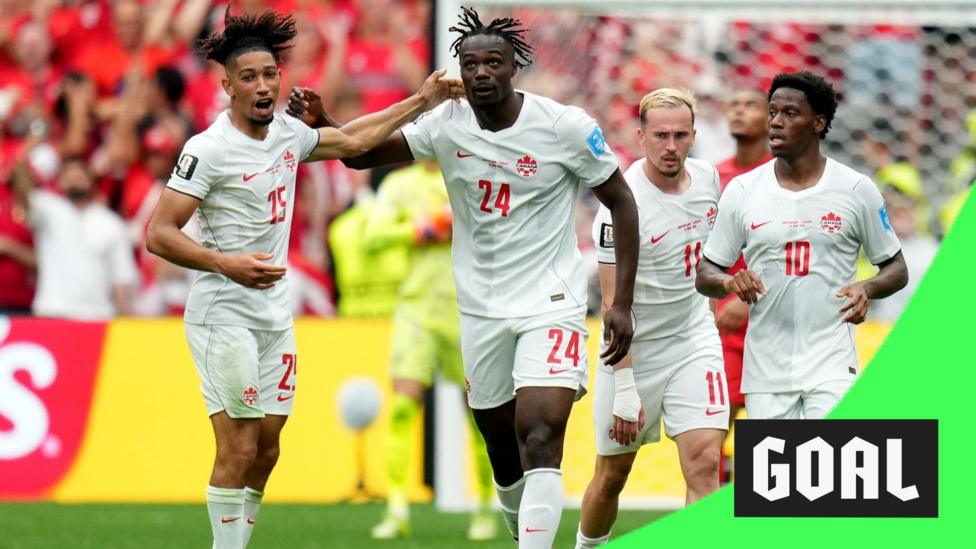
David's First-Touch Strike Redefines Canada's Tactical Identity
Promise David's immediate impact off the bench redefined Canada's pressing geometry and shifted the tactical balance against Switzerland.

Inter Miami Land Casemiro as MLS Opens Tampering Probe
The Brazilian midfielder joins on a short-term deal with an extension option, but the league is scrutinizing how the move came together.