Tebas Slams FIFA’s Complicit Silence Over Balogun Saga
Javier Tebas accuses FIFA of enabling player unrest through inaction, exposing governance failures in international football.
The Silence Is Deafening
Javier Tebas does not suffer fools lightly, and he certainly does not tolerate institutional cowardice. The La Liga president has turned his gaze toward FIFA, accusing the global governing body of harboring a "complicit silence" regarding the ongoing saga involving Folarin Balogun. This is not merely a complaint about a single player transfer dispute. It is a direct indictment of FIFA's inability to enforce order in an era where player power is reshaping the landscape of international football.
The controversy centers on Balogun, an American international who found himself caught between Arsenal and Real Sociedad. While the specifics of contract negotiations often remain behind closed doors, the public fallout has been messy. Players are leveraging their status to disrupt club plans, and FIFA, tasked with maintaining regulatory stability, has offered little more than procedural mumbling. Tebas sees this gap as a failure of leadership.
The concerns have now reached the highest levels of European football governance. UEFA vice-president Laura McAllister has warned that Balogun's avoidance of a ban at the World Cup risks turning football into "an absolute cesspit" of political interference. Her intervention underscores that Tebas's frustration is not an isolated grievance but part of a broader alarm being sounded across the sport's corridors of power.
"We are witnessing a complicit silence from FIFA," Tebas stated, highlighting the disconnect between regulatory promises and actual enforcement.
The Tactical Failure of Governance
To understand Tebas's anger, one must look at the mechanics of modern player contracts. When a player like Balogun enters a situation where he can effectively hold a club hostage, it undermines the integrity of the sporting calendar. Clubs invest millions in scouting, development, and infrastructure. They rely on squad stability to execute tactical plans. When a player decides to sit out or negotiate aggressively without immediate sporting consequences, the balance of power shifts dangerously.
FIFA's response has been characterized by delay. In cases of high-profile disputes, the governing body often retreats into bureaucratic processes that take months to resolve. By the time a ruling is issued, the damage to the club's competitive standing is usually done. This is the "complicity" Tebas refers to. It is not necessarily active encouragement of player unrest, but a passive acceptance of it due to a lack of will or capacity to intervene swiftly.
McAllister's warning adds a new dimension to this critique. When decisions like Balogun's World Cup ban avoidance go unchecked, they do not merely affect the competitive balance between clubs. They invite external political forces to exert influence over football's governance structures, creating a precedent that could fundamentally compromise the sport's independence. The intersection of political interests and player eligibility decisions is precisely the terrain McAllister fears FIFA is failing to police.
The statistics of player mobility support this view. In recent seasons, the number of pre-contract agreements and unilateral terminations has risen sharply. Clubs in La Liga and the Premier League are increasingly treating player availability as a variable rather than a constant. This volatility makes long-term tactical planning nearly impossible for managers who need to build cohesion over a six-month window.
The Arsenal-Sociedad Dynamic
The Balogun case is a microcosm of the broader tension between English and Spanish football structures. Arsenal operates with a rigid hierarchical control, rarely allowing players to dictate terms publicly. Real Sociedad, while also disciplined, operates in a market where financial leverage is often used to secure talent. When these two systems collide, the result is often a stalemate that benefits neither party except the player involved.
Balogun's situation highlights the risks of cross-border transfers in a deregulated environment. If a player can move from one top-tier league to another without fulfilling contractual obligations, it sets a precedent that other agents and players will exploit. The lack of a swift FIFA intervention means that clubs are left to navigate these disputes through legal channels that are slow, expensive, and uncertain.
This dynamic erodes trust. Clubs are less likely to engage in high-stakes transfers if they fear that FIFA will not uphold the sanctity of the contract. For La Liga, which prides itself on competitive balance and financial sustainability, this is a critical issue. Tebas knows that if FIFA cannot police its own domain, smaller leagues will suffer the most.
Verdict: A Crisis of Authority
The bottom line is that FIFA's silence is not neutral. It is permissive. By failing to act decisively in cases like Balogun's, FIFA signals that contractual obligations are secondary to individual player desires. This undermines the entire foundation of professional football. Without enforceable contracts, the sport becomes a free-for-all where only the most financially robust or politically connected players thrive.
McAllister's intervention from the UEFA boardroom lends institutional weight to this argument. When a vice-president of European football's governing body openly describes the trajectory as an "absolute cesspit," it is no longer just club presidents and league officials sounding the alarm. The governance establishment itself is acknowledging that the current course is unsustainable. Political interference in football is not a theoretical risk—it is an emerging reality that FIFA's inaction is enabling.
Tebas's criticism is a wake-up call. If FIFA does not reform its disciplinary mechanisms, it risks losing relevance to domestic leagues that are better equipped to handle such disputes. The era of centralized control is ending, and FIFA must adapt or become obsolete.
What This Means for the Future
Looking ahead, the implications of this standoff are significant. Clubs will likely begin to demand stricter clauses in contracts to protect against player unrest. Agents will face increased scrutiny as leagues attempt to close loopholes. The transfer market may become more fragmented, with fewer high-profile moves and more short-term deals designed to mitigate risk.
For fans, this means less certainty and more drama. The narrative of football is shifting from team-based strategies to individual negotiations. This is a trend that Tebas and other league presidents are determined to reverse. They want a system where the club, not the player, holds the primary authority.
The coming months will test FIFA's resolve. Will they step up to enforce regulations, or will they continue to hide behind procedural delays? The answer will define the next decade of international football governance.
The Bottom Line
FIFA's silence is a strategic error. It emboldens players, frustrates clubs, and weakens the sport's integrity. Tebas is right to call it out. McAllister is right to warn of the political consequences. Until FIFA acts, the balance of power in football will continue to tilt away from the institutions that built the game.
- Contract Enforcement: FIFA must prioritize swift rulings in high-profile disputes.
- League Autonomy: Domestic leagues should have more power to sanction player unrest.
- Market Stability: Clearer regulations are needed to prevent future stalemates.
- Governance Independence: FIFA must establish safeguards against political interference before the sport's credibility is irreparably damaged.
The Balogun saga is not just about one player. It is a battle for the soul of football's governance. Tebas is drawing a line in the sand. McAllister is raising the stakes. FIFA needs to decide if it is willing to stand with them or remain silent.
Updated: 2026-07-07 — Added UEFA vice-president Laura McAllister's warning about political interference in football following Balogun's World Cup ban avoidance.
Editorial Integrity
This is an original SportPulse article written by our editorial team. All content is independently researched, written, and reviewed by our writers and editors before publication. We do not publish copied, aggregated, or syndicated content.
SportPulse is committed to original sports journalism. Read our editorial policy or contact us with any questions.
More Like This
All football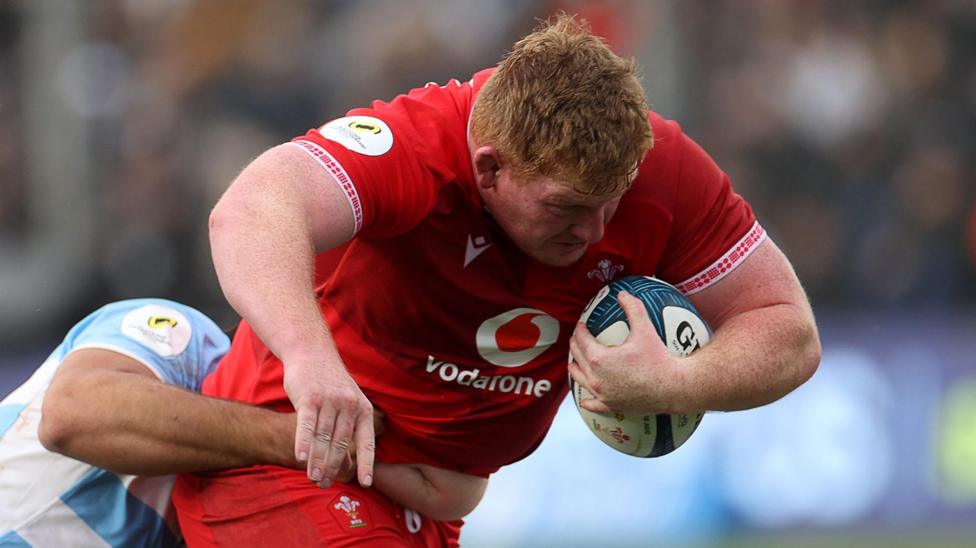
Carre's Rare Honesty Exposes a Wales Side Running Out of Road
Rhys Carre's blunt admission that Wales stepped backward against Argentina reveals a team grappling with uncomfortable truths.
Tuchel's England Gamble: Physicality Over Creativity Is a High-Stakes Bet
Thomas Tuchel is betting everything on physical dominance, sidelining England's creative elite in a move that could define his tenure.

SportPulse Interactive: The New Arena of Fan Engagement
Daily puzzles and guess-games are quietly rewiring how fans consume football and sport.