The Last Dance: 10 Legends Nearing Their Final World Cup Curtain Call
From Messi to Modrić, these icons may be gracing the World Cup stage for the final time in 2026.
When the Clock Runs Out
There is a particular cruelty to World Cup cycles. Every four years, the tournament arrives with ceremony and spectacle, and every four years, it claims a fresh batch of legends. By the time the 2026 edition kicks off across the United States, Mexico, and Canada, some of football's most decorated names will be staring down the barrel of their final appearance on the sport's grandest stage. The question isn't whether the curtain will fall. It's who gets to choose when.
This ranking isn't about sentiment. It's about the collision of age, ambition, and the unforgiving arithmetic of time. Some of these players will arrive in 2026 as diminished versions of themselves, clinging to relevance. Others may never make it at all. And at least one or two might just have one last masterpiece left.
1. Lionel Messi (Argentina) — Age at 2026: 39
The GOAT debate isn't the point here. What matters is that Messi lifted the trophy in Lusail in December 2022, completing the one missing piece of a career that spans eight Ballon d'Or awards and over 800 career goals for club and country. He said after that final that the World Cup was the one thing he needed. He got it.
Could he return in 2026? Technically, yes. He's still playing for Inter Miami, still pulling strings in MLS with the casual brilliance that defined his prime. But Argentina's manager Lionel Scaloni has built a new generation around Julián Álvarez and Enzo Fernández. Messi at 39 would be a ceremonial figure, not the engine. The romantic in all of us wants one last dance. The realist knows the Lusail final was the perfect ending.
Verdict: If Messi plays, it's for the farewell. If he doesn't, no one should be surprised. Either way, 2022 was the climax.
2. Cristiano Ronaldo (Portugal) — Age at 2026: 41
Here's the thing about Cristiano Ronaldo: betting against his willpower has been a losing strategy for two decades. He has five Champions League titles, over 900 career goals, and an ego that refuses to acknowledge biological decline. At the 2022 World Cup in Qatar, he was benched by Fernando Santos for the knockout rounds, and the fallout was seismic.
Now playing in Saudi Arabia with Al Nassr, Ronaldo's fitness levels remain extraordinary for a man his age. But Portugal's squad has evolved. Rafael Leão, Bernardo Silva, Bruno Fernandes, and Diogo Jota form a frontline that doesn't need a 41-year-old focal point. New manager Roberto Martínez reintegrated him, but the landscape is shifting beneath his feet.
Ronaldo has never hidden his desire to play at every World Cup. His record 208 international caps and status as men's international football's all-time leading scorer give him political capital that no Portuguese coach can easily ignore. But there's a difference between being selected and being essential.
The Bottom Line: He'll fight for it. Whether the fight is worth it for Portugal is the real question.
3. Luka Modrić (Croatia) — Age at 2026: 40
The man who dragged Croatia to a World Cup final in 2018 and a third-place finish in 2022 deserves better than a quiet exit. Modrić won the Ballon d'Or in 2018, the only player to break the Messi-Ronaldo duopoly in over a decade. His trophy cabinet at Real Madrid includes six Champions League titles and a legacy as one of the greatest midfielders to ever lace up boots.
At 38, he was still orchestrating Croatia's midfield at Euro 2024, albeit with visibly reduced range. By 2026, the legs that once covered every blade of grass in Russia will have slowed further. Croatia's midfield pipeline, while not overflowing with generational talent, has enough in Lovro Majer and others to transition.
Modrić himself has spoken about international retirement multiple times, only to return each time his country called. The pull of the shirt is strong. But the body doesn't negotiate.
Verdict: His legacy is secure regardless. 2026 would be a bonus, not a necessity.
4. Robert Lewandowski (Poland) — Age at 2026: 37
Lewandowski's international career has been defined by one painful truth: Poland have never been a genuine World Cup contender during his prime. He scored over 80 international goals but has only one World Cup knockout-stage appearance to show for it, and that ended in the group stage exit of 2018.
Now at Barcelona, Lewandowski remains a devastating penalty-box striker, but his game was never built on pace. It was built on movement, timing, and finishing instinct. Those qualities age better than raw speed, but the Poland squad around him is modest. Karol Świderski and others offer support, not salvation.
At 37, Lewandowski could still be Poland's best option. That says as much about the national team's depth as it does about his longevity.
The Bottom Line: The World Cup owes him a proper stage. Poland may not be able to provide one.
5. Kevin De Bruyne (Belgium) — Age at 2026: 35
Belgium's so-called "Golden Generation" peaked at the 2018 World Cup with a third-place finish and has been in managed decline ever since. De Bruyne, the creative heartbeat of that era, has battled persistent hamstring and knee injuries throughout his thirties.
When fit, he remains one of the most devastating passers in world football. His Premier League assist record and ability to unlock any defense with a single through ball are peerless. But fitness has become the operative word. De Bruyne has missed significant stretches of multiple seasons, and Belgium's group-stage exit at the 2022 World Cup felt like a premature funeral for the generation.
By 2026, De Bruyne will be 35. If his body cooperates, he could be the tournament's most creative midfielder. That's a massive if.
Verdict: The talent is still there. The availability is the gamble. Belgium needs a plan B that doesn't depend on him.
6. Neymar (Brazil) — Age at 2026: 34
This might be the most complicated entry on the list. Neymar's talent is beyond reproach. He has over 750 career goals and assists combined for club and country and has been Brazil's talisman for the better part of a decade. But his career has been a study in what-ifs.
The 2014 World Cup ended with a back injury against Colombia. The 2018 edition was marred by theatrical diving controversies. The 2022 tournament saw him equal Pelé's all-time Brazilian scoring record before a quarterfinal exit against Croatia. His move to Al Hilal in Saudi Arabia was followed by a devastating ACL injury in October 2023 that sidelined him for over a year.
Brazil's current squad under Dorival Júnior is being rebuilt around Vinícius Júnior, Rodrygo, and Endrick. Neymar at 34, post-ACL, returning from the Saudi Pro League, faces a steep climb back to relevance.
The Bottom Line: The talent demands inclusion. The body may not allow it. Brazil won't wait forever.
7. Virgil van Dijk (Netherlands) — Age at 2026: 34
Van Dijk has been the standard for elite centre-back play since his £75 million move to Liverpool in 2018. His Champions League triumph in 2019 and near-miss for the Ballon d'Or that same year cemented his status as the world's best defender.
The Netherlands reached the quarterfinals at the 2022 World Cup before falling to Argentina in one of the tournament's most dramatic matches. Van Dijk marshalled the defense admirably, but the Dutch squad's depth has never matched the top nations.
At 34, Van Dijk's reading of the game and aerial dominance should still be intact. Central defenders tend to age more gracefully than outfield players in other positions. The question is whether the Netherlands can build a squad capable of going deeper than the last eight.
Verdict: Van Dijk will still be elite. Whether the Netherlands around him will be is another matter entirely.
8. Antoine Griezmann (France) — Age at 2026: 35
Griezmann announced his retirement from international football in September 2024, ending a France career that included a World Cup winner's medal in 2018 and a runner-up finish in 2022. His 137 caps and role as France's connective tissue in the attacking third made him indispensable across multiple tournament cycles.
His inclusion here is conditional: could Didier Deschamps or his successor coax him back? Griezmann has reversed international retirement decisions before. At Atlético Madrid, he continues to perform at a high level, and France's attacking depth, while extraordinary, lacks his specific profile of intelligent movement and selfless link play.
The Bottom Line: The door is technically closed. But in international football, doors have a habit of creaking open.
9. Mohamed Salah (Egypt) — Age at 2026: 33
Salah's international career carries a particular anguish. Egypt have qualified for only three World Cups in their history, and Salah's lone appearance in 2018 ended in a group-stage exit with a shoulder injury suffered in the Champions League final weeks earlier. He has over 50 international goals but no World Cup moments to speak of.
At Liverpool (or wherever he lands next), Salah remains devastatingly effective. His Premier League goal record and consistency across multiple seasons place him among the best forwards of his generation. Egypt's qualification for 2026 is not guaranteed, and even if they make it, the squad's overall quality limits what Salah can achieve on the biggest stage.
Verdict: Salah deserves a proper World Cup. Whether Egyptian football can deliver one is the enduring frustration.
10. Harry Kane (England) — Age at 2026: 32
The youngest entry on this list, and the one with the most realistic shot at a swansong performance. Kane is England's all-time leading scorer with over 65 international goals and has been the Three Lions' captain through their most successful modern era: a World Cup semifinal in 2018, a Euro final in 2021, and a World Cup quarterfinal exit to France in 2022.
Now at Bayern Munich, Kane is in the prime of his career, having scored 44 goals in his debut Bundesliga season. At 32, he'll still be at peak effectiveness in 2026. The real question is whether this is his last realistic chance at lifting the trophy, and whether England's squad, bolstered by Jude Bellingham, Phil Foden, and Bukayo Saka, can finally clear the final hurdle.
The Bottom Line: Kane won't be diminished in 2026. He'll be desperate. That might be exactly what England needs.
The Bigger Picture
World Cup farewells are rarely scripted. Zinedine Zidane headbutted his way out of football. Andrea Pirlo walked away silently after Italy's 2014 group-stage exit. Xavi Hernández never got the goodbye he deserved. The tournament doesn't care about narrative closure.
What makes this list poignant isn't individual brilliance. It's the collective weight. A generation that dominated the 2010s and early 2020s is fading, and the 2026 tournament will be the last time many of these names share a pitch with the world watching. The next wave is already here: Bellingham, Vinícius, Lamine Yamal, Florian Wirtz. But there's something irreplaceable about watching a legend know it's the end and play like it anyway.
The clock is ticking. For some of these players, it's already run out.
Editorial Integrity
This is an original SportPulse article written by our editorial team. All content is independently researched, written, and reviewed by our writers and editors before publication. We do not publish copied, aggregated, or syndicated content.
SportPulse is committed to original sports journalism. Read our editorial policy or contact us with any questions.
More Like This
All football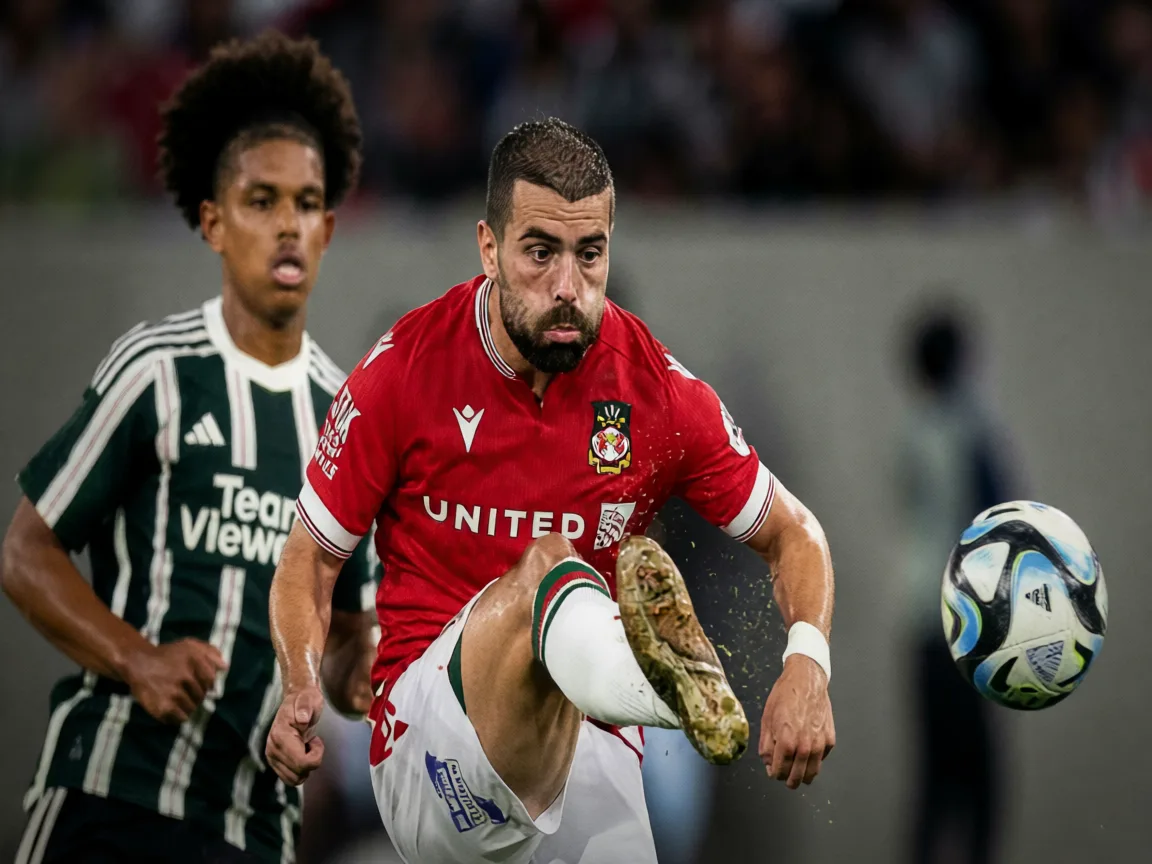
Wrexham's Helsinki Date With United Exposes Pre-Season's Awkward Truths
Parkinson's Wrexham face a depleted Manchester United in Helsinki, revealing the strange realities of mid-season commercial football.
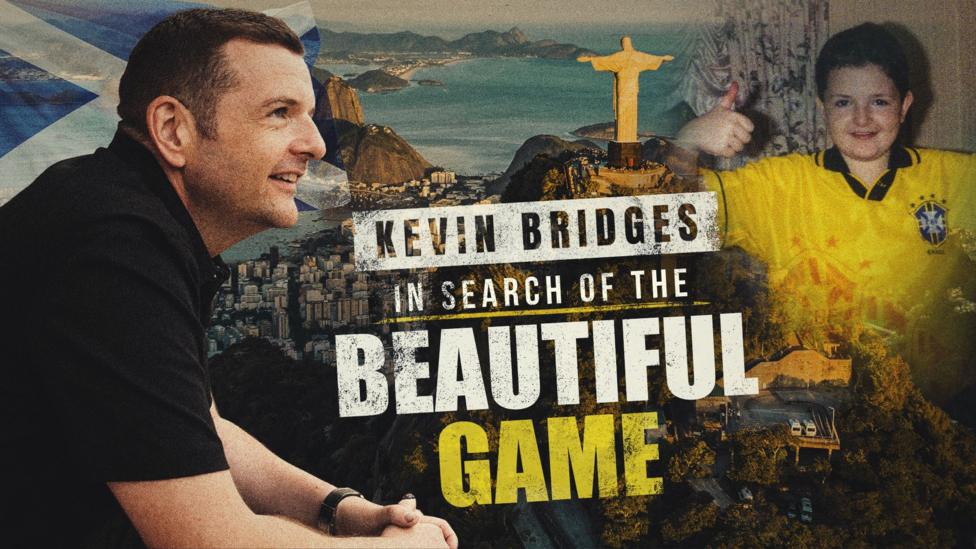
Kevin Bridges Asks the Question Every Football Fan Fears to Answer
The Scottish comedian's journey to find football's soul strikes a nerve in an era of data-driven pragmatism.
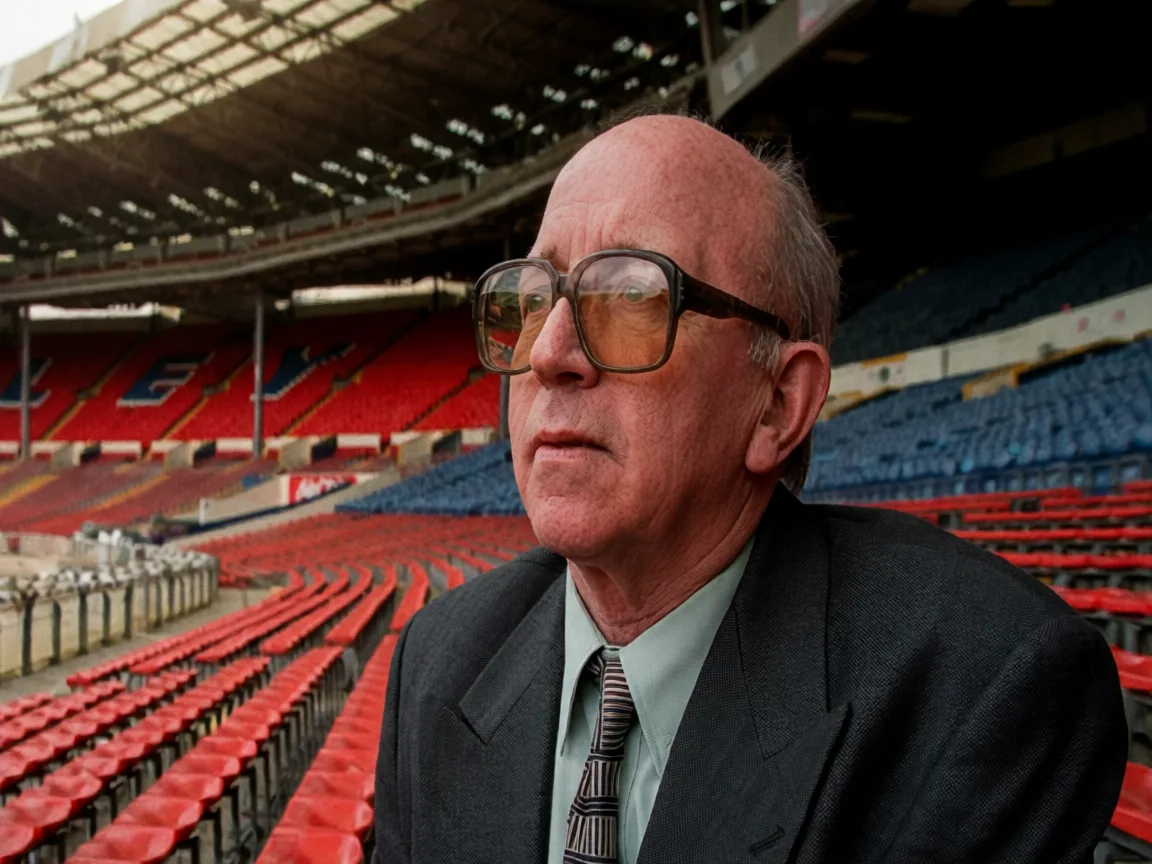
Coroner Orders Inquest Into Nobby Stiles Death Over Repeated Head Trauma
A coroner has ruled an inquest is needed into Nobby Stiles' death after finding injuries consistent with repeated head trauma from football.