The Body Remembers What Language Erases
A personal essay unravels the gap between the abortion debate's abstractions and the raw, unforgettable violence of the body.
The Slogans Stop at the Skin
There is a particular kind of violence that political language does to experience. It takes something chaotic and full-bodied and compresses it into a position. Pro-choice. Pro-life. As if the interior of a clinic waiting room, the dampness of your own palms, the anaesthesia dragging you under, the blood soaking through pad after pad for days, could ever be reduced to a bumper sticker.
The author of a new deeply personal essay for The Guardian confronts this gap head-on. She describes having been so habituated to defending abortion as an abstract right, as privacy, as healthcare, as autonomy, that when she found herself fasting for hours, clammy and light-headed, hands freezing in a waiting room, she was blindsided. Not by the decision. By the body.
"It did not feel like a choice, though of course, in some formal and factual way, I did choose to have an abortion," she writes. "It's just that the choice seemed to be the least important and least interesting part of the whole experience."
That sentence detonates something. It names what most public discourse about abortion refuses to name: that the experience itself, the physical reckoning, is not a metaphor. It is not a political position walking around in a body. It is a body doing what bodies do when something fundamental shifts inside them. And it hurts.
What the Body Knows
The essay draws on the work of French Nobel laureate Annie Ernaux, who wrote about her own abortion in 1960s France before legalisation. Ernaux describes the experience as something that "sweeps through the body," language that refuses to flinch from the sensory reality. Ernaux's memoir Happening does what the abortion debate, as it is conducted in legislatures and on cable news, structurally cannot do: it places the woman's body at the centre of the story. Not as evidence. Not as argument. As experience.
"There was no real plot – but feeling."
The essayist confesses she could not translate her physical experience easily into a feminist politics, into a slogan, into something she could shout. The waves of contracting pain, the vomit from the anaesthesia, the days of cramping and bleeding, the cold sweat, none of it condensed neatly into the kind of testimony that circulates on social media, "piled up with the others to make some kind of aggrieved claim."
This is not a rejection of advocacy. It is something more uncomfortable: an admission that the most honest account of what happened to her did not serve any political purpose at all. It was not useful. It was not inspirational. It was just true.
The Severing
The essay's most penetrating argument is structural. The debate itself, its very architecture, severs women from history. The language of life versus choice, of rights versus morality, creates a framework in which women are either heroines exercising autonomy or victims of circumstance, mothers or monsters. There is no room in that binary for the woman who simply went through something painful and bodily and came out the other side unsure how to talk about it.
The piece suggests that this severing is not accidental. It is the mechanism by which the debate sustains itself. If you allow women to describe what actually happened to them, without demanding those descriptions serve a political end, the neatness of the argument collapses. You are left with something messier, something that does not reduce to a sign at a march.
"I don't want to forget my abortion and I don't want to forget theirs," the author writes. That word, haunting, surfaces in the essay's title: "It is comforting to be haunted."
The claim is startling. Haunting is usually understood as something to be escaped, resolved, exorcised. But the author reframes it. To be haunted is to remember. To refuse the cultural pressure to either mythologise the experience into empowerment or bury it into silence. The ghosts are the women who went through this before her, under worse conditions, with fewer options, and whose stories were never told because they did not fit the narrative machinery of either side.
Pain Is Not a Position
There is something radical in the refusal to make pain politically legible. We live in a culture that demands narratives. Every experience must become a story, and every story must have a moral, and every moral must belong to a cause. The essay resists this. It says: this happened to my body, and it hurt, and I am still thinking about it, and I do not owe you a lesson.
"I thought having an abortion would feel like the exercise of the hard-won autonomy of generations of feminists before me. But mostly it just hurt."
That honesty cuts in multiple directions. It does not validate the anti-abortion movement's framing of abortion as trauma, because the essayist chose this and does not regret it. But it also does not validate the pro-choice movement's tendency to speak about abortion in the sterile language of rights and access, as though the experience itself is a footnote to the principle.
The piece occupies a third space. It says: you can choose something, affirm it, defend it for others, and still be staggered by what it does to you. Those two things are not contradictions. They are the texture of being a person who lives inside a body that does not care about your politics.
History Lives in the Body
What lingers after reading is the essay's quiet insistence that the body is a historical document. Every woman who has fasted in a waiting room, who has bled through sheets, who has swallowed medication and waited for the cramping to start, carries something that the public debate cannot metabolise. Not trauma necessarily, not regret, not triumph. Just the residue of having been there.
The author's decision to write about this, to refuse both silence and sloganeering, is itself a form of remembrance. She is doing for others what Ernaux did for her: insisting that the experience exists, that it happened inside a real body, that it belongs to history even if history does not know what to do with it.
"It is comforting to be haunted" is not a plea for pity. It is a declaration that forgetting would be the greater violence. The ghosts do not demand resolution. They demand witness.
The Debate Continues. The Body Endures.
As abortion remains among the most polarising issues across the globe, from the United States, where Roe v. Wade was overturned in 2022, to countries in Europe and Latin America navigating their own legislative battles, this essay arrives as a corrective. Not to the politics. To the language.
The body does not have a position. It has experiences. And those experiences, if we are honest enough to sit with them, are far more complicated, far more painful, and far more human than any ballot measure or court ruling could ever capture.
The essayist does not offer a resolution. She offers presence. She was there. It hurt. She remembers. And in that remembering, she reaches back through time to every woman who went through the same thing in silence, and says: I see you. I will not forget.
That may be the most political act of all.
Editorial Integrity
This is an original SportPulse article written by our editorial team. All content is independently researched, written, and reviewed by our writers and editors before publication. We do not publish copied, aggregated, or syndicated content.
SportPulse is committed to original sports journalism. Read our editorial policy or contact us with any questions.
More Like This
All long-reads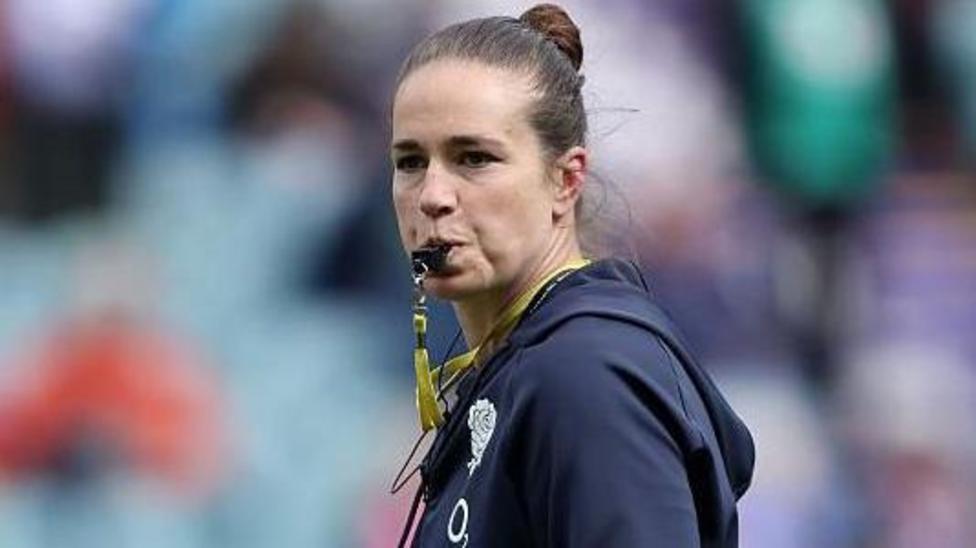
Scarratt Goes Permanent as Red Roses Coaching Staff Reshapes
England's all-time leading points scorer Emily Scarratt commits long-term future to the Red Roses coaching team.
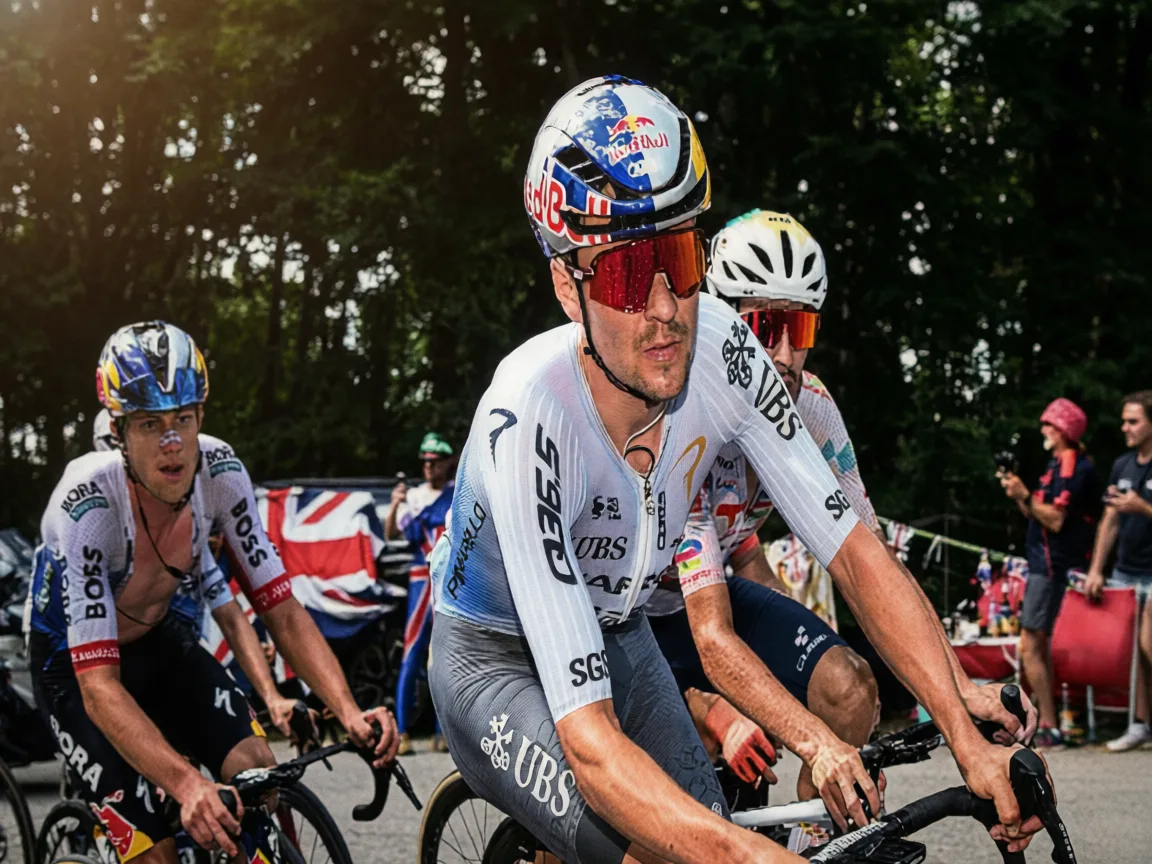
Pidcock's Bold Gamble Pays Off as Schmid Steals Stage 13 Glory
Tom Pidcock's audacious breakaway ride rockets him to fourth overall as Mauro Schmid claims a stunning stage victory.
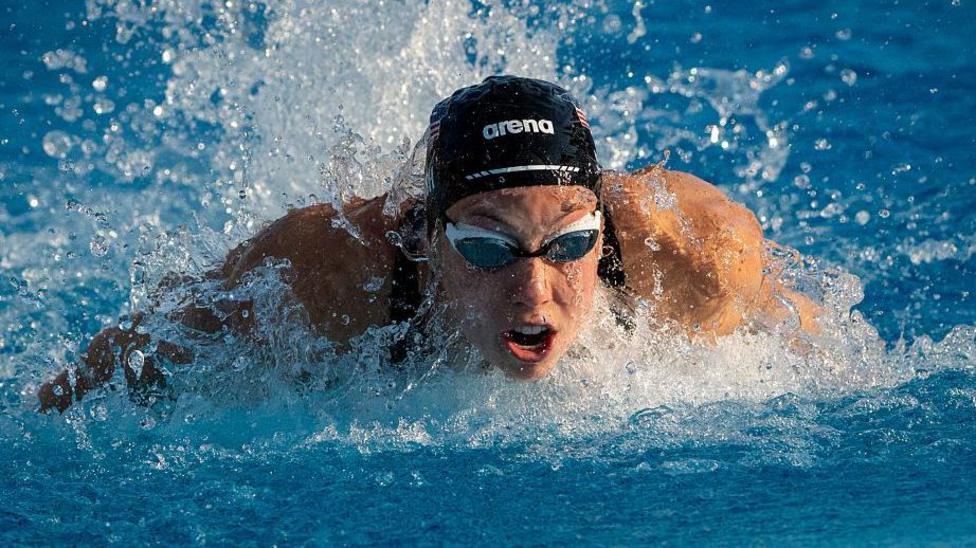
Walsh Reclaims 50m Freestyle World Record From Training Partner Douglass
Gretchen Walsh breaks Kate Douglass's 50m freestyle record by 0.04 seconds, continuing an extraordinary nine-day cycle of American dominance.