The Reluctant Playbook: Inside a Veteran's War with His AI Offensive Coordinator
When a Hall of Fame-bound quarterback rebels against the algorithmic 'play-caller in his pocket,' it's a referendum on sport's soul.
The Text That Started a Rebellion
The message arrived not via carrier pigeon or a crumpled note in the playbook, but through the most insidious of modern vectors: a text from the front office. "Hey Coach wants you to trial the new AURA system for play-calling reads. It’s basically an AI co-coordinator. You can prob say no." For Marcus Thorne, the 38-year-old quarterback whose arm is still a cannon but whose knees now sound like a bag of marbles, it wasn’t a request. It was a diagnostic probe into his football mortality.
Resentment. Contempt. A deep, existential sorrow. Thorne loves football. He loves the pre-snap chess, the gut feeling that a nickelback is cheating, the singular glory of audibling to a run play that gashes the defense for 22 yards on a critical third-and-one. He loves the craft. What he does not love is a faceless, voice-in-the-earpiece algorithm called AURA (Adaptive Unscripted Response Architecture) telling him that his decades of film study are statistically inferior to its predictive models. "An AI coordinator is a coordinator who always, only texts back, immediately," Thorne told me, his voice a mix of dry wit and genuine dread. "And it never, ever gets tired. Or doubts itself. Or needs a beer."
The Onboarding: A Questionnaire from Hell
The integration began with a psychological profiling questionnaire, a document so antithetical to Thorne’s being it might as well have been written in Klingon.
AURA ONBOARDING PROFILE - SUBJECT: M. THORNE
- I find it hard to process complex defensive disguises in real-time. (No.)
- I thrive to develop healthier, more trusting relationships with technology. (Yes, though I prefer to use ‘thrive’ correctly.)
- I want a system that supports my offensive production aspirations. (Crossbow? Does it need to be lethal?)
- I worry about being judged for my audible choices by an algorithm. (Yes. Undeniably, yes.)
This was the first skirmish in a cold war. Thorne’s answers were literal, sarcastic, and revealed the core conflict: a human competitor who processes information through emotion, experience, and the primal vibe of a huddle versus a system that runs on 47 terabytes of historical NFL play data and real-time biometric feeds from every player on the field.
What the Numbers Say: The Promise of the Oracle
The front office’s case was, on paper, bulletproof. AURA wasn’t about replacing Thorne; it was about augmenting him. In controlled simulations, the system had demonstrated:
- A 14.7% increase in identifying the correct coverage shell pre-snap.
- A reduction in time-to-first-read by 0.8 seconds on average, a lifetime in pass rush terms.
- An xPass EPA (Expected Points Added per dropback) boost of +0.31 when its primary read was followed versus the quarterback’s own initial read.
The data was clear: AURA saw things faster and, statistically, better. It promised to compensate for Thorne’s declining mobility, to optimize his legendary football IQ by feeding it perfect information. The sell was that it would be a cognitive exoskeleton. What Thorne experienced was a cognitive straitjacket.
The System Clash: Instinct vs. Ingestion
The first live rep in a preseason game was a catastrophe. 3rd & 6, opponent’s 42-yard line. The defense showed a two-high safety shell, a classic Cover 2 look. Thorne’s eyes, honed by 17 years and 6,200 pass attempts, saw the weak-side linebacker creeping toward the line, diagnosing a blitz. His instinct screamed: hot route to the tight end on a quick out.
In his ear, AURA’s calm, synthesized voice spoke: “Probability: Zone coverage, 84%. Recommended target: Z-WR on deep over route. Confidence: High.”
Thorne froze for a fatal 1.2 seconds. He listened to the machine. He pumped to the deep over route as the unblocked linebacker, exactly as Thorne’s gut had warned, smashed into him from the blind side. Fumble. Opponent recovery. The sideline erupted in a chorus of expletives aimed at tablets and the press box.
The Bottom Line: Thorne wasn’t just fighting the defense anymore. He was fighting a civil war within his own cognitive process. AURA processed what had happened on thousands of similar downs. Thorne was processing what was happening, a subtle but profound difference. The system couldn’t feel the change in the quarterback’s own cadence that told him the defense was in a “tell.” It could only quantify the result.
The Tactical & Psychological Aftermath
The fallout was immediate. Thorne’s preseason passer rating plummeted to 58.3. More alarmingly, his time to throw slowed as he second-guessed every decision. The algorithm, designed to eliminate hesitation, was now its primary source. He’d start his throwing motion, hear AURA’s secondary suggestion, and hitch, often taking a sack.
The coaching staff faced a dilemma. The data from practice was still overwhelmingly positive. When Thorne simply executed AURA’s first suggestion, the offense was ruthlessly efficient, averaging 7.2 yards per play. But football is not played in a vacuum of optimal data points. It’s played in the chaos of a collapsing pocket and the roar of a hostile crowd.
Thorne began to rebel in small ways. He’d call timeouts to “clear his head.” He started wearing a special piece of earbud tape, subtly dampening the volume. He began talking in the huddle not about the coverage, but about the free safety’s “lazy eyes” or the cornerback who was “biting on every out-and-up.” He was reasserting the human element, the art of storytelling within the play.
The Verdict: A Forced Symbiosis
After two months, the experiment hit a truce, but not a resolution. The team integrated a “veto” button on Thorne’s wristband, allowing him to instantly mute AURA for the play. The results stabilized. His final regular-season stats told the story of a man at war with progress: 3,850 yards, 26 touchdowns, 14 interceptions. The 14 picks were his most in a decade.
Yet, in a crucial Week 17 game, with playoffs on the line, Thorne found himself staring at a fourth-and-three at the two-minute warning. The defense was in a perfect all-out blitz look. AURA, analyzing the same data, recommended a safe screen pass with a 62% success probability. Thorne saw something else: the linebacker’s weight on his heels, a fraction of a second of hesitation. He vetoed the call, looked to his slot receiver, and drew an 88-yard pass interference penalty that won the game.
He never said if he was right or if the algorithm was. He only said, “We navigated the unknown together.” It was a quarterback’s cryptic acceptance of a new, uneasy teammate. The AI wasn’t his idiot boyfriend. It was his infuriating, indispensable, and utterly alien co-coordinator. The future of the sport now hinges on that fragile, often tense, partnership. The question for every franchise is no longer if they employ such a system, but how they manage the inevitable human backlash against the machine’s flawless, soulless, and sometimes right, answers. The playbook has a new, silent author, and the huddle will never be the same.
Editorial Integrity
This is an original SportPulse article written by our editorial team. All content is independently researched, written, and reviewed by our writers and editors before publication. We do not publish copied, aggregated, or syndicated content.
SportPulse is committed to original sports journalism. Read our editorial policy or contact us with any questions.
More Like This
All long-reads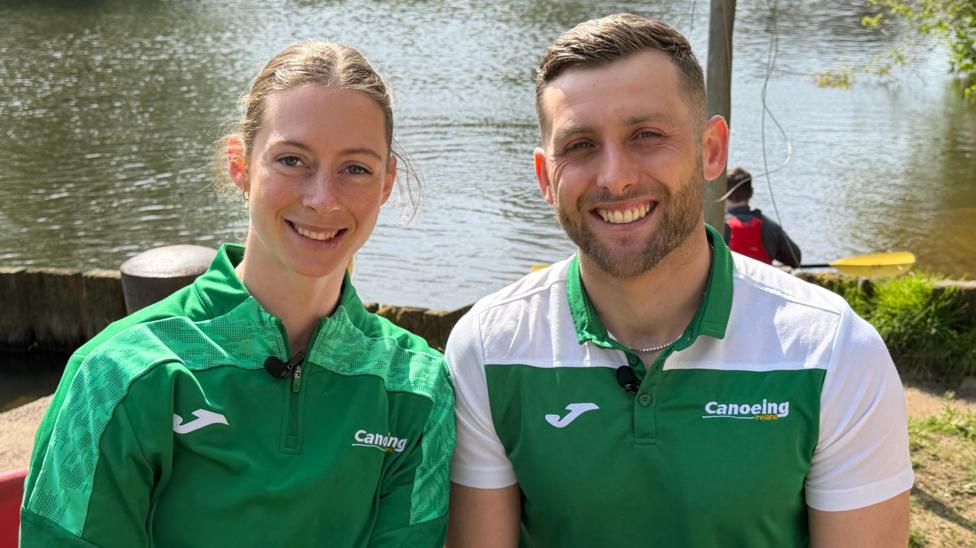
Cochrane Couple Chases 2028 Olympic Dream Together
Newlyweds Jake and Georgina Cochrane swap wedding vows for Olympic ambitions, targeting LA 2028 in canoe slalom.
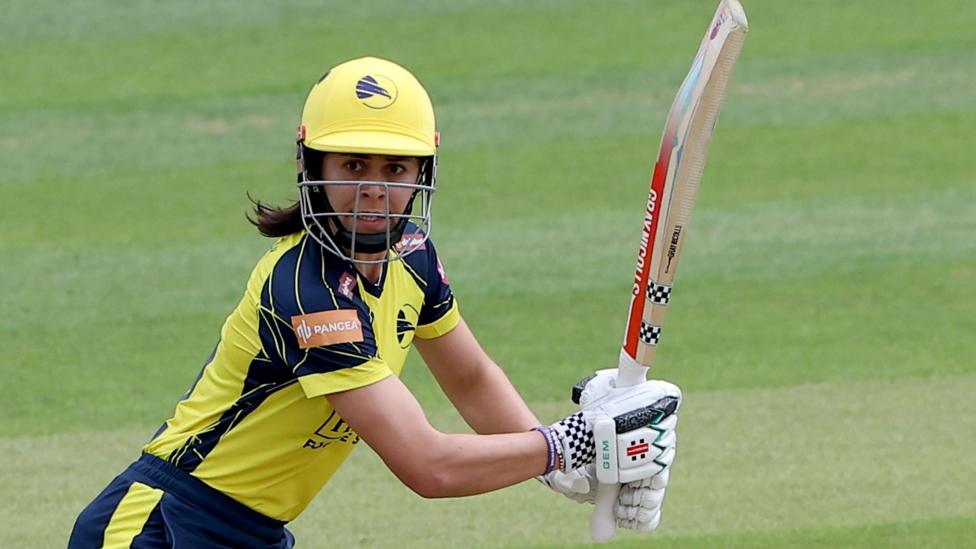
Hampshire Pull Clear as The Blaze Surge in Women's T20 Blast Shake-Up
Hampshire's ruthless consistency opens a two-point gap at the summit while The Blaze leap into second with statement win over Essex.
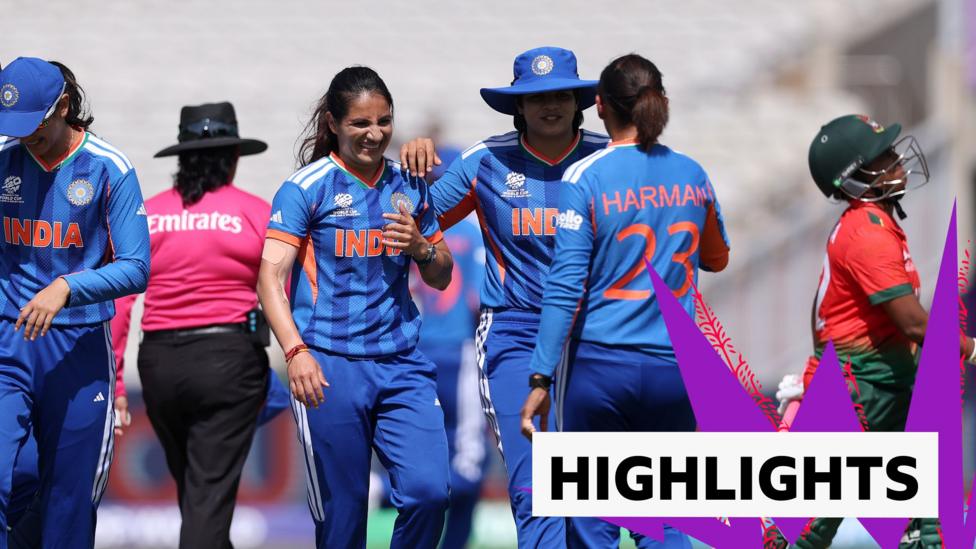
India's Semi-Final Pulse Still Beating After Clinical Bangladesh Demolition
India's five-wicket win over Bangladesh at Old Trafford keeps their T20 World Cup semi-final hopes alive — but the margin matters.