Thomas Frank's Tottenham Collapse Was a Tactical Mismatch
Thomas Frank's Tottenham tenure ended after eight months, undone by an irreconcilable clash between his **4-3-3** pragmatism and the club's demanding identity.
When Thomas Frank walked through the doors of Hotspur Way, the appointment carried the weight of continental logic. Here was a coach who had engineered Brentford’s ascent with structural rigor, transforming a modest squad into a stable ** Premier League** entity through disciplined mid-blocks and surgical transitions. Yet just eight months later, the Frank experiment lies in ruins. His dismissal is not merely a failure of results, but a stark illustration of what happens when a manager's tactical worldview collides with an institution's entrenched identity.
The initial tactical tone of Frank's tenure was immediately recognizable to those who studied his work in West London. He sought to transplant the 4-3-3 shape that had defined his Brentford Overachievers, prioritizing defensive轴向compactness and vertical passing lanes. The objective was clear: stabilize a Tottenham side that had hemorrhaged space under previous regimes, then construct a counter-attacking framework capable of punishing opposition possession. It was a philosophy rooted in控制 the space behind the ball rather than dominating the space in front of it.
However, the Premier League's tactical scaffolding shifts rapidly, and Frank's structural rigidity proved fatal. Tottenham’s squad, assembled at vast expense over multiple windows, was built for a different paradigm. The roster was stacked with technicians comfortable in possession-based phases and high-terrain pressing, not the deep-lying mid-block Frank required. Asking creative midfielders to anchor a low defensive shell was akin to deploying a Formula 1 car on a rally circuit. The tools were precision instruments; the application demanded sledgehammers.
The friction between profile and philosophy manifested in a chronic inability to progress the ball through the thirds. Frank’s 4-3-3 frequently morphed into a rigid 4-5-1 in defensive phases, with the wide tucking in to congest central corridors. This surrendered the wide zones entirely, allowing opposition fullbacks unopposed territory to deliver crosses or progress the ball into the final third. The pressing triggers were delayed, the spatial awareness disjointed, and Tottenham’s defensive record plummeted as a direct consequence of leaving backdoor channels permanently ajar.
Tactical Shift: The Moment the System Fractured
Every doomed tenure possesses a structural tipping point, a match where the tactical thesis is definitively disproved on the grass. For Frank, this arrived during a grim winter period where the team's mid-block wasn't just bypassed, it was systematically dismantled. Opponents identified a specific vulnerability: Tottenham’s reluctance to commit bodies to the first press meant rivals could cycle possession unbothered around the halfway line, drawing the compact shape toward the ball before switching play into the vacated wide corridors.
The tactical shift that broke the system was opponents' realization that they did not need to play through Tottenham; they merely needed to play around the block. Without a competent ** Gegenpressing** mechanism to recover the ball immediately after turnovers, Frank’s men were forced into perpetual retreat. The counter-attack, the very lifeblood of his Brentford system, became neutered. The team ranked in the bottom quartile for fast-break sequences, a damning statistic for a coach whose entire methodology relied on exploiting transitional moments.
Furthermore, the vertical passing structure Frank demanded lacked the necessary footholds in the inside channels. The number 6 was frequently isolated against aggressive opposition presses, while the number 8s were stranded between the distress of defensive tracking and the requirement of providing forward passing options. It created a tactical chasm in the center of the pitch, a dead zone where possession went to die.
The Statistical Collapse
- Fast-break sequences ranked in the bottom quartile of the Premier League
- High turnovers per 90 minutes dropped by over 30% compared to the previous season
- Passes per defensive action (PPDA) regressed to 14.2, indicating a passive defensive shell
- Points per game plummeted to 0.95, a figure inconsistent with top-half survival
The Fan Disconnect: A Crisis of Epistemology
While the tactical dissonance was fatal on the pitch, the collapse of the stands proved equally terminal for Frank's prospects. Tottenham Hotspur Stadium demands a specific aesthetic; it is a crowd weaned on the proactive, front-foot ideologies of Mauricio Pochettino and the likes of Ange Postecoglou. They tolerate defensive vulnerability if it is born from aggressive attacking ambition. They do not, however, forgive defensive vulnerability born from conservative retreat.
The atmosphere curdled as the football grew more passive. Fans reading the game through the lens of pressing intensity and territorial dominance witnessed a team actively surrendering the initiative. The mid-block became a visual metaphor for a lack of ambition, a weekly surrendering of the club's spiritual territory. Frank's post-match attempts to explain the structural necessity of dropping deep fell on deaf ears. In North London, pragmatism is not viewed as a virtue; it is perceived as a capitulation.
"The players are giving everything for the shirt, but the message isn't landing. We are trying to build a structure that protects us, but when the belief leaves the stadium, it leaves the bodies on the grass as well."
This reported sentiment from Frank in the final weeks laid bare the epistemological divide. The manager was speaking the language of structural preservation; the fanbase was screaming the language of progressive conquest. There was no bridging that gap.
The Bigger Picture: Systemic Incompatibility
Frank's failure at Tottenham underscores a broader disease in modern football hiring: the myth of the overachieving mid-table coach. Brentford's success was a product of a holistic club ecosystem tailored to Frank's specificity—smart recruitment, set-piece obsession, and an acceptance of low possession numbers. Tottenham presented an entirely different environment, equipped with players whose technical profiles were irreconcilable with Frank's pragmatism.
The eight-month tenure serves as a case study in the perils of transplanting a tactical system without the requisite organic matériel. You cannot implement a 4-3-3 mid-block when your forwards are conditioned to press high, your midfielders are trained to operate in the pockets rather than the shadow of the defensive line, and your center-backs are comfortable pushing up to the halfway line rather than retreating to the edge of the box.
The board must now confront the wreckage of another failed appointment. The next step is not merely identifying a talented coach, but conducting a ruthless audit of the squad's inherent tactical DNA. Hiring a philosophically opposed manager to the existing roster is an exercise in expensive futility. The squad requires a coach who speaks fluent possession dominance, a manager whose pressing triggers are synchronized with the instincts of the attackers already on the books.
What Comes Next: The Rebuild
Looking ahead to the upcoming fixtures and the remainder of the season, Tottenham's immediate priority is halting the tactical entropy. The club faces a critical run of games against sides who will ruthlessly exploit interim vulnerability. The new appointment must immediately reinstall the ** Gegenpressing** mechanisms that have lain dormant since Frank's arrival.
The watchword for the next era is synchronization. The next manager must align the club's vertical ambition with a defensive structure that does not require sacrificing the high line. Until Tottenham reconcile their squad profile with their tactical application, the cycle of short tenures and philosophical clashes will continue unabated.
Editorial Integrity
This is an original SportPulse article written by our editorial team. All content is independently researched, written, and reviewed by our writers and editors before publication. We do not publish copied, aggregated, or syndicated content.
SportPulse is committed to original sports journalism. Read our editorial policy or contact us with any questions.
More Like This
All football
Arsenal's Double Newcastle Swoop Signals Ruthless Midfield Upgrade
Arsenal's exploratory talks for Bruno Guimaraes and Sandro Tonali reveal a calculated strategy to weaponize PSR chaos and solve their final-third stagnation.

Austin FC Academy Under FBI and Police Investigation Over Abuse Allegations
Multiple academy families reported concerns to the club, triggering joint inquiries from Austin police and the FBI into player interactions.
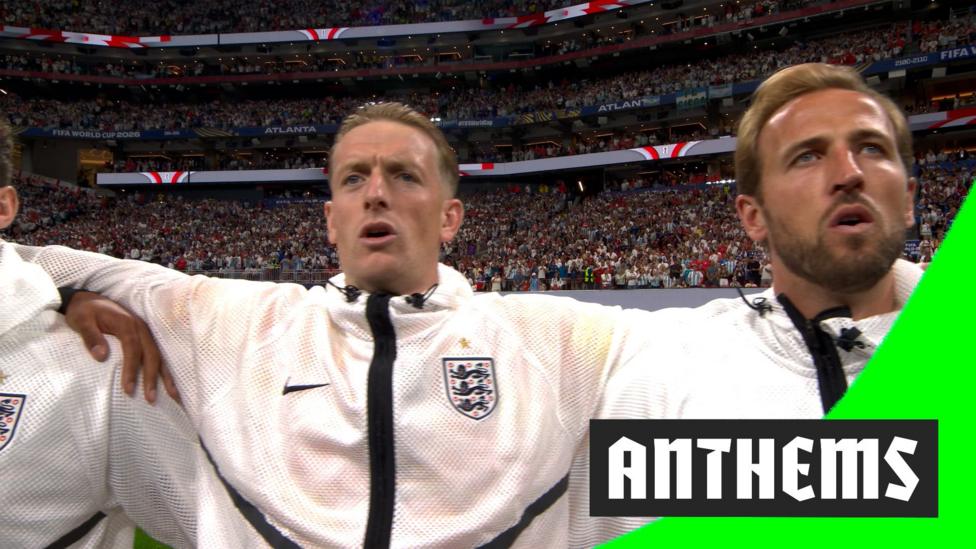
Atlanta Roar Drowns Anthems as England Face Argentina in World Cup Semi
A deafening Atlanta Stadium soundtrack swallowed both national anthems before England and Argentina collided for a place in the 2026 World Cup final.