The Long Climb: Toby Samuel Eyes Tennis's Most Exclusive Club
British tennis player Toby Samuel is chasing the top 100 — a threshold that has humbled generations of hopefuls before him.
There is a number in professional tennis that functions less like a ranking and more like a locked door. It is not the top 50, where prize money flows freely and main-draw Grand Slam spots are virtually guaranteed. It is not the top 200, where the faintest glimmers of a sustainable career first appear. It is 100. The men's top 100. And British player Toby Samuel has just announced he intends to walk through it.
It is a deceptively simple declaration. No timeline attached. No caveats. Just a young man from a country that has produced exactly a handful of consistent top-100 players in the last two decades, looking at one of the most brutal meritocracies in sport and saying: that is where I belong.
The question worth asking is not whether Samuel wants it. Every player ranked between 150 and 500 on the ATP Tour wants it. The question is what separates the ones who get there from the thousands who spend entire careers pressing their faces against the glass.
Why the Top 100 Is Tennis's Real Threshold
The ATP rankings are a pyramid so steep it makes football's promotion-relegation ladder look leisurely. There are roughly 1,500 players who hold an ATP ranking at any given time. Of those, fewer than 100 can call themselves top-100 professionals. The gap between player number 90 and player number 180 is not a gap. It is a canyon.
For a player outside the top 100, the weekly grind is a merciless cycle of Challenger events, qualifying rounds at ATP 250 tournaments, and the constant mathematics of whether the next flight, the next hotel, the next string job can be justified by the prize money available. The financial reality is stark. Players ranked outside the top 100 often spend more on travel and coaching than they earn in a season. Tennis does not care about your potential. It cares about your results on Monday morning.
Break into the top 100, and the landscape shifts overnight. Main draws at ATP events open up. Wildcard allocations for home tournaments become more likely. Sponsors who previously ignored your emails start returning calls. For a British player, cracking that threshold could mean automatic entry into the Wimbledon main draw without needing to navigate three gruelling rounds of qualifying on the unforgiving grass of Roehampton.
Samuel knows this. Every British player knows this. The top 100 is not just a ranking. It is a passport.
The British Context: A Nation Waiting for Its Next Contender
British tennis has lived in the shadow of one man for the better part of two decades. Andy Murray carried the weight of an entire nation's expectations, reaching world number one, winning three Grand Slam titles, and redefining what British tennis could look like. Before Murray, Tim Henman gave a generation of fans someone to believe in without ever quite delivering the ultimate prize.
The post-Murray era has been quieter, harder, more anxious. Cameron Norrie broke into the top 10 in 2022, reaching the Wimbledon semifinals in a run that briefly electrified the British game. Jack Draper has emerged as the most exciting young talent in the country, his explosive left-handed game suggesting a ceiling that could stretch well beyond the top 20. Dan Evans has been a gritty, streetwise presence, keeping his ranking in respectable territory through craft and guile rather than raw firepower.
But beyond those names, the pipeline has thinned. The Lawn Tennis Association has invested hundreds of millions of pounds in facilities, coaching programs, and player development over the past two decades. The returns have been uneven. For every Draper who looks like a future Grand Slam contender, there are dozens of talented youngsters who stall somewhere between 200 and 400 in the world, unable to make the final jump.
Samuel's stated ambition places him squarely in this conversation. He is not just chasing a personal dream. He is trying to prove that the British development system can still produce players capable of sustaining themselves at the highest level.
What It Takes to Make the Leap
The journey from the fringes of professional tennis into the top 100 is not linear. It is a series of plateaus, breakthroughs, and setbacks that test every dimension of a player's character.
Physically, the demands are punishing. The ATP calendar runs nearly 11 months of the year, across every surface and every time zone. Players outside the top 100 rarely have the luxury of choosing their schedule. They go where the points are available, which often means playing four or five consecutive weeks at Challenger events on different continents, their bodies accumulating fatigue while their opponents rotate fresh.
Tactically, the gap between a top-200 player and a top-100 player is often not about shot-making. It is about decision-making under pressure. It is about the ability to close out tight sets, to convert break points at critical moments, to manage the emotional architecture of a three-set match against an equally desperate opponent. The margins are microscopic. A single service game can be the difference between earning 25 ranking points and earning nothing.
Mentally, the challenge may be the most formidable of all. Tennis is a solitary sport played in public. There is no teammate to share the burden, no coach shouting instructions from a sideline. When things go wrong, and they always go wrong at some point, the player is alone with their thoughts in front of thousands of spectators and a global television audience.
"The difference between 120 and 80 is not talent. Everyone at that level can hit the ball. The difference is who can hold their nerve at 5-5 in the third set, week after week, when the points actually matter." — A common refrain among coaches who have guided players through the top-100 barrier.
Samuel's willingness to publicly state his target suggests a psychological readiness that many players at his level lack. There is a vulnerability in ambition stated aloud. It invites scrutiny. It invites pressure. But it also creates accountability, a line in the sand that transforms a vague aspiration into a concrete mission.
Career by Numbers
The full statistical portrait of Samuel's career trajectory is still being written, but the broader numbers of the top-100 chase are instructive:
- A player needs approximately 700 to 900 ATP ranking points to sit inside the top 100, depending on the depth of the field at any given moment
- Challenger titles typically yield between 80 and 125 points, meaning a player likely needs at least six to eight titles plus consistent deep runs at higher-level events over a rolling 12-month period
- The average age of players breaking into the top 100 for the first time has hovered around 22 to 24 years old in recent seasons, though late bloomers are not uncommon
- Prize money for a player hovering around rank 100 typically falls in the range of $250,000 to $400,000 annually before taxes and expenses
- Only about 15 to 20 new faces crack the top 100 in any given calendar year, meaning the club is exclusive and constantly rotating
The Road Ahead
Samuel's declaration is the beginning of a chapter, not the conclusion of one. The ATP Tour is littered with talented players who stated their intentions loudly and were quietly absorbed back into the anonymity of the Challenger circuit. The difference between aspiration and achievement in professional tennis is measured in thousands of hours of practice, hundreds of matches, and an almost irrational refusal to accept that the odds are stacked against you.
But there is something to be said for the act of naming the target. British tennis needs more players who believe they belong in the sport's upper tier, not as qualifiers hoping for a lucky draw, but as main-draw regulars capable of winning matches against anyone on any given day. The path Murray blazed, Norrie validated, and Draper is now charging along remains open. It is narrow and punishing, but it is open.
Toby Samuel has told the world where he wants to go. Now comes the part that matters: the quiet, unglamorous, relentless work of getting there. In tennis, the scoreboard does not care about your ambitions. It only cares about your results.
The climb starts now.
Editorial Integrity
This is an original SportPulse article written by our editorial team. All content is independently researched, written, and reviewed by our writers and editors before publication. We do not publish copied, aggregated, or syndicated content.
SportPulse is committed to original sports journalism. Read our editorial policy or contact us with any questions.
More Like This
All tennis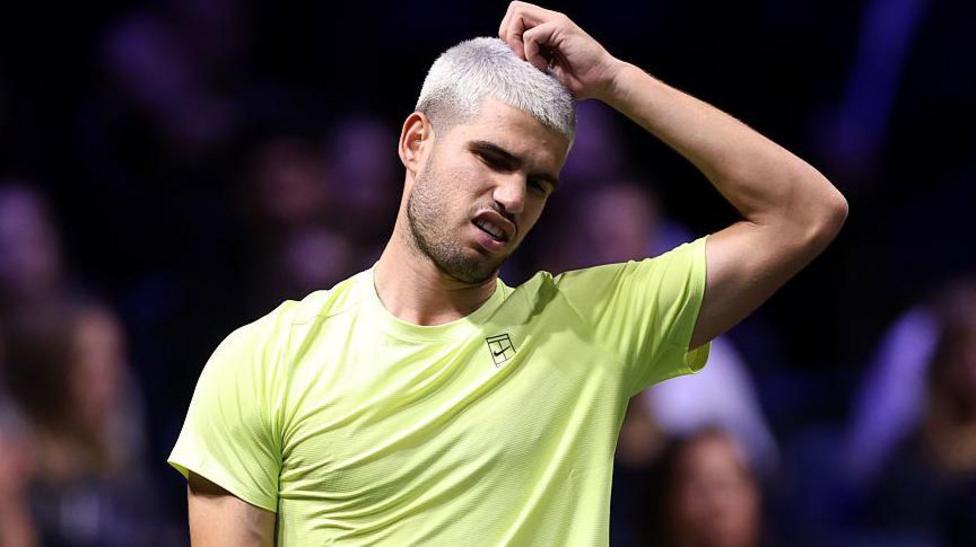
Alcaraz Withdraws from Cincinnati as Wrist Recovery Stalls
Carlos Alcaraz's wrist issues resurface, knocking him out of Cincinnati and clouding his US Open timeline.

Evert v Navratilova: The Rivalry That Built Modern Tennis
A new Netflix documentary revisits the defining rivalry of women's tennis, arriving just as Wimbledon reminds us what greatness looks like.
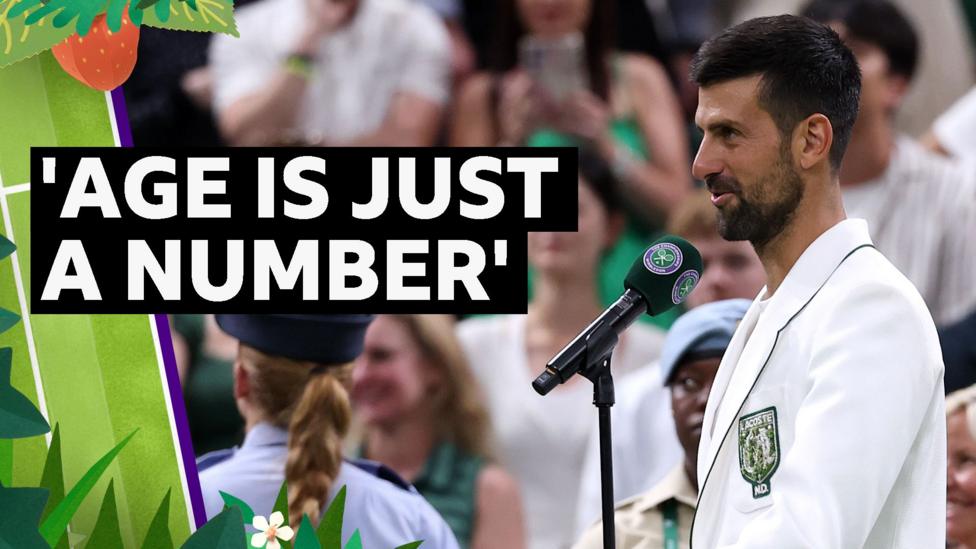
The Immortal Serb: Djokovic Turns Back the Clock Against Tsitsipas on Centre Court
At 39, Novak Djokovic dismantled Stefanos Tsitsipas in straight sets, reminding Wimbledon that his hunger hasn't dimmed.