Pelova Across North London: Tottenham's Arsenal Coup
Tottenham secure Victoria Pelova on a free transfer from Arsenal, adding a pressing orchestrator to reshape their midfield dynamic.
The architecture of a midfield demands a delicate balance between structure and chaos. When Robert Vilahamn surveyed the tapestry of his Tottenham Hotspur squad ahead of the new Women's Super League campaign, the missing thread was evident: a press-resistant connector capable of dictating the tempo under suffocating pressure. The acquisition of Victoria Pelova, arriving from arch-rivals Arsenal, addresses that exact tactical void. This is not merely a transfer designed to agitate the North London rivalry; it is a precise, calculated maneuver to install a new gravitational center in Vilahamn's 4-2-3-1 system.
Pelova’s departure from Arsenal speaks volumes about the divergent tactical priorities across the capital. At Arsenal, the Dutch international often found herself caught in a rotational paradox. Operating primarily on the right flank or in a hybrid 8/10 space under Jonas Eidevall, her natural inclination to drift inside and combine in the half-spaces frequently resulted in structural congestion. Arsenal’s aggressive, wide-focused 4-3-3 required wingers who stretched the pitch vertically and horizontally. Pelova, fundamentally a central orchestrator with a collector's mentality, was frequently forced into wide isolation. Her exit represents a mutual recognition: a player whose sophisticated tactical intelligence requires a different geometric canvas.
For Tottenham, the acquisition feels like a masterclass in market opportunism and tactical alignment. Vilahamn’s project in N17 has been defined by a gradual shift toward possession-dominant football. However, last season frequently exposed a frailty in the central corridors. When faced with organized mid-block defenses, Spurs lacked the rotational capacity to progress the ball through the lines, often defaulting to sterile lateral passing. Pelova changes that equation entirely. Her profile is tailor-made for the left 8position in Vilahamn’s 4-2-3-1, where she can exploit her exceptional spatial awareness to receive between the opposition's lines and manipulate the angle of the press.
The Scanning Midfielder: Pelova's Technical Dictionary
To understand Pelova's value, one must look beyond basic output metrics and examine her underlying progression profile. She is a player defined by her pre-reception scanning, a trait that allows her to execute the third-man run concept with devastating efficiency. By dropping deep to offer a decoy, she creates vertical channels for her dual-pivot teammates to exploit.
Progression Under Pressure
Pelova’s statistical footprint in the WSL reveals a midfielder operating at an elite level in confined spaces:
- 86% pass completion rate when pressed by multiple defenders
- 7.2 progressive carries per 90 minutes, ranking in the 92nd percentile among WSL midfielders
- 4.1 shot-creating actions originating from live-ball passes in the central zone
- 2.8 successful pressures in the middle third per 90, demonstrating elite counter-pressing geometry
These numbers illustrate a player who does not merely tolerate pressure, but actively invites it to manipulate defensive shapes. In a Tottenham side that frequently struggled to play through organized blocks, this capacity to draw opponents out before dissecting them becomes an invaluable tactical weapon.
"She has an incredible ability to see the picture before the ball arrives. That is what makes her special in tight spaces. She always finds the optimal vertical pass to break lines." — A former Netherlands national team coaching staff member
Tactical Shift
The integration of Pelova necessitates a nuanced tactical adjustment from Vilahamn, one that transforms Tottenham from a reactive transition outfit into a proactive possession team. Last season, the double pivot was predominantly occupied by destroyers and simple recyclers, leaving the front four isolated against low blocks. Installing Pelova as the left-sided 8 creates an asymmetric midfield structure. She will naturally invert, pulling opposing pressing triggers toward the ball, thereby creating vast expanses of space on the left flank for the overlapping fullback.
This internal inversion effectively converts the base formation into a 3-2-5 in the attacking phase. Pelova tucks inside alongside the deeper pivot, forming a compact box midfield with the 10. This structural shift forces the opposition’s defensive midfielder into an impossible choice: step out to engage Pelova and leave the 10 free, or hold position and allow the Dutch international to turn and face the backline unopposed. The knock-on effect is a dramatic increase in the frequency of Tottenham's forwards receiving the ball in advantageous 1v1 situations near the penalty area.
Furthermore, Pelova’s defensive output aligns perfectly with Vilahamn’s counter-pressing mandate. Her time in the Dutch national system under Andries Jonker instilled a rigorous understanding of Gegenpressing triggers. Upon a turnover, Pelova does not retreat; she immediately collapses the space around the ball, cutting off the vertical passing lanes. This proactive approach will provide the Spurs backline with the crucial micro-seconds required to reset their defensive shape, a luxury they were frequently denied last season.
The Psychology of the Cross-Capital Switch
Beyond the chalkboard, the psychological dimension of this transfer cannot be understated. Moving directly across the North London divide carries an immense weight of expectation and tribal scrutiny. Yet, Pelova’s mental profile suggests she possesses the necessary coldness to thrive under the glare. Her performances for the Netherlands in high-stakes international fixtures, most notably her composed display against Portugal in the World Cup group stage, demonstrate a player insulated from external noise, entirely focused on executing the tactical game plan.
For Arsenal, the tactical calculus of letting her leave is rooted in their commitment to width and speed. Eidevall's system demands explosive, direct runners in the wide zones who can stretch defenses vertically, creating space for the inside forwards to operate. Pelova’s desire to occupy the central corridors simply did not align with the strict positional requirements of the Arsenal 4-3-3. It was a clash of philosophy, not a reflection of ability. In the structured environment of Vilahamn's Tottenham, she will finally find the positional freedom to act as the primary metronome.
What Lies Ahead: The New Tactical Frontier
The immediate challenge for Vilahamn is managing the transition period. Imposing a new tactical hierarchy around a single profile is inherently risky, and Tottenham must ensure they do not become overly reliant on Pelova’s progression ability to escape pressure. The forwards must refine their off-ball movement to capitalize on the vertical deliveries she will inevitably provide.
As the new WSL season approaches, the strategic battleground will be defined by how effectively Tottenham can translate this theoretical tactical sophistication into consistent on-pitch results. Their upcoming fixture against Arsenal at the Tottenham Hotspur Stadium will serve as the ultimate crucible for this transfer. Placing Pelova in the cauldron of a North London derby against her former employers will immediately test her psychological resilience and Vilahamn’s tactical setup. The expectation is that her intimate knowledge of Arsenal’s high line and defensive triggers will provide Spurs with a critical exploitable edge. A new tactical geometry is emerging in North London, and its focal point is a midfielder crossing the divide to finally find her true tactical home.
Editorial Integrity
This is an original SportPulse article written by our editorial team. All content is independently researched, written, and reviewed by our writers and editors before publication. We do not publish copied, aggregated, or syndicated content.
SportPulse is committed to original sports journalism. Read our editorial policy or contact us with any questions.
More Like This
All football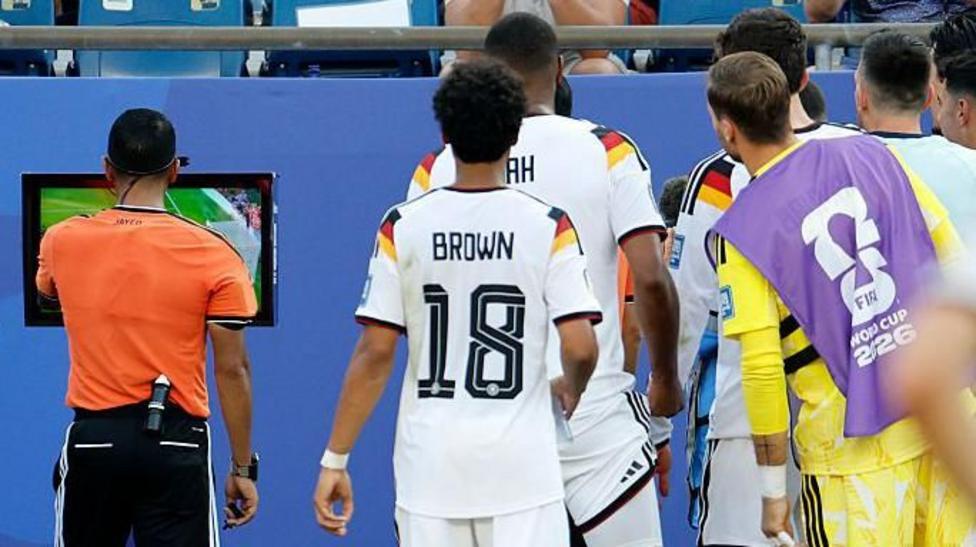
FIFA Backs Referees: Germany's Ruled-Out Goal Was No Surprise
FIFA insists the foul that wiped out Germany's extra-time goal against Paraguay was flagged to all teams before the tournament.

Iran's World Cup Ends in Draws and Political Point-Scoring Off the Pitch
A US senator celebrated Iran's exit as three draws weren't enough to survive a tournament shadowed by geopolitics.
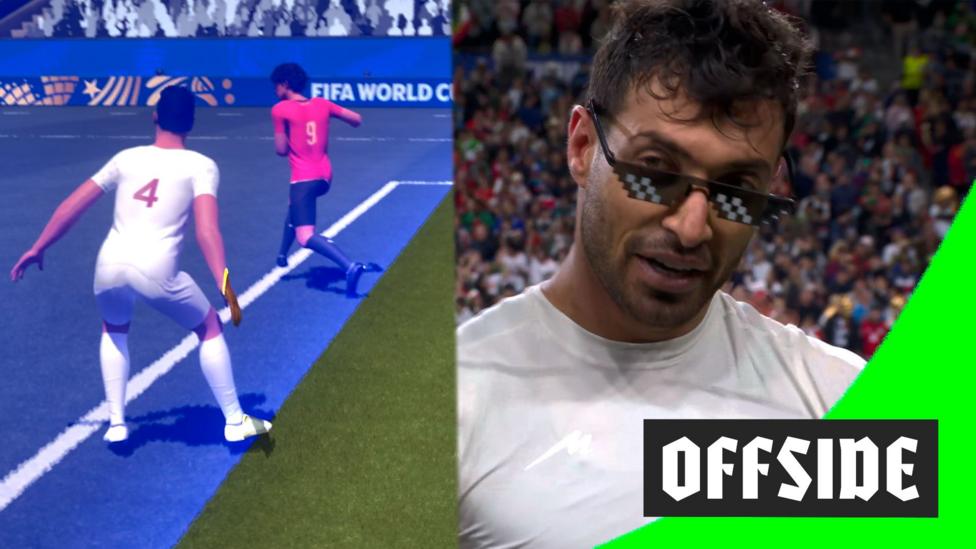
VAR Cruelty Denies Iran Automatic Advancement
Shoja Khalilzadeh's injury-time winner chalked off by VAR leaves Iran waiting on other results to salvage their tournament hopes.