Trump's Balogun Intervention Cuts Deep Into FIFA's Already Fragile Legitimacy
Presidential pressure to overturn a USMNT suspension exposes the soft underbelly of football governance weeks before a home World Cup.
title: "Trump's Balogun Intervention Cuts Deep Into FIFA's Already Fragile Legitimacy"
category: football
badge: Opinion
badgeType: category
author: James Chen
authorRole: Senior Football Analyst
authorInitials: JC
date: 2026-07-06
readTime: 5 min read
image: https://i.guim.co.uk/img/media/23897680574587a70a6ba6f3e54ec45852d6e765/177_0_2961_2368/master/2961.jpg?width=140&quality=85&auto=format&fit=max&s=806a2ab2988fdf85453414364d3c8d31
imageAlt: FIFA headquarters with an overlaid shadow of political influence looming over the football pitch
tags: FIFA, World Cup, USMNT, Concacaf, Football
excerpt: "Presidential pressure to overturn a USMNT suspension exposes the soft underbelly of football governance weeks before a home World Cup."
When a sitting United States president leans on FIFA to overturn a domestic suspension, the sport does not celebrate a victory for justice. It witnesses the precise moment where sporting integrity gets quietly shuffled into the back room, eclipsed by the blinding optics of a home World Cup superpower. The intervention to reverse Folarin Balogun's suspension represents something far more corrosive than a simple administrative favor. It signals that the rules of football are negotiable, provided the geopolitical leverage is sufficient. President Donald Trump's push to clear Balogun for the upcoming tournament did the most American thing imaginable: it asserted unasked-for power to get its way, confirming that the intersection of politics and football is not a collision course but a Superhighway.
FIFA ultimately bowed to the pressure, suspending Balogun's one-match ban. On Monday, Trump personally confirmed he asked FIFA president Gianni Infantino to review the red card shown to Balogun, saying he believed the dismissal was unfair but insisting he did not pressure football's governing body to overturn the suspension. Infantino has confirmed that Trump called him over the Balogun matter. Trump declared the governing body "made the right decision" and warned that enforcing the ban otherwise would have left a "big stain" on the World Cup.
The intervention by the president of a World Cup host nation has thrust FIFA's disciplinary process into the spotlight and prompted an angry response from Belgium, who face the USA on Monday night for a place in the quarter-finals.
The Garrincha Precedent: A Historical Echo
To understand the severity of this moment, you must rewind to the 1962 World Cup in Chile. The Brazilian genius Garrincha was sent off in the semifinal for lashing out at an opponent. Back then, FIFA had no automatic one-match suspension mandate in place. A disciplinary committee convened the next day to decide his fate for the final.
As the legend goes, the assistant referee with the best view of the incident was paid off and vanished. The president of Chile, the tournament host, placed a direct call to FIFA, urging them to spare Garrincha additional suspension. He did so to keep one of the tournament's most entertaining players on the pitch. Garrincha walked scot-free, and Brazil lifted their second World Cup days later.
The parallels between Santiago 1962 and the current cycle are not just uncomfortable; they are structurally identical. A host nation's highest political office intervening to manipulate disciplinary outcomes is not a quirk of a bygone era; it is the recurring blueprint.
The Anatomy of Undue Influence
Folarin Balogun, the USMNT striker who committed his international future to the United States over England, found himself suspended following a contentious incident. The specifics of the foul matter less than the mechanism of his reinstatement. When Trump applied pressure, FIFA folded. The governing body's architecture is supposedly engineered to resist external political pressure. The FIFA Disciplinary Code, Article 14, mandates strict liability for players who breach fair play principles. The code has no carve-out for host-nation advocacy.
Yet, the structural firewall between political power and sporting governance evaporated the moment a phone call was made. FIFA's compliance department, which theoretically operates independently of the president's office, demonstrated its fundamental flaw. It answers to the same institutional power structure that craves a commercially successful, star-studded World Cup on American soil.
What This Means for Concacaf
The implications extend far beyond a single player missing a single match. This sets a precedent that will haunt the Concacaf region and FIFA globally for decades.
- Erosion of Referee Authority: Match officials will question the point of applying the laws of the game if suspensions are reversed by executive decree.
- Political Chilling Effect: Rival federations will now calculate diplomatic leverage.
- Precedent for 2030 and beyond: With a joint bid spanning North America, expect escalating intervention.
The Commercial Imperative Overriding Integrity
FIFA's decision cannot be separated from the financial realities of the expanded 48-team World Cup. The tournament forecasts $11 billion in revenue, heavily guaranteed by US market penetration. Balogun, as a high-profile dual-national who chose the USMNT, is a marketing asset. The communists at FIFA are not ideological; they are capitalists in tracksuits.
- $11 billion projected revenue for the expanded World Cup format
- 48 teams competing across three nations
- 16 cities hosting matches, creating an unprecedented logistical and commercial footprint
When a player's suspension threatens the marketability of the host's opening narrative, the rules bend. The claim that the intervention was about fairness is structurally hollow. It was about protecting the investment and guaranteeing the spectacle.
The USMNT's Credibility Deficit in Full View
For the United States Men's National Team, this is a double-edged sword. They gain their striker back, but they lose something intangible: the respect of the global football community. The USMNT's narrative has long been anchored in resilience and a growing meritocracy. This intervention reduces that narrative to a punchline.
European and South American critics already view Concacaf qualifiers as an unnecessarily physical affair. The idea that US players can effectively receive diplomatic immunity trivializes American soccer's growth. It tells the world that the USMNT requires institutional favoritism to compete.
The Bottom Line
The intervention in the Balogun case does not help the US World Cup effort. It hollows it out. It notifies every official, every opponent, and every fan that the tournament's integrity is subordinate to the host's political convenience.
Why This Hurts More Than It Helps
Claims that Trump's intervention aids the US by securing a key player miss the broader structural damage. A World Cup's success is not solely measured in quarterly profit margins or the presence of recognizable names. The long-term value of the event lives in the belief that it is a meritocracy. Sporting justice must be blind to nationality, GDP, and political clout.
When that blindness is compromised, the product devalues. Sponsors do not pay premium dollar for a contested product. ** FIFA needs only to look back at its own recent history** to understand the reputational cost of compromised integrity.
The Verdict
FIFA's capitulation to political pressure over the Balogun suspension is a self-inflicted wound. It relegates the governing body to a subservient actor on the global stage, willing to rewrite its own rulebook at the behest of whoever holds the loudest megaphone. The World Cup should be the pinnacle of sporting meritocracy, an arena where the rules apply equally to the humblest minnow and the most potent superpower. Instead, the Balogun affair provides proof that football's guardians are primarily guarding their own access to power.
Updated: 2026-07-06 — Added Trump's personal confirmation that he asked Infantino to review the red card, Infantino's confirmation of the call, Trump's insistence he did not pressure FIFA, and Belgium's angry response to the intervention.
Editorial Integrity
This is an original SportPulse article written by our editorial team. All content is independently researched, written, and reviewed by our writers and editors before publication. We do not publish copied, aggregated, or syndicated content.
SportPulse is committed to original sports journalism. Read our editorial policy or contact us with any questions.
More Like This
All football
Beckham's American Gambit: How One Man Bent US Culture
David Beckham promised to grow football in America 19 years ago. He delivered, then kept building.
Infantino's 64-Team World Cup Gamble Threatens Football's Soul
FIFA eyes expanding the 2030 World Cup to 64 teams, prioritizing revenue over quality and risking tournament integrity.
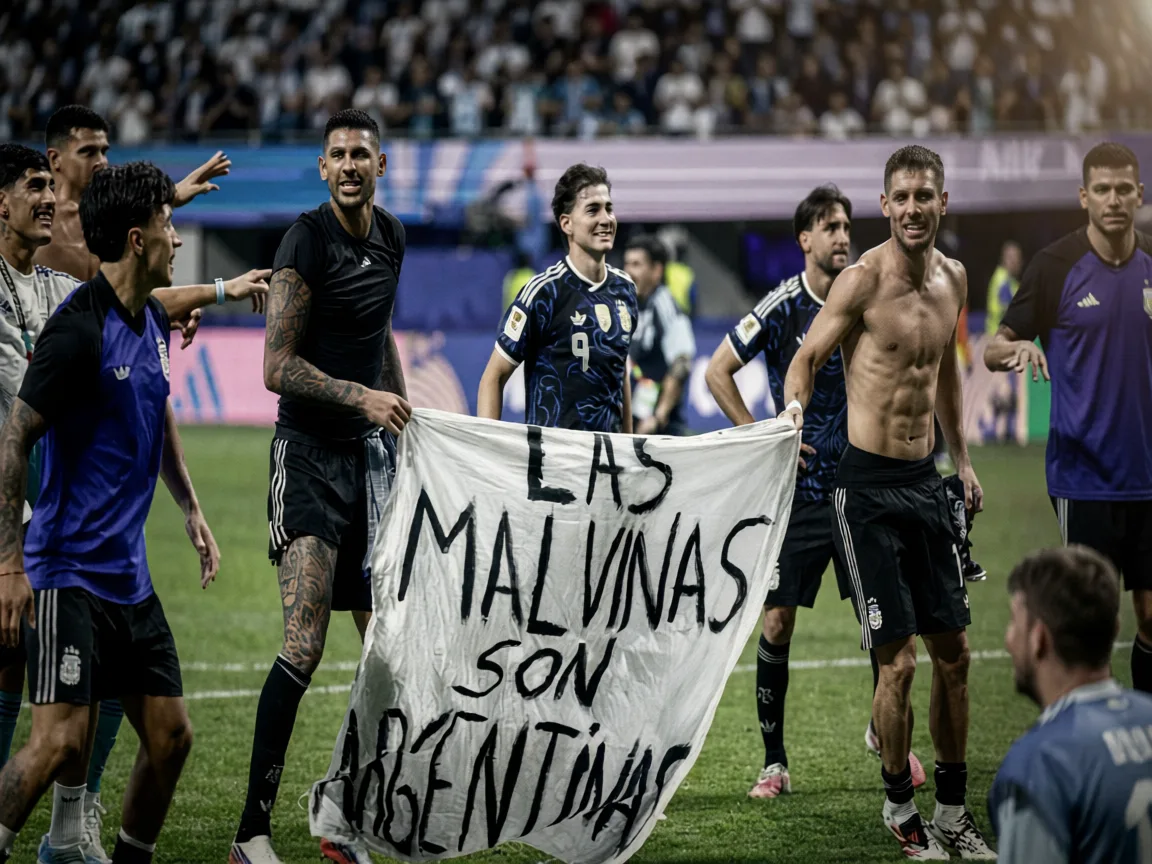
Falklands Banner After England Win Puts Argentina Under FIFA Scrutiny
Argentina's post-match celebrations crossed from sporting triumph into geopolitical provocation, triggering a FIFA disciplinary inquiry.