Kane's Defensive Retreat: When Tactical Prudence Becomes Self-Sabotage
England's decision to drop their captain deep against Argentina drew political criticism, but the real question is whether the system sacrificed the team's most lethal weapon.
The opening 25 minutes of England's World Cup semi-final against Argentina offered a glimpse of a genuinely modern side. The 3-4-2-1 shape deployed by Gareth Southgate allowed for aggressive high pressing, with Jude Bellingham and Phil Foden tucking inside from advanced midfield positions to suffocate Argentina's build-up. Harry Kane, operating as a classic false nine, dropped into the half-spaces to link play. The tactical symbiosis was clear: England's press had forced six turnovers in the opposition half within the first quarter of the match. Argentina's 4-3-3 looked overwhelmed and disparate. A goal felt inevitable.
Yet it never arrived. Eventually, Southgate's ingenuity curdled into caution. The game's tactical inflection point arrived around the 55th minute, when England retreated into a mid-block. This was not mere game management; it was a structural shift that stripped the side of all the qualities that had made them dangerous. Kane, who had been a dynamic force dropping between the lines and combining with the advanced midfielders in the first half, was suddenly instructed to sit deeper and deeper, effectively becoming a third central midfielder.
The Mid-Block Collapse
This defensive posture fundamentally altered the geometry of England's attack. By retreating into a mid-block, England created a 30-metre gap between their forward line and their midfield. This seismic disconnect was exacerbated by Kane's new instruction to press less and track back more. Argentina's centre-backs, previously harassed into rushed long balls, were now given time to step out and dictate play. The zone between England'sattack and midfield became a superhighway for Lionel Messi and his supporting cast.
Tactically, this is where Argentina's adjustments won the match. Lionel Scaloni shifted his double pivot higher up the pitch, effectively playing a 4-2-3-1 in possession. With Kane preoccupied with defensive duties, there was no England striker occupying the opposition centre-backs. Argentina could push their defensive line 10 metres higher, compressing the space that Bellingham and Foden had exploited so effectively earlier. The Three Lions' most potent attacking weapons were nullified by their own tactical decisions.
The numbers paint a stark picture of this retreat. In the first half, Kane registered 3 shots, 2 key passes, and 7 final-third entries. In the second half, those figures plummeted to 0 shots, 0 key passes, and 1 final-third entry. His average position dropped by nearly twelve metres. This was not a player struggling for form or starving off service. This was a player systematically removed from his most influential zones by his own manager's design.
When Caution Becomes Self-Destruction
What makes this tactical regression so frustrating is that it contradicts the very principles that had brought England to the semi-final. Throughout the tournament, their best performances had been built on proactive possession and a sustained high press. The quarter-final victory over France was arguably the high-water mark of Southgate's tenure precisely because his side had refused to cede territorial and structural control. Against Argentina, the fear of losing overwhelmed the urge to win.
This is not a new critique of Southgate's England. The Euro 2020 final against Italy followed a remarkably similar pattern: an early goal followed by a deep retreat, a loss of possession, and eventually a loss of composure. The World Cup 2018 semi-final against Croatia ended in similar fashion. The pattern is now undeniable: when England face elite opposition in tournament knockouts, the tactical instinct is to shrink rather than to assert.
The Trump Commentary and the Real Issue
Even US President Donald Trump weighed in on the semi-final loss, questioning why a striker of Kane's calibre was turned into a "defensive player" in the second half. While it is easy to dismiss political commentary on football tactics as uninformed, Trump's observation aligns with a widespread and legitimate criticism from the football community. The sight of England's all-time top scorer chasing shadows in his own half rather than terrorizing defenders in theirs was a damning indictment of the tactical setup.
Pundits across Europe echoed similar sentiments. The notion of a player with Kane's finishing ability being deployed as a defensive workhorse is tactically absurd. At 31 years old, Kane remains one of the most complete number nines in world football. His pressing stats had been among the best in the tournament during the group stage. The issue was not physical decline or tactical indiscipline; it was a philosophical choice from the bench to prioritise defensive solidity over attacking threat.
The Failure to Adapt
The counter-argument, of employing a mid-block to counter Argentina's transitions, falls apart under scrutiny. A mid-block only works if the opponent is forced sideways and lacks the penetration to play through the lines. Argentina possess exactly the kind of players who thrive against a mid-block. Messi, in particular, is the definitive destroyer of passive defensive structures. By giving him time and space, England played into his hands. The Argentine captain's influence grew exponentially after Southgate's tactical adjustment, culminating in the winning goal that resulted from a situation where no England striker was positioned to press the ball or occupy the recovering defenders.
Had Southgate maintained the high press, Argentina would have been forced into low-percentage long balls or risky passes through a compressed midfield. Instead, the retreat turned England from the aggressor into the victim.
The Systemic Cost of Fear
This touches on the broader issue of England's tactical culture under Southgate. The fear of defeat has consistently trumped the courage to attack. In the high-stakes environment of a World Cup semi-final, the default reaction to adversity or even the prospect of it is to retreat into a defensive shell. This approach has now failed in three consecutive major tournament semi-finals or finals. The sample size is large enough to draw firm conclusions.
The pity is that this squad is built for more. With players who excel at high-tempo pressing and quick transitions, England have the tools to play a proactive game. The 3-4-2-1 shape that started the Argentina match was not the problem. The problem was the abandonment of that shape and those principles at the first sign of second-half pressure.
Southgate's post-match rhetoric has long struggled to reconcile the gap between the team's attacking potential and its reactive reality.
"We wanted to secure the space behind the midfield line and make sure we weren't exposed to their speed. It's about finding the right balance between attack and defense at this level."
This is the language of management that has lost its bite. "Finding the right balance" has become a euphemism for surrendering initiative. At the highest level of international football, against the best teams and the best coaches, ceding control is rarely a pathway to victory.
What Comes Next
The Football Association now faces a pivotal decision. Southgate's contract situation and his future as England manager will dominate the discourse in the coming weeks. But beyond the personnel question, there is a deeper tactical reckoning. Can English football cultivate a tactical culture that embraces risk without collapsing into recklessness? Can the next iteration of this golden generation play to its strengths for the full 90 minutes of a semi-final?
The next fixture, a third-place playoff against a wounded France side, presents Southgate with one final opportunity to demonstrate tactical flexibility. A return to the proactive pressing game and the aggressive 3-4-2-1 shape would be a statement of intent. Another retreat into the mid-block would be a final, damning confirmation of a philosophy that has reached its limits.
For Kane, the tournament is likely his last realistic shot at World Cup glory. To see his prime years wasted on a defensive scavenger role is a tragedy that extends beyond this semi-final. It is a failure of imagination from a coaching staff that has never fully trusted the attacking talent at its disposal.
Editorial Integrity
This is an original SportPulse article written by our editorial team. All content is independently researched, written, and reviewed by our writers and editors before publication. We do not publish copied, aggregated, or syndicated content.
SportPulse is committed to original sports journalism. Read our editorial policy or contact us with any questions.
More Like This
All football
Lewis Ferguson: The Bologna Engine Driving Scotland's World Cup Dream
From Serie A stardom to Scotland's midfield heartbeat, Ferguson has become the man Clarke cannot afford to leave out against Brazil.
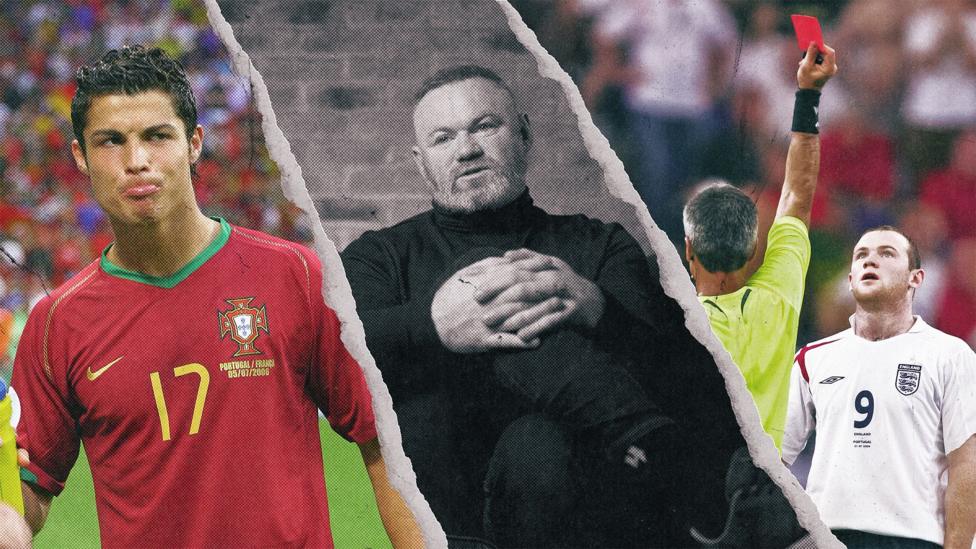
Rooney Breaks His Silence: 'I'd Have Done the Same' to Get Him Sent Off
Twenty years on, Rooney's brutal honesty about the 2006 World Cup red card reframes one of football's most toxic flashpoints.

Southampton Boss Eckert Charged Over Spying Scandal That Cost Playoff Place
The FA hits Tonda Eckert with three misconduct counts after he admitted sending staff to spy on three opponents, ending Southampton's promotion bid.