Tuchel Shields Bellingham After Queiroz Touchline Clash
Thomas Tuchel backs Jude Bellingham following a heated touchline altercation with Carlos Queiroz, reframing the incident through a tactical lens.
The Anatomy of a Touchline Fracture
When Thomas Tuchel stepped into the England managerial vacuum, he inherited a squad brimming with tactical ego and positional fluidity. He also inherited the inevitable friction that arises when the aggressive pressing triggers of an elite European system collide with the deep-block resilience of global football. That friction ignited on the touchline when Jude Bellingham became entangled in a furious dispute with veteran coach Carlos Queiroz, an incident that has since revealed as much about tactical identity as it does about temperament. Tuchel's subsequent defense of his midfielder was not merely managerial solidarity. It was a calculated defense of the very positional freedom his system demands.
The catalyst for the confrontation was a tackle Tuchel himself characterized with clinical precision. A silly tackle, a bad reaction. But in the sprawling landscape of continental football philosophy, such moments are rarely isolated. They are the pressure valves of opposing tactical doctrines. Queiroz, a disciple of structured defensive shadows and low-block containment, operates on the principle of extinguishing spatial fires before they ignite. Bellingham, operating within Tuchel's framework of verticality and sustained pressure, views the same space as a canvas for disruption.
Competing Philosophies on the Margins
Queiroz's tactical oeuvre has long been defined by its rigidity. His teams are engineered to deny central progression, forcing opponents into wide corridors where the pitch acts as an extra defender. When Bellingham received the ball in the half-spaces, he was executing the half-space occupation that Tuchel's 4-2-3-1 morphed into a 3-2-5 in possession demands. The English midfielder is not just a runner. He is a structural disruptor, tasked with pulling deep-lying midfielders out of their rest-defence shape.
The challenge that sparked the row occurred precisely in this volatile transition zone. Bellingham had driven into the pocket between the opposition's double pivot, forcing a defender to step out of the low block to engage. The resulting tackle was mistimed, a symptom of the defender's desperation to recover positional ground. Bellingham's reaction, a visceral rejection of the tactical foul disguised as a genuine challenge, spoke to an underlying frustration. Queiroz's sideline eruption was equally predictable. From his perspective, the tackle was a necessary violence to prevent a structural collapse.
"It was a silly tackle, and then a bad reaction. But Jude is a player who plays on the edge, because our system requires him to play on the edge. He is constantly probing, constantly inviting contact to release the pressure elsewhere." — Thomas Tuchel
Tuchel's framing of the incident strips away the moralizing. It repositions the clash as an inevitable byproduct of Bellingham's role as a press-resistant carrier. When you design a system that relies on a single player to break the first line of pressure through physical and technical imposition, you accept the volatility that accompanies it.
Tactical Shift: The Fault Lines of Transition
The critical moment arrived in the immediate aftermath of the tackle. The touchline row between Bellingham and Queiroz was a microcosm of a broader tactical conflict. Queiroz's reaction was rooted in a desire to slow the game's tempo. The tackle, though poorly executed, achieved its primary objective: it halted Bellingham's vertical carry and forced a reset. For a team operating in a deep 4-5-1 defensive shape, these moments of cynical disruption are the oxygen of survival.
Bellingham's anger, however, reflected the frustration of a player caught between two phases of play. In Tuchel's Gegenpressing paradigm, the moment a tackle is made, the system must immediately shift from ball possession to counter-pressing or rapid transition attack. A cynical foul disrupts this mechanical sequence. It kills the momentum that England's 3-2-5 attacking shape relies upon to exploit the chaotic, post-turnover moments. The bad reaction was born from Bellingham's desperate desire to keep the transition sequence alive.
The Systemic Value of the Edge
Tuchel's defense of his star midfielder extends beyond personal affinity. Bellingham's perceived volatility is intrinsically linked to his systemic value. In the modern continental game, the elite number 10 or advanced 8 must be a player who invites chaos. The half-space is a zone of constant physical confrontation. A player who shirks that confrontation, who opts for the safe lateral pass rather than the progressive carry, renders the 3-2-5 shape sterile. By defending Bellingham's right to feistiness, Tuchel is defending the integrity of his attacking structure.
- Progressive carries per 90: Bellingham ranks in the 97th percentile among positional peers in top-five leagues
- Fouls won in the middle third: A metric that correlates directly with positional phase disruption
- Post-tackle recovery rate: Tuchel's system demands immediate re-engagement, a sequence cynically broken by the mistimed challenge
Psychological Management and the Tuchel Doctrine
What makes Tuchel's public stance so significant is his historical approach to player management. This is a coach who has clashed with superstars at Paris Saint-Germain and Chelsea over questions of tactical discipline. His willingness to absorb Bellingham's emotional outburst signals a nuanced understanding of psychological investment. Tuchel recognizes that the same competitive fire that fuels a touchline argument is the engine of Bellingham's ball-carrying dominance.
Queiroz, representing the old guard of reactive pragmatism, views such emotional displays as a breach of professional decorum. In his mind, the tackle was a justifiable tactical expedient and Bellingham's fury an unsporting overreaction. This philosophical dissonance underscores the generational shift in football. The modern game, particularly in the attacking third, is built on individual expression within collective structures. The old paradigm of collective sacrifice for individual moments is yielding to systems that weaponize individual brilliance.
What This Means for England's Shape
Moving forward, this incident provides a stark blueprint for how opponents will attempt to neutralize Tuchel's England. Teams anchored in mid-block or low-block structures will deploy targeted, physical fouling to disrupt Bellingham's verticality. They will attempt to drag him into emotional confrontations, hoping to either provoke a disciplinary sanction or simply break his positional rhythm.
Tuchel must address this vulnerability. The solution lies in the surrounding positional rotations. If the wide 10s in the 3-2-5 can offer immediate, accessible passing lanes the moment Bellingham draws contact, the cynical foul becomes a mechanism for advancing the attack rather than halting it. The double pivot must also be attuned to these moments, stepping into the vacated space to ensure the counter-pressing trap springs even when the initial carry is stopped.
The Horizon: Navigating the Deep Blocks
The next international window will test Tuchel's ability to transform this touchline friction into tactical evolution. England will face opponents who have studied this incident and will replicate its underlying strategy. The challenge for Bellingham will be channeling his frustration into sharper decision-making in the transitional moments. The challenge for Tuchel will be ensuring his system does not become overly reliant on a single point of ball-progression.
The touchline argument with Queiroz was a fleeting spectacle. The tactical reality it exposed will shape England's approach to breaking down the game's most stubborn defenses. In the modern continental landscape, the edge between brilliance and volatility is agonizingly thin. Tuchel has made his choice: he will live on that edge.
Editorial Integrity
This is an original SportPulse article written by our editorial team. All content is independently researched, written, and reviewed by our writers and editors before publication. We do not publish copied, aggregated, or syndicated content.
SportPulse is committed to original sports journalism. Read our editorial policy or contact us with any questions.
More Like This
All football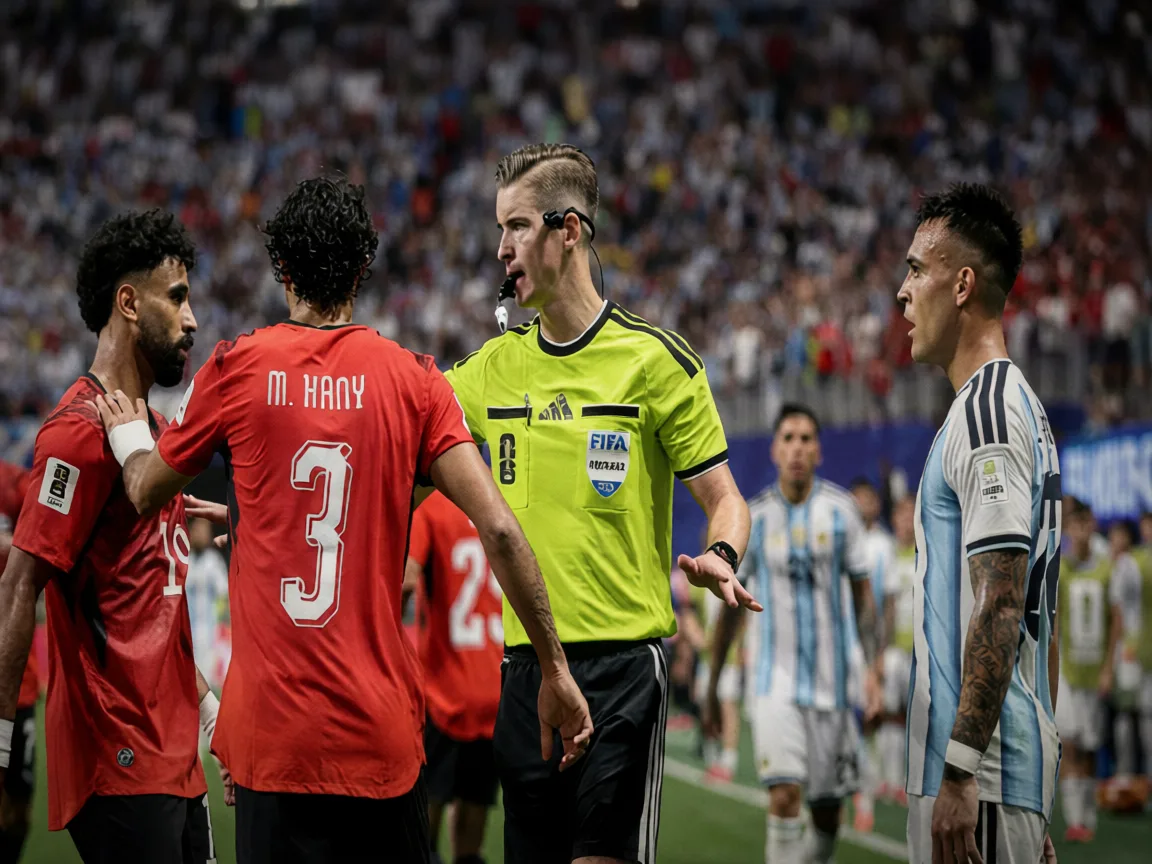
Inside Argentina FA's Cyber Crisis After World Cup Email Hack
Hackers breached Argentina's FA email system to criticise World Cup refereeing, exposing vulnerabilities in football's digital infrastructure.
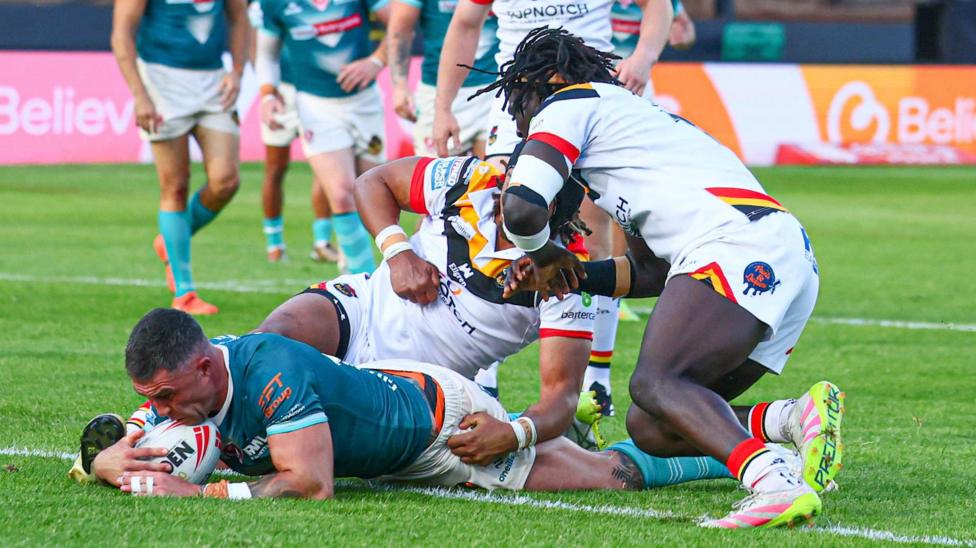
Saints Unleash 28-Point Second-Half Barrage to Storm Into Fourth
St Helens produced a devastating second-half display, shutting out Bradford with 28 unanswered points to climb into Super League's top four.

Atlanta Roar Drowns Anthems as England Face Argentina in World Cup Semi
A deafening Atlanta Stadium soundtrack swallowed both national anthems before England and Argentina collided for a place in the 2026 World Cup final.