Tuchel's England Gamble: Why Grit Won't Fix the System
England beat France in a ten-goal thriller and still ended up furious with Thomas Tuchel. The tactical identity crisis runs deep.
The Bronze Medal That Felt Like a Defeat
England beat France in a 10-goal thriller to claim the World Cup bronze medal. They walked off the pitch furious with their manager.
Only England could turn a scoring spectacle against a historic rival into a referendum on tactical incompetence. But here we are. The recriminations from the collapse against Argentina last week are still bleeding into every conversation about this team.
Winning a game low on jeopardy did nothing to cool the temperature. If anything, it highlighted the disconnect between what Thomas Tuchel was hired to do and what he is actually delivering.
"When that fell down, all that was left was anger." The core promise of the Tuchel appointment was that he would make the difference in the big games.
The 3-0 defeat to Argentina was more than just an elimination. It was a cold, clinical dissection of a side that looked completely disconnected from its own identity. Tuchel had been brought in for exactly this type of occasion. The English Football Association had invested a king's ransom into a coach with a Champions League pedigree, expecting him to solve all their problems.
Instead, the Argentina thriller crumbled under the weight of its own tactical contradictions.
The Core Emptiness of the Appointment
The FA's decision to hire Tuchel was never about long-term planning. It was a band-aid solution masquerading as a strategic masterstroke. Here is a rich federation covering up the systemic flaws in its own coaching development by gaming the system.
Throwing money at an expensive outsider is the ultimate shortcut. And shortcuts always come with a toll.
- £5 million-plus annual salary: A staggering investment meant to guarantee results.
- Zero tournament final appearances: The return on investment so far.
- One tactical identity crisis: The hidden cost of the experiment.
- Six months of preparation: Time that has seemingly been wasted.
The FA looked at Tuchel's resume and saw a man who had outfoxed Pep Guardiola in a Champions League final. They saw a tactical chameleon who could adapt to any opponent. What they failed to see was that Tuchel's greatest strength is also his greatest weakness: a rigid tactical dogmatism that squeezes the joy and instinct out of creative players.
Clinging to an Outdated English Style
Thomas Tuchel has a problem. He is a German tactical obsessive trying to implement a version of English football that never really existed, and certainly does not work in 2024.
This is the deepest irony of the Tuchel era. A coach renowned for his sophisticated, continental pressing game at Chelsea and Paris Saint-Germain has arrived in English football and retreated to a physical, transition-based approach.
It is a style that has rarely worked for England at the elite level. The ghosts of past tournaments are littered with teams that tried to out-muscle opponents and ended up being out-thought instead. The 2014 World Cup disaster, the Euro 2016 embarrassment against Iceland, the 2018 semi-final defeat against Croatia. Each failure was a lesson in the limits of grit over guile.
Tuchel seems determined to repeat those mistakes.
The English game has evolved. The Premier League is now the most technical league in the world, producing players who are comfortable in tight spaces, who can manipulate the ball under pressure, who see passes before they exist.
Yet Tuchel is clinging to an outdated English style that ignores these gifts. He is asking Phil Foden to chase long balls. He is asking Jude Bellingham to be a defensive midfielder. He is asking Jack Grealish to run in behind defenders.
These are not their natural games. These are not the games that made them the most exciting generation of English talent in decades.
The Tactical Mismatch
The contrast between Tuchel's approach and the personnel at his disposal is jarring. England's greatest strength is the technical quality of their ball players. Their greatest weakness has always been the temptation to abandon that quality under pressure.
Under Tuchel, they have abandoned it by design.
- Phil Foden: Used as a wide runner instead of a central playmaker. His 107 Premier League goal involvements over the past three seasons suggest he needs to be at the heart of the game.
- Jude Bellingham: Asked to occupy deeper positions, restricting his ability to make late runs into the box. His 23 goals for Real Madrid last season came from playing higher up the pitch.
- Bukayo Saka: Given defensive responsibilities that limit his attacking impact. His 19 goal involvements in 35 England appearances speak for themselves.
- Cole Palmer: Marginalised in a system that does not accommodate a pure number 10.
The statistics tell a story of systemic underperformance. Against Argentina, England managed just 0.8 expected goals and 34% possession. These are not the numbers of a team that has invested in an elite tactical mind. These are the numbers of a team playing against its own strengths.
The Argentina Collapse: A Case Study in Tactical Failure
The semi-final defeat to Argentina was the moment the Tuchel experiment officially failed.
England went into the match with a back five, two holding midfielders, and three forwards asked to press without the ball. It was a setup designed to contain, to suffocate, to grind out a result. It was the setup of a manager who did not trust his players to win a game of football.
Argentina, by contrast, played with the confidence of a side that knew exactly who they were. They moved the ball with purpose, stretched the English defence, and exposed the space between the lines. The 3-0 scoreline was not a reflection of Argentina's superiority. It was a reflection of England's refusal to play.
"It exposed the core emptiness of the appointment." The promise was that Tuchel would make the difference in the big games. The reality was that he made no difference at all.
The bronze medal match against France was supposed to be a chance at redemption. Instead, it turned into a chaotic, 10-goal thriller that only deepened the sense of confusion. England won 6-4, but the defensive fragility on display was alarming. Conceding four goals to a French side that had already been eliminated from the tournament was not a sign of attacking prowess. It was a sign of a team that does not know how to control a game.
What Tuchel Must Change
The path forward is clear, but it requires Tuchel to swallow his pride.
England have the players to play a possession-based, high-intensity pressing game. They have the technical quality to dominate the ball against any team in the world. What they lack is a manager who is willing to let them express that quality.
Tuchel must ditch the physical approach. He must embrace the gifts of his ball players. He must build a system that maximises the strengths of Foden, Bellingham, Saka, and Palmer, rather than asking them to fit into a tactical template that belongs to a different era.
This means playing with a back four. It means using a single defensive midfielder. It means giving Bellingham the freedom to roam. It means building the attack through Foden in central areas. It means trusting the players to make decisions on the pitch, rather than micromanaging every movement from the touchline.
The Bigger Picture: An FA Failure
The Tuchel crisis is not just about one manager. It is about an entire system of football governance that has lost its way.
The FA's decision to hire Tuchel was an admission of failure. It was a public acknowledgment that English football cannot produce its own elite coaches. It was a white flag waved by a federation that has spent decades trying to develop homegrown talent and has come up empty.
The irony is that English football has never been richer in coaching talent. The Premier League is home to some of the most innovative tactical minds in the world. Eddie Howe at Newcastle, Roberto De Zerbi at Brighton, Ange Postecoglou at Tottenham. These are coaches who have proven they can build teams that are both effective and exciting.
Yet the FA chose to look abroad. Again.
The decision to throw £5 million-plus a year at Tuchel was not just a waste of money. It was a missed opportunity to invest in the long-term development of English coaching. It was a choice to game the system rather than fix it.
A rich federation covering up the flaws in its coaching development by trying to game the system.
The Road Ahead
England's World Cup campaign is over. The bronze medal is a footnote. What matters now is what happens next.
Tuchel has 18 months until the next European Championship. That is plenty of time to rebuild the team, to instil a new tactical identity, to give the players the freedom to express themselves. But it requires a fundamental change in approach.
It requires Tuchel to stop being a control freak and start being a facilitator. It requires him to trust the talent at his disposal and build a system that enhances it, rather than restricts it.
It requires the FA to accept that they made a mistake and demand better from their expensive hire.
And it requires the players to take responsibility. They have been given a platform. They need to use it.
The talent is there. The question is whether anyone is brave enough to let it breathe. England have the players to conquer Europe. They do not have a manager who knows how to use them.
That is the tragedy of the Tuchel era. And that is why, even with a bronze medal around their necks, English football is once again looking at itself in the mirror and wondering what might have been.
The clock is ticking. And the patience of a nation is wearing thin.
Editorial Integrity
This is an original SportPulse article written by our editorial team. All content is independently researched, written, and reviewed by our writers and editors before publication. We do not publish copied, aggregated, or syndicated content.
SportPulse is committed to original sports journalism. Read our editorial policy or contact us with any questions.
More Like This
All football
Volcanoes, Underpasses, and Dreams: Mexico's Pitches Tell a Football Nation's Story
As Mexico prepares to co-host the 2026 World Cup, its grassroots pitches reveal the raw soul of a football nation.
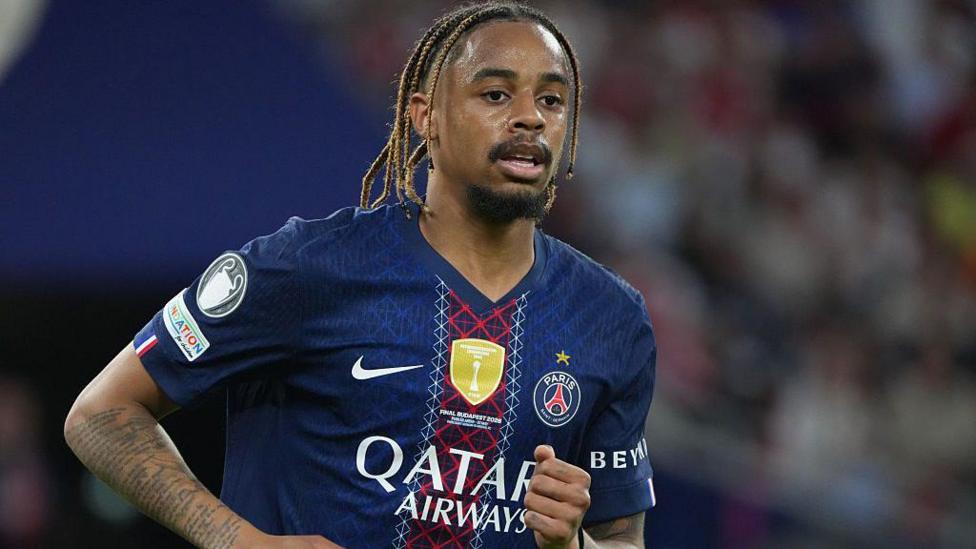
Arsenal Eye PSG's Barcola as Left-Wing Gamble Replaces Rogers Plan
Arsenal pivot to Bradley Barcola after Morgan Rogers pursuit stalls, signaling a bold tactical shift in their summer recruitment.
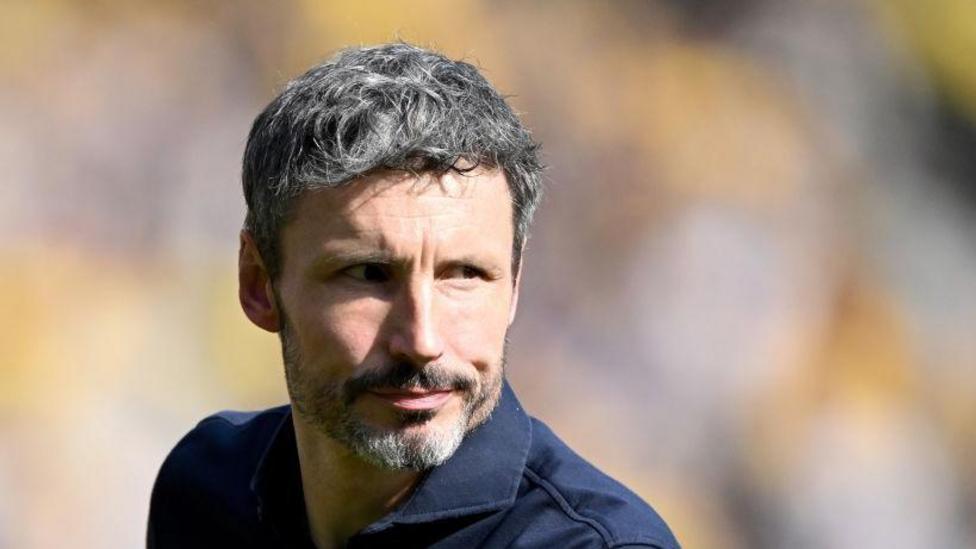
Van Bommel takes charge of Belgium on deal through Euro 2028
Belgium turn to former Netherlands captain Mark van Bommel to lead a generational overhaul with eyes on Euro 2028.