Tuchel's England Possession Surrender Is a Red Flag Nobody Can Ignore
England's new coach dismissing ball retention as not part of the team's DNA reveals a deep philosophical cowardice at the worst possible moment.
The Confession That Should End a Tenure Before It Begins
Thomas Tuchel stood in front of the media and surrendered. Not on a pitch. Not after a humiliating defeat. In a room, into a microphone, with the permanent record rolling.
The England manager claimed that ball possession is not in the team's DNA.
Read that again. Let it settle.
The man entrusted with ending England's decades-long wait for a major trophy looked at the most fundamental currency of modern football and decided his players were simply not built for it.
"It's a philosophy that doesn't just accept mediocrity. It institutionalizes it. It tells a generation of elite Premier League ballers that their native instinct is to panic."
This is not a detail. This is the philosophical scaffolding of a regime. England are managing games from the first whistle as if the inevitable collapse is a matter of when, not if.
The Lie at the Heart of an Argument
Let's dissect the premise.
Declan Rice orchestrates Arsenal's midfield with a First Division title medal to show for it. Kobbie Mainoo glides through European semifinals for Manchester United. Cole Palmer threads needles nobody else sees at Stamford Bridge. Phil Foden has Premier League titles engraved on his career.
These players do not just tolerate possession. They dominate games through it. They are the lifeblood of a league celebrated, commercialized, and exported globally, with its elite clubs proving their mettle in European fixtures.
Tuchel's assertion that a squad drawn from the most technically sophisticated domestic competition on the planet is somehow not equipped to hold the ball is staggering.
The Real Disease Spreading from the Top
When Gareth Southgate departed, the FA recognized they were buying aimar and acumen. Tuchel arrived from Chelsea and Bayern Munich, carrying a CV that featured a tactical triumph in Europe's premier club competition. He was the antithesis of cautious island football.
And yet, here he stands, peddling a defensive alibi so transparent it borders on contempt for the audience. Framing possession as some foreign concept to English sensibilities isn't just an insult to the players. It rewrites history.
Forget that Pep Guardiola and Mikel Arteta have spent the better part of the last decade wiring these exact players to crave the ball, to use it as a suffocating weapon.
Forget Raheem Sterling, Bukayo Saka, and Harry Kane intelligent off-ball movement that demands intricate, synchronized interplay.
Forget that the alternative to possession isn't a tactical masterstroke. It's passive resignation. It's inviting the kind of pressure that has broken English hearts in Rome, Saint Petersburg, Munich, and Riga.
The Riga Blueprint: Chasing Shadows in the Baltics
The supporters have been through this particular psychodrama before.
They have poured prestige and resources into following this team through every outpost of European football. Tickets, flights, late-night searches for food in ancient capitals after emotional engines.
And for what? To be told by their highly-paid German import that positional play is an unrealistic ambition.
They chanted at bus stops and in the office toilets that this time would be different. They reassured themselves the eliteерьмен era calibre of tactician would bring tactical nous, not a throwback to survival football in cosplay.
Now those supporters are staring directly at a watershed moment in a World Cup semifinal. It's a script they know by heart. England clinging to a one-goal lead against either a nerveless, probing opponent like Argentina is the purest distillation of what happens when a team decides the ball is a poisoned chalice.
For forty minutes, the world watches a group of elite players essentially apologizing for their existence, retreating deeper, clearing lines, and hoping the goalkeeper's palms are adhesive.
This is the disease of small ambitions manifesting at the highest level. And Tuchel isn't even pretending to cure it. He's diagnosing it as a virtue.
"When the coach says possession isn't in the DNA, what he really means is: I don't trust these players to execute what I can't teach them."
Behind the Delusion: The Economics of an Alibi
Strip sentiment and cultural soul-searching and you'll find the cold economics of modern management.
The Premier League's financial muscle flexes itself across the continent, weighing in on every elite talent market. its stars don't come cheap.
If England fail at a tournament, the narrative must justify the fall.
Roy Hodgson had the difficult second album. Sam Allardyce survived just a handful of matches. Southgate carried the agony of the rising generation on his shoulders.
For an imported manager, lowering the bar ahead of time guarantees that the popular verdict focuses on whether England kept their shape under duress rather than whether they controlled the tempo.
- The Manager Shield: Most highly-paid tacticians, including England coaches, operate with golden handshakes that prevent wholesale dismissal.
- The Praetorian Guard: Surrounding the coach are technical analysts and PR advisors whose income depends on justifying the system.
- The Media Echo: Pundit after legacy manager who built entire identities on a dive-and-width philosophy will amplify the DNA argument.
Stripping away the narrative reveals a grave historical revision.
It's a claim that insults every English player who ever learned to play under tactical sophistication.
The Defining Choice Before Rio
There is still a sliver of time. Tuchel can change course before the plan ossifies into habit.
But the window is closing. Every press conference where the possession line is repeated, it calcifies. The players hear it. The opponents hear it. And most dangerously, the players start to believe it.
If England take a lead against Argentina in a World Cup semifinal, the world knows what comes next. A team unlearning the past decade of tactical evolution will retreat into its own penalty area. A fanbase that has invested itself in every training-ground breakthrough and tactical tweak will hold its breath once again.
Tuchel has not just revealed a tactical disposition. He has declared a philosophical surrender before a competitive match is even kicked in anger.
That is not a detail. That is a nail in the coffin of a regime.
"I've covered tactics, I've covered egos. But I've never covered a coach so willing to tell his players they aren't good enough to play football correctly."
That is a clinical admission of a manager's own deeply held limitations, announced publicly as if it were some immutable truth of nature.
It should disqualify him from the role.
Hanging on to a lead for forty minutes in a high-stakes World Cup semifinal isn't a strategy—it's the last resort of a team with nothing left. For England, that sequence of events should produce tactical nous, not jumping-off-your-seat moments of desperation football.
The Final Verdict
There is a reason modern international football is obsessed with possession, structured press, and ball retention. It wins trophies and controls games.
The nations that lift silverware—France, Brazil, the tireless Spanish midfielders—don't apologize for wanting the ball. They don't retreat into a shell and pray for the whistle.
Thomas Tuchel has laid his cards on the table. England's players deserve better than a coach who thinks their ceiling is survival.
The FA, the supporters, and crucially, the squad itself must decide: is this the ideology that carries them through the next cycle? Or is it a signal that the man holding the clipboard is simply too afraid to demand greatness?
The clock is ticking. And for once, the English game cannot afford to be defensive about its own aspirations.
Editorial Integrity
This is an original SportPulse article written by our editorial team. All content is independently researched, written, and reviewed by our writers and editors before publication. We do not publish copied, aggregated, or syndicated content.
SportPulse is committed to original sports journalism. Read our editorial policy or contact us with any questions.
More Like This
All football
Spain's Collective Machine: Why Individual Stars Lose to Togetherness
Spain reached the World Cup final not through superstar heroics but via relentless collective control and a coach who built a family.
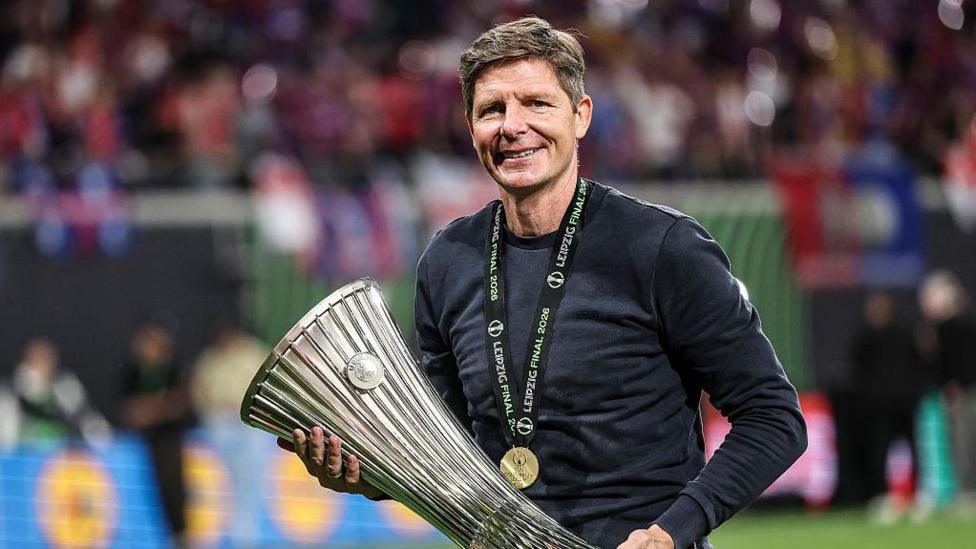
Glasner's Forest Gamble: Can Palace's Architect Walk Away Clean?
Oliver Glasner transformed Crystal Palace into a legitimate force. A move to Nottingham Forest would test the limits of managerial loyalty.

Carter Crowned T20 World Cup Top Scorer After Masterclass Against New Zealand
Scotland's Darcey Carter stakes her claim as the tournament's dominant force with an unbeaten 72 against New Zealand.