Tuchel Must Reveal His System as England Enter World Cup Danger Zone
Thomas Tuchel faces a defining tactical call as England navigate a World Cup of shocks that demands immediate certainty over experimentation.
The systemic volatility of this World Cup has stripped away the luxury of patience. For Thomas Tuchel, the transition from domestic tactical tinkerer to international steward now demands an abrupt end to experimentation. England have drifted into a tournament zone where shocks have become the prevailing norm rather than the exception, and surviving it requires a coach to nail his colours to the mast. The era of rotating formations and fluid, undefined tactical shapes must yield to the clarity of a single, devastating system.
Tuchel's coaching pedigree is built on structural rigidity. From his Mainz Gegenpressing to his Stuttgart academy principles, and onward to the 3-4-2-1 that conquered Europe at Chelsea, the German has always thrived when he commits to a definitive framework. Yet the international game, with its fleeting contact windows and fragile egos, often tempts coaches into compromise. Tuchel's early England tenure has flirted with multiple profiles, attempting to shoehorn generational talent into compromised shapes. The World Cup's unforgiving cadence punishes such indecision.
Magnitude of the Danger Zone
This tournament has established a bruising hierarchy where reputations count for nothing. The shocks rippling through the bracket are not mere anomalies; they are the logical conclusion of modern football's tactical convergence. Smaller nations now possess the pressing organisation and low-block discipline that neutralise superior individual talent. To fallback on individual brilliance is to invite elimination.
England's historical tournament trajectory under previous regimes often followed a familiar, fatal arc: stuttering through the group phase with disjointed mechanics before encountering a tactically superior opponent in the knockout rounds. Gareth Southgate offered structural security but spontaneous attacking solutions. The FA's pivot to Tuchel was an explicit demand for elite European tactical nuance. But nuance without certainty is chaos. Entering this danger zone means Tuchel can no longer afford to keep his tactical cards close to his chest.
The Goalkeeper Gambit and Defensive Foundation
Every Tuchel masterpiece begins with the first phase. The most immediate and defining selection call revolves around the goalkeeper, a position that dictates the entire geometrical build-up of the side. Sticking with a traditional shot-stopper offers residual security but obscures the positional play required to beat the mid-blocks England will now face. Deploying a ball-playing sweeper-keeper compresses the opponent's pressing shape and opens vertical channels, but requires absolute trust.
In defence, mixing a back four with moments of a back three has left England's wide defenders unsure of their resting positional state. The half-space coverage has been inconsistent, exposing the central channels to counter-attacks. A definitive structure, likely a resolute 3-4-2-1 or an attacking 4-2-3-1 with locked interior positioning, is required. The backline must operate as a single mechanised unit, knowing exactly when to drop and when to push up as a cohesive line.
The Midfield Balance and Attacking Phrasing
The central midfield puzzle offers Tuchel his greatest opportunity to impose his will. The temptation to deploy two pure ball-carrying number tens alongside a single pivot is a romantic construct that collapses against high-level transitional pressing. Tuchel's Chelsea succeeded because of Jorginho's metronomic control flanked by relentless runners. England require that same sacrificed profile—a disciplined destroying presence who offers fundamental rest-defence, allowing the creative weapons to function without fear of the spaces behind them.
Further forward, the tactical instruction must shift from creating overloads to executing them with ruthless geometry. Too often, England's wide forwards have drifted inside prematurely, compressing the pitch and making the attack entirely legible. Tuchel must enforce width. The touchline hugging winger is not an archaic concept; it is a structural necessity that pulls the opponent's defensive shell apart. Stretching the pitch horizontally creates the vertical chasms for central creators to exploit.
Tactical Shift
The pivotal adjustment required is fundamentally psychological as much as it is schematic. Tuchel must abandon the preparatory mindset of international management—where broad squads are assessed and systems diluted to accommodate various profiles—and adopt the ruthless specificity of knockout football.
The shift requires moving from a reactive possession model, where England probe and wait for the opponent to make an error, to an active Gegenpressing paradigm. Upon losing the ball, Tuchel's side must immediately compress the space around the ball-carrier, suffocating the transition before the opponent can exploit the temporary disorganisation. Passively retreating into a mid-block after turnovers has allowed inferior teams to gain momentum and confidence. In the danger zone, you cannot let an underdog breathe.
Furthermore, in possession, the tactical shift must involve the aggressive elevation of the defensive line. A low line invites sustained pressure, playing into the hands ofobotient teams looking to spring surprises. By pinning the opposition back and manipulating the ball through the half-spaces, England force the game to be played solely in the opponent's defensive third. It is high-risk, but it is the only system that adequately protects against the chaos of the unexpected.
"At this level, and at this stage, you cannot play to protect what you have. You must play to dominate the space, to make the pitch as small as possible for the opponent. The moment you hesitate, you are vulnerable. We must show our true face now."
Historical context amplifies the urgency. England have not won a major tournament since 1966, but the deeper, more relevant scar tissue stems from knockout losses where tactical ambiguity undid superior squads. The defeats where formations looked confused, where pressing triggers were misaligned, and where players appeared burdened by the weight of conflicting instructions. Tuchel was appointed precisely to solve this syndrome, yet the World Cup's shock factor threatens to swallow another generation of English talent.
What Lies Ahead
The next fixture is not merely a game; it is the ultimate test of Tuchel's capacity to translate his club-level tactical absolutism to the international stage. He must select his strongest XI in terms of tactical suitability, not just reputation. He must drill a single pattern of play until it is subconscious. The opposition will present their own structural challenges, likely a deep 4-5-1 designed to frustrate and transition quickly.
Beating it requires patience in circulation, surgical precision in the final third, and an unyielding press out of possession. There is no longer room for the luxury of versatility. Versatility without a primary identity is merely tactical schizophrenia. England need a rigid, undeniable tactical philosophy imposed upon the tournament. Only then can they navigate the danger zone and justify the bold appointment of their German architect.
Editorial Integrity
This is an original SportPulse article written by our editorial team. All content is independently researched, written, and reviewed by our writers and editors before publication. We do not publish copied, aggregated, or syndicated content.
SportPulse is committed to original sports journalism. Read our editorial policy or contact us with any questions.
More Like This
All football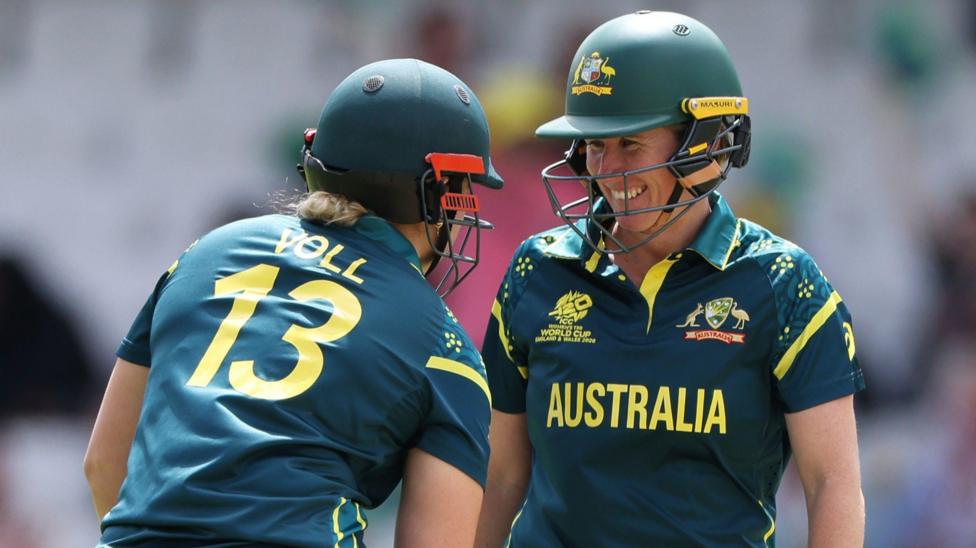
Australia and India Statement Wins Shake Up T20 World Cup
Australia and India delivered ruthless victories at the Women's T20 World Cup, sending a massive warning to their rivals.

Eleven-Try England Demolish Fourteen-Man Fiji in Liverpool
England's tactical width and relentless phase play exposed Fiji's red-card vulnerability in a rout that ended their losing streak.

At 17, Layla Drury Just Rewrote Manchester United's Record Books
The youngest player in United Women's history now holds another record after signing her first professional deal.