Tunnel Vision: The Rituals Shaping World Cup 2026's Elite
From Messi's timed maté to Kane's left-first kit routine, preparation rituals reveal the tactical psychology behind elite tournament performance.
The Architecture of Routine
The tunnel is the last neutral zone. Ninety minutes before kick-off, it becomes a corridor of controlled chaos where the world's most refined tactical instruments calibrate themselves for the demands ahead. For the 2026 World Cup's generation of elite players, preparation is not merely habit. It is a system of psychological and physical anchoring that mirrors the tactical structures waiting on the pitch.
Lionel Messi's ritual of sharing maté with Rodrigo De Paul at precisely 9:30am represents more than cultural comfort. It is an exercise in temporal certainty. In tournament football, where control of the schedule often the first casualty of media obligations, travel logistics and shifting kick-off times, locking a routine to a specific hour provides an anchor. The Acto-Argentine compounds within maté offers mild stimulation, but the ritual's tactical value lies in its predictability. Messi processes his pre-match cognitive load through a framework he can control when everything else sits in flux.
Harry Kane's insistence on donning the left side of his kit first speaks to a different preparatory philosophy entirely. This is sequential processing at its most literal. The act of dressing becomes a kinetic checklist, each movement confirming readiness in a specific order. For a striker whose entire game depends on the sequence of movement, timing of runs and the order of operations inside the penalty area, the ritual is a physical rehearsal of the positional discipline that defines his role.
The Psychology of Pre-Match Systems
Elite footballers operate within structures so demanding that cognitive load management becomes a tactical asset. The modern game's pressing systems, with their triggers, coverage shadows and rest-defence shapes, require players to process multiple variables simultaneously. Rituals reduce decision fatigue by automating portions of the pre-match routine. What appears eccentric to the observer is, in tactical terms, a form of load management.
Consider the broader context of tournament football. A World Cup conducted across three nations in 2026 will present logistical challenges unmatched in the tournament's history. Travel distances, climate variations and altitude changes across the United States, Mexico and Canada will disrupt circadian rhythms and challenge established preparation windows. Players who have hardened their rituals against disruption will possess an adaptive advantage. Those whose routines depend entirely on environmental stability may find themselves compromised before the first tactical instruction is delivered.
The cognitive science underpinning these behaviours is well-established. Representational routines can serve as cognitive shortcuts that reduce the demands on working memory. By embedding elements of the competitive task within the pre-match routine, players effectively extend the window during which their neural pathways fire in competition-ready patterns.
The Data Behind the Habit
- 9:30am: Messi's scheduled maté time with De Paul, a fixed point in an otherwise fluid tournament schedule
- Left side first: Kane's sequential kit protocol, a kinetic anchor for positional discipline
- 2026: World Cup spanning three nations, introducing unprecedented logistical variation
- 90 minutes: The window during which tunnel routines transition from preparation to execution
Tactical Implications of Individual Rituals
Messi's matinée with maté connects to his broader profile as a spatial processor. His style has always been defined by the capacity to read positioning before team-mates and opponents have fully registered the spatial picture. A ritual that calms the mind and establishes a baseline of focused attention serves this capacity directly. The compound effect occurs in how Messi enters the match: not with the anxious energy of a player seeking to impose himself, but with the settled awareness of someone who has already processed the opening phases before stepping on the grass.
De Paul's presence in the ritual is equally significant. Within Argentina's 4-3-3 structure, De Paul functions as a transitional conduit, the player most responsible for converting Messi's spatial observations into executed actions. Their shared ritual establishes a micro-communication channel that predates the match. The trust built over maté transfers directly to the trust required when De Paul must decide whether to play the early ball into the channel or recycle possession. The ritual is, in essence, a rehearsal of their tactical relationship.
Kane's routine reflects the mindset of a penalty-box predator whose game is built on repetition and positional certainty. His movement patterns inside the area are sequences: the feint, the check, the acceleration toward the near post. These are rehearsed movements that depend on precise timing and an unwavering sense of spatial positioning. By sequencing a pre-match routine with the same rigour, Kane engages the same neural pathways that will govern his movement in the decisive moments. The ritual is not superstitious. It is pre-performance priming.
Ritual as Tactical Adaptation
The modern coach's relationship with player rituals has evolved significantly. A generation ago, eccentric pre-match behaviours were often dismissed as superstition and quietly discouraged by managers who preferred a uniform approach to preparation. The current generation of tacticians, many of whom have incorporated sports psychology into their staffing structures, recognise that rituals serve a function worth preserving.
For a coach like Lionel Scaloni, whose Argentina side won the 2022 World Cup partly through an extraordinary level of tactical flexibility, the challenge is to accommodate individual rituals within a collective framework. Messi's matinée maté does not disrupt the schedule. It operates within a window that Scaloni's staff have learned to protect. The same applies to Kane under various England managers, whose left-first protocol has never interfered with the team's collective warm-up sequence.
The tactical value lies in what these rituals prevent: the cognitive drift that can seized a player in the anxious hours before a major fixture. A mind left unstructured in the pre-match window can spiral into over-analysis, second-guessing and the processing of irrelevant stimuli. Rituals occupy the mind with a task of trivial difficulty, freeing the subconscious to complete the more complex work of tactical preparation.
"We don't wait for the perfect moment. We build the shape that creates the moment." — A philosophy that captures the essence of pre-match ritual as active construction rather than passive waiting
The 2026 Context and What It Demands
The 2026 World Cup will test these rituals like no previous tournament. The expanded format, with 48 teams competing across vast geographical distances, introduces a level of environmental variation that will strain even the most established routines. A player who has spent a career refining a preparation protocol may find that protocol disrupted by a flight delay, an unfamiliar hotel layout or a kick-off time shifted to accommodate broadcast schedules.
This is where the distinction between rigid ritual and adaptive routine becomes tactically significant. Messi's timed maté session represents a fixed point, but its function as a temporal anchor is what matters. If the kick-off shifts or travel disrupts the schedule, the anchor can be recalibrated without losing its psychological function. The ritual's value is not the specific hour but its consistency.
Kane's sequential kit protocol is more portable. The act of dressing left-first can be executed in any dressing room, regardless of the logistical challenges that preceded arrival. This environmental independence makes it more resilient to the disruptions that tournament football inevitably produces.
The Coaching Challenge
For the tactical staff preparing teams for 2026, the management of rituals becomes part of the broader challenge of squad optimisation. Identifying which routines serve a genuine cognitive function and which have devolved into superstition requires nuance. A ritual that has become a source of anxiety when disrupted is worse than no ritual at all. It introduces a variable that the player cannot control, undermining the confidence that the ritual was designed to provide.
The most sophisticated staff treat pre-match routines as data points within the performance spectrum. They document the rituals, observe their consistency and monitor their relationship to on-pitch performance. When a routine correlates with strong performances, it is protected. When the correlation weakens, the conversation shifts toward adaptation.
This analytical approach to what was once considered the mystical realm of superstition reflects the broader professionalisation of football's psychological dimension. The tunnel is no longer a space where players disappear into private worlds of habit. It is an extension of the tactical environment, monitored and managed with the same precision as the pressing trigger or the rest-defence structure.
Looking Ahead: The Tournament Within the Ritual
As the 2026 World Cup approaches, the narratives will focus on formations, pressing schemes and the tactical nuances of each contenders. The tunnel rituals will remain largely invisible, playing out in private moments before the public spectacle begins. Yet their influence will be present in every first touch, every decision under pressure, every moment where a player processes the game with the clarity that preparation provides.
The next milestone in this preparation cycle will be the international friendlies scheduled for the final window before tournament squads assemble. These matches offer the last opportunity for players to test their rituals under conditions that approximate the tournament environment. For coaches, they represent a final chance to observe how individual routines integrate with collective preparation before the stakes become absolute.
The tunnel will be quiet then, as it always is. But within that silence, the architecture of performance will be under construction, one ritual at a time.
Editorial Integrity
This is an original SportPulse article written by our editorial team. All content is independently researched, written, and reviewed by our writers and editors before publication. We do not publish copied, aggregated, or syndicated content.
SportPulse is committed to original sports journalism. Read our editorial policy or contact us with any questions.
More Like This
All long-reads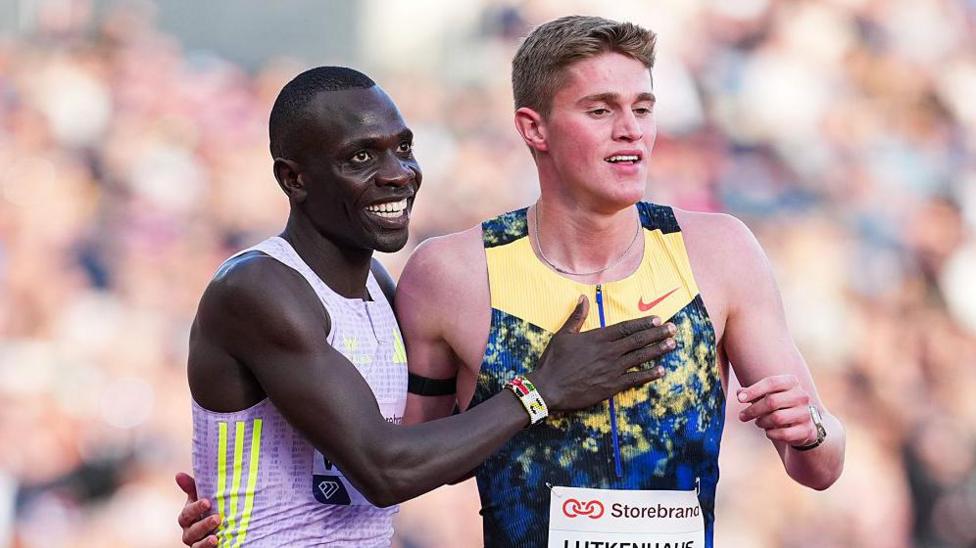
Lutkenhaus Tactical Masterclass Stuns Wanyonyi in Oslo
Cooper Lutkenhaus deployed superior pacing strategy to dismantle Emmanuel Wanyonyi's tactical framework at the Oslo Diamond League.
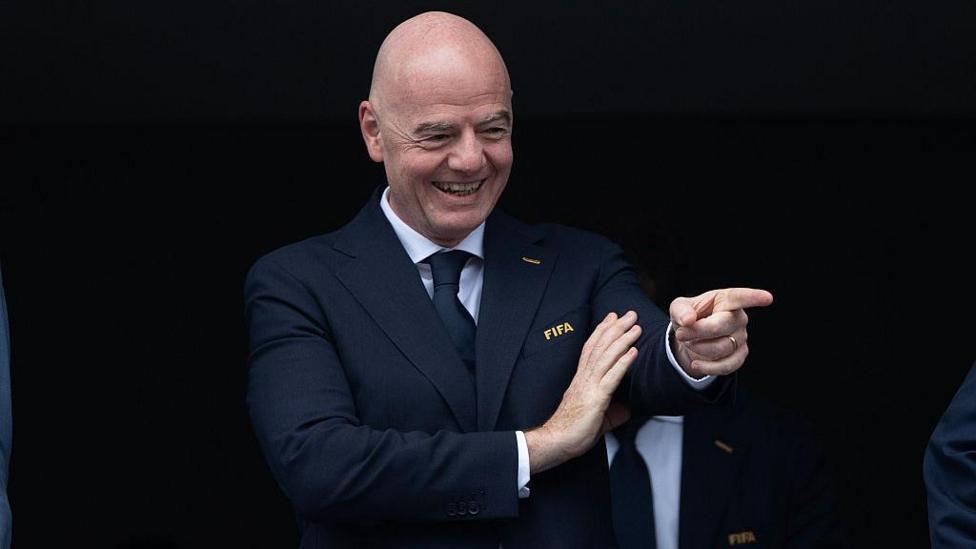
Infantino's Decade of Power: Why Europe Can't Touch Him
Ten years into his presidency, European outrage over Trump's Balogun intervention won't unseat Gianni Infantino. Here's why.
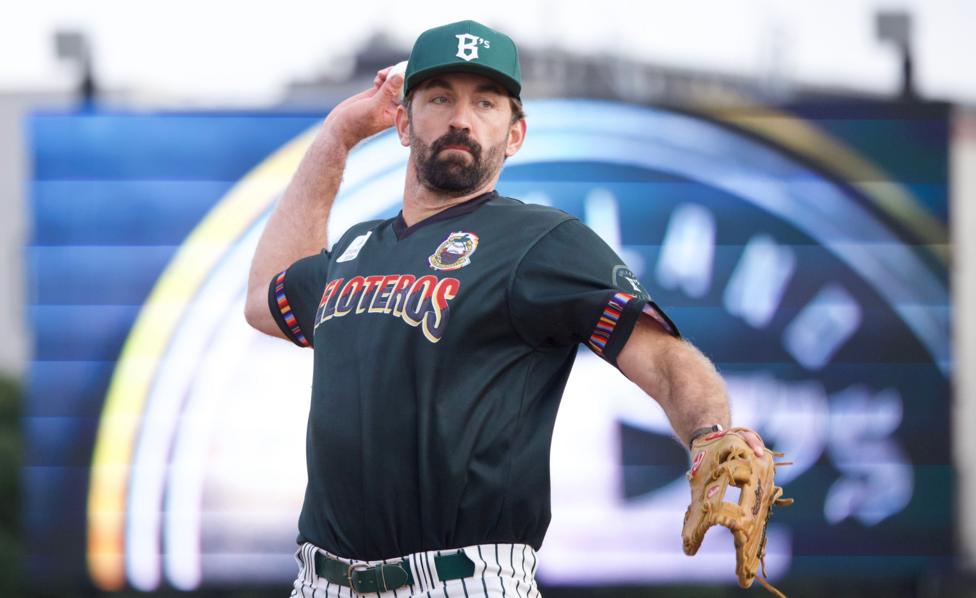
Plunkett's Pitch: From England's Fast Lane to the American Diamond
Former England fast bowler Liam Plunkett officially begins his pro baseball career, tackling the ultimate athletic pivot.