Uefa Draws the Line: Russia's Football Return Faces Continental Veto
Uea is prepared to block Russia's reintegration into international football, setting up a fresh governance clash with Fifa.
A Cold War Rekindled
The provisional lifting of Russia's suspension by the International Olympic Committee was always going to send shockwaves through the global sporting ecosystem. What few anticipated was the speed and severity of the backlash from European football's governing body. Uefa is prepared to block the return of Russian teams to international competition, a stance that deliberately positions the continent's administrators in direct opposition to both the IOC's softly-softly approach and, potentially, Fifa's forthcoming review.
This is not a bureaucratic skirmish. It is a fundamental philosophical divergence over the role of sport in geopolitics, the pace of reintegration, and the autonomy of regional governing bodies. The last time Uefa and Fifa openly clashed on an issue of this magnitude, the fallout reshaped the governance of the global game for a generation.
The trigger came on Tuesday when Fifa confirmed it would "analyse the decision before deciding on next steps" regarding its own suspension of Russian teams, imposed nearly three years ago following the full-scale invasion of Ukraine. That invasion, launched in February 2022, triggered the most comprehensive sporting boycott of a major nation since apartheid-era South Africa.
The Numbers Behind the Isolation
The suspension of Russia from international football has been total and uncompromising. Since the ban was enacted, the Russian national team has not played a single competitive fixture recognized by either Uefa or Fifa. Russian clubs have been absent from the Champions League, Europa League, and Conference League for what will soon be three full seasons.
- 0 competitive international appearances by the Russian men's national team since November 2021
- 0 Russian clubs participating in Uefa competition since the 2021-22 season
- 4 years since Russia last competed in a major tournament (Euro 2020, held in 2021)
- Tens of millions in lost broadcast revenue and prize money for the Russian Football Union
The financial toll on Russian football has been staggering.鸡腿一致. The Russian Football Union, which historically generated substantial income from participation bonuses, television rights, and commercial partnerships tied to European competition, has seen those revenue streams evaporate completely. Domestic football survives, but it exists in a bubble isolated from the rhythms and rewards of the European game.
Why Uefa Holds the Real Power Here
The Geographical Reality
Uefa's leverage stems from one inconvenient truth: Russia, geographically and administratively, sits within Europe's football jurisdiction. The Russian Football Union is a Uefa member, not an Asian Football Confederation member. For Russian teams to return to competitive international football, they would need to participate in Uefa-sanctioned tournaments, whether that is the European Championship, the Nations League, or the club-controlled Champions League and its sister competitions.
A proportional SportPulse analysis of Russia's historical position reveals why this matters:
- European Championship qualification has been Russia's only viable pathway to major tournament football since the collapse of the Soviet Union, with the nation qualifying for 7 of the last 10 Euros tournaments prior to the ban.
- Club coefficient points accumulated through Uefa competition were the sole mechanism by which Russian clubs could access continental prize money and prestige. Spartak Moscow, Zenit Saint Petersburg, and CSKA Moscow built modern infrastructure on the back of Uefa revenue distributions.
- Youth development pathways for Russian players were almost entirely dependent on exposure to European competition, both at club and international level.
If Uefa maintains its veto, Fifa's theoretical permission for Russia to return means functionally very little. A national team cannot play friendlies indefinitely and call itself reintegrated. The competitive structure runs through Nyon, not Zurich.
The Political Mathematics
Beyond the structural mechanics, the political reality within Uefa is overwhelmingly opposed to reintegration. Multiple national associations have privately and publicly indicated their refusal to compete against Russian teams. The Nordic nations, Poland, the Baltic states, and crucially Ukraine itself, form a bloc that would almost certainly boycott any competition involving Russian sides.
Poland's refusal to play Russia in the 2022 World Cup playoff semifinal was the opening salvo in this campaign. It forced Fifa's hand then, and the precedent established,euros. That precedent is that athletes and federations are willing to forgo competitive opportunities rather than normalize participation by representatives of an active aggressor state.
The practical mathematics of reintegration are devastatingly simple. If even five or six associations refuse to fix欧洲tures against Russia, an entire competition draw collapses. forfeits cascade. The sporting integrity of any tournament featuring Russia is immediately compromised, and Uefa knows it.
The IOC Precedent and Its Limitations
The IOC's decision to provisionally lift Russia's suspension from global competition provides the diplomatic cover Fifa needs to begin its own review. But the IOC operates in a fundamentally different landscape, one where athlete neutrality, individual participation, and the Olympic charter's stated principles of apoliticism provide a framework for reintegration that simply does not exist in team football.
Football is not gymnastics. It is not fencing. It is not a sport where a single athlete can enter a venue under a neutral flag and compete without requiring an opposing team to share a pitch for 90 minutes. The collective, tribal nature of international football means that any Russian return is not an administrative technicality. It is a political act, a statement of normalization, and every federation that takes that pitch is implicitly endorsing that act.
We do not wait for the perfect alignment of international politics. But we do require a baseline consensus that competition is possible without compromising the integrity of the tournament or the safety of its participants.
Ueas内部对这段话的共识正在硬化. The internal consensus around this principle at Uefa has hardened over the past two years. What began as a reactive, emergency suspension has calcified into institutional policy, reinforced by the vocal preferences of major associations and the ongoing reality of the conflict in Ukraine.
What Happens When Two Governing Bodies Collide
The last major governance collision between Uefa and Fifa over a member association's status produced a protracted legal and political battle that dragged on for years and cost both organizations significant political capital. That dispute ultimately required intervention from the Court of Arbitration for Sport, and the resolution satisfied no one fully.
The current standoff has the potential to be even more corrosive. Fifa, under its current leadership, has attempted to position itself as a global unifier, a body that transcends regional politics. Uefa, by contrast, has adopted a stance that is explicitly regional, explicitly political, and unapologetically grounded in the views of its European membership.
The practical scenarios break down into three paths, each with profound implications for the global game.
- Full confrontation. Fifa clears Russia to return, Uefa maintains its ban. Russian teams are technically eligible for Fifa events but cannot practically participate because they have no Uefa-sanctioned competitive pathway.
- Compromise formula. A negotiated return with conditions so stringent they satisfy neither the pro-reintegration lobby nor the opposition bloc. This is the IOC's playbook, but football's structure makes it significantly harder to implement.
- Indefinite deferral. Fifa's review produces no actionable recommendation, and the status quo persists by inertia. This is the most likely short-term outcome.
Uefa's preemptive strike, making its opposition public before Fifa has even completed its analysis, is a deliberate escalation. It removes the excuse of ignorance and forces Fifa to acknowledge that any reintegration decision will be actively contested by the most powerful and wealthy confederation in the global game.
The Bottom Line
Uea has calculated that blocking Russia's return is both morally defensible and practically sustainable. It is a calculation rooted in institutional solidarity, the demonstrated willingness of its members to boycott, and the structural reality that European football's governing body controls the only competitive pathway that matters for Russian teams.
The IOC may have cracked the door open. Uefa just welded it shut. The question now is whether Fifa has the appetite to try kicking it down, or whether this becomes the latest chapter in the long, bitter history of football governance warfare.
One thing is certain.. The next six months will reveal whether the global game can survive a fracture between its two most powerful bodies, or whether the institutional architecture of world football, designed for an era of consensus and compromise, can withstand the pressure of a conflict it was never built to resolve.
Editorial Integrity
This is an original SportPulse article written by our editorial team. All content is independently researched, written, and reviewed by our writers and editors before publication. We do not publish copied, aggregated, or syndicated content.
SportPulse is committed to original sports journalism. Read our editorial policy or contact us with any questions.
More Like This
All football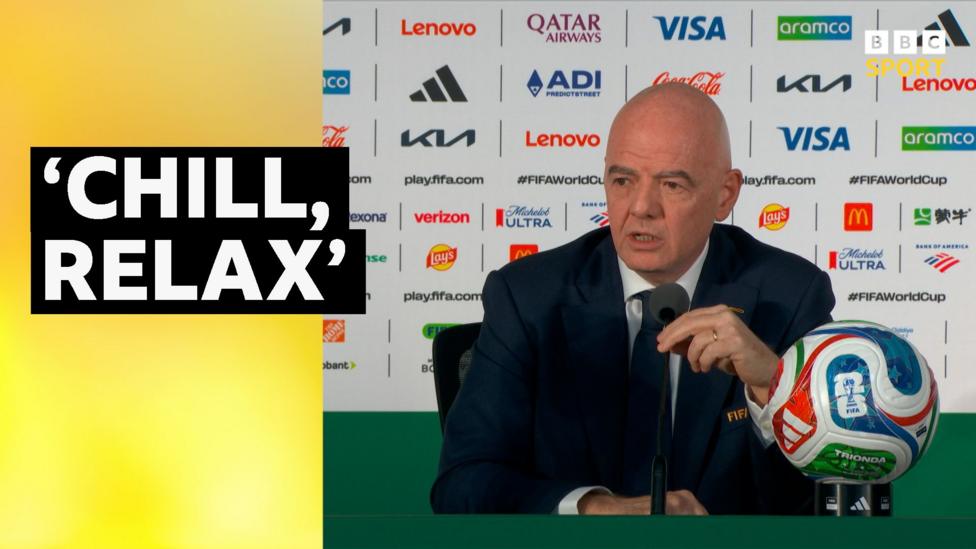
Have You Lost Control? Infantino Squares Off With the Press on World Cup Eve
Gianni Infantino told journalists to 'chill' over World Cup chaos. Then the BBC asked the question nobody else would.
Philadelphia's Tailgate Gamble Is A World Cup Cultural Masterstroke
Philadelphia bet on tailgating culture for the 2026 World Cup. It is the smartest decision any US host city has made.
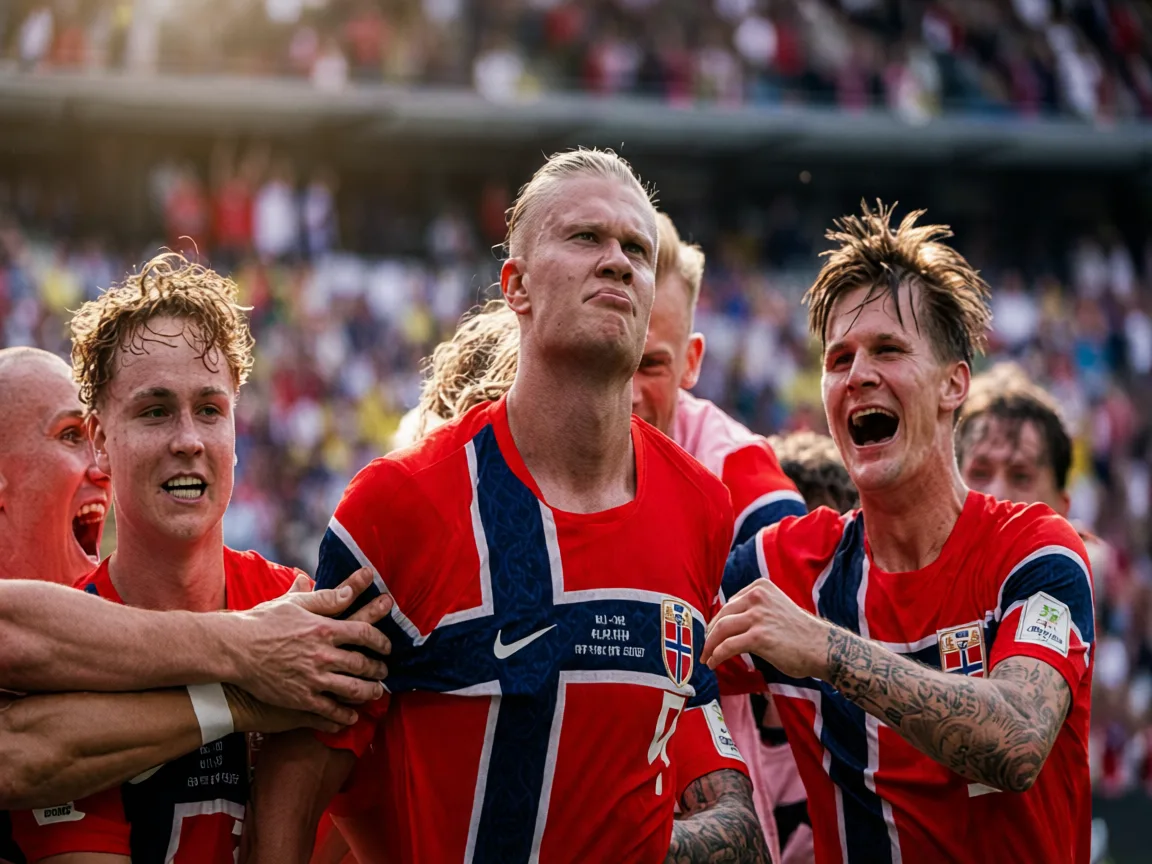
How Norway Built a Golden Generation From Plastic Pitches
Artificial turf, gambling revenue, and a coach-first culture built Norway's talent machine from the ground up.