Ugarte's Knee Injury Leaves United's Midfield Architecture in Ruins
Knee ligament damage to Manuel Ugarte threatens to unravel Ruben Amorim's entire pressing structure at Old Trafford.
The Injury That Changes Everything
Manchester United confirmed on Monday that midfielder Manuel Ugarte sustained a knee ligament injury during Uruguay's 1-0 World Cup defeat to Spain. The 25-year-old was carried off on a stretcher shortly before half-time after appearing to twist awkwardly while closing down Spain's Pedri. The club's brief medical statement offered no timeline for recovery, but ligament injuries of this nature typically sideline players for a minimum of six to eight weeks, with more severe cases stretching toward three to four months.
For Ruben Amorim, this is not merely a personnel setback. It is a structural crisis.
Ugarte was not just a player in United's system. He was the system. The Uruguayan international functioned as the single pivot in Amorim's preferred 3-4-2-1 formation, the fulcrum around which everything else rotated. His absence forces a fundamental reassessment of how United can play, not just who replaces him.
Why Ugarte Was Irreplaceable
Since arriving from Paris Saint-Germain, Ugarte had become the heartbeat of Amorim's tactical project at Old Trafford. His role demanded a very specific profile: the ability to cover vast horizontal distances, shield the back three, and initiate pressing sequences from a deep central position. Few midfielders in European football combine that particular skill set.
The numbers told the story of his indispensability. Ugarte consistently ranked among the Premier League's elite for ball recoveries per 90 minutes, a metric that underpins Amorim's entire defensive philosophy. The 3-4-2-1 shape relies on the defensive midfielder winning second balls and recycling possession quickly into the half-spaces occupied by the two number 10s. Without that first action, the system collapses into disconnected lines.
United's pressing structure under Amorim is built on a concept borrowed from his Sporting CP days: the rest-defense. In this model, the wing-backs push high but the single pivot holds a disciplined position between the lines, acting as insurance against counterattacks. Ugarte excelled in this role because of his anticipation and his willingness to commit tactical fouls when the press was broken. He was, statistically, one of the most effective tactical foulers in the division.
Remove that player, and the entire pressing funnel loses its filter.
Tactical Shift: The Midfield Vacuum
The central question facing Amorim is not simply "who plays in midfield" but "what shape can we credibly field without our anchor?"
Option one is to deploy Kobbie Mainoo in the single pivot role. Mainoo possesses the technical quality and the composure on the ball, but his profile is fundamentally different from Ugarte's. The young Englishman is a progressive carrier, not a destroyer. Placing him as the lone six in a 3-4-2-1 would expose him to defensive transitions he is not yet equipped to handle alone. His tendency to drive forward with the ball, while electrifying in the final third, would leave gaps behind him that elite sides will punish ruthlessly.
Option two involves a formation shift entirely. Amorim could revert to a 3-5-2 or even a 4-2-3-1, pairing Mainoo with Casemiro or Toby Collyer in a double pivot. This would provide greater defensive solidity but would sacrifice the width that the wing-back system generates. It would also mean benching one of the two number 10s, likely disrupting the connection between Bruno Fernandes and whichever second attacker operates alongside him.
Option three is the most intriguing and the most risky: accelerating Sekou Kone's integration into the first team. The young midfielder was signed with the long term in mind, but circumstances may force Amorim's hand. Kone's profile mirrors Ugarte's more closely than any other option in the squad, combining physicality with defensive awareness.
None of these solutions replicate what Ugarte provides. Each introduces a compromise.
The Broader Context: International Duty and Squad Management
Ugarte's injury during a Uruguay match adds fuel to the simmering tension between clubs and national federations over player welfare. United invested heavily in the midfielder specifically to anchor their Champions League and Premier League campaigns. Losing him to an international fixture during the club season is a scenario that will frustrate the Old Trafford hierarchy, even if they would never say so publicly.
Uruguay's defeat to Spain was a high-intensity affair, the kind of match where the margins between competitive commitment and physical risk become dangerously thin. Ugarte, characteristically, threw himself into every challenge. That aggression, so valuable at club level, proved costly on the international stage.
The injury also raises questions about United's squad depth planning. The club sanctioned several midfield departures in recent windows without securing adequate cover for the Ugarte role specifically. Scott McTominay was allowed to leave for Napoli, a decision that now looks more consequential than it did at the time. McTominay was never a like-for-like replacement for Ugarte, but his physical presence and goal threat from midfield provided an alternative tactical dimension that United now lack entirely.
What This Means for the Champions League
The timing could hardly be worse. United's Champions League campaign is entering its critical phase, and the fixtures ahead demand the defensive discipline that Ugarte provides. European opponents are significantly more adept at exploiting the transitional moments that arise when a pressing structure loses its anchor.
Under Amorim, United's best performances this season have all featured a dominant Ugarte display. The wins where he was absent or below par tended to be scrappier, less controlled affairs. The correlation between his individual performance level and the team's collective output is unusually strong for a defensive midfielder, a testament to how central the single pivot role is to this tactical system.
The Recovery Timeline and What Comes Next
United have yet to confirm a specific return date, which itself is telling. Ligament damage in the knee can range from a minor Grade 1 sprain requiring three to four weeks to a complete tear demanding six months or more of rehabilitation. The club's vagueness suggests they are awaiting further assessment before committing to a prognosis.
In the meantime, Amorim faces a defining stretch. The matches over the coming weeks will reveal whether his tactical project is built on Ugarte's shoulders or on a system that can adapt to the loss of its most critical component. Great managers build systems that transcend individuals. This is Amorim's earliest and most severe test of that principle at Old Trafford.
The Premier League does not pause for tactical experiments. United's next fixture will arrive whether Amorim has solved the puzzle or not. The answer he reaches will shape not just the next few months, but the credibility of his entire positional play philosophy in English football.
Ugarte's knee has done more than sideline a player. It has forced a philosophical reckoning.
Updated: 2026-06-28 — Added official Manchester United confirmation of knee ligament injury and details of incident occurring while closing down Pedri.
Editorial Integrity
This is an original SportPulse article written by our editorial team. All content is independently researched, written, and reviewed by our writers and editors before publication. We do not publish copied, aggregated, or syndicated content.
SportPulse is committed to original sports journalism. Read our editorial policy or contact us with any questions.
More Like This
All football
Tacos, Drones, and Mockery: South Korea's Chaotic World Cup
Amid taco-gate, drone drama, and a gutting defeat, Son Heung-min faces a defining moment against South Africa to save Korea's tournament.
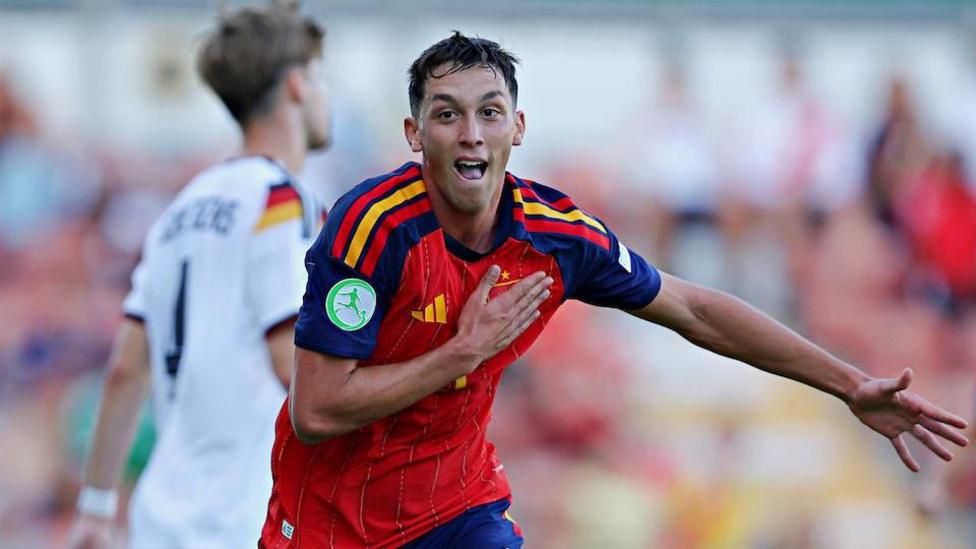
Spain's U19 Conquest: A Decade-Defining Dynasty in Wrexham
Spain claimed their 10th U19 European title with a 2-0 win over Germany at Wrexham's Racecourse Ground, cementing an unparalleled youth dynasty.
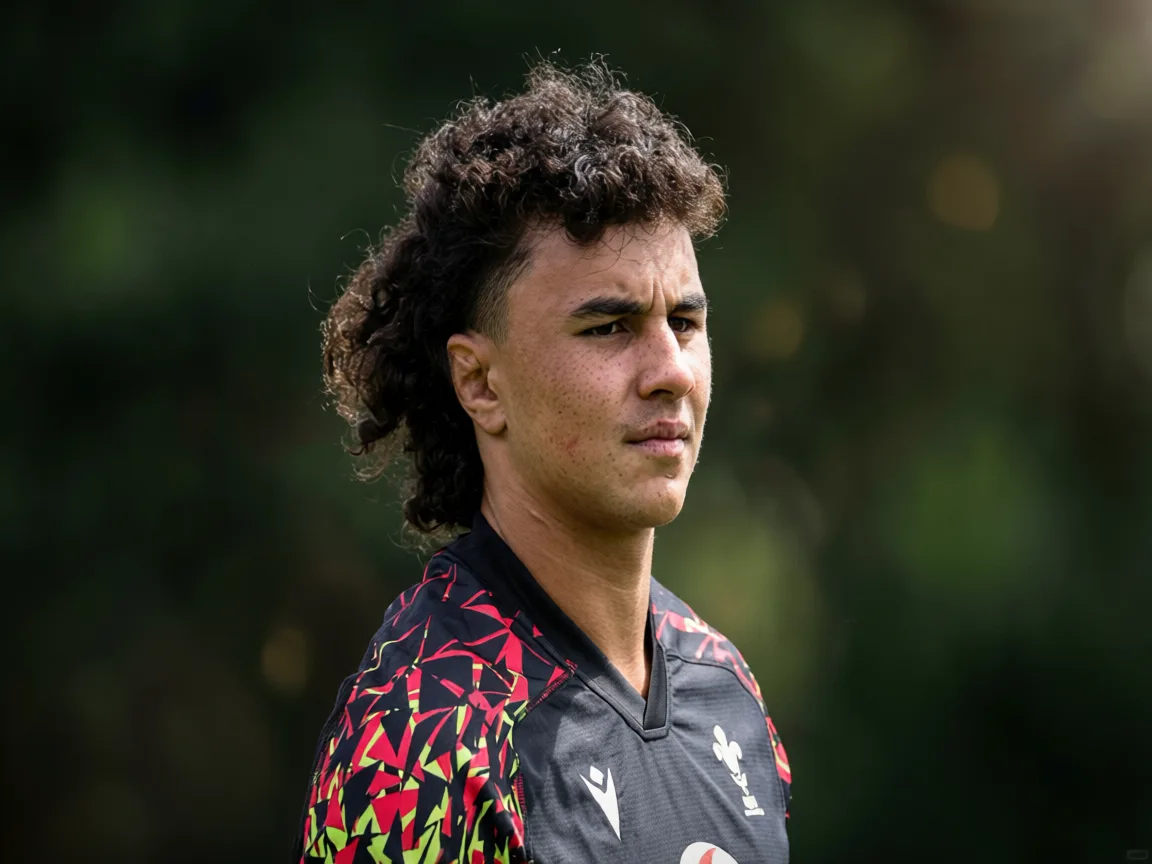
Exeter's Kane James Poised for Wales Debut Against Argentina
Exeter Chiefs forward Kane James is in line for his first Wales cap against Argentina in San Juan, a milestone moment for club and country.