UK Moves to Shield World Cup and Crown Jewel Sports From Streaming Paywalls
New government legislation could rewrite the rules of sports broadcasting, keeping the biggest events free for UK viewers.
The Government Draws a Line in the Sand
The UK government is pushing forward with new legislation designed to prevent some of the world's biggest sporting events from disappearing behind subscription paywalls. At the heart of the proposal: streaming and catch-up rights for events like the FIFA World Cup, the Olympic Games, and other national treasures of the sporting calendar must remain freely accessible to viewers across Britain.
This is not a minor policy tweak. It is a direct intervention into a market that has been tilting steadily toward subscription models for over two decades. The government is making a calculated bet that the public interest in free access to marquee sport outweighs the commercial appetite of rights holders and platforms.
The move comes as the lines between traditional broadcast television and streaming continue to blur at an accelerating pace. Catch-up services, on-demand replays, and streaming-only deals have opened a new front in the battle over who gets to watch what, and at what cost.
The Crown Jewels: A Brief History
The concept of protecting major sporting events for free-to-air audiences is not new in the UK. The listed events regime, established under the Broadcasting Act 1996 and later amended by the Communications Act 2003, created a framework of so-called "crown jewel" events that must be available to the widest possible audience.
These are split into two tiers. Group A events must have live coverage on free-to-air television. This includes the FIFA World Cup finals and all matches involving home nations, the Olympic Games, the FA Cup Final, Wimbledon finals, the Grand National, and the Rugby League Challenge Cup Final, among others. Group B events require secondary or highlights coverage to remain free, encompassing fixtures like home cricket internationals, the Ryder Cup, and the Commonwealth Games.
For years, this regime held. But it was designed for a world of terrestrial channels and satellite dishes. Streaming was not part of the original calculus, and the legislation has struggled to keep pace with how modern audiences actually consume live sport.
Why Now? The Streaming Tipping Point
The timing of this proposal is no accident. Rights deals have grown exponentially more complex and expensive. Amazon Prime Video secured a package of Premier League matches starting from the 2019-20 season. Apple TV+ now holds Major League Soccer rights globally. DAZN has positioned itself as the "Netflix of sport" across multiple territories.
In this landscape, the risk of major events migrating behind a paywall is no longer hypothetical. Streaming platforms are willing to pay premiums that traditional free-to-air broadcasters increasingly struggle to match. The government clearly sees a window closing.
There is also a democratic argument at play. The World Cup final, for example, is not just a football match. It is a shared national moment. When England reached the semi-finals of the 2018 World Cup in Russia, an estimated 26.5 million viewers tuned in on ITV. That kind of viewership depends entirely on free accessibility. Lock it behind a subscription wall, and you fracture the audience and the cultural moment itself.
What the Legislation Could Change
The proposed law would extend the protections of the listed events regime into the streaming and catch-up space explicitly. Under current rules, the legislation primarily targets linear broadcast television. The digital landscape has been something of a grey area, allowing platforms to acquire streaming rights for listed events without necessarily being held to the same free-to-air obligations.
This legislation would close that loophole. Streaming platforms that secure rights to crown jewel events would be required to make that content available without a subscription paywall, or at minimum, to ensure that catch-up access remains free to the public.
The implications are significant. For one, it would fundamentally reshape how rights auctions work. If a platform knows it cannot monetize the World Cup through subscriptions alone, its willingness to pay top dollar shifts. That, in turn, affects the revenue flowing to FIFA, UEFA, and domestic governing bodies.
For broadcasters like the BBC and ITV, the proposal offers a lifeline. These public service broadcasters have seen their share of top-tier live sport erode steadily. The legislation could help level a playing field that has tilted dramatically toward deep-pocketed streaming rivals.
The Tension: Commercial Reality vs. Public Access
Not everyone will welcome this. Rights holders, including FIFA and the Premier League, have long argued that maximizing revenue from broadcasting deals is essential to funding the sport at every level. Grassroots development, facility investment, and player pathways all depend, at least in part, on the money generated by selling premium access to premium content.
There is a genuine tension here. The Premier League's current domestic broadcast deal is worth approximately £6.7 billion over three years. Streaming packages represent a growing slice of that pie. Restricting how platforms can monetize those rights could, in theory, depress future valuations.
Streaming platforms themselves will push back. Amazon, Apple, and DAZN entered the sports market precisely because live sport is one of the few remaining content categories that drives real-time, appointment viewing. Take away the subscription model, and the commercial logic weakens considerably.
The government will need to navigate these competing interests carefully. The legislation must be specific enough to close the gap but flexible enough not to discourage investment in sports broadcasting altogether.
The Fan Perspective
For the average football fan in Britain, this is straightforward. They want to watch the World Cup. They want to watch the FA Cup Final. They do not want to need three different streaming subscriptions to do so.
The fragmentation of sports broadcasting has already pushed many fans toward illegal streams. Research from Intellect and various anti-piracy bodies has consistently shown that accessibility is one of the primary drivers of piracy. When fans cannot access matches legally without significant cost, they find alternatives. Free-to-air protections are, in a very real sense, also anti-piracy measures.
There is also the generational dimension. Younger audiences, particularly those under 25, are far more likely to consume sport through streaming platforms than through traditional television. If the crown jewels migrate behind paywalls, an entire generation risks growing up without the shared sporting experiences that previous cohorts took for granted.
What Happens Next
The proposal is in its early stages. Legislation of this nature will face scrutiny from multiple directions: parliamentary debate, industry lobbying, and likely legal challenges from rights holders who view it as an encroachment on commercial freedom.
The European context matters too. Several EU nations maintain similar lists of protected sporting events. France, Germany, and Italy all have their own versions of the crown jewels regime. The UK's move could set a precedent that reverberates across the continent, particularly as the EU considers its own digital-era updates to sports broadcasting regulations.
For now, the government has signaled its intent clearly. Sport belongs to the public, and the biggest events should remain accessible regardless of a viewer's ability to pay for a subscription.
What It Means
This is a defining moment for sports broadcasting in the United Kingdom. The government is not merely tinkering with an existing framework. It is attempting to future-proof the principle that certain sporting events are part of the national fabric and should not be auctioned off exclusively to the highest bidder.
If the legislation passes in meaningful form, it reshapes the entire rights market. Streaming platforms will need to adapt their models. Rights holders will need to recalibrate their expectations. And fans, crucially, will retain access to the moments that matter most.
The battle between free access and subscription exclusivity has been brewing for years. With this proposal, the UK government has chosen its side. Now comes the fight over the details.
Editorial Integrity
This is an original SportPulse article written by our editorial team. All content is independently researched, written, and reviewed by our writers and editors before publication. We do not publish copied, aggregated, or syndicated content.
SportPulse is committed to original sports journalism. Read our editorial policy or contact us with any questions.
More Like This
All long-reads
How Mayor Mamdani Made New York the World Cup's Unexpected Capital
Zohran Mamdani's transport and fan zone policies have turned New York into an improbable World Cup haven, capping a staggering sporting summer.
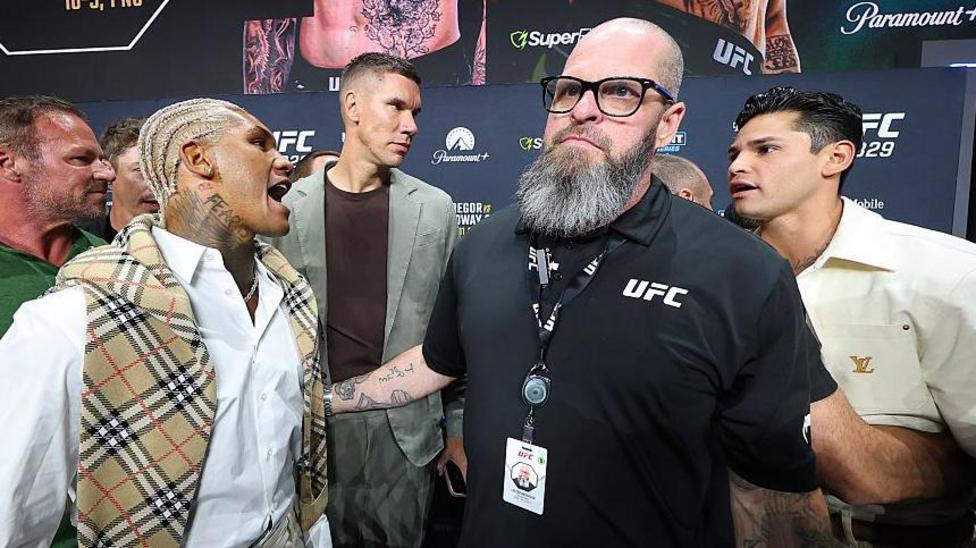
Benn vs Garcia: Las Vegas Stages Welterweight Chess Match
Conor Benn challenges WBC welterweight king Ryan Garcia at T-Mobile Arena on September 12 in a high-stakes stylistic collision.

Diamond in the Rough: Poirier's Raw Plea for Help After Arrest
Dustin Poirier admits he needs help after a public drunkenness arrest, exposing the human toll behind MMA's toughest fighter.