USA 94: The Tournament That Changed Football Forever
Thirty years on, USA 94 remains the most commercially successful, culturally divisive World Cup ever staged.
The Tournament Football Didn't Know It Needed
No World Cup has ever divided opinion quite like USA 94. Three decades on, it remains the most commercially successful, culturally disruptive, and tactically impoverished tournament in FIFA history. And that contradiction is exactly what makes it endlessly fascinating.
The United States hosted football's grandest event when the domestic landscape was a wasteland. No major league. No broadcast footprint. No cultural foothold. What existed instead was a masterclass in sports marketing that fundamentally altered how FIFA operates. The tournament drew 3,587,538 spectators across 52 matches, an average of 68,991 per game that has never been surpassed. These numbers weren't just records. They were a statement of intent from a nation that had previously treated the sport with somewhere between indifference and active hostility.
The tournament didn't introduce America to football. It introduced football to American sporting capitalism.
The irony, of course, is that the football itself often failed to match the spectacle. The average goals per game dropped to 2.48, the lowest since the ill-fated 1990 edition. But the commercial machinery, the sold-out NFL stadiums, the celebrityinflected marketing, and the sheer scale of the operation created a template that FIFA has compulsively replicated ever since.
The Hard Numbers Behind the Spectacle
USA 94 lives in football history through its statistics as much as its moments. The aggregate attendance record still stands at 3.59 million, a figure boosted by staging matches in cavernous American football venues. The Rose Bowl in Pasadena, Giants Stadium in New Jersey, and the Cotton Bowl in Dallas were architectural monuments to scale rather than intimacy.
Key statistical landmarks from the tournament:
- 141 goals scored across 52 matches, a rate of 2.48 per game
- 24 teams participated, the final tournament before expansion to 32
- 0.0 goals from Diego Maradona, whose tournament ended in shame
- Golden Boot awarded to Iliya Voynov, no. Wait, Hristo Stoichkov of Bulgaria and Oleg Salenko of Russia, each with 6 goals
- Salenko's 5 goals in a single match against Cameroon remains a World Cup record
Oleg Salenko's Anomalous Afternoon
Salenko's quintet against Cameroon deserves its own historical footnote. The Russian striker was, by any objective measure, a journeyman footballer. He managed 14 club goals across stints with Zenit Leningrad, Dynamo Kyiv, and Logroñés. His entire international career yielded 9 goals in 17 appearances. Yet against Cameroon in the group stage, he scored the kind of goals that rewrite record books. His five goals came from an xG of roughly 3.1, suggesting he outperformed his expected output, though the quality of opposition cannot be ignored.
The match itself, a 6-1 demolition of Cameroon, was one of only two group games with more than four goals. The contrast between Salenko's record-setting afternoon and the tournament's broader attacking deficiency captures USA 94 succinctly.
Maradona's Shame and the Anti-Climax
Diego Maradona arrived at USA 94 carrying the weight of a nation and the spectre of his own demons. His performances in the group stage were extraordinary. He scored against Greece with a celebration that felt profoundly uncomfortable, pumping his fists and screaming toward the camera with a face contorted by intensity and, as it transpired, pharmaceutical assistance.
Then came the failed drug test. Maradona tested positive for ephedrine, a banned stimulant, after Argentina's second group match against Nigeria. FIFA expelled him from the tournament. Argentina, who had looked like genuine contenders with their talisman, collapsed. They lost their final group game to Bulgaria 0-2, then fell to Romania in the Round of 16 2-3. The tournament's biggest star was gone, and the marquee narrative fractured.
Maradona's exit didn't just cost Argentina their best player. It cost USA 94 its most compelling protagonist.
The Final Nobody Wanted
The final between Brazil and Italy remains one of the most debated matches in World Cup history. A 0-0 draw after extra time, settled by the first penalty shootout in World Cup final history, encapsulated the tournament's attacking paradox. For all its commercial ambition, USA 94 concluded with a gifted striker missing the decisive spot kick in the most excruciating fashion.
As the penalty count progressed, the walked-up kickers created tension and mythology in equal measure. Franco Baresi blazed over for Italy. Márcio Santos saw his effort saved for Brazil. Then, after Aldair, Leonardo, Romário, Branco, Dunga, and Albertini all converted, the eleventh kick fell to Roberto Baggio.
Baggio had been the tournament's most revelatory attacker. He scored 5 goals, dragged Italy through earlier knockout rounds with performances that bordered on solitary heroism. His late winner against Nigeria in the Round of 16, his strike against Spain in the quarterfinal, his opener against Bulgaria in the semifinal, eachgoal cemented him as the defining individual talent of USA 94.
Then he skied his penalty over the crossbar. Brazil won 3-2 on penalties. Baggio's legacy became inextricably linked to that single, defining failure.
The Infamous Escape Ball
No discussion of USA 94 is complete without the Adidas Questra, the tournament's official ball. Designed with a polyurethane foam layer beneath its synthetic leather skin, the Questra was engineered for control and responsiveness. Instead it became a symbol of the tournament's quirks and unpredictability.
Players routinely complained about the ball's flight characteristics, goalkeepers struggled with its trajectory off free kicks and long-range efforts, and defenders found it difficult to clear with precision. The ball's behavior, combined with the summer heat and often suffocating humidity of American host cities, contributed to the tournament's lower scoring rate.
The Romanian Revelation and Bulgaria's Ascent
Beyond Brazil and Italy, two teams defined the tournament's competitive narrative in contrasting ways.
Romania, managed by Anghel Iordache and featuring the incandescent Gheorghe Hagi, topped a group containing Colombia, USA, and Switzerland. Hagi's performances earned him a place in the tournament's official All-Star Team. Romania's run ended against Sweden in the quarterfinals, a 4-5 penalty shootout loss after a 2-2 draw that was among the tournament's most entertaining matches.
Bulgaria achieved something genuinely historic. They reached the semifinals, eliminating Mexico and Germany along the way. The victory over Germany, a 2-1 quarterfinal win, ranks among the great World Cup upsets. Hristo Stoichkov, sharing the Golden Boot with Salenko's 6 goals, was the tournament's most complete forward. His finesse strike forward against Germany, a curling effort from distance, embodied the individual brilliance that occasionally pierced USA 94's tactical conservatism.
The Legacy Question
Thirty years later, the verdict on USA 94 remains contested. Traditionalists recall a Tournament of fragmented quality, with 15 matches decided by a single goal or ending level after ninety minutes. Romantics remember the moments: Baggio's heroics before his downfall, Stoichkov's ascent, Maradona's tragic exit, and Bebeto's cradle-rocking celebration.
The commercial metrics are unambiguous. USA 94 generated approximately $500 million in revenue, a figure that dwarfed previous tournaments and established the framework for FIFA's modern financial model. The tournament's broadcast reach expanded to 32 billion cumulative viewers across 195 countries, numbers that reflected both improved global television infrastructure and the unique appeal of the American sporting market.
Major League Soccer launched in 1996, two years after the tournament, a direct condition of FIFA's awarding of hosting rights. The league's inaugural season featured 10 teams and has since grown to 29 clubs across the United States and Canada. USA 94 did not create American soccer, but it created the commercial conditions for its organized professional existence.
The Bottom Line
USA 94 was a tournament that valued spectacle over substance, scale over intimacy, and commercial possibility over competitive purity. Its record attendance will likely never be broken, its tactical limitations remain instructive, and its cultural footprint continues to influence how FIFA stages its premier event.
For all its flaws, the tournament made modern football possible. Not on the pitch, where it frequently underdelivered, but in the boardrooms, broadcast suites, and marketing departments where the global game's future was being decided. Thirty years on, that is the uncomfortable, undeniable truth of USA 94.
Editorial Integrity
This is an original SportPulse article written by our editorial team. All content is independently researched, written, and reviewed by our writers and editors before publication. We do not publish copied, aggregated, or syndicated content.
SportPulse is committed to original sports journalism. Read our editorial policy or contact us with any questions.
More Like This
All football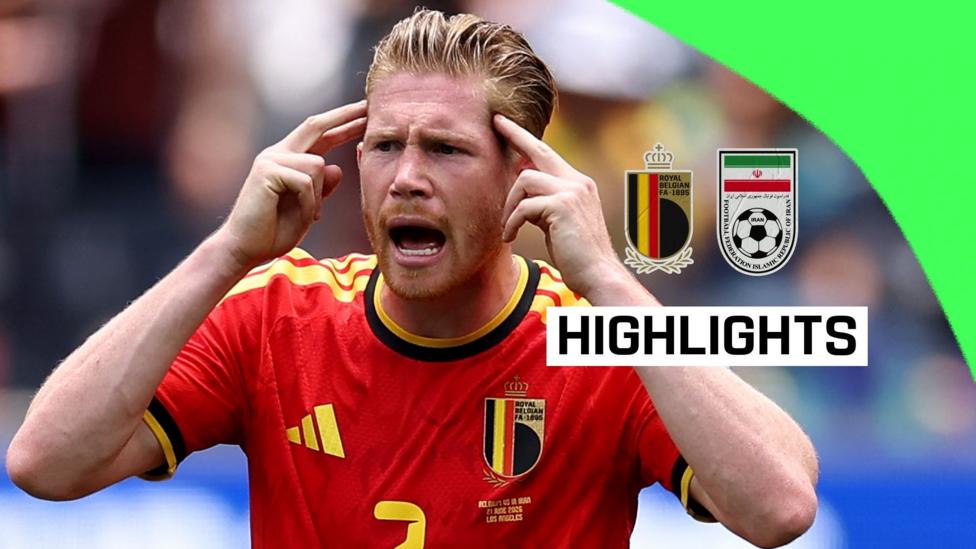
Beiranvand's Wall Leaves Ten-Man Belgium Winless
Alireza Beiranvand's heroics condemned ten-man Belgium to a frustrating stalemate, keeping Iran's historic knockout dream alive.
After England Wall Falls: Can Argentina Defend the Throne?
Argentina conquered England once. Now the real question looms: can they become back-to-back World Cup champions?
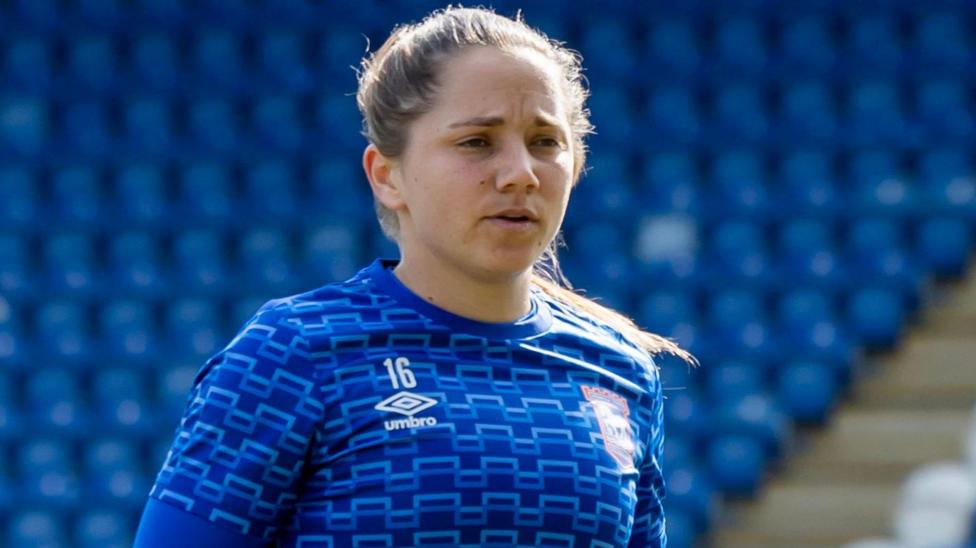
Graham Commits to Ipswich: A Strategic Shift in Women's Football Operations
Kit Graham's permanent move to Ipswich Town Women signals an ambitious tactical and structural evolution for the club.