USMNT's World Cup Paradox: Peaks, Valleys, and the Pochettino Question
A 4-1 demolition of Paraguay followed by a 4-1 capitulation to Belgium exposes the structural fragility beneath Pochettino's project.
The opening match of a home World Cup is supposed to be a coronation. For forty minutes against Paraguay, the United States men's national team delivered something resembling exactly that. Mauricio Pochettino had his side pressing with coordinated intensity, collapsing space in the middle third and counter-attacking devastatingly on the flanks. A 4-1 victory, hailed as the most complete performance in the program's modern history.
But a tournament is not a coronation. A tournament is a series of tactical problems that escalate in complexity. And once those problems became acute, the structural limitations of this so-called golden generation were laid bare. By the time Belgium departed the round of sixteen with a 4-1 scoreline of their own, the paradox of Pochettino's United States was fully exposed.
The margins were not fine. A four-goal difference between the team's peak and its nadir tells a story of tactical fragility. The US demonstrated they have the ceiling of an elite international side. They also demonstrated they have the floor of a ponderous, structurally unprotected one.
The Paraguay Blueprint: 4-3-3 Pressing with Coordinated Mechanisms
To understand the collapse against Belgium, we must first analyse the architecture that made the opening victory so impressive. Against Paraguay, Pochettino lined his team up in a thoroughly modern 4-3-3 structure. But the system was defined less by its nominal shape and more by a highly coordinated ball-oriented pressing scheme.
In the defensive phase, the American frontline operated as a compact, three-player unit that shifted aggressively toward the ball. The key tactical instruction was clear: force Paraguay's build-up toward the touchline, where the nearside winger and the #8 could create an effective 3v2 overload. By compressing the pitch horizontally, the US robbed the South Americans of passing angles through the middle.
The statistical accumulation reflected this control. A higher line of engagement meant the US won possession in the middle third with remarkable frequency, quickly transitioning through vertical progression patterns. The central midfielders were not merely passive screeners; they were active disruptors, stepping forward to intercept and immediately feeding the wide attackers.
This is the hallmark of Pochettino's best coaching work. His career has been defined by teams that suffocate opponents through collective, proactive defending. Against Paraguay, the system was pristine. Every player understood their trigger to press. Every covering position was filled.
"We don't wait for the perfect moment. We build the shape that creates the moment."
This Pochettino doctrine requires intense collective synchronization. When it works, the opponent is trapped in a narrow channel and forced into errors. The resulting transitions are lightning-fast, with wide attackers isolating full-backs in 1v1 duels.
With Paraguay, this worked flawlessly. The goals came from forced turnovers in the middle third, rapid switches of play, and clinical finishing. But this approach demands constant high-risk calibration.
The Systemic Failure Against Belgium
The round of sixteen showcased how fragile this architecture becomes when an opponent refuses to play into the pressing traps. Belgium arrived with a clear tactical counter: bypass the American front-line press entirely.
Rather than build through the centre, Belgium used their midfield as a decoy, dropping their pivot deep to draw the American #8 out of position. The centre-backs would then play long, diagonal balls directly to their wide forwards, skipping the vertical compression entirely.
This is where Pochettino's system broke down. The American pressing structure was designed to swarm in the middle. When Belgium played over the swarm, the space behind the American full-backs became a canyon. With the holding midfielder pulled forward to engage Belgium's pivot, the three centre-backs in the defensive phase were left without cover.
Belgium's 4-1 dismantling of the United States was not merely a matter of individual talent. It was a tactical execution. Their direct approach exposed the fundamental weakness of an aggressive, ball-oriented pressing scheme: when the press is bypassed, the defensive structure becomes disjointed and unbalanced.
The Americans were caught in a transition deficit. Their front-line pressed an empty space where the ball used to be. Their midfielders were stranded high up the pitch. And the backline was left without the compact shield that makes the entire system viable.
Tactical Shift
The match turned decisively on Belgium's decision to abandon central build-up play entirely. In the first twenty minutes, Belgium attempted 14 horizontal passes in their own third, inviting the American press. This was a probe, not a real attacking intent.
Once Pochettino's side committed to their triggers and pushed the line of engagement high, Belgium shifted to vertical passing. The first two goals came from long passes over the American midfield block, directly to attackers running into the channels vacated by the advancing full-backs.
Pochettino's response was to drop the line of engagement and shift to a 4-4-2 defensive block. This should have provided more horizontal compactness. But a pressing system lives and dies by its triggers. When a coach asks a team built for proactive engagement to suddenly become a passive, zonal unit, the result is often a loss of collective purpose.
The players looked unsure of when to step forward and when to hold. The 4-4-2 lacked the aggressive coordination of the earlier 4-3-3. Belgium exploited this hesitation, using quick combinations on the periphery to create gaps in a defence that was not structured for reactive defending.
The grand irony of the World Cup for the US was the symmetry of the scorelines. 4-1 in their finest hour. 4-1 in their darkest. This symmetry highlights a team that lacks a middle ground. They can be spectacularly proactive or spectacularly exposed.
The Bigger Picture: Tactical Identity vs. Adaptability
What this World Cup revealed is that the USMNT under Pochettino has a clear tactical identity. That is an upgrade from the iterative pragmatism of previous cycles. Having a defined system is a necessary foundation for international football.
The problem is that identity without adaptability becomes a weakness in tournament football. Pochettino's system is excellent at imposing its will on matches where the opponent is willing to engage. But when faced with an opponent who understands how to bypass the press and exploit space in transition, the system lacks a reliable fallback.
This is not a novel problem. The history of international tournament football is written with the names of proactive coaches whose teams were undone by practical, direct opponents. Pochettino's task now is to instil a secondary mechanism.
Looking Forward: What Pochettino Must Build Next
The next cycle of matches for the USMNT will reveal whether Pochettino can teach this golden generation how to play a different kind of game when their primary system fails.
A true tactical identity is not just what you do when you have control of the match. It is how you adapt when the opponent takes that control away.
For all the deserved criticism of the Belgium defeat, remember that developing a tactical system takes time. The Paraguay match showed the ceiling. The Belgium match showed the floor. Pochettino's task is to raise the floor without lowering the ceiling.
This requires integrating more nuanced defensive principles into the same squad that excels at aggressive pressing. It means developing mid-block control mechanisms that do not rely solely on triggering pressing traps.
The gap between the best performance in program history and one of its most dispiriting defeats was separated by just one match. The ongoing challenge for Pochettino is to ensure the next time his system is stressed, the tactical break is minor, not decisive.
Editorial Integrity
This is an original SportPulse article written by our editorial team. All content is independently researched, written, and reviewed by our writers and editors before publication. We do not publish copied, aggregated, or syndicated content.
SportPulse is committed to original sports journalism. Read our editorial policy or contact us with any questions.
More Like This
All football
The King's Right Wing Masterclass That Broke English Hearts
Lionel Messi reinvented himself on the right wing to drag Argentina into a third World Cup final, leaving England stunned.
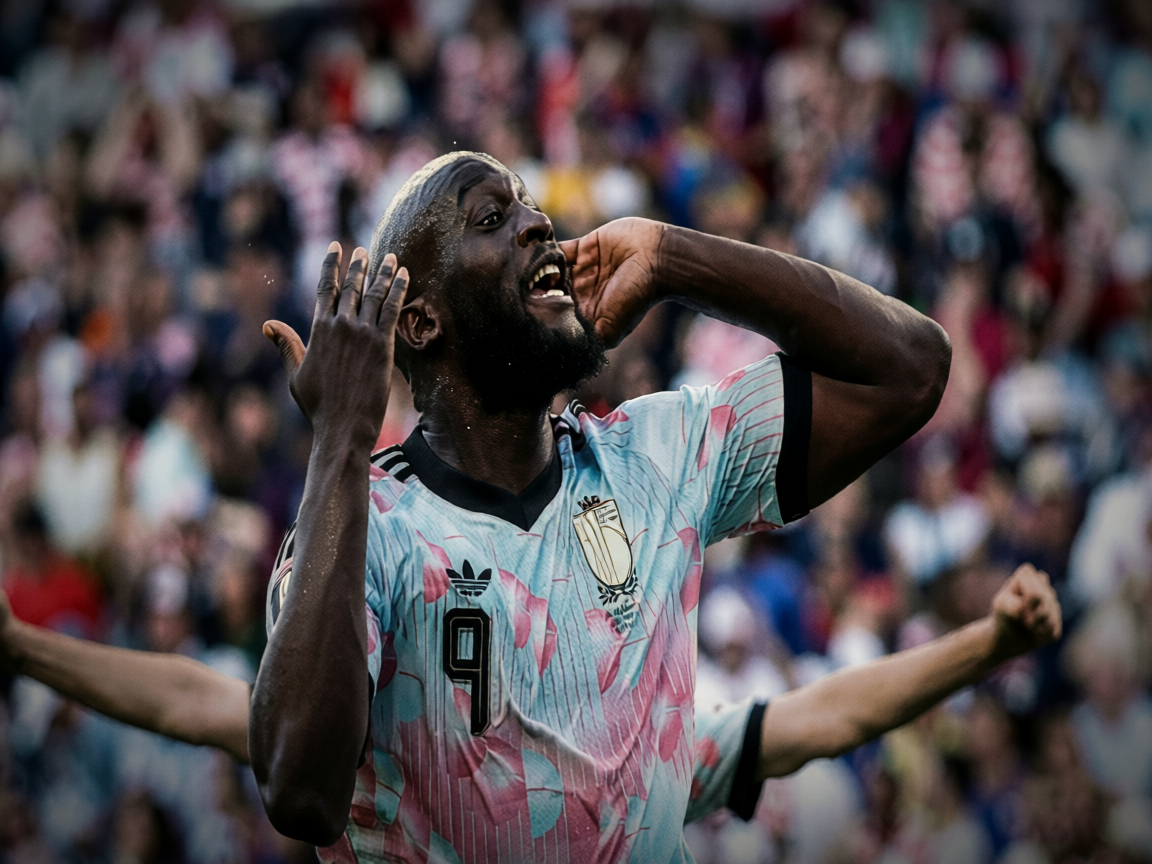
Overturn This: Belgium Channeled FIFA Chaos Into US Elimination
Nicolas Raskin reveals Belgium used FIFA's last-minute Balogun ruling as fuel, exposing USMNT's fragile tournament mentality.
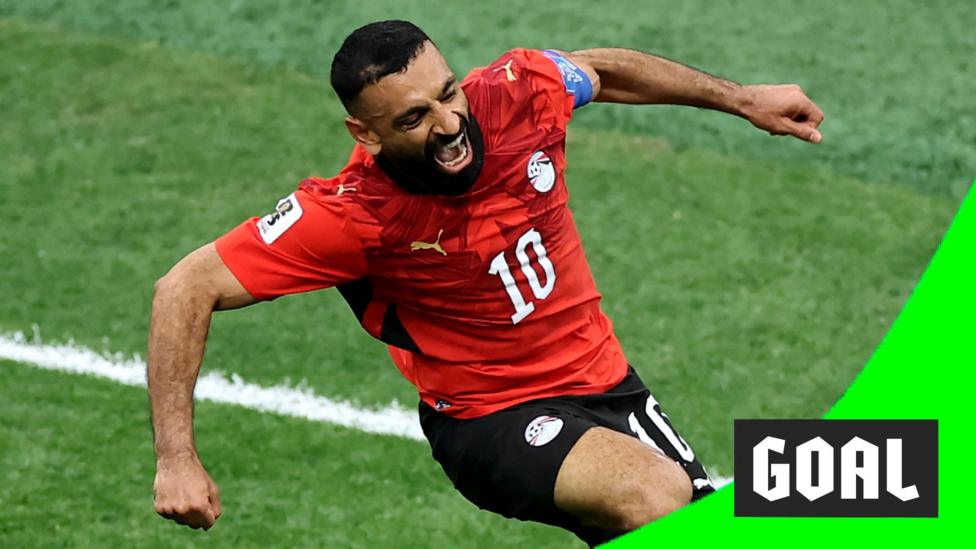
Salah Marches Into History as Egypt's Record Looms
Mohamed Salah edges closer to Egypt's all-time scoring record, reinforcing his legacy as the Pharaohs' generational talisman.