Eight Red Cards, Riot Police, and a USWNT Win: Fortaleza Descends Into Chaos
Brazil's 1-0 friendly loss to the USWNT spiraled into mayhem with eight red cards and riot police on the pitch.
A Friendly That Was Anything But
Fortaleza was supposed to host a showcase. Instead, it became a flashpoint.
The United States Women's National Team ground out a 1-0 victory over Brazil on Monday night in a match that will be remembered not for the scoreline but for the carnage surrounding it. Eight red cards were brandished against the Brazilian side, riot police encircled match officials at the final whistle, and the visiting manager walked away struggling to process what she had just witnessed.
"It was an experience I will never forget," said USWNT head coach Emma Hayes, a woman who has coached Champions League finals and managed under the white-hot spotlight of Chelsea. Even she was shaken.
The winner came from Sophia Wilson, whose goal proved decisive in a match that spiraled out of control long before the final whistle. But the football itself became a footnote in a night defined by confrontation, discipline failures, and a security apparatus that felt more suited to a protest than a pitch.
The Red Card Cascade
The dismissals began trickling in during the second half before turning into a torrent. Brazil head coach Arthur Elias was sent off, along with three members of his coaching staff, as frustrations boiled over on the touchline. That alone would have been remarkable for an international friendly. But the officials weren't finished.
By the time the dust settled, eight individuals connected to the Brazilian setup had been shown red. The exact sequence of each dismissal remains partially unclear, but the pattern was unmistakable: a team losing its grip on the match, then losing its composure entirely, then losing personnel at a rate that made the contest almost farcical.
The sight of riot police forming a perimeter around the referees as they attempted to leave the pitch told the full story. This was no longer a football match. It was a security incident.
Marta Sounds Off
If anyone carries the moral authority to speak on Brazilian women's football, it is Marta. The six-time FIFA World Player of the Year did not hold back in her assessment of the officiating.
She accused the referee of positioning herself as the "main character" of the match, a pointed critique that cuts to the heart of the tension between competitive fire and officiating standards in women's international football. Marta's frustration was palpable, and her words carry weight far beyond a single friendly.
When Marta speaks, the football world listens. Her accusation suggests the officiating crew may have contributed to the escalation, though eight red cards point to systemic indiscipline from the Brazilian camp rather than a single rogue performance from the middle. The truth likely sits somewhere in between: a combustible mix of poor game management from both sides and a referee who lost control of a match that was never truly under control.
The Bigger Picture
This result arrives at a delicate moment for both programs. Emma Hayes has been methodically building the USWNT's identity since arriving from Chelsea, emphasizing tactical structure and emotional maturity. A gritty 1-0 win on the road against a hostile crowd in Fortaleza is exactly the kind of result she values. The Americans didn't need to be brilliant. They needed to be professional. They were.
For Brazil, the optics are devastating. Arthur Elias has been working to elevate the Seleção into genuine World Cup contenders, building around a new generation of talent while managing the twilight of Marta's legendary career. A friendly spiraling into eight dismissals and a police intervention is the opposite of the image a program seeking global credibility needs to project.
The Confederação Brasileira de Futebol will almost certainly face questions about the conduct of its staff and players. FIFA, too, may feel compelled to review the incident, particularly the post-match scenes involving security forces. International friendlies are supposed to be low-stakes preparation. This one became a reputational crisis.
Hayes' Composure Under Fire
One of the more striking elements of the evening was how calmly the USWNT navigated the chaos. Hayes' teams at Chelsea were known for their discipline, their refusal to be dragged into opponents' emotional maelstroms. That quality was on full display in Fortaleza.
While Brazil imploded around them, the Americans stayed compact, stayed focused, and let Wilson's goal do the talking. It is the kind of performance that builds tournament DNA, the kind of night a coaching staff files away for when the stakes are genuinely high.
"I will never forget it," Hayes repeated, and one suspects she means it not as a celebration but as a cautionary tale about what happens when competitive sport loses its boundaries.
What It Means
The fallout from Fortaleza will linger. Brazil face a potential FIFA review and serious internal reckoning about discipline within their coaching staff. Eight red cards in a single match is virtually unprecedented at the international level and invites scrutiny of Elias' touchline conduct and the culture he has fostered.
For the USWNT, this is a statement of a different kind. Not a dominant performance, but a mature one. Hayes' squad showed they can win ugly, stay composed in hostile environments, and let opponents self-destruct. Those are championship qualities.
The broader conversation about officiating standards in women's international football will also be reignited. Marta's comments about the referee being the "main character" resonate because they touch a nerve that extends well beyond one match. As the women's game grows in stature and intensity, the gap between the quality of play and the quality of officiating remains a friction point that governing bodies must address.
Fortaleza hosted a football match on Monday night. What it got instead was a warning shot.
Editorial Integrity
This is an original SportPulse article written by our editorial team. All content is independently researched, written, and reviewed by our writers and editors before publication. We do not publish copied, aggregated, or syndicated content.
SportPulse is committed to original sports journalism. Read our editorial policy or contact us with any questions.
More Like This
All football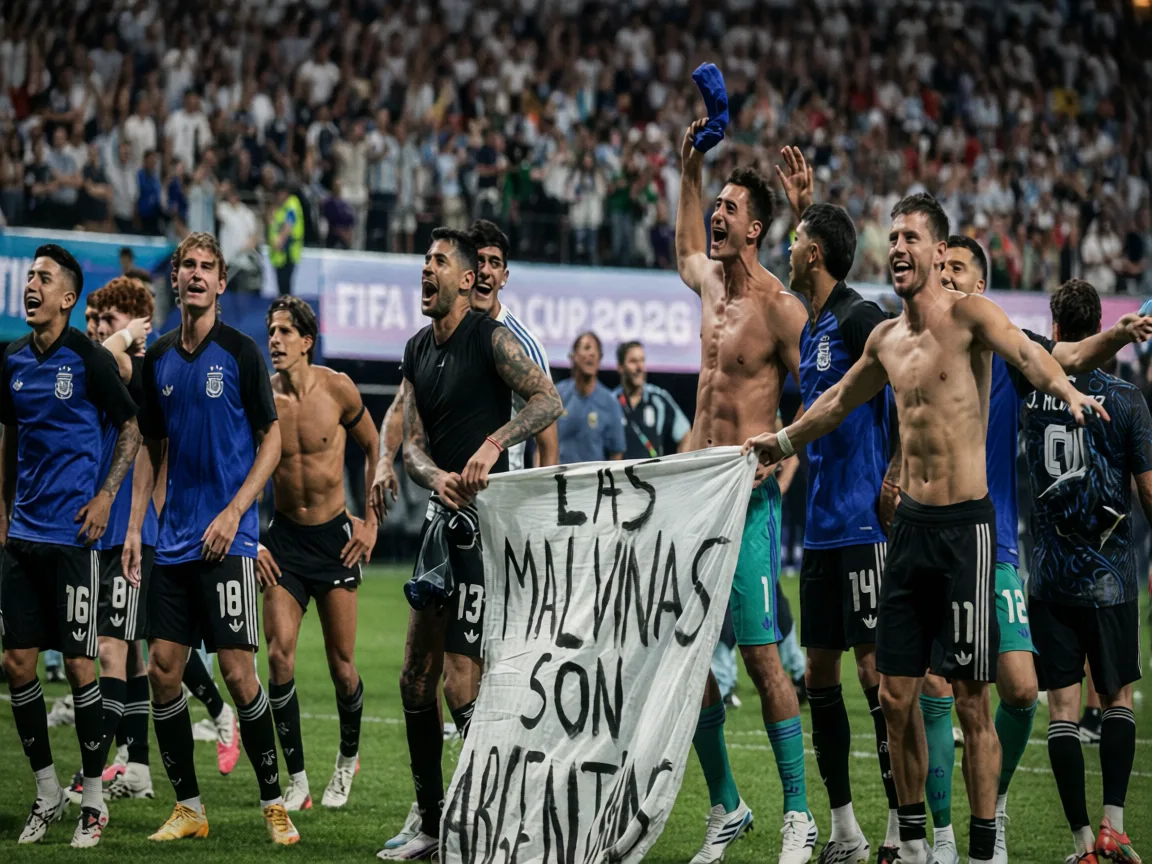
Argentina Face FIFA Fine Over Falklands Banner After England Semi-Final
Argentina players celebrated a World Cup semi-final win over England with a political banner about the Falkland Islands, prompting a likely FIFA fine.
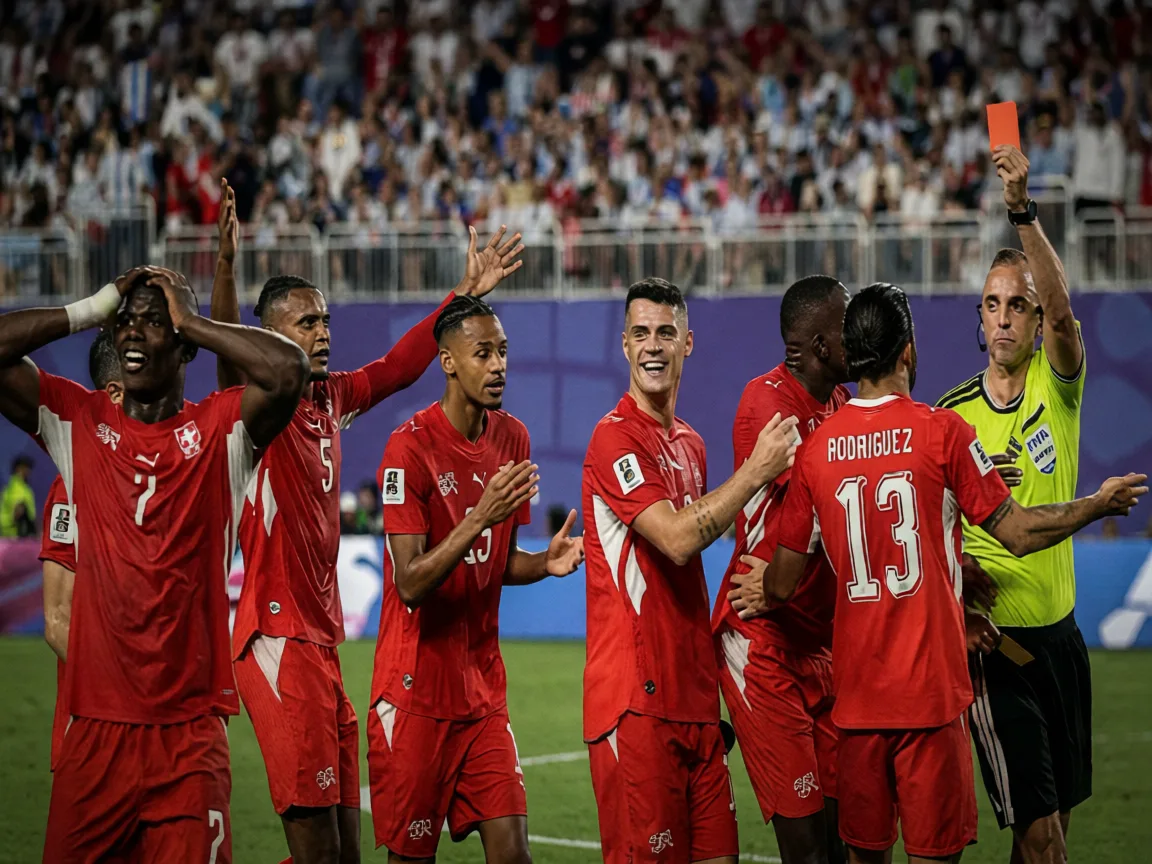
Embolo Makes World Cup History With Bizarre Red Card
Switzerland striker Breel Embolo became the first World Cup casualty of the mistaken identity rule.

Cape Verde Stun Uruguay Again as Bielsa Faces World Cup Exit
Cape Verde's Varela strike earns another historic draw, leaving Uruguay's World Cup hopes hanging by a thread.