Van Bronckhorst Returns to Feyenoord: A Tactical Rebuild Awaits
Giovanni van Bronckhorst returns to De Kuip tasked with restoring Feyenoord's tactical identity after a season of structural collapse.
When Giovanni van Bronckhorst walked back through the doors at De Kuip, it was not merely a homecoming. It was an emergency intervention into a tactical system that had lost its coherence. The announcement of his return on a two-year contract with a one-year option signals a desperate need to restore the structural fidelity that evaporated during the previous regime. Feyenoord’s season had devolved into a series of disconnected phases, where the 4-2-3-1 became a fractured shell rather than a cohesive pressing unit. Van Bronckhorst’s immediate task is to rebuild the spatial relationships that make the Rotterdam side’s system function.
The Structural Collapse That Preceded the Return
Feyenoord’s recent struggles have been defined by a catastrophic loss of compactness. The double pivot, once the engine of their ball progression and defensive shielding, became easily bypassed. Opponents consistently found space between the lines, exploiting the yawning gaps between the holding midfielders and the advancing fullbacks. Without a coordinated rest-defence, transitions turned into chaotic retreats rather than organized counter-pressing triggers.
The defensive metrics laid bare the dysfunction. The average distance between the defensive and midfield lines stretched to unworkable proportions, allowing opposition attackers to receive the ball in stride between the units. When a team loses its vertical compactness, individual errors inevitably multiply. The chaos at the back was not a personnel issue alone. It was a systemic failure of spacing and synchronization.
Consider the specific decay in their defensive actions. Pressing triggers that previously fired automatically became hesitant and disjointed.
- High turnover rate in the pressing sequences, ranking among the lowest in the Eredivisie for sustained pressures
- A drop in counter-pressing recoveries, falling from elite continental standards to domestic mediocrity
- Structural vulnerabilities in wide zones, as overlapping fullbacks were caught high up the pitch with no rotational cover
Van Bronckhorst’s initial mandate is to contract these spaces. The para-compactness of his preferred shape must be reimposed on a squad that had forgotten how to move as a single organism.
Rebuilding the 4-2-3-1 Identity
During his first tenure at De Kuip, Van Bronckhorst proved adept at maximizing the 4-2-3-1 without elite financial resources. He constructed a side that controlled games through the ball, using the double pivot to dictate tempo and the wide playmakers to stretch defensive blocks horizontally. The fundamental issue he now faces is that the current squad was assembled to play in a different structural image, requiring a swift ideological recalibration.
The asymmetrical winger profiles currently on the roster present a fascinating tactical puzzle. Van Bronckhorst prefers inverted wingers who can drift inside to occupy half-spaces, allowing overlapping fullbacks to provide width. This creates central overloads that suffocate opposition midfields and open passing lanes into the number ten space. However, the current personnel are more accustomed to staying high and wide, hugging the touchline to isolate fullbacks in one-versus-one scenarios. Re-educating these attackers on when to pinch inside and when to hold the width will dictate the early rhythm of his second spell.
The goalkeeper position also demands structural alignment. Under the previous framework, Feyenoord routinely built out of the back with a high defensive line, pushing the opposition press up the pitch. This required sweeping goalkeepers comfortable with the ball at their feet and confident in managing high space. Van Bronckhorst’s system also asks goalkeepers to act as auxiliary sweepers, but within a framework that is less aggressive and more structurally conservative. The keeper must now serve as a reliable циркуляционный pivot, weighing vertical passes into the double pivot rather than constantly firing line-breaking balls into the front line.
Tactical Shift
The critical turning point in Feyenoord’s season was not a single defeat but the systematic abandonment of their defensive shape. The tactical shift required under Van Bronckhorst will be profoundly psychological as well as structural. He must reinstall a low-block proficiency to provide a safety valve for the team. Previously, when the high press failed, the team was caught in no man's land
Instead of committing bodies forward recklessly, the new tactical mandate will likely emphasize controlled aggression. Pressing triggers will be stricter, requiring specific spatial cues before the unit collapses on the ball carrier. If the trigger is not met, the team drops into a 4-4-2 mid-block, protecting the central lanes and funneling play into the wide areas where the defensive unit can use the touchline as an extra defender. This shift from reckless pressing to calculated containment will determine whether Feyenoord can stabilize their season and salvage a European place.
The Coaching Philosophy of Continuity
Van Bronckhorst has always been a coach who values rhythmic possession over chaotic transitions. This philosophical inclination is fundamentally aligned with the historical identity of Feyenoord, a club that has traditionally prided itself on authoritative, possession-dominant football even when compared to the more mechanical approaches of their Eredivisie rivals.
"We want to dominate the ball, but domination is not just about having it. It is about what the ball does to the opponent when we have it. We move them, we stretch them, we create the spaces we want to attack."
This emphasis on possession as a weapon of manipulation rather than a sterile tactical choice is crucial. In the contemporary Eredivisie, where pressing systems have become increasingly sophisticated, merely keeping the ball is insufficient. Van Bronckhorst’s task is to train his squad to use possession with vertical intent. Every pass must carry the purpose of shifting an opposition block, opening a lane, or baiting a press to exploit the space left behind.
The training ground will become the crucible for this ideological shift. Van Bronckhorst is known for his obsessive attention to positional games, where players are confined to tight grids and forced to solve spatial puzzles under pressure. These rondo variants are designed to accelerate decision-making and ingrain the passing triangles that underpin his 4-2-3-1 structure. Only through relentless repetition can the players internalize the geometries required to break down deep blocks and progress the ball cleanly through midfield.
The Bigger Picture and Tactical Outlook
The two-year contract with a one-year option reflects a realistic understanding of the project's timeline. This is not a quick fix but a structural renovation. The hierarchy has recognized that the squad requires a coach who can re-establish the baseline tactical principles before any meaningful sporting progression can occur.
The immediate challenge lies in balancing the short-term necessity of results with the long-term implementation of the system. Squads learning a new tactical language often suffer from hesitation, caught between the old instructions and the new. This cognitive lag frequently manifests as disjointed pressing and passive defending, the very sins that plagued Feyenoord in recent months. Van Bronckhorst must find a way to accelerate this learning curve without sacrificing the defensive stability that will keep the club in contention.
Looking ahead, the next few weeks will reveal whether the playing group can adapt to the demands of asymmetric build-up shapes and rest-defence discipline. The central midfielders must rediscover their ability to operate in tight spaces, receiving the ball on the half-turn under pressure. The back four must learn the precise moments to squeeze the pitch and when to retreat to protect depth. And the wingers must internalize the timing of their interior movements, knowing exactly when to vacate the wide areas to create channels for the overlapping fullbacks.
Van Bronckhorst’s return is a bet on memory and method. He knows the club, the stadium, and the expectations. More importantly, he knows the tactical blueprint that has historically brought success to De Kuip. Whether he can impose that vision on a squad that has drastically underperformed remains the central question of the Eredivisie season. The architecture of the team must be rebuilt from the foundations up, and the engineer has finally returned to the site.
Editorial Integrity
This is an original SportPulse article written by our editorial team. All content is independently researched, written, and reviewed by our writers and editors before publication. We do not publish copied, aggregated, or syndicated content.
SportPulse is committed to original sports journalism. Read our editorial policy or contact us with any questions.
More Like This
All football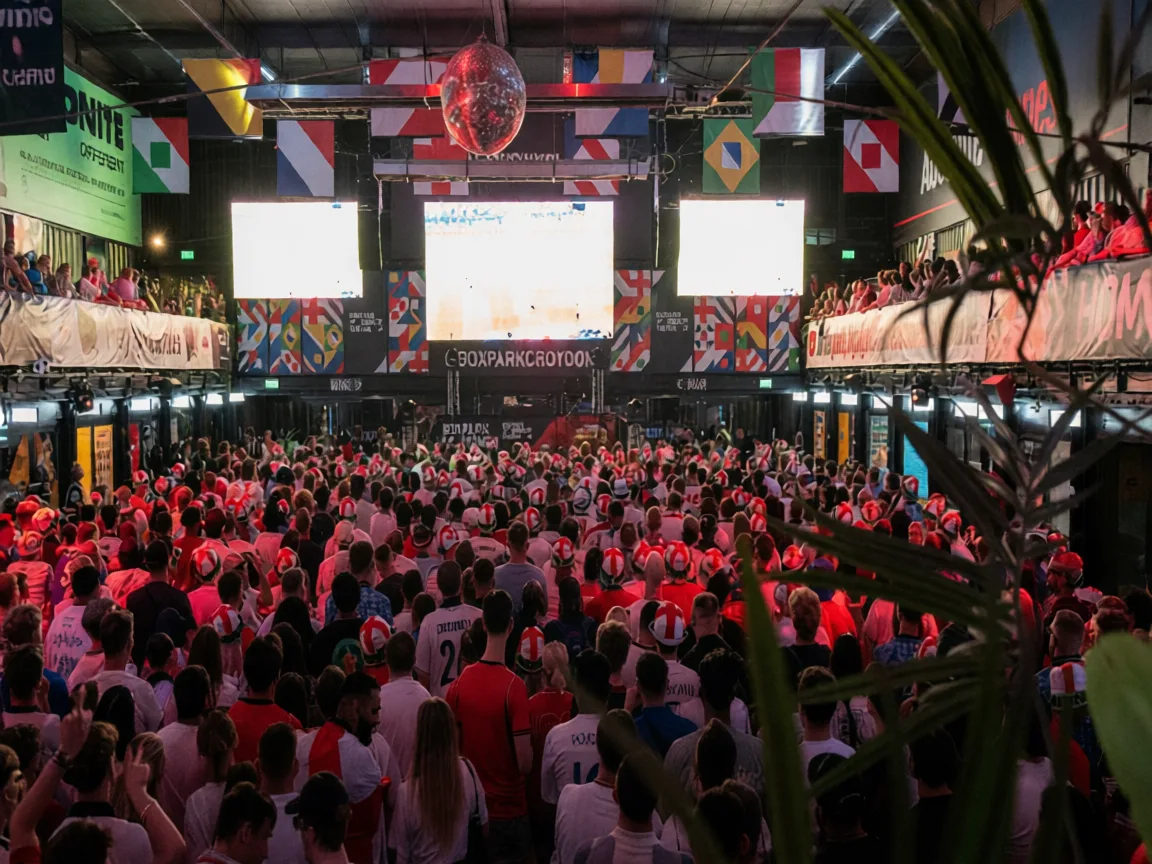
England's Fan Culture Reckoning: Police Plea Exposes Stadium Security Gap
A police chief's stark plea to England fans to mirror US supporter behaviour exposes deeper crowd management failures at home.
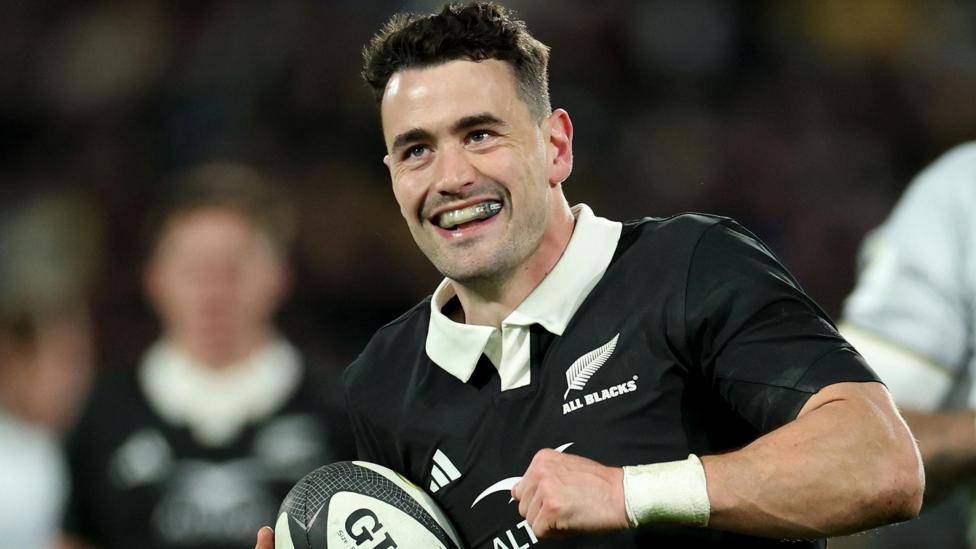
Jordan's Hat-Trick Crown: All Blacks' New Try King
Will Jordan's hat-trick against Italy made him New Zealand's record try-scorer, a seismic shift in All Blacks rugby history.
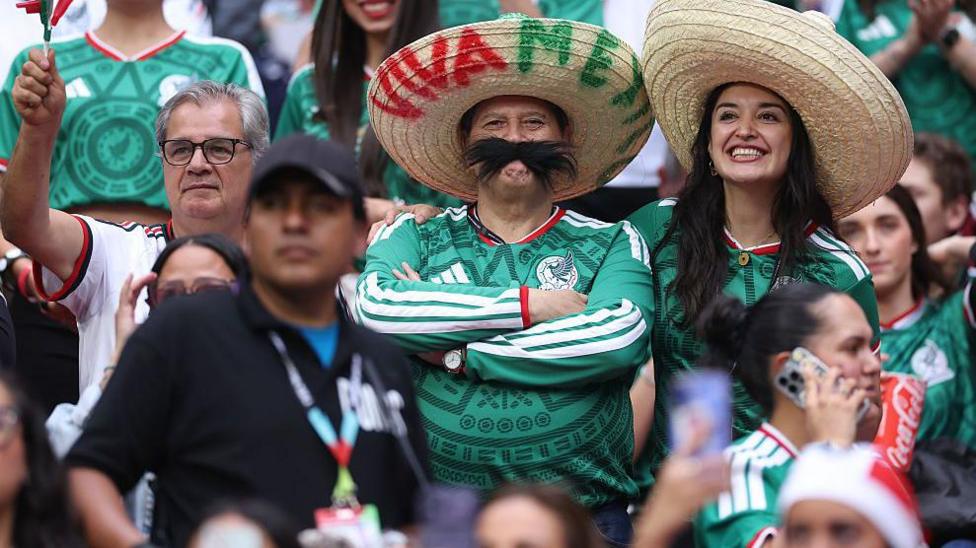
Ecuador Cry Foul Over Mexico Fans' Hotel Siege Before World Cup Showdown
Ecuador's noise complaint before facing co-hosts Mexico exposes the ugly underbelly of World Cup home advantage.