Verstappen's Silverstone Qualifying Cursed by 'Double Whammy'
Two overlapping technical gremlins sabotaged Verstappen's British GP qualifying, raising urgent questions about Red Bull's margin for error.
Setting the Scene at Silverstone
The legendary asphalt of Silverstone demands absolute mechanical sympathy from its challengers. The British Grand Prix circuit features a relentless sequence of high-speed corners,太极拳 from Abbey through Copse, into the throttle-heavy sweep of Maggotts and Becketts, and finally the complex of Stowe and Club. When a Formula 1 car is perfectly balanced here, it sings. When something is compromised, the lap time disintegrates almost instantly. On a track where the wind direction fluctuates and tyre temperatures dictate everything, mechanical precision is not just preferred, it is required.
Qualifying conditions are notoriously temperamental at this former airfield. Gusts clip the grandstands and alter the aerodynamic pressure distribution across the front wing. Tyre blanket regulations and the specific compound allocations for the weekend force teams into narrow operational windows. Teams must judge their peak tyre temperature to the nearest degree, timing their out-laps so the rubber hits the track at its absolute stickiest point. It is a high-wire act even for a team as historically dominant as Red Bull has been. When tire temperatures and track evolution intersect, the margins are measured in thousandths of a second, not tenths.
The era of clean air and effortless pole positions dissipated long ago for the reigning engineers' champions. The technical regulations of the current ground-effect generation mean ride height sensitivity is acute. Placing the floor too low induces bouncing and corrupts the airflow. Setting it too high bleeds away the crucial downforce required to commit to Copse flat-out. It is a structural puzzle that leaves no room for error, a puzzle that is further complicated by the relentless development curve of their closest rivals. Every fraction of a millimetre in setup has a cascading effect on the stopwatch.
The 'Double Whammy' Unpacked
The term 'double whammy' carries a specific weight in motorsport engineering. It implies not a solitary failure, but a compounding set of mutually destructive variables. Verstappen and his race engineer Gianpiero Lambiase are usually a symphony of calm, their terse, frugal radio messages betraying deep mutual understanding. On Saturday at Silverstone, that channel crackled with frustration. Dealing with two simultaneous technical inconsistencies means the driver cannot adapt to the car; he is simply chasing a moving target.
The first variable in such situations often relates to the differential and torque delivery. When the rear axle fails to lock predictably upon corner entry, the car develops an understeer characteristic that completely kills the apex speed. Alternatively, an overly aggressive differential setting induces sudden oversteer that destroys exit traction and infuriates the rear tyres. The delicate balance required to navigate Silverstone's rapid direction changes leaves no margin for this specific type of drivability flaw. A driver uses the differential to micro-manage grip levels, so when that tool is compromised, every braking zone becomes a high-stakes gamble.
The second variable, logically hinted at in any discussion of Silverstone setup, is aerodynamic imbalance. Downforce levels dictate the entire performance envelope of a ground-effect racer. If the beam wing or the rear wing is generating an asymmetrical load distribution, the car becomes fundamentally unpredictable. The high-speed corners amplify aerodynamic flaws like an acoustic dome amplifies sound. An aero mapping error or a damaged floor strake can bleed away the load over the front axle precisely when the driver needs it most. A compromised aero platform cannot be driven around; it must be fundamentally fixed in the garage, a process that is virtually impossible during the compressed timescales of a qualifying session.
Strategy Breakdown
In the pit lane, the strategy wall is a crucible of live data analysis under qualifying pressure. The monitors display live telemetry feeds against a constantly updating track evolution overlay. Engineers monitor delta times mapping the circuit in sequential colored sectors. Green means a driver is gaining in a specific braking zone, purple means the fastest overall time, and red indicates that critical lap time is haemorrhaging away. When the driver reports a structural problem over the radio, the mathematical models guiding the run plan must instantly shift.
In Q1, the tactical priority is pure survival. The pit wall might instruct a driver to take an out-lap that is three seconds slower than the theoretical optimum. This is not a mistake. It is a calculated temperature management tactic. The aim is to dissipate the spike of pressure the tyres absorb during their initial firing cycle, preventing them from blistering while waiting in the flat-bed queue at the final corner. Smooth thermal management allows the surface temperature to stabilize through the core structure of the carcass. A botched preparation sequence can lock the surface temperature in while the bulk remains comparatively cold, robbing the driver of mechanical grip precisely when they need to deliver a banker lap.
If a 'double whammy' of drivability and aero issues strikes during the frantic push laps of Q2 or Q3, the pit wall faces a brutal choice. Do they abort the lap entirely to save a set of soft tyres for the race? Or do they urge the driver to push through the compromised balance? Modelling thermal degradation becomes speculative at the extreme limits of performance. A mistake of just one or two degrees in the team's thermal modelling can result in the tyres surrendering grip before the final apex of Club. The decision-making margin between triumph and catastrophe becomes razor-thin.
The Heavy Cost in the Telemetry
The telemetry graph tells the true story of a compromised qualifying session. The steering wheel angle trace going into a corner like Copse reveals the mechanical reality far more clearly than the lap time itself. A driver fighting the platform will show a jagged, oscillating steering angle, while a perfectly balanced setup displays a smooth, flowing input wave. The pedal map, showing the exact percentage of brake pressure applied, exposes any instability in braking stability. When mechanical gremlins corrupt the systems, the inconsistencies are visible in these squiggles. The car never points straight, the torque is never delivered cleanly, and the thermal graph bounces wildly.
Qualifying at the absolute limit is about exploiting track evolution to carry the maximum possible apex speed through a sequence. It requires a chassis that responds predictably to microscopic steering corrections. Mechanical grip is the crucial, fundamental foundation that allows aerodynamic performance to function effectively. When two technical issues overlap, they multiply each other's destructive effects. Downforce relies on a stable ride height, and a stable ride height depends on consistent suspension kinematics. Corrupt one variable through torque mapping errors, and the aerodynamic load simply flies out of the window. The lap time collapses.
The Searing Implications for Sunday
Starting from a compromised grid position at Silverstone immediately invites severe strategic and physical pain on Sunday afternoon. The overtaking zones demand premium performance and tactical patience. DRS activation through the Wellington Straight provides a brief opportunity, but the racing line dictates everything. Getting trapped behind a midfield car produces the dreaded dirty air effect. The hot exhaust gases and disrupted airflow from the car ahead overheat the engine, while the turbulent wake strips the front wing of its crucial downforce. The chasing car slides wide, the front-left tyre blisters from the excessive sliding friction, and the chasing driver is pushed wide under braking.
Tyre thermal degradation is the single decisive factor in the British Grand Prix race narrative. The specific Pirelli compound allocation for this weekend always places thermal management at the centre of the tactical battle. Pushing the soft compound through the early stint combustion zone of dirty air destroys the chemical structure of the rubber within five laps. It then forces an early pit stop that reverses any strategic track position advantage achieved earlier. A team attempting to execute a long first stint on the hard compound must protect the front-left shoulder through the high-speed direction changes. They must do so while claiming clean air, a luxury denied to those starting in the lower positions.
The Tightening Championship Horizon
The constructors' fight is rapidly becoming a multi-team mathematical conundrum based entirely on microscopic operational gains. DNFs and qualifying disasters directly alter the construction of the points table by distorting the available allocation of the high-scoring positions. A missed opportunity to bank a pole position and the accompanying sprint race point bonus compounds downward across the entire weekend's financial and competitive balance sheet. The mechanical variance in rear-end torque delivery and the aerodynamic intricacies of the floor design reflect the highly stressed margins separating the top three organizations. They are separated not by concept, but by execution.
Looking Ahead in the Title Fight
The fight for the drivers' title reshuffles violently when the leading contender is repeatedly dragged into the midfield combat zone. Running in turbulent air for twenty laps fundamentally alters the physical degradation profile of the chassis over a stint. Starting a car with two unresolved technical issues guarantees that the primary focus of the Sunday strategy shift profoundly. It moves from outright race pace and attacking the lead to desperate damage limitation and defensive tyre preservation. Every single point scored under duress carries double the psychological weight in the closing chapters of a long campaign. The British Grand Prix weekend is rarely won or lost on Sunday in the gravel traps. It is won or lost in the cold garage light of Friday night, dictated entirely by the materials data and the differential settings. Silverstone punishes technical indiscipline with absolute, unforgiving efficiency.
"That was a double whammy. There were two distinct issues with the car that we haven't experienced before. It made it impossible to extract the maximum."
The engineers at Milton Keynes face a long night of data forensics. The telemetry provides the raw machinery of truth, but the execution on the track provides the brutal verdict. For Red Bull, the margin for error has evaporated just as the summer heat of the championship battle reaches its absolute peak.
Editorial Integrity
This is an original SportPulse article written by our editorial team. All content is independently researched, written, and reviewed by our writers and editors before publication. We do not publish copied, aggregated, or syndicated content.
SportPulse is committed to original sports journalism. Read our editorial policy or contact us with any questions.
More Like This
All f1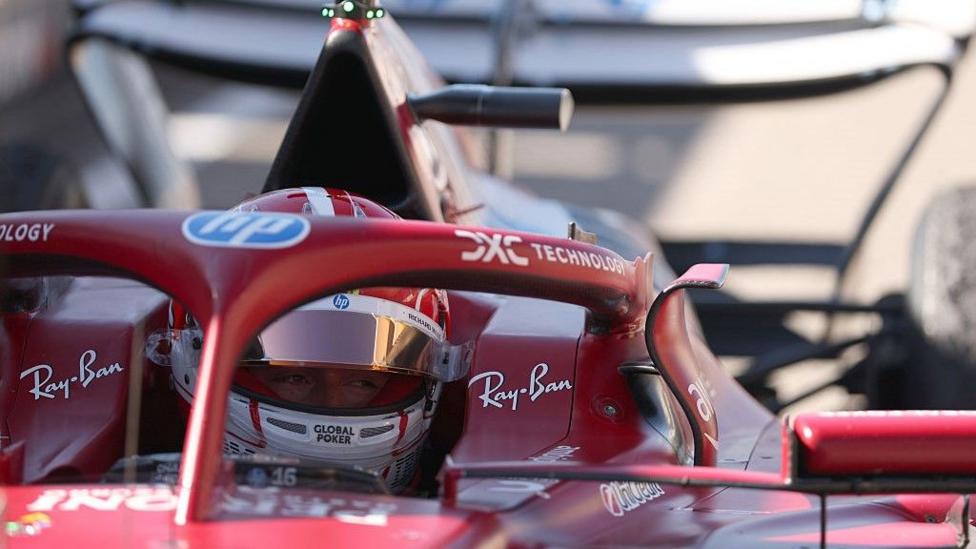
The Titanium Shield: How F1's Halo Rewrote Survival
The F1 halo was dismissed as ugly, but its aerospace-grade titanium geometry has rewritten crash survival physics forever.
The FIA Super Licence: How Formula 1's Golden Ticket Actually Works
Every F1 seat requires 40 Super Licence points earned across junior categories. Here's how the system shapes the grid.

The Architect Who Built Williams' Dynasty: Patrick Head's Technical Revolution
Patrick Head engineered nine constructors' titles and seven drivers' crowns, redefining what a Formula 1 car could be.