Verstappen Laughs at Silverstone Simulation: 'It's Just Constantly Flat'
The four-time champion warns the new engine formula could strip Silverstone of its soul this Sunday.
Lights Out at Silverstone? Verstappen Isn't Holding His Breath
Max Verstappen has never been one to sugarcoat it. So when the four-time world champion says he was laughing at his Silverstone simulator run this week, the paddock should probably pay attention.
The Dutchman's concern is blunt and specific: the current Formula One engine formula, with its heavy reliance on electric deployment and energy recovery, could turn one of the sport's most beloved circuits into something resembling a procession. "You barely have battery. It's just constantly flat," Verstappen said after his sim session, painting a picture that should alarm every fan who has tickets for Sunday.
This isn't idle moaning from a driver fresh off a defeat. This is a technical alarm bell from someone who has spent more time wrestling with these power units than almost anyone else on the grid.
Why Silverstone and the New Formula Don't Mix
To understand Verstappen's frustration, you need to understand the circuit itself. Silverstone is a power track disguised as a handling track. The legendary sequence of Maggotts, Becketts, and Chapel demands sustained high-speed commitment, but it also bleeds energy recovery opportunities. Copse is flat-out. Stowe is a heavy braking zone, yes, but the straights connecting these corners are long enough to drain the battery without offering the kind of aggressive deceleration events that regenerate it.
The 2026 engine regulations tilted the balance dramatically toward electrical power. The internal combustion engine was slimmed down, while the electric component grew to account for roughly 50 percent of total power output. In theory, this was supposed to make F1 greener and more relevant to road car technology. In practice, it has created a nightmare of energy management at circuits that don't offer enough braking zones to keep the battery fed.
Silverstone, with its fast, flowing nature and relatively few heavy-braking events, is the worst-case scenario. The battery depletes. The cars slow down. The racing suffers.
"You barely have battery. It's just constantly flat." — Max Verstappen on his Silverstone simulator experience
Verstappen's reaction during the sim wasn't frustration. It was disbelief. He has raced at Silverstone in machinery that could dance through Copse at 185 mph with the engine screaming. Now, the simulation tells him the car will be coasting, nursing, managing. The very DNA of what makes Silverstone special is under threat.
Red Bull's Austrian Resurgence Adds Context
The timing of Verstappen's comments is crucial. He arrives at Silverstone riding the momentum of a significantly improved Red Bull RB22, which debuted a host of upgrades at the Austrian Grand Prix just last weekend.
At the Red Bull Ring, Verstappen qualified and finished P2, splitting the Mercedes duo and showing pace that hadn't been there all season. George Russell took the victory for Mercedes, but the gap was manageable. More importantly, Red Bull's upgrade package appeared to deliver exactly what the team needed: better rear stability, improved tyre degradation, and a car that Verstappen could lean on through the fast stuff.
There was a catch. Verstappen revealed after the race that he'd been nursing a technical problem at the rear of the car for the entire second half of the Grand Prix. He didn't elaborate on specifics, but the implication was clear: even with a compromised machine, the upgraded Red Bull was a genuine contender.
That context makes his Silverstone concerns all the more telling. This isn't a driver making excuses before a bad weekend. This is a driver who finally has a competitive car and is furious that the engine formula might rob him of the chance to use it properly.
The Simulator Tells a Dark Story
Simulators in modern F1 are brutally accurate. Teams invest tens of millions of dollars in their sim programs, and drivers trust them implicitly for setup direction, strategy modeling, and fuel management projections. When Verstappen says the sim made him laugh, he's not joking about the technology. He's joking about the result.
The simulation likely modeled battery state-of-charge curves through every corner of the lap. At Silverstone, those curves would show near-total depletion through the high-speed sections, with minimal recovery at the few braking zones available. The result: cars that are quick in the first sector but progressively slower through Copse, the Hangar Straight, and Stowe as the battery empties.
This creates a paradox. Silverstone is one of the circuits where aerodynamic efficiency matters most. Teams spend millions developing low-drag packages specifically for this weekend. But none of that matters if the power unit can't deliver energy when the driver needs it.
What the Numbers Suggest
- Silverstone's lap features approximately 57 percent of the distance at full throttle, among the highest on the calendar
- Heavy braking zones number only three to four per lap, limiting regenerative braking opportunities
- The 2026 power units generate roughly 350 kW from the electric motor alone, making battery management critical
- Energy recovery at Silverstone is projected to be 15 to 20 percent lower than at circuits like Bahrain or Jeddah
These figures paint a stark picture. The math doesn't lie, and neither does Verstappen's simulator data.
The Broader Regulatory Debate
Verstappen's comments land in the middle of a growing tension within the sport about the 2026 regulations. The FIA and Formula One Management pushed the new formula as a necessary evolution, prioritizing sustainability and manufacturer relevance. Mercedes, Ferrari, Renault, and the new entrants all signed up on that basis.
But the unintended consequences are becoming harder to ignore. At certain circuits, the cars are visibly slower than their predecessors. The energy management battles that were supposed to add strategic intrigue have instead created confusion among fans and frustration among drivers. Overtaking has become a battery game, with drivers strategically harvesting energy to deploy on the next straight rather than fighting wheel-to-wheel.
Silverstone could amplify every one of these complaints. Imagine Copse Corner, the scene of some of F1's most iconic overtakes, being approached at reduced speed because the battery is depleted. Imagine the Hangar Straight, where slipstream battles have thrilled generations, becoming a coasting zone where nothing happens.
Verstappen isn't alone in his concerns, though he's the most prominent voice. Several drivers have privately expressed similar worries about high-speed, low-braking circuits this season. The difference is that Verstappen says it publicly, without filter, and with the authority of 80 Grand Prix victories behind him.
Race Verdict
MVP of the Build-Up: Max Verstappen
Love him or loathe him, Verstappen is the only driver willing to say what half the paddock is thinking. His simulator feedback might not change Sunday's race, but it puts the FIA and engine manufacturers on notice. If Silverstone turns into an energy-saving exercise, Verstappen will have called it first. That takes courage in a sport where speaking out carries political consequences.
Biggest Concern: The Spectacle
The real loser here isn't a driver or a team. It's the 140,000 fans expected at Silverstone on Sunday who paid premium prices to watch the fastest cars in the world wrestle with one of the greatest circuits ever built. If those cars are nursing batteries and managing energy, the spectacle suffers. And in a sport that lives and dies on entertainment, that's the most dangerous outcome of all.
Championship Picture
The Austrian Grand Prix result tightened the constructors' fight considerably:
- Mercedes — Russell's victory extended their lead, but the margins are shrinking
- Red Bull — P2 for Verstappen signals a genuine resurgence. If the upgrades hold, they're back in the fight
- Ferrari — Consistent but not spectacular. They need a breakout weekend soon
- McLaren — Solid points but lacking the raw pace to challenge for wins right now
In the drivers' standings, Verstappen remains in contention despite a difficult opening third of the season. If Red Bull's upgrade package delivers again at Silverstone, the championship picture could shift dramatically before the summer break.
But that's the crux of Verstappen's frustration. He finally has the car. The engine formula might not let him use it.
What's Next
Silverstone's weekend begins with Friday practice sessions that will provide the first real-world data on battery performance. Every team will be watching the energy readouts as closely as the lap times. If Verstappen's simulator fears prove accurate, expect a frantic scramble for energy management solutions in the garages.
Saturday's qualifying could be equally revealing. The new regulations have made qualifying energy deployment a delicate art, with drivers needing to time their battery usage perfectly across multiple laps. At Silverstone, that calculus becomes even more complex.
Sunday's race, meanwhile, will be the ultimate test. Can the drivers and teams find a way to make the racing work, or will the British Grand Prix become a cautionary tale about unintended consequences?
One thing is certain: Max Verstappen will be watching the battery readout on his steering wheel very carefully. And if it's as empty as his simulator predicted, the paddock will hear about it.
Editorial Integrity
This is an original SportPulse article written by our editorial team. All content is independently researched, written, and reviewed by our writers and editors before publication. We do not publish copied, aggregated, or syndicated content.
SportPulse is committed to original sports journalism. Read our editorial policy or contact us with any questions.
More Like This
All f1
Stromsted Breaks Through as F3's Eighth Different Winner at Spielberg
Noah Stromsted's Spielberg victory underlines the most open F3 championship fight in years with eight different winners.
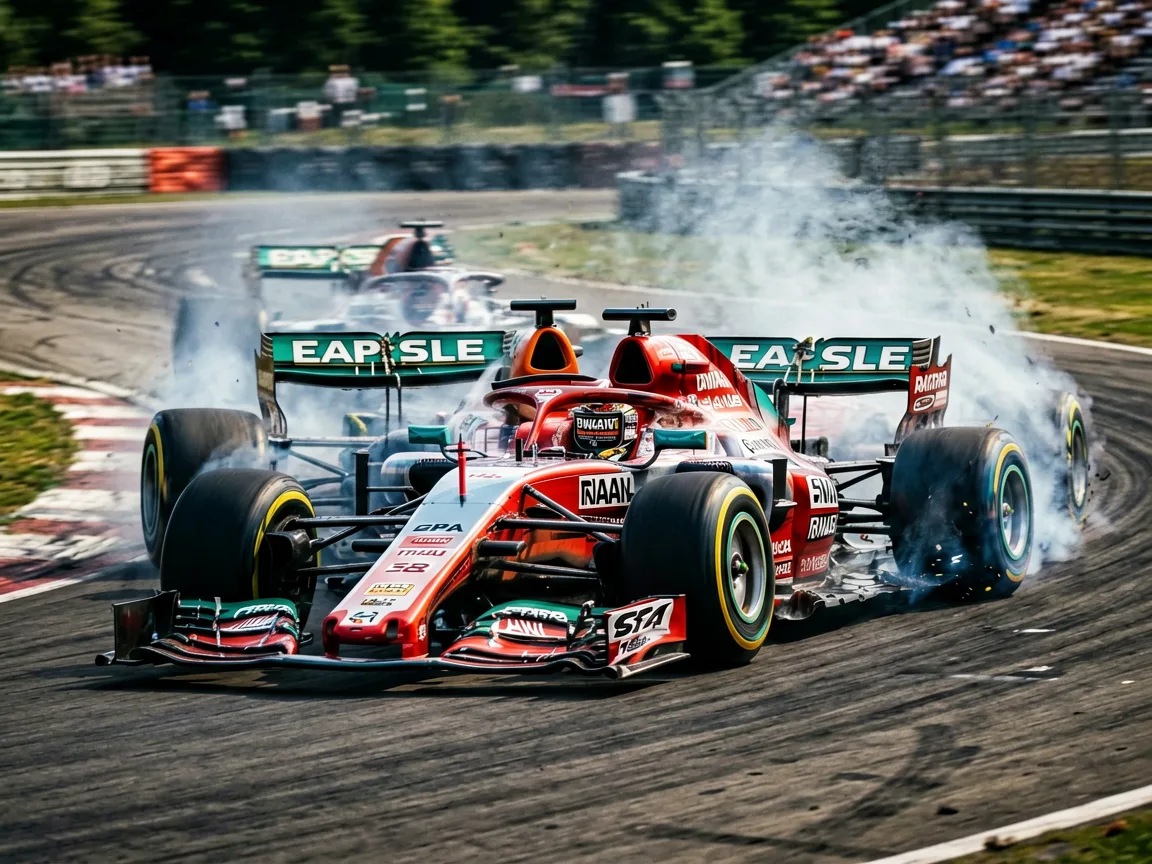
Spa Tyre War: Why Belgian GP Strategy Is a Gambler's Paradise
Spa-Francorchamps demands tactical genius with tyre degradation, weather chaos and pit windows defining Sunday's Belgian Grand Prix.
Antonelli and Bearman Hit New Highs as Cadillac Push the Boundaries
Kimi Antonelli and Ollie Bearman set new F1 benchmarks while Cadillac's race simulation hints at a serious 2026 entry.