Montagliani's Quiet March Toward the FIFA Throne
Concacaf's president has positioned himself as the frontrunner to succeed Infantino, and the 2026 World Cup is his runway.
A City Declares a Holiday, a Confederation Bends an Arc
On 12 September last year, Vancouver city hall held a ceremony that, on the surface, resembled any municipal honour roll. Mayor Ken Sim stood at the podium and declared the date would henceforth be known as Victor Montagliani Day. Family members filled the front rows. FIFA General Secretary Mattias Grafström was present. So was the Lieutenant Governor of British Columbia, Wendy Cocchia, and Anthony von Mandl, the billionaire whose beverage empire now includes Más+ by Messi. MLS Commissioner Don Garber sent video congratulations from the other side of the continent.
It was, by every conventional measure, a love-in. But in the architecture of football governance, nothing is ceremonial without purpose. Montagliani, the Italian-born Canadian who has served as Concacaf president since 2016, is not the kind of figure who accumulates civic tributes by accident. Every handshake, every proclamation, every friendly billionaire in the room represents a node in a network being carefully assembled for something much larger than a day named after him.
The open secret in Zurich, and increasingly in the corridors of every confederation, is that Montagliani is positioning himself as the leading candidate to succeed Gianni Infantino as FIFA president. And the 2026 World Cup, jointly hosted by the United States, Canada, and Mexico, is not just a tournament on his watch. It is his campaign platform.
The Concacaf Reformer Who Outlasted the Scandal
To understand Montagliani's current position, you have to understand where Concacaf stood when he took over. He inherited an organization that had been gutted by scandal. His predecessors Jack Warner and Jeffrey Webb had both been indicted in the sweeping 2015 FIFA corruption case. The confederation's reputation was radioactive. Sponsors were fleeing. Trust was nonexistent.
Montagliani, then a relatively unknown figure outside Canadian football circles, ran on a reform ticket. He had served as president of the Canadian Soccer Association from 2012 to 2017 and had built a reputation as a steady administrator rather than a charismatic operator. His pitch was simple: restore credibility through institutional discipline and financial transparency.
What followed was an eight-year project that has been, by most external assessments, remarkably effective. Concacaf restructured its governance protocols, introduced term limits, overhauled its financial reporting, and rebuilt commercial relationships. The confederation's revenues grew substantially. Critically, Montagliani also oversaw the reorganization of Concacaf's club competitions, introducing the Concacaf Champions Cup as a rebranded and restructured successor to the Champions League, giving the region's club football a product more aligned with global standards.
But the centrepiece, the achievement that vaulted Montagliani from regional administrator to global player, was his role in securing the 2026 World Cup for North America. When the tripartite bid defeated Morocco at the 68th FIFA Congress in 2018 by a vote of 134 to 65, Montagliani was one of the principal architects of the victory. He had spent years building relationships with federations across the globe, leveraging Concacaf's 41 member associations as a voting bloc and personally courting wavering federations in Africa and Asia.
Navigating the Infantino Era
The relationship between Montagliani and Infantino is one of the more intricate dynamics in contemporary football politics. On the surface, they are allies. Montagliani has been a reliable supporter of Infantino's agenda, backing the expanded 48-team World Cup format and the president's various institutional reforms. He holds the title of FIFA Vice President, a position that comes with the Concacaf presidency under FIFA's confederation rotation model.
But the alliance has a transactional quality that anyone familiar with FIFA politics recognizes immediately. Montagliani's support for Infantino has been reciprocated with access, influence, and the institutional space to consolidate his own power base. The 2026 World Cup being hosted in his confederation's territory gives Montagliani something no other confederation president currently possesses: a global showcase that will dominate the football calendar for an entire summer, with him as the de facto regional steward.
Infantino's current term runs until 2027, and while he has not publicly confirmed whether he will seek re-election, the prevailing assumption among insiders is that a transition of power is approaching. Infantino has achieved much of what he set out to do: the expanded World Cup, the revamped Club World Cup, the financial restructuring of FIFA's commercial model. Whether he has the appetite, or the political capital, for another full cycle is an open question.
This is where Montagliani's positioning becomes most visible. He has quietly built relationships across all six confederations. He has been a fixture at UEFA events despite being a Concacaf figure, cultivating ties with European federations who will ultimately hold significant sway in any FIFA presidential election. He has made visits to AFC and CAF member associations with increasing frequency. And he has done all of this while maintaining the posture of a loyal deputy, never publicly challenging Infantino or signalling overt ambition.
The Infrastructure of Ambition
Montagliani's path to the FIFA presidency runs through several structural realities that work in his favour.
First, there is the geopolitical calculus. FIFA has historically rotated its presidency across confederations. Sepp Blatter (UEFA via Switzerland) was succeeded by Infantino (UEFA, though he campaigned as a globalist). Before Blatter, João Havelange represented CONMEBOL. A Concacaf president would represent a region that has never held the top seat, which carries symbolic weight in a congress where every member association has one vote regardless of size.
Second, there is the 2026 factor. The World Cup will generate enormous visibility for North American football at a moment when the sport is trying to crack the American mainstream. If the tournament is a commercial and sporting success, Montagliani will be positioned as the man who delivered it. He will control the narrative.
Third, there is the absence of a clear alternative. UEFA's internal politics are fractured. Aleksander Čeferin, the current UEFA president, has been weakened by controversies around the proposed Super League fallout and questions about his own tenure. CONMEBOL's Alejandro Domínguez is respected but lacks the global network Montagliani has built. The African and Asian confederations are dealing with their own internal elections and governance challenges.
Fourth, Montagliani has the commercial relationships that matter in a FIFA election. The presence of Anthony von Mandl at the Vancouver ceremony was not incidental. Montagliani has cultivated connections with the corporate ecosystem surrounding North American sport, from MLS ownership groups to beverage companies to tech investors who see football as the next frontier. In a FIFA presidential race, these relationships translate into influence with federations that depend on commercial partnerships.
The Controversies That Linger
It would be inaccurate to portray Montagliani's ascent as entirely clean. His tenure at the Canadian Soccer Association was not without criticism. Questions were raised about the governance of the CSA during his presidency, including concerns about financial oversight and the handling of certain personnel decisions. Some critics within Canadian football circles have argued that Montagliani's reform credentials are overstated and that his political skill lies in managing perceptions rather than driving substantive change.
There is also the broader question of what Concacaf's reform actually means in practice. The confederation has undoubtedly improved its institutional standards since the Warner-Webb era, but critics point out that the bar was so low that almost any competent administration would have looked transformative by comparison. Whether Montagliani has genuinely changed the culture of Concacaf governance or merely professionalized its surface is a debate that continues among football governance scholars.
These are not trivial objections, but they are unlikely to derail a presidential candidacy in an institution where the electorate has historically valued loyalty, stability, and strategic alignment over spotless records.
What the 2026 World Cup Means for Everything
The upcoming tournament is the centrepiece of Montagliani's implicit campaign. If the 48-team format works, if the 16 host cities across three countries deliver a compelling spectacle, if the commercial revenues set new records (and all projections suggest they will, with FIFA targeting $11 billion in revenue for the 2023-2026 cycle), then Montagliani will have the most powerful argument any FIFA presidential candidate has ever possessed: I already delivered the biggest event in the sport's history.
The logistical challenges are immense. Coordinating three host nations, managing the political complexities of a tournament that spans different legal jurisdictions, tax regimes, and immigration policies, all while ensuring the sporting product justifies the expanded format, is a monumental undertaking. But Montagliani has demonstrated throughout his career a capacity for navigating exactly these kinds of institutional complexities.
The tournament also offers Montagliani a unique opportunity to build personal relationships with every participating federation. As the host confederation's president, he will be a central figure in the organizational apparatus. Every delegation that arrives in North America will interact with Concacaf's infrastructure. Every handshake is a vote.
The Road to 2027
The FIFA presidential election, if it takes place as expected in 2027, will be a referendum on Infantino's legacy and a contest over the future direction of world football. Montagliani's candidacy, should he formally declare, will likely be framed around continuity with reform, institutional stability, and the commercial growth of the sport. He will position himself as the pragmatic centrist who can hold together the fragile coalition of confederations that any FIFA president needs.
His rivals, whoever they turn out to be, will need to answer a simple question: what can they offer that Montagliani cannot? In a sport where the 2026 World Cup will be the defining event of the preceding decade, the man who brought it to his own backyard enters the race with a hand that is difficult to match.
Vancouver named a day after him. The question now is whether world football will name him its next president.
Editorial Integrity
This is an original SportPulse article written by our editorial team. All content is independently researched, written, and reviewed by our writers and editors before publication. We do not publish copied, aggregated, or syndicated content.
SportPulse is committed to original sports journalism. Read our editorial policy or contact us with any questions.
More Like This
All long-reads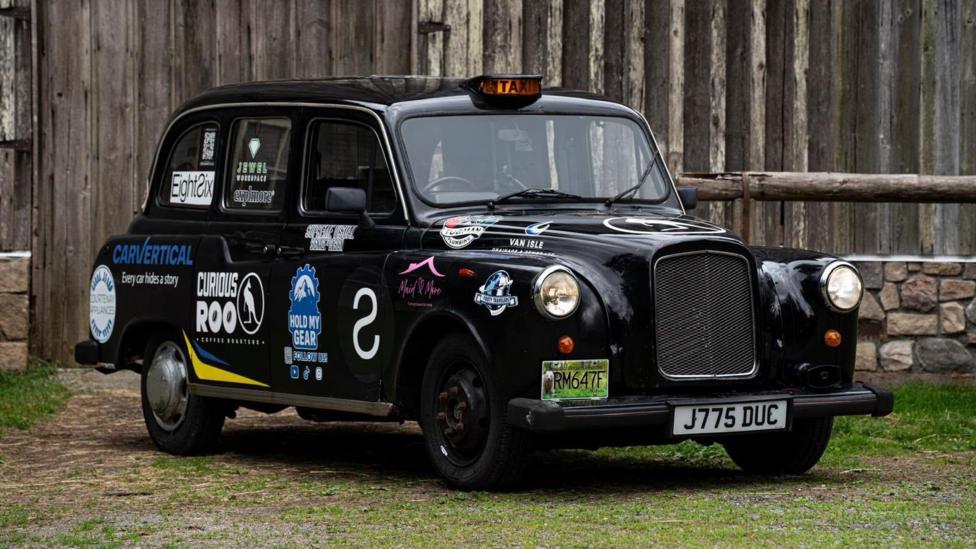
Driving 16 World Cup Stadiums in a London Taxi: The Ultimate Road Trip
Two Englishmen are attempting to visit all 16 World Cup 2026 venues in a traditional London cab. It is a logistical nightmare and a brilliant stunt.
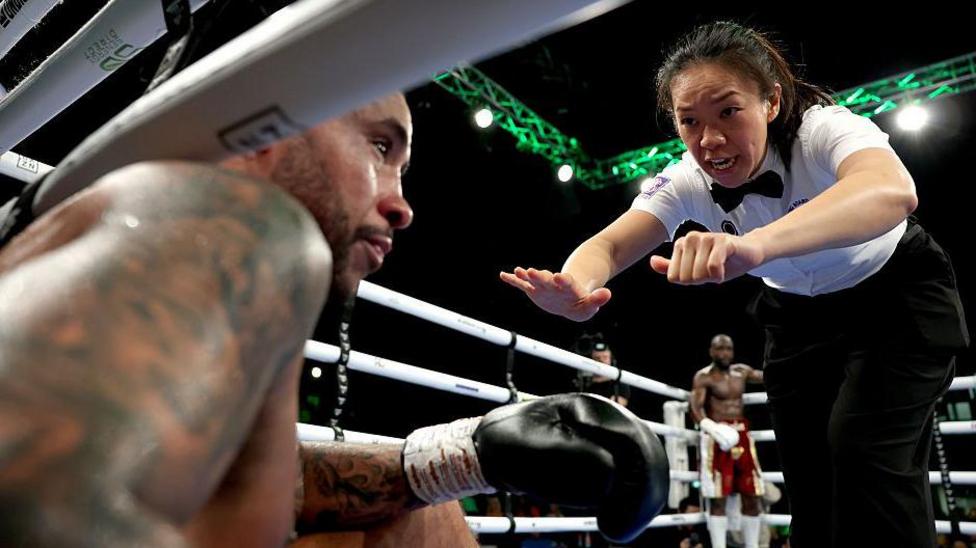
Breaking the Count: Amy Pu Shatters Boxing's Glass Ceiling
Amy Pu became the first woman to referee a professional boxing fight in British history, confronting prejudice at every turn.

Cusack Inquest Exposes Systemic Failures in Women's Football Safeguarding
Sheffield United's inquest into Maddy Cusack's death reveals alarming gaps in player welfare, whistleblowing, and resources.