Wales' Free Agents Used World Cup Qualifying as the Ultimate Audition
Rhian Wilkinson's free-agent internationals turned a qualifying campaign into a showcase of quality for prospective clubs.
A Qualifying Campaign With Two Objectives
Wales' women completed their World Cup qualifying group at the summit, a result that carries genuine weight for a programme still building its reputation on the European stage. But beneath the headline of topping the section lies a more nuanced and strategically significant subplot: several of the players who delivered that achievement did so without a club contract, effectively turning international duty into the most compelling audition tape imaginable.
Head coach Rhian Wilkinson made no attempt to obscure the reality. In her post-campaign assessment, she pointedly acknowledged that her free-agent internationals had seized the platform that qualifying offered, allowing their qualities to be displayed in competitive, high-stakes fixtures rather than behind closed doors at trial sessions or in lower-profile friendlies. It is a situation that speaks to the broader economics and structural realities of women's football, where the gap between international prestige and club security remains wide for players outside the top-tier domestic leagues.
The Structural Reality of Women's Football Employment
To understand why Wilkinson's comments carry such significance, one must first appreciate the employment landscape in the women's game. Unlike the men's professional pyramid, where even third-division players in most European nations hold full-time contracts, women's football still has vast segments of its workforce operating on short-term deals, semi-professional terms, or no contract at all. For a Welsh international without a club, the pathway back to professional football is neither straightforward nor guaranteed.
This is what makes qualifying campaigns so valuable beyond the sporting achievement. FIFA international windows bring together scouts, agents, and club executives who are actively monitoring the global talent pool. A strong performance in a competitive qualifier, broadcast and documented in official statistics, carries far more weight than a standout display in a domestic league that may receive minimal coverage. Wilkinson understands this dynamic intimately, having built her coaching career across multiple countries and competitions.
The Welsh Football Association has invested meaningfully in the women's programme over recent years, but the federation cannot replicate the daily professional environment that a club contract provides: consistent training at high intensity, sports science support, regular competitive minutes, and financial stability. For free agents, international camps serve as both the pinnacle of their competitive calendar and, paradoxically, the most visible window into their current form.
Wilkinson's Coaching Philosophy and Squad Management
What makes Wilkinson's approach particularly noteworthy is how she has managed to extract peak performances from players who, by definition, are not operating at full-time professional rhythm during gaps between international windows. This requires a coaching methodology that prioritises tactical clarity over physical conditioning, because players arriving from periods without structured club training cannot be expected to execute a demanding pressing game or sustain a high defensive line for ninety minutes.
Wilkinson has leaned heavily on positional structure and disciplined shape rather than asking her squad to outrun opponents. Wales under her tenure have typically operated with a compact 4-2-3-1 or 4-3-3 that focuses on defensive organisation first, with attacking transitions built on quick, direct movement rather than prolonged possession sequences. This approach is not a concession of ambition but a pragmatic recognition that her squad's competitive edge lies in cohesion, set-piece quality, and the ability to exploit moments of transition against opponents who may have more individually talented rosters but less collective discipline.
For free-agent players, this tactical framework is actually beneficial. It reduces the demand for the kind of match sharpness and physical endurance that comes only from weekly club football, while maximising the importance of tactical intelligence, positional awareness, and technical reliability. These are qualities that remain relatively stable even during periods without a club, and they are precisely the qualities that sophisticated scouts value when assessing whether a player can integrate into a structured professional environment.
What the Qualifying Table Tells Us
Finishing top of a World Cup qualifying group is not a trivial achievement for any nation outside the established elite of women's football. Wales had to navigate a schedule that demanded consistency across multiple windows, managing squad availability and form across a stretched timeline. The fact that players without regular club football contributed meaningfully to that consistency underlines both the quality of the individuals involved and the effectiveness of the coaching setup.
- Wales topped their qualifying group, the most significant competitive achievement in the programme's recent history
- Multiple squad members entered the campaign as free agents without club contracts
- The team's defensive record across the group stage demonstrated tactical discipline that transcended individual match fitness
- Set-piece execution, a trainable and repeatable skill, played a key role in results
Tactical Shift: How Wilkinson Adapted to Her Resources
The defining tactical adjustment in this campaign was Wilkinson's willingness to structure her team around the available personnel rather than imposing a fixed ideal. When free-agent players lacked the sharpness for sustained high pressing, the coaching staff shifted to a mid-block that conceded territory in the opponent's half but compressed space in the middle third. This created a funnel effect, channeling attacks into areas where Wales could contest possession with numbers rather than relying on individual physical duels.
In transition moments, Wales looked to exploit the speed of their forward players with early vertical passes, bypassing the midfield when the opposition committed numbers forward. This is a pattern that suits players who may lack the endurance for repeated 60-metre sprints but possess the acceleration and decision-making to execute a single decisive run. The tactical template essentially allowed free agents to showcase the attributes most relevant to prospective employers: tactical discipline, technical execution under pressure, and the ability to read and react to game states.
"The players who came into this camp without clubs showed exactly what they are capable of in a competitive environment. That is the best advertisement any player can have." — Rhian Wilkinson
The Shop Window Effect and What It Means Going Forward
Wilkinson's candour about the shop-window dynamic is refreshing in a sport where coaches typically avoid discussing players' contractual situations publicly. By framing the qualifying campaign in these terms, she has done two things simultaneously: she has praised her players' professionalism and resilience, and she has sent a clear signal to clubs that her squad contains individuals worthy of investment.
For the players themselves, topping the group provides a concrete credential that transcends individual performance metrics. Clubs recruiting in the women's market increasingly evaluate the international pedigree and competitive exposure of potential signings. A player who has contributed to a successful qualifying campaign carries a profile that is demonstrably different from one whose last competitive action was a mid-table domestic league appearance months earlier.
The women's transfer market has grown significantly in both volume and financial scale over the past three years. Clubs across the WSL, Liga F, Frauen-Bundesliga, and the Première Ligue are investing more heavily in recruitment infrastructure, and international performances are a key data point in scouting assessments. Wales' qualification success, driven in part by free agents performing at a high level, places those players firmly in the consciousness of decision-makers across Europe.
Looking Ahead: Nations League and Continued Development
With qualifying concluded, the next chapter for Wales under Wilkinson will involve the UEFA Women's Nations League and the continued development of a programme that has now demonstrated it can compete at the top of its qualifying section. The retention and recruitment of players will be central to maintaining that trajectory.
For the free agents who starred in this campaign, the immediate priority is securing club contracts that allow them to arrive at future international windows in peak condition. If Wilkinson can build a squad where the majority of her key players are training and competing full-time at professional clubs, the ceiling for this Welsh team rises considerably. The foundations laid in qualifying, tactical discipline, squad cohesion, and a clear identity, provide a platform that becomes genuinely formidable when underpinned by consistent professional environments.
The broader lesson of this campaign extends beyond Wales. In women's football, where the professional infrastructure remains unevenly distributed across nations and leagues, international windows serve a dual purpose: competitive qualification and player development through visibility. Wilkinson has leveraged both with intelligence and transparency, and the players who benefited from her approach will hope that the phone calls from clubs have already begun.
Editorial Integrity
This is an original SportPulse article written by our editorial team. All content is independently researched, written, and reviewed by our writers and editors before publication. We do not publish copied, aggregated, or syndicated content.
SportPulse is committed to original sports journalism. Read our editorial policy or contact us with any questions.
More Like This
All football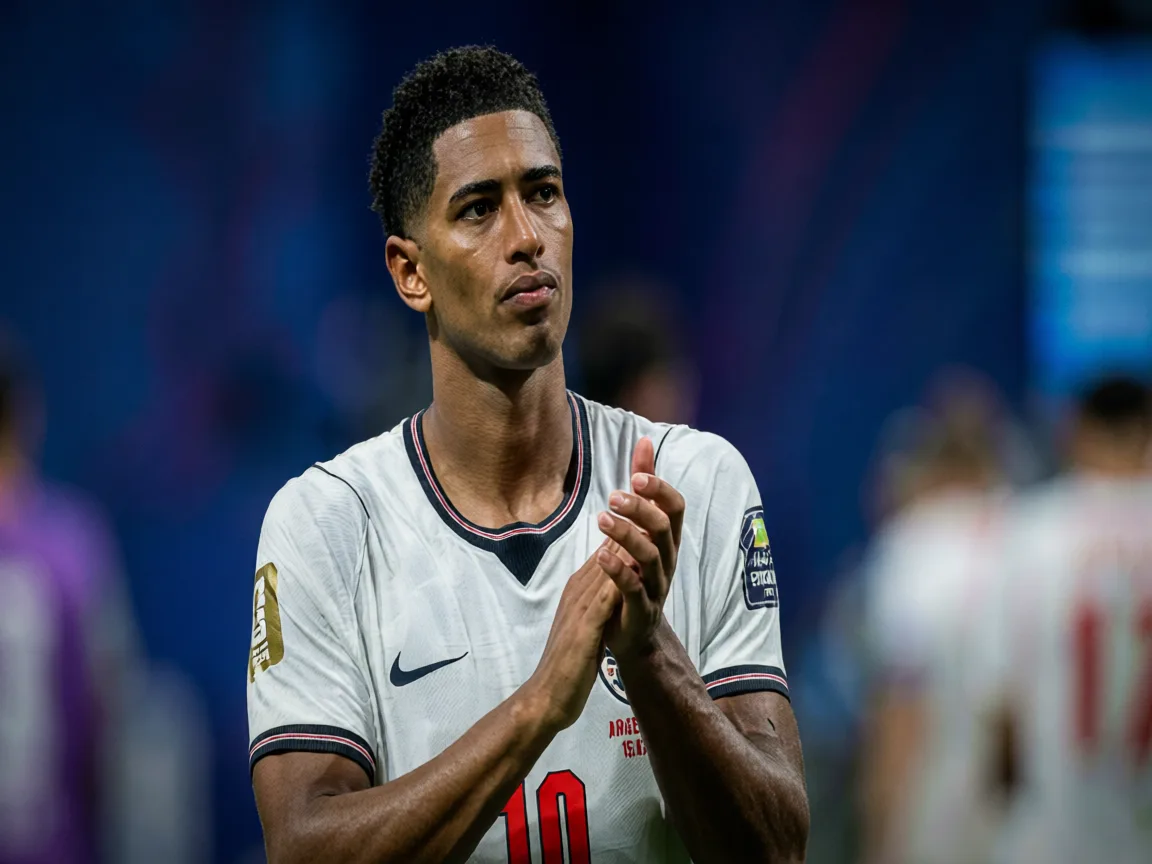
England's 2026 World Cup Grades: Who Delivered and Who Faltered
A data-driven assessment of every England player at the 2026 World Cup in North America, revealing the tactical story behind the numbers.
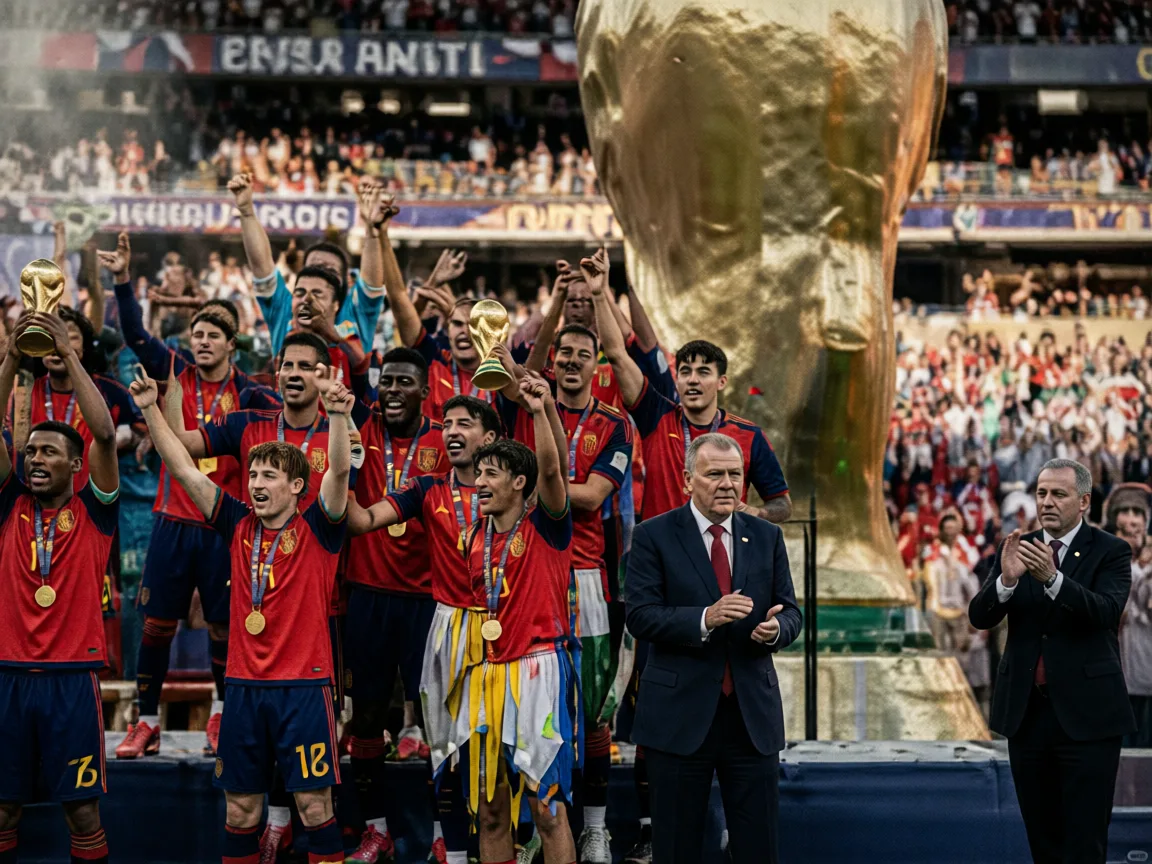
Trump and Infantino Booed as President Tries to Crash Spain's Party
A spectacle on and off the pitch as Trump and Infantino faced boed fans before the U.S. president attempted to muscle into Spain's celebration.

Colombia Denied Late Winner as Thrilling Draw Sends Both Sides Through
A gripping 0-0 between Colombia and Portugal delivers drama, controversy, and mutual passage to the last 32.