Wembley at 3 AM: How Saudi Money Could Rewrite Boxing's Clock
Fury-Joshua at Wembley in the early hours exposes how PPV dollars and Saudi billions now dictate when, not just where, boxing happens.
A Fight at 3 AM: Boxing's New Normal?
The concept sounds absurd: 90,000 fans filing into Wembley Stadium in the dead of night, packed into their seats by 2 AM, waiting for ring walks that might not happen until 3:30 AM. Tyson Fury versus Anthony Joshua, the fight British boxing has craved for a decade, staged not in primetime but in the small hours when most of London is asleep.
Yet this is exactly what planners are now seriously considering. The proposed heavyweight showdown between Fury and Joshua could be held at Wembley in the early hours of the morning, driven by one immutable force: the demands of international pay-per-view markets and the money that flows from them. The British fight fan, long the lifeblood of the sport, is being asked to rearrange their biological clock to accommodate a global audience.
This is not a novelty. It is the logical endpoint of a trend that has been reshaping boxing for years.
The Economics of the Unusual Hour
Follow the Money
The rationale is brutally simple. A fight staged at 3 AM BST translates to 10 PM Eastern in the United States and 5 AM in Riyadh, Saudi Arabia. The American market pays the premium. A Showtime or ESPN pay-per-view needs the Eastern seaboard conscious and settled on their couches. That means a main event slot between 11 PM and midnight ET, which is mathematically impossible if the fight happens at a sensible 8 PM in London.
The numbers tell the story of why promoters will accept the logistical headache:
- Fury vs. Wilder III generated approximately 600,000 PPV buys in the US, driven largely by prime-time scheduling.
- Joshua's rematch against Andy Ruiz Jr. in Diriyah produced a mid-afternoon UK start time to satisfy American broadcaster DAZN's evening slot.
- Saudi Arabia's Vision 2030 sports investment strategy has committed an estimated $600 million plus to boxing events since 2019, with a clear preference for fights that air live during evening hours in the Middle East.
The overnight Wembley concept is therefore a compromise, and a striking one. Rather than export the fight to Riyadh or Las Vegas, the venue stays British. The timing, however, belongs to everyone except the local fan.
Wembley as a Pawn
Wembley Stadium is not merely a venue. It is a national institution, the cathedral of English football, hosting 90,000 seats and a century of sporting memory. Holding a boxing match there at any hour is an event. Holding one at 3 AM transforms the stadium into something surreal, a gladiatorial pit lit by floodlights while the surrounding streets sit empty.
The logistical considerations are staggering. Transport for London does not run Night Tube services on all lines, and certainly not with the frequency needed to evacuate 90,000 people at 5 AM. The Metropolitan Police would need a substantial operation. Local residents in Brent, already accustomed to event-day disruption, would face noise and crowd management through the night.
Promoters are betting that none of this matters. They are betting that the magnitude of the event, the sheer once-in-a-generation drawing power of Fury versus Joshua, will override every practical objection.
The Athlete's Dilemma
Circadian Rhythm as a Weapon
Fighters train for years. They peak physically and mentally for a specific moment. That moment is typically calibrated to their body's natural rhythm. Fury has historically fought in evening slots. Joshua's league fights have followed the same pattern. Asking either man to perform at 3 AM is asking them to fight against their own biology.
Sports science is unequivocal on this. Peak testosterone and physical performance occur in the late afternoon and early evening, roughly 4 PM to 8 PM. Cortisol levels, essential for reaction time and explosive power, decline sharply after midnight. A fighter stepping into the ring at 3:30 AM is operating at a measurable physiological disadvantage compared to an 8 PM start.
The mitigation strategy, used by fighters adapting to overseas time zones, is to shift the entire training camp. WAKE at 3 PM. Train in the evening. Sleep at 7 AM. It works, but it is not seamless. It requires three to four weeks of discipline to adjust, and even then, the body's deep circadian preferences resist.
"Timing is everything in boxing. Not just the timing of the punch, but the timing of the body. You fight when your body thinks it is time to fight."
Both camps will incorporate sleep specialists, circadian rhythm consultants, and possibly melatonin protocols into their preparation. The fight camps for Fury and Joshua would become as much about chronobiology as sparring and conditioning.
The Fan Contract
Paying for the Inconvenient
The British boxing public has accepted inconvenience before. They traveled to Riyadh in their thousands for Joshua-Ruiz II. They stayed up until 5 AM to watch Carl Froch battle George Groves. They tolerated the peculiar scheduling of the Dillian Whyte rematch against Alexander Povetkin, staged on a Saturday afternoon to satisfy American television.
But there is a meaningful difference between traveling abroad or watching late from home and being asked to attend a live event at 3 AM in your own city. The fan who buys a ticket for Wembley is making a commitment disproportionate to the typical fight night. They must arrange childcare, transport, annual leave from work on the following Monday, and a tolerance for exhaustion that borders on the athletic.
The price of that ticket, expected to range from £40 for the upper tiers to well over £3,000 courtside, does not include the hidden cost of a disrupted week. Yet the expectation, and it is a reasonable one, is that the fight will sell out within hours.
The Bottom Line: British boxing fans have proven repeatedly that they will absorb any inconvenience for the fights that matter. The question is whether this loyalty is being respected or merely monetized.
Boxing's Temporal Surrender
A Sport That Bends to Broadcasters
Football, the world's most popular sport, often schedules matches at unusual times, but those adjustments are constrained by a relatively narrow window. A Saturday 12:30 PM kickoff is unusual. A 5 AM match is inconceivable. Boxing has no such floor. Its history is littered with fights timed to suit television networks rather than athletes or spectators.
The overnight Wembley proposal is not the first instance of this phenomenon, but it is the most extreme. It represents a sport that has fully surrendered its temporal agency to the highest bidder. The venue is British. The fighters are British. The fans are British. The schedule is American and Saudi.
What Fury versus Joshua at 3 AM truly represents is the final erosion of the idea that boxing serves the community that sustains it. The sport's governing bodies, promoters, and broadcasters have long operated on the principle that money dictates location. This fight extends the principle to time itself.
The fighters will adjust. The fans will attend. The event will be a commercial success. At no point in this calculation does anyone ask whether staging a fight in the middle of the night in a residential area is a reasonable thing to do.
Verdict: Fury-Joshua at Wembley overnight is a massive event delivered with a calculated disrespect for the people who made it possible. It will happen, it will sell out, and it will set a precedent that boxing has no hours it will not disturb.
Editorial Integrity
This is an original SportPulse article written by our editorial team. All content is independently researched, written, and reviewed by our writers and editors before publication. We do not publish copied, aggregated, or syndicated content.
SportPulse is committed to original sports journalism. Read our editorial policy or contact us with any questions.
More Like This
All long-reads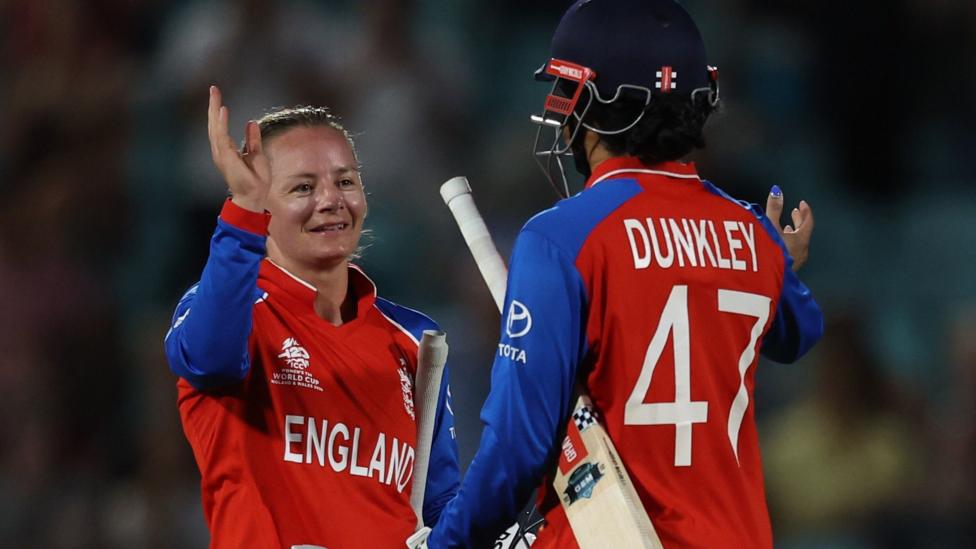
Hartley's Bold Verdict: England Playing Best Cricket in Years
Former spinner Alex Hartley backs England Women to reach the T20 World Cup final ahead of Thursday's semi-final showdown.

The Trial That Saved Antoine Semenyo's Career
Antoine Semenyo's rise toPremier League stardom hinges on a single, desperate trial that pulled him back from the brink of obscurity.
Starmer Races Hillsborough Law Through Commons in Final Week
After months of delays, the stalled Hillsborough law faces a final-week sprint through Parliament to prevent future cover-ups.