Falklands Banner Row Engulfs Argentina, Britain, and Now the White House
A pre-match banner referencing the Falklands has drawn the White House into a diplomatic row pushing FIFA into the political deep end.
A Banner That Ignited a Diplomatic Firestorm
The White House has waded into a controversy that football did not ask for and cannot easily resolve. The dispute centers on the Argentine national team displaying a banner referencing the Falkland Islands before a recent fixture. What began as a pre-match gesture has metastasized into a full-blown diplomatic incident involving three governments and the sport's global governing body.
Downing Street had already thrown its weight behind calls for FIFA to investigate the incident. Now, the involvement of American officials adds another layer of geopolitical complexity to what should have been a routine sporting event. The Argentine players held the banner with a message that directly challenged British sovereignty over the islands they call Las Malvinas.
For Argentina, the Falklands remain an open wound, a national cause that transcends politics and football alike. The 1982 war cost nearly a thousand lives and left a territorial dispute unresolved that still shapes relations between Buenos Aires and London. When footballers touch that nerve, the aftershocks reach capitals far beyond the stadium.
The Geopolitical Backdrop
The South Atlantic archipelago has been the subject of a sovereignty dispute stretching back nearly two centuries. Britain has administered the islands since 1833 and conducted a referendum in 2013 in which 99.8% of voters chose to remain a British Overseas Territory. Argentina has never accepted that outcome and has never abandoned its claim.
Neither country has been shy about using football as a stage for this argument. Argentine players and fans frequently chant about Las Malvinas during matches against England. The emotional significance of the fixture is inseparable from the political context surrounding it.
This latest banner incident, however, represents an escalation. Previous expressions were largely confined to crowd chants and offhand remarks. A formal banner assembled and displayed by the team as a collective act transforms the message into something official. It forces institutions to take sides when their stated purpose is to remain neutral.
The Diplomatic responses
Downing Street's response was swift and unambiguous, backing demands that FIFA examine whether the banner violated regulations prohibiting political demonstrations during matches. British officials framed the display as provocative and inappropriate for a sporting context. The message was clear: sport should not be a vehicle for territorial disputes.
The White House's decision to weigh in adds an unpredictable element to the standoff. American involvement in South Atlantic sovereignty disputes is historically limited and carefully calibrated. By defending the Argentine position, even indirectly, officials risk straining what is already a delicate diplomatic moment between the United States and Britain.
The broader context of Falklands sovereignty has never been a defining issue in British bilateral relations. A South Atlantic dispute pulling in American commentary creates a triangular dynamic with no straightforward resolution. For Britain, the principle of territorial self-determination remains non-negotiable.
Below the surface, the incident exposes how quickly modern football becomes a proxy for wider political battles. Governments now recognize that a pre-match banner travels further and faster than any press release.
FIFA's Regulatory Dilemma
FIFA's statutes contain explicit language regarding political neutrality. The governing body's rules prohibit the use of football matches for political or ideological messages. The question is whether a sovereignty claim falls under that definition or whether FIFA categorizes it as a cultural expression.
The governing body has faced similar dilemmas before. Three Points and discretion do not mix easily. The challenge is that any ruling will be perceived through the lens of the dispute itself. A decision to punish Argentina risks inflaming sentiment across South America. A decision to do nothing risks alienating the British footballing establishment and setting a precedent no one can control.
FIFA's institutional instinct is to delay, deflect, and ultimately issue a ruling that satisfies no one but leaves everyone vaguely unsatisfied. When a case involving the Falklands crosses their desk, the bet is that prolonged deliberation will allow the immediate outrage to fade before a formal verdict arrives.
The governing body's regulations grant significant latitude for interpreting what constitutes a political statement. A sovereignty claim has cultural, historical, and emotional dimensions that do not fit neatly into any single category. FIFA's disciplinary committee will have to weigh intent, context, and precedent in equal measure.
In the dressing room after the match, the atmosphere was tense but unified. Players understood the diplomatic machine now churning around them but did not retreat from their position. Some exchanged quiet words about the magnitude of what they had set in motion. The staff paced between lockers,Phones buzzing with messages from federation officials already fielding inquiries from FIFA. There was no celebration, no bravado. Just a sober awareness that a three-minute pre-match gesture had become a matter of international relations.
The Regional Dynamic
The Falklands dispute occupies a unique place in South American diplomacy. Across the continent, nations have historically supported Argentina's claim. Brazil, Chile, Colombia, and others have issued statements backing Buenos Aires at the United Nations and in regional forums. This solidarity is a point of continental pride.
A heavy FIFA sanction against Argentina would likely trigger a coordinated backlash from CONMEBOL. South American federation presidents would frame any punishment as an attack on regional identity. They would argue that European sensibilities are being prioritized over South American expression. This threat of collective action gives the Argentine Football Association a degree of insulation as the case proceeds.
What It Means
The White House has now placed itself in a position where it is effectively endorsing the Argentine framing while Britain demands a formal investigation. That leaves FIFA in a position where neutrality is increasingly untenable.
For Argentina, the banner episode reinforces their reputation for merging passion and politics on the football field. The eventual FIFA ruling will set a precedent for how strictly the governing body enforces its own rules. This one will be referenced for years whenever a team brings a geopolitical grudge onto the pitch.
The broader lesson is that modern football can no longer pretend to exist in a political vacuum. The sport's global reach and visibility make it an irresistible platform for causes that transcend the ninety minutes on the field. When players hold up a banner, they are not just making a statement. They are testing the limits of what the game will allow and drawing a map of where sport ends and politics begins. The answer, increasingly, is that no one knows.
For now, the row will rumble on through diplomatic channels and disciplinary committee meetings. The immediate fixture that produced the banner has finished. The controversy it generated has only just begun.
Editorial Integrity
This is an original SportPulse article written by our editorial team. All content is independently researched, written, and reviewed by our writers and editors before publication. We do not publish copied, aggregated, or syndicated content.
SportPulse is committed to original sports journalism. Read our editorial policy or contact us with any questions.
More Like This
All football
Oyarzabal's Ice-Cold Penalty Puts Spain in Control Against France
Lamine Yamal won it, Oyarzabal buried it, and France's semi-final hopes took a devastating hit.

Keane and Fernandes Clear Air After Misquote Fallout
Roy Keane and Bruno Fernandes resolve their public rift, but the episode exposes deeper tensions around Manchester United's leadership identity.
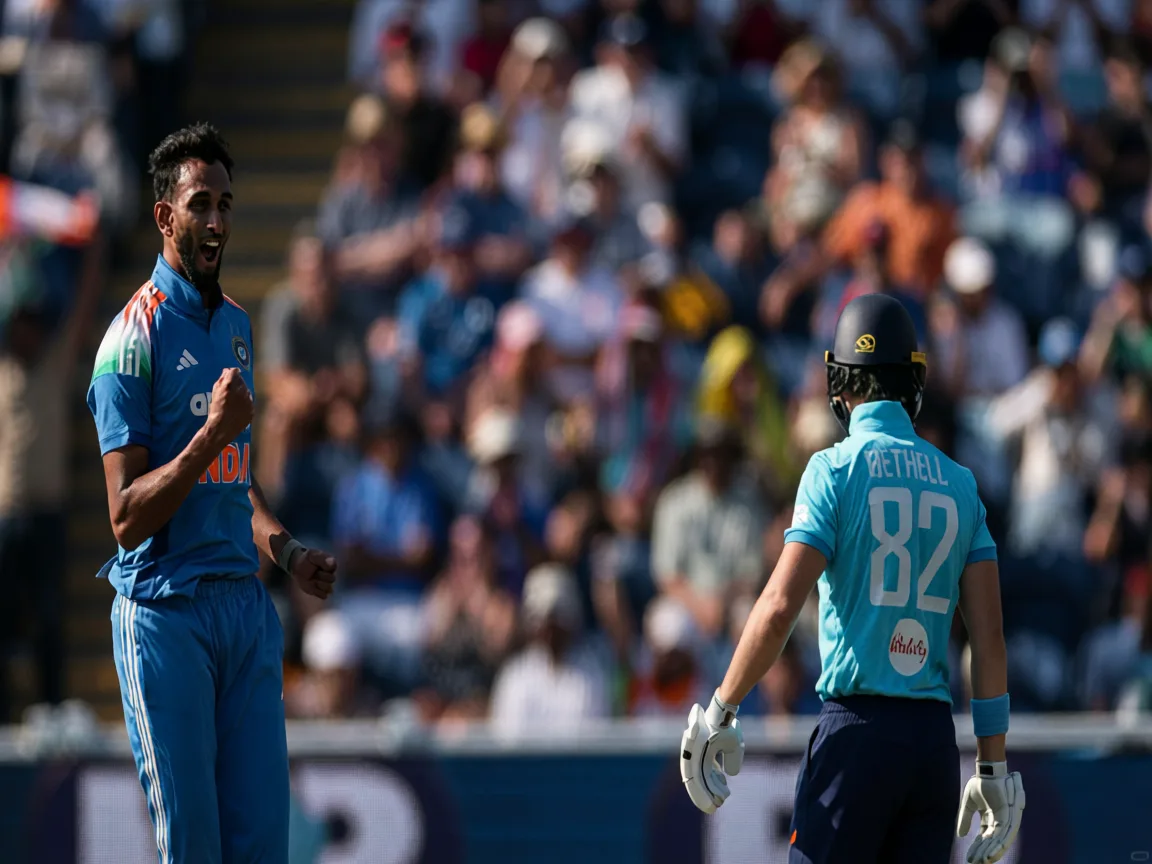
England Top Order Crumbles as India Dominate Cardiff Chase
England slumped to 8-2 inside four overs against India in Cardiff, exposing a top-order crisis that demands urgent reassessment ahead of the World Cup.