Sinner Steps Into the Spotlight as Wimbledon 2026 Springs to Life
Defending champion Jannik Sinner headlines a thrilling opening day at the All England Club alongside British hopefuls Norrie and Dart.
The Champion Returns to His Stage
There is a particular kind of tension that lives in the opening moments of Wimbledon. The grass is impossibly green. The white is impossibly white. And when the defending champion strides onto Centre Court for the first time since lifting that golden trophy, the air itself seems to hold its breath.
Jannik Sinner knows this feeling now. The Italian, who conquered the All England Club last summer to claim his maiden Wimbledon title, was back on day one of the 2026 Championships — and the flashes of brilliance he produced served as an immediate reminder of why the crown sits so comfortably on his head.
The shots that rippled across social media within minutes of his first match told the story. Federer-esque was the word that kept surfacing, and it was not hyperbole. There was a fluidity, a kind of effortless geometry to his movement and ball-striking that harked back to the maestro himself. Sinner's game has always been built on precision and devastating flat groundstrokes, but on grass, those weapons take on a different dimension entirely.
"The way the ball comes off his racquet on this surface — it's like it was designed in a lab specifically for Wimbledon."
That description, circulating among analysts and former players watching courtside, captures something essential about the Sinner-grass court relationship. He is not a player who merely adapts to the surface. He elevates upon it.
The British Pulse: Norrie and Dart Carry the Home Hopes
Wimbledon without British contenders firing on Centre Court or Court One would be like a symphony missing its opening chord. The Championships demand home heroes, and day one delivered two familiar names: Cameron Norrie and Harriet Dart.
Norrie's relationship with Wimbledon has been a complicated one. The former British No. 1, who reached the semi-finals in 2022 in what felt like a coronation run, has since endured the kind of form fluctuations that define the modern ATP Tour grind. Injuries crept in. Rankings dipped. The narrative shifted from breakthrough contender to gritty veteran fighting for relevance at the top.
But Norrie on grass has always been a slightly different animal. His flat, left-handed groundstrokes skid through the low-bouncing surface with a natural menace. His return game, one of the most underrated weapons on tour, becomes even more potent when opponents lose a fraction of a second on their serve.
His appearance on day one was a statement: he is not done. Not at Wimbledon. Not yet.
Harriet Dart's Moment Under the Roof (of Expectation)
Dart, meanwhile, represents something more emotionally raw. The British No. 1 ranking on the women's side has been a revolving door of names in recent years, and Dart has carried that weight with a mix of determination and visible vulnerability that makes her deeply relatable.
Her shot-making on day one reminded everyone why she continues to command wildcard entries and centre-court billing. The hand skills at the net, the willingness to come forward, the willingness to attack rather than defend — these are the instincts that grass courts reward.
For British tennis fans, seeing Dart and Norrie both producing highlight-reel moments on the opening day was a tonic. The home crowd at Wimbledon does not simply want to watch the best players in the world. They want to believe their own can compete with them.
The Federer Echo: Why the Comparisons Matter
When anyone describes a shot as Federer-esque at Wimbledon, it carries the weight of two decades of grass-court genius. Roger Federer's eight Wimbledon titles are the standard against which all excellence on this surface is measured. To invoke his name is not casual praise. It is the highest compliment the tennis lexicon can deliver.
For Sinner, the comparison arrives at a critical juncture. He has now won Grand Slams on hard courts and grass. The question hovering over his 2026 season is whether he can build a sustained period of dominance the way Federer, Nadal, and Djokovic each did in their eras.
His opening-day performance suggested the hunger has not dimmed.
- Sinner's 2025 Wimbledon triumph was a watershed moment for Italian tennis
- His grass-court win rate over the past two seasons sits among the top three on the ATP Tour
- The Italian has won multiple titles across surfaces in the last 18 months
The defending champion's aura at Wimbledon is a powerful psychological weapon. Opponents in the draw know they are not just playing Sinner the tennis player. They are playing Sinner the Wimbledon champion, on his court, in his moment.
Day One Traditions and the Modern Game
There is something beautifully anachronistic about Wimbledon's opening day in 2026. While the rest of the tennis world has embraced electronic line-calling, neon colorways, and late-night sessions, the All England Club still begins its Championships with the same rituals: the perfectly manicured grass, the all-white dress code, strawberries and cream, and the quiet reverence of a crowd that understands it is witnessing something that transcends sport.
The shots that lit up day one — Sinner's liquid forehands darting along the baseline, Norrie's stinging cross-court returns, Dart's deft touch at the net — were not just athletic achievements. They were chapters in a story that Wimbledon has been telling since 1877.
The Surface Factor
Grass-court tennis is increasingly rare on the professional calendar. The season lasts barely a month. Most players spend the year grinding on hard courts and clay, arriving at Wimbledon with limited preparation time on the surface that demands the most radical tactical adjustments.
This is what makes opening-day performances so revealing. Players who look comfortable immediately — whose footwork reads the low, unpredictable bounces instinctively — are telling you something about their game intelligence. Sinner looked like he had been playing on grass for months. Norrie's movement was crisp and purposeful. Dart's willingness to take the ball early and flatten her strokes spoke to someone who has done her homework.
What Day One Tells Us About the Draw
Opening days at Grand Slams are dangerous terrain for narrative prediction. The draw is vast. Upsets lurk in every quadrant. But the quality of shot-making on display offered some early signals about the pecking order.
Sinner's form was the loudest statement. If the defending champion moves through the early rounds with the fluency he showed on day one, the rest of the field has a problem. His ability to dictate rallies from the baseline, to absorb pace and redirect it with surgical precision, is arguably more lethal on grass than any other surface.
"When Sinner is timing the ball like that, you're not playing tennis against him. You're playing defence."
For Norrie, the path is narrower but not impossible. Grass is the great equaliser. Serve speeds matter less. Movement and guile matter more. If he can find the level he produced at his peak, a deep run is not out of the question.
Dart faces the steepest climb, navigating a women's draw stacked with power players who have increasingly embraced grass-court tennis. But the home crowd is a weapon at Wimbledon that no statistic can quantify.
The Long Road Ahead
Wimbledon 2026 has only just begun. Fourteen days of tennis stretch ahead, each one capable of rewriting the narratives that day one has started to build.
But the opening chapter was unmistakable in its message: Jannik Sinner arrived as the defending champion and played like one. The British contingent showed spine and quality. And the All England Club, as it always does, reminded the sporting world why two weeks on grass can feel like the most important fortnight in athletics.
The best shots from day one will be replayed hundreds of times before the final. Each viewing will reveal something new — a slight adjustment of the grip, a half-step of anticipation, a fraction of racquet-head speed that separated brilliance from mere competence.
That is Wimbledon. That is why the world watches.
Editorial Integrity
This is an original SportPulse article written by our editorial team. All content is independently researched, written, and reviewed by our writers and editors before publication. We do not publish copied, aggregated, or syndicated content.
SportPulse is committed to original sports journalism. Read our editorial policy or contact us with any questions.
More Like This
All tennis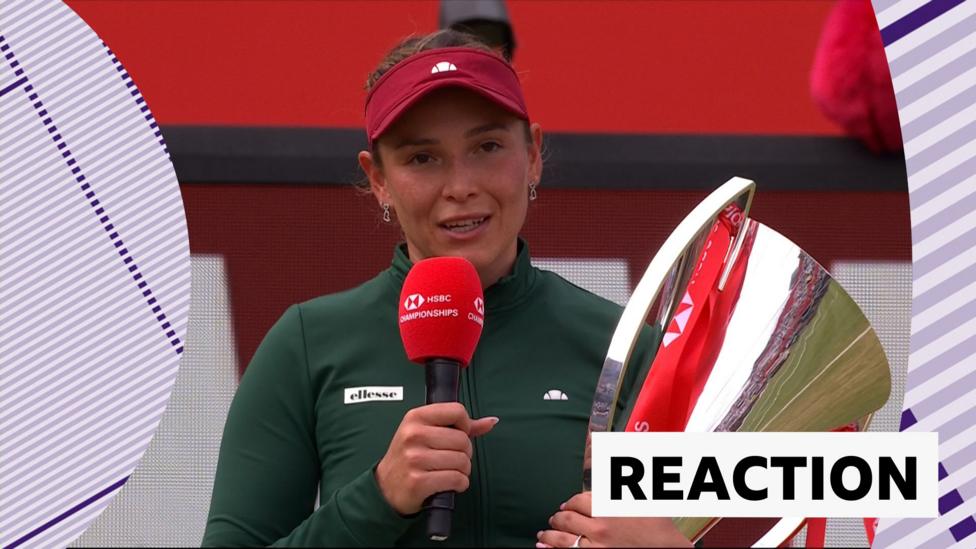
Vekic Thanks Trailblazers After Queen's Club Title Win
Donna Vekic thanks pioneers for women playing at Queen's Club after straight-sets final win.
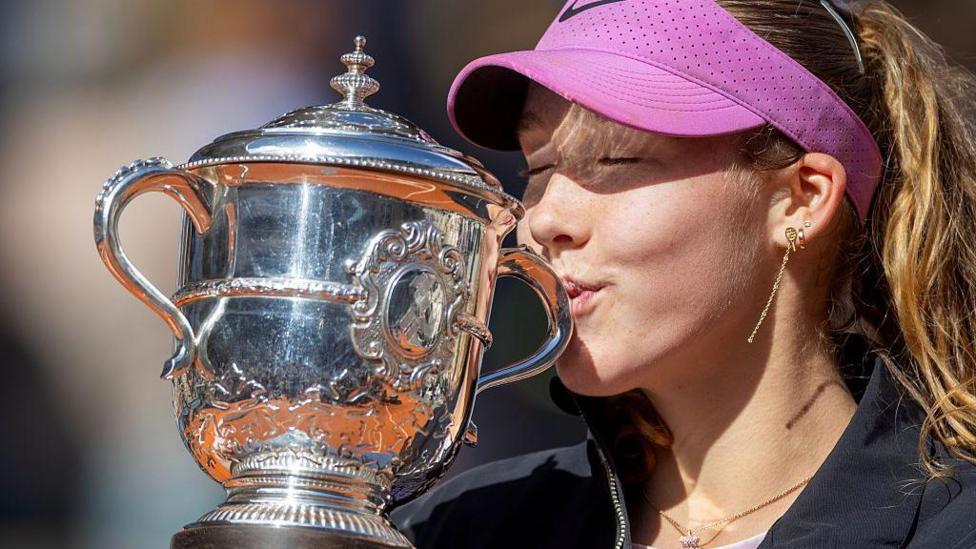
Andreeva Claims French Open Glory with Stunning Self-Belief
Mirra Andreeva captures her first Grand Slam at the French Open, crediting her own relentless self-belief as the ultimate catalyst.
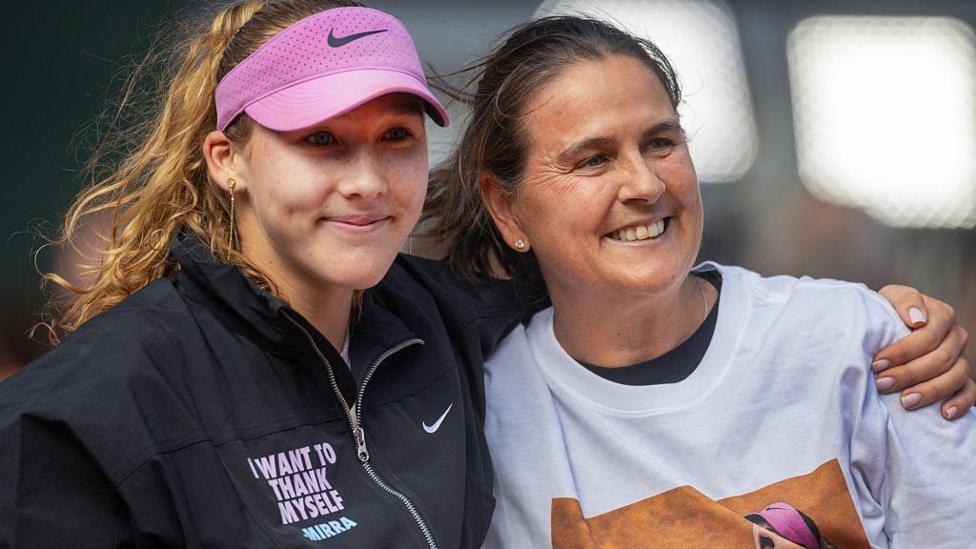
The Net Is Still Too High for Female Tennis Coaches
Tennis preaches gender equality, yet its coaching boxes remain a boys' club. The women fighting to change that face egos, stereotypes, and locked doors.