Wimbledon's Prize Money: The Economics of Grass Court Survival
Wimbledon's prize money distills professional tennis into a brutal financial referendum on early exits and deep runs.
Grass is the most precarious of surfaces. It slips, it skids, it rewards the fleet and punishes the plodding. For two weeks every summer, the All England Club transforms this fragility into a theatre of survival. Every stroke carries a heightened risk. Every misstep amplifies the margin for error into a chasm. Yet beneath the poetic uncertainty of the lawn lies a stark, unyielding reality: the mathematics of survival. Wimbledon's prize money structure is not merely a reward system. It is a financial referendum on a player's seasonal viability, dividing the touring professional from the weekend wildcard with the cool indifference of a guillotine.
The Scale of the Grand Slam Economy
British broadcasting traditions, embodied by the BBC's recent public exploration of the Championships' financial breakdown, offer a window into the economics that govern the sport's peak events. The overarching narrative of recent years is one of aggressive inflation. Tournament organizers, acutely aware of the grueling physical toll the sport demands and the ever-widening gulf between the haves and have-nots, have consistently pushed the total purse upward. Wimbledon now operates with a financial gravity that pulls the entire tennis calendar into its orbit, setting benchmarks that Masters 1000 events and lower-tier tournaments struggle to match.
The 2024 edition of the Championships maintained this upward trajectory, ensuring the total compensation package hovered around the £50 million mark. This figure represents more than prize money; it is the operating budget for hundreds of independent contractors who traverse the globe with a racket bag and a fragile ranking. The overarching purse is a lifeblood injection into an ecosystem where players outside the top fifty routinely cover their own travel, accommodation, and coaching expenses. To understand the Wimbledon prize structure is to understand the cruel arithmetic of professional tennis.
The Guillotine of the Early Rounds
The distribution of wealth at a Grand Slam is a steep, unforgiving cliff face. The prize money per round does not ascend gently; it multiplies with a violence that mirrors the escalating pressure of the fortnight. A first-round loss at Wimbledon offers a sum that, while substantial by everyday standards, is a precarious foundation for a year's labor. Players falling at the first hurdle collect approximately £55,000. It is a handsome check for ninety minutes of work, yet it is fundamentally a severance package, a consolation for a journey interrupted before it ever truly began.
Progress to the second round, and the compensation deepens to roughly £85,000. The gap is significant, but it merely buys a player the right to survive another day on the 法fragile grass. By the time a competitor reaches the third round and secures around £131,000, they have already defeated two opponents and the fickle surface itself. Week one of Wimbledon is a war of attrition. The financial rewards for surviving it are handsome, yet they remain foundational. They cover the overheads, replenish the depleted accounts, and fund the flights to the hard-court swing across North America. They rarely build empires.
The Middle-Class Struggle for Sustainability
The fourth round marks the threshold where survival begins to morph into prosperity. A run to the second week guarantees a paycheck in the region of £226,000. This is where the economics of the sport recalibrate. A quarterfinal run, worth roughly £375,000, secures a season of financial comfort. A semifinal berth elevates the earnings to approximately £715,000, a figure that vaults a player into the upper echelons of the tour's earning hierarchy. Each step deeper into the draw does not merely add to a bank balance; it fundamentally alters the trajectory of a player's career, affording them the luxury of better coaching, superior medical care, and the psychological freedom that financial security purchases.
Yet the cruelty of the structure lies in the chasm between these rounds. Miss a forehand return at 5-5 in the third set of a first-round match, and the £131,000 of a third-round run evaporates into the £55,000 of an immediate exit. The difference is a full season of hardship versus a season of stability. Professional tennis is a sport played on a few centimeters of string, but accounted for in tens of thousands of pounds.
The Rarefied Air of the Fortnight
The summit of the draw is where the real wealth is hoarded. Wimbledon is a winner-takes-most economy. Reaching the final guarantees a staggering £1.4 million, but lifting the Venus Rosewater Dish or the gentlemen's trophy deposits £2.5 million into the champion's account. The jump from runner-up to champion, a margin often decided by a solitary break of serve or a fleeting lapse in concentration, is worth over £1 million. That single million represents the career earnings of a journeyman professional condensed into a few hours of glass-court combat.
"The difference between a good season and a great one is seven matches on the grass."
The champion's bounty is a transformative windfall. It secures legacy, guarantees entry into the sport's most exclusive end-of-year events, and provides the financial capital to dictate one's schedule for the following season. For a player like Carlos Alcaraz or Marketa Vondrousova, the prize money is almost secondary to the commercial endorsements that follow. But for those hovering on the precipice of the top twenty, the £2.5 million is the difference between perpetually chasing ranking points and curating a career.
The Unseen Subsidy
Lost in the celebration of the champion's windfall is a quiet evolution in the Wimbledon financial philosophy. Recognizing the brutal attrition rate of professional tennis, the All England Club has steadily increased the compensation for early-round losers. Where once a first-round exit barely covered the cost of a transatlantic flight and a week in a London hotel, the current £55,000 provides a tangible, if temporary, safety net. It is a tacit admission that the supporting cast of a Grand Slam, the unheralded qualifiers and the wildcard recipients who fill the outer courts, are essential to the prestige of the event. Without them, the mountain has no base.
The tournament also maintains a player per diem, a small but vital contribution to the daily costs of competing in one of the world's most expensive cities. It is a fraction of the overall purse, yet it symbolizes an understanding that the professional tennis tour is a relentless, unforgiving grind. The players who lose on Monday must often find the resolve, and the funds, to travel to the next Challenger event by Wednesday.
The Shadow Economy of the Lawn
Wimbledon's prize money does not exist in a vacuum. It exerts a gravitational pull on the entire sport, setting a bar that other Slams must clear or risk losing their prestige. The rippling effects of the All England Club's financial generosity, or lack thereof, dictate the earning expectations for the entire season. Yet for all its scale, the prize pool remains a deeply imperfect distributor of wealth. The distribution remains top-heavy, ensuring that the already wealthy accumulate more, while those scrapping at the margins must continue their relentless, globe-trotting hustle.
The grass will always favor the bold. It will always reward the serve, the volley, and the instinctive push to the net. But beneath the elegance of the sporting contest, the numbers tell a parallel story. Every round survived is not just a match won. It is a budget line secured. Wimbledon, for all its strawberries and cream, is a殿堂 of beautiful survival. And for the players walking onto the lawns each summer, the grass beneath their feet is green in more ways than one.
Editorial Integrity
This is an original SportPulse article written by our editorial team. All content is independently researched, written, and reviewed by our writers and editors before publication. We do not publish copied, aggregated, or syndicated content.
SportPulse is committed to original sports journalism. Read our editorial policy or contact us with any questions.
More Like This
All tennis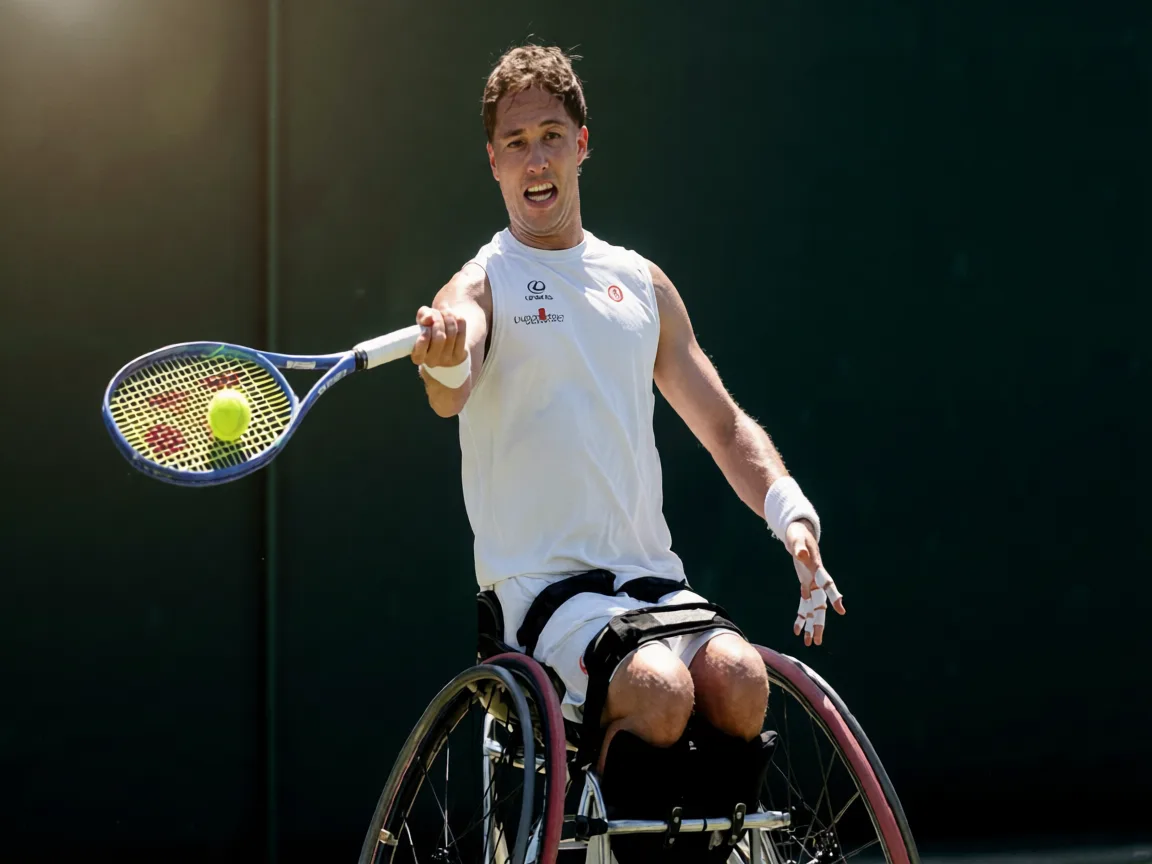
Hewett Marches On as Reid Falls: The Divergent Paths of British Wheelchair Tennis
Alfie Hewett reaches a tenth Wimbledon wheelchair singles quarter-final while Gordon Reid bows out early, encapsulating two very different chapters in British para-sport.
Day 11 at Wimbledon Delivered Out-of-This-World Tennis
Alfie Hewett and Coco Gauff turned Day 11 at Wimbledon into a showcase of grit, artistry, and unforgettable shot-making.
Raducanu Delivers Merciless Queen's Club Debut
Emma Raducanu announced her grass-court return with a ruthless 6-0 6-3 demolition of Anna Blinkova at Queen's Club.