The Unsung Orchestrators: Life in the Wimbledon Umpire's Chair
Wimbledon's umpires endure pressure, weather, and biological reality. A deep dive into the hidden craft behind tennis's most prestigious officiating assignment.
The Weight of the Whistle
The silence at Wimbledon is unlike anywhere else in tennis. Fourteen thousand spectators packed into Centre Court, and the silence before a serve is so absolute you can hear the fuzz of a ball clipping the tape from fifty rows away. That silence demands precision from everyone in the arena. From the players, yes, but crucially from the figure perched above it all in the high chair, the chair umpire who holds the threads of a match together with a voice that must cut through tension without ever breaking it.
Umpiring at a Grand Slam is an act of sustained concentration that few outside the profession truly understand. A five-set marathon on Court 12 can stretch past four hours. During that time, the umpire tracks every serve, every line call from the officiating team, every time violation, every medical timeout request, and every shift in the match's psychological temperature. There is no halftime. There are no substitutions. There is only the chair.
The Biological Reality of the Chair
The question every fan eventually asks, usually around the third hour of a gruelling baseline rally, is simple: can umpires take breaks? The answer reveals just how demanding the profession truly is.
Unlike players, who are entitled to a toilet break between sets under the Grand Slam rulebook, chair umpires do not have a structured mechanism for stepping away mid-match. In practice, tournament organisers account for human biology through scheduling. Umpires are typically assigned to matches with their expected duration in mind. If an official needs to use facilities, replacements are available at changeovers during lower-profile early-round fixtures, but on the show courts, the expectation is continuity. The same voice calls the score from the first point to the championship point.
This is not an oversight. It is a feature of the system. Consistency is the most valued currency in officiating. Players develop a read on an umpire's cadence, their tolerance for time between points, their handling of crowd noise. Swapping umpires mid-match disrupts that invisible rhythm. Tournament supervisors prefer a single official seeing a contest through to its conclusion, even if that means holding on for a fifth set that nobody anticipated.
The Path to the Chair
The officials working Wimbledon 2024 represent the apex of a pyramid that begins far from the leafy grounds of the All England Club. Certification follows a rigorous progression governed jointly by the International Tennis Federation and individual national associations. Bronze badge umpires typically handle local and regional events. Silver badge officials work Challenger and qualifying-level ATP and WTA events. Gold badge certification, the entry requirement for regular Grand Slam and main tour assignments, takes most officials between eight and twelve years of continuous assessment to achieve.
Even within the Gold badge tier, hierarchy matters. The small group of umpires trusted with Centre Court assignments at Wimbledon, perhaps a dozen officials in any given fortnight, are selected based on years of accumulated evaluations. Supervisors track metrics that most viewers never consider: accuracy on line call overrules, communication clarity under crowd noise, management of player confrontations, and the ability to maintain composure when a match devolves into chaos.
- First serve call accuracy must exceed 99% across evaluated matches.
- Overturn rate on player challenges should fall below 10%, indicating the umpire's initial line calls are consistently correct.
- Code violation enforcement is reviewed for consistency: warnings must precede point penalties unless the offense is egregious.
- Communication evaluations assess whether score calls are audible to the back of the stands without sounding aggressive or robotic.
The Mental and Physical Toll
The most overlooked aspect of umpiring at Wimbledon is the physical endurance the role requires. Chair umpires sit in elevated positions, often under direct sunlight for extended stretches. During early rounds, when matches extend deep into the evening on outside courts, conditions shift dramatically from oppressive heat to cooling dampness within a matter of hours. Hydration strategies mirror those of the players below. An umpire arriving dehydrated or underfueled is an umpire one decision away from a controversy that could dominate the next news cycle.
The mental endurance is the real crucible. A single missed call at 4-5, 30-40 in a fifth set becomes the story of a tournament. The officials who consistently land on the biggest matches share a psychological profile: they process outcomes without internalising them. A blown call is acknowledged, corrected if possible, and released. The next point demands the same level of attention as the one before. Players talk about this in terms of staying present. For umpires, it is not a technique. It is a job requirement.
"The crowd at Wimbledon is educated, knowledgeable, and expects a standard. When you walk onto Centre Court, you know every call you make is being assessed by people who have watched tennis for decades. You earn the right to be there, and you prove it on every point."
The Unseen Orchestra
For every chair umpire working a marquee match, there is a supporting cast operating at the same level of scrutiny. Line umpires, at Wimbledon still very much a visible presence on most courts despite the expansion of electronic line calling on the show courts, track balls at speeds exceeding 130 miles per hour. Their calls are instantaneous, made with a fraction of a second to determine whether a ball measuring less than seven centimetres in diameter has landed within a strip of paint eight millimetres wide. They work in pairs at the baseline and singles at the service and center lines, rotating positions every set to manage both fatigue and the psychological weight of sustained focus.
The communication between the chair and the lines is a study in understated choreography. A fist pump from a line umpire signals a challenge from the player. A glance from the chair confirms acknowledgment. The electronic review system, deployed on all Wimbledon show courts and an expanding number of outside courts, has not eliminated the human element from lines officiating. It has refined it, providing a safety net for marginal calls while preserving the authority of the officials who make the initial judgment.
The ггг Price of Authority
And then there are the moments of friction that define a Wimbledon umpire's fortnight. A player disputing a time violation. A coach gesturing from the player box. A crowd growing restless during a medical timeout that has stretched beyond the permitted three minutes. Each situation requires swift adjudication, and each carries the risk of becoming a flashpoint.
The best umpires resolve these through a blend of authority and de-escalation. A quiet word at the changeover. A firm but measured explanation of the rule. The rare code violation, issued with the awareness that it will be replayed on broadcast and dissected across social media within minutes. The scrutiny is relentless, and the margin for error vanishingly thin.
What It Takes to Survive
Wimbledon's officiating standards represent the benchmark in the sport. The officials who earn a place on the automatic electronic line calling courts and in those prestigious high chairs do so after years proving they can meet a standard that remains almost impossibly high. They will have officiated matches on sun-baked Challenger courts in minor venues where the crowd numbered in the dozens. They will have navigated qualifying events where a single chair assignment could stretch to six hours. They will have absorbed the kind of pressure that separates a career at the top of the profession from a productive one at the levels below.
For the viewer at home, the umpire is often a voice. A cadence. A presence that registers only when something goes wrong. But beneath that disembodied call of the score lies one of the most demanding roles in sport, executed by a small group of individuals who train for that moment with the same dedication as the players they adjudicate. The next time a Wimbledon final reaches 6-6 in the fifth set, spare a thought for the figure in the chair. They have been there for every point. They will not be leaving.
Match Stats: Wimbledon 2024 Officiating by the Numbers
- 352 matches officiated across the Gentlemen's and Ladies' Singles draws combined.
- 12 chair umpires formed the core rotation assigned to Centre Court and Court No. 1.
- 98.7% accuracy rate on chair umpire overrules reviewed by tournament supervisors.
- 3 hours 12 minutes as the average duration of a Gentlemen's Singles match in the quarterfinal stage and beyond.
- 0 mid-match substitutions of a chair umpire on a show court during the singles competition.
- 8 Gold badge chair umpires used exclusively for singles semifinals and finals across both draws.
Editorial Integrity
This is an original SportPulse article written by our editorial team. All content is independently researched, written, and reviewed by our writers and editors before publication. We do not publish copied, aggregated, or syndicated content.
SportPulse is committed to original sports journalism. Read our editorial policy or contact us with any questions.
More Like This
All tennis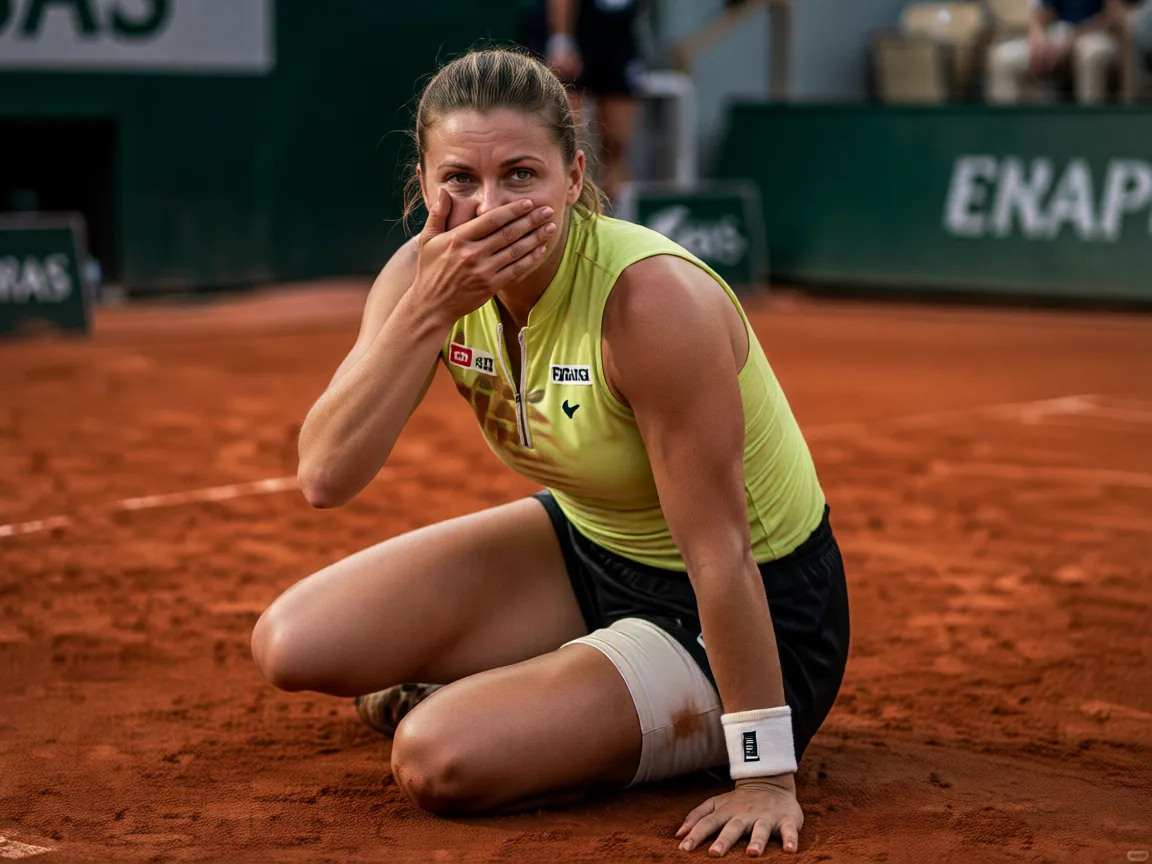
The Underdog Summer: Fery and Chwalinska Rewrote the Grand Slam Script
Arthur Fery and Maja Chwalinska proved that tennis still belongs to the unknown, climbing from nowhere to reshape what a Grand Slam deep run means.
Dimitrov Outlasts Berrettini in Five-Set Wimbledon Epic
Grigor Dimitrov survived a valiant Matteo Berrettini fightback to reach the Wimbledon last 16, exorcising the demons of his 2024 Centre Court heartbreak.

Truth on Trial: The Let Call Row That Shook Wimbledon's Grass
Arthur Fery's Wimbledon win over Damir Dzumhur descended into acrimony over a let call, raising questions about honesty and officiating on tennis's grandest stage.