Why Dedicated Women's Football Coverage Is No Longer Optional
The launch of dedicated women's football newsletters signals a seismic shift in how the women's game is consumed and valued.
The Quiet Revolution in the Press Box
Something significant happened when one of the world's most established sports desks decided that women's football warranted its own standalone newsletter, published twice a week, written by dedicated specialists and featuring direct editorial contributions from elite players. It was not a splashy announcement. There were no billboards, no prime-time ad slots. But the launch of Moving the Goalposts represented a structural acknowledgment that women's football has outgrown the margins of weekend round-ups and tournament-time supplements.
The newsletter, authored primarily by Júlia Belas Trindade and Sophie Downey, positions itself as informative, entertaining, global, and critical when necessary. That last qualifier matters. The women's game does not need cheerleading dressed up as journalism. It needs the same forensic, sometimes uncomfortable scrutiny that has sharpened men's football coverage for over a century. The fact that contributors like Ada Hegerberg and Magdalena Eriksson are lending their voices to the project is equally telling. Players are no longer content to let others narrate their sport. They want a seat at the editorial table.
From Margins to Mainstream
To understand why a dedicated women's football newsletter is significant, you need to appreciate how recently the women's game existed in a media desert. As recently as 2015, the FIFA Women's World Cup in Canada drew record television audiences, yet most major outlets still treated women's football as an event-driven curiosity rather than a year-round sport deserving consistent editorial investment. Coverage would spike during international tournaments and vanish between them, leaving clubs, leagues, and players in an information vacuum.
The transformation over the past seven to eight years has been dramatic. The Women's Super League in England secured broadcast deals that, while still a fraction of the men's Premier League revenue, represent a quantum leap from the days when matches were streamed on club YouTube channels to audiences in the low thousands. Liga F in Spain, the Division 1 Féminine in France, and the Frauen-Bundesliga in Germany have all professionalized to varying degrees, attracting corporate sponsors and, crucially, mainstream media attention.
The 2022 European Championship on home soil in England was arguably the tipping point. Wembley sold out for the final. 87,192 spectators watched England beat Germany. Television audiences across the tournament shattered previous records. But more importantly, the post-tournament conversation did not die. Readers wanted to know what happened next: who was signing where, how clubs were structuring their women's sections, what tactical trends were emerging. The appetite was no longer seasonal. It was permanent.
Why Specialist Coverage Matters
The existence of dedicated women's football journalism is not merely a feel-good story about editorial diversity. It serves a concrete tactical and strategic function for the sport's development. Consider the analytical gap that has existed in women's football. In the men's game, a manager's decision to switch from a 4-3-3 to a 3-5-2 at halftime generates instant, detailed dissection from dozens of qualified analysts. In women's football, the same tactical adjustment has historically been reduced to a single sentence in a match report.
That gap matters because it affects how the sport is understood, coached, and consumed. Tactical literacy among fans drives deeper engagement. Deeper engagement drives attendance, viewership, and commercial investment. Commercial investment funds better coaching, facilities, and player development. It is a virtuous cycle, and quality journalism is one of its essential cogs.
When players of the caliber of Ada Hegerberg — the first-ever Ballon d'Or Féminin winner in 2018 and a striker whose understanding of spatial manipulation and movement patterns is elite by any standard — contribute directly to editorial content, the analytical bar rises. Hegerberg can articulate the mechanics of a pressing trap or the geometry of a half-space run in ways that enrich the reader's understanding far beyond what a traditional match report achieves. Similarly, Magdalena Eriksson, a center-back who has operated at the highest level of European club football with Chelsea and Bayern Munich, brings a defensive tactical vocabulary that most journalists simply cannot replicate from the press box.
The Player-as-Contributor Model
This player-contributor model is relatively new in football media and represents a fascinating evolution. In men's football, post-career punditry has long been the pathway for ex-players to shape public discourse. But those contributions come years or decades after the competitive experience. What makes the involvement of active or recently active players in editorial projects like Moving the Goalposts different is the immediacy of insight.
A player writing about a tactical trend she encountered last Tuesday in Champions League qualifying delivers a fundamentally different product than a retired international reflecting on a system he played in a decade ago. The analysis is fresher, more granular, and more connected to the current tactical meta of the women's game.
This is particularly relevant as women's football undergoes its own tactical maturation. The sport is moving through a phase that men's football experienced in the 1990s and early 2000s — the transition from relatively simplistic structural approaches to increasingly sophisticated systems involving coordinated pressing triggers, positional play principles, and set-piece innovation. Clubs like Lyon, Barcelona, Chelsea, and Wolfsburg are not merely assembling talented squads; they are building coherent tactical identities that demand analytical depth to fully appreciate.
Barcelona Femení's dominance in particular has pushed the tactical conversation forward. Their use of inverted full-backs, fluid positional rotations in the attacking third, and a pressing structure calibrated to recover possession within six seconds of losing it represents a level of tactical sophistication that demands equally sophisticated coverage. You cannot explain what Jonatan Giráldez or his successor is building with a paragraph and a highlights package. You need dedicated, knowledgeable writers spending time on the detail.
The Commercial Equation
There is, of course, a commercial dimension. Newsletters have become a critical vehicle for media organizations to build direct reader relationships, bypassing the algorithmic uncertainty of social media platforms. The newsletter format offers guaranteed delivery to an opted-in audience, higher engagement rates than standard web articles, and a premium advertising environment. For women's football specifically, the audience demographic skews toward engaged, educated consumers who are attractive to sponsors.
The decision to offer Moving the Goalposts as a free product rather than a paid one is strategically sound at this stage. The priority is audience-building. Monetization follows scale. This mirrors the broader trajectory of women's football's commercial model: invest in accessibility now, capture value later as the audience matures and deepens its commitment.
Other sports newsletters from the same outlet cover cricket (The Spin), rugby union (The Breakdown), and a general weekly sports roundup (The Recap). The placement of a women's football newsletter alongside these established products signals editorial parity, not tokenism. It says: this sport is substantial enough to warrant its own dedicated space in the sports media ecosystem.
What Comes Next
The real test for dedicated women's football coverage will come not during marquee events like the World Cup or the Champions League final, but in the quieter weeks of domestic league competition. Can a newsletter sustain reader interest during a mid-table WSL fixture in November? Can it make a Liga F relegation battle compelling to a global audience? Can it translate the tactical nuances of a 4-4-2 low block deployed by a newly promoted side into content that readers actively seek out?
These are the questions that will determine whether women's football media has truly matured or whether it remains dependent on the gravitational pull of major tournaments. The early signs are encouraging. The appetite for year-round coverage exists. The talent pipeline for specialist writers and player-contributors is growing. The commercial infrastructure is developing.
For a sport that spent decades fighting for basic recognition, the emergence of dedicated editorial products is not a small victory. It is a structural shift that will shape how women's football is understood, debated, and valued for the next generation.
The press box is filling up. And the women's game deserves every seat.
Editorial Integrity
This is an original SportPulse article written by our editorial team. All content is independently researched, written, and reviewed by our writers and editors before publication. We do not publish copied, aggregated, or syndicated content.
SportPulse is committed to original sports journalism. Read our editorial policy or contact us with any questions.
More Like This
All football
Dutch Penalty Demons Return as Morocco Rewrite Their World Cup Story
Netherlands miss three penalties in a shootout collapse as Morocco's golden generation marches on in North America.
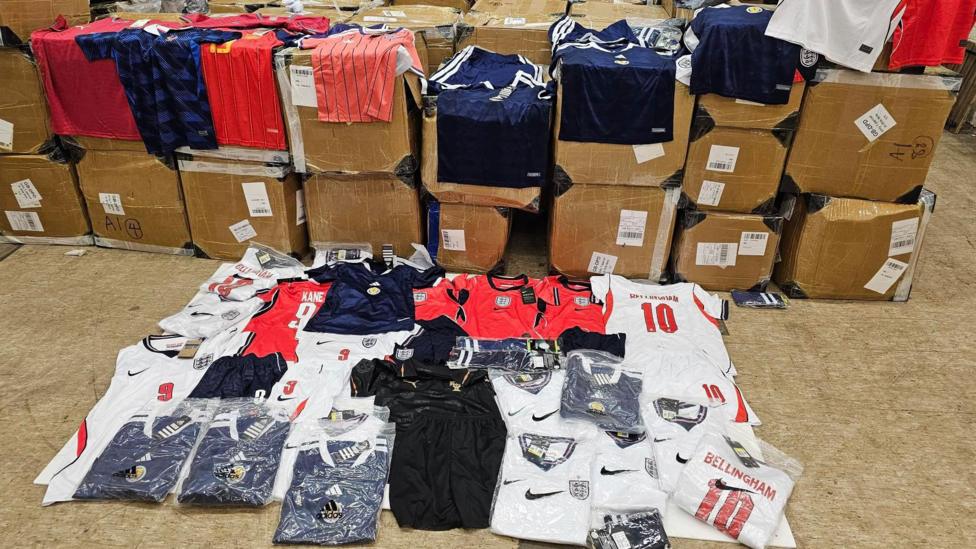
58,000 Counterfeit Scotland and England Kits Seized in Edinburgh Raid
Trading standards uncover one of the UK's largest counterfeit football kit hauls, exposing a sophisticated black market operation.
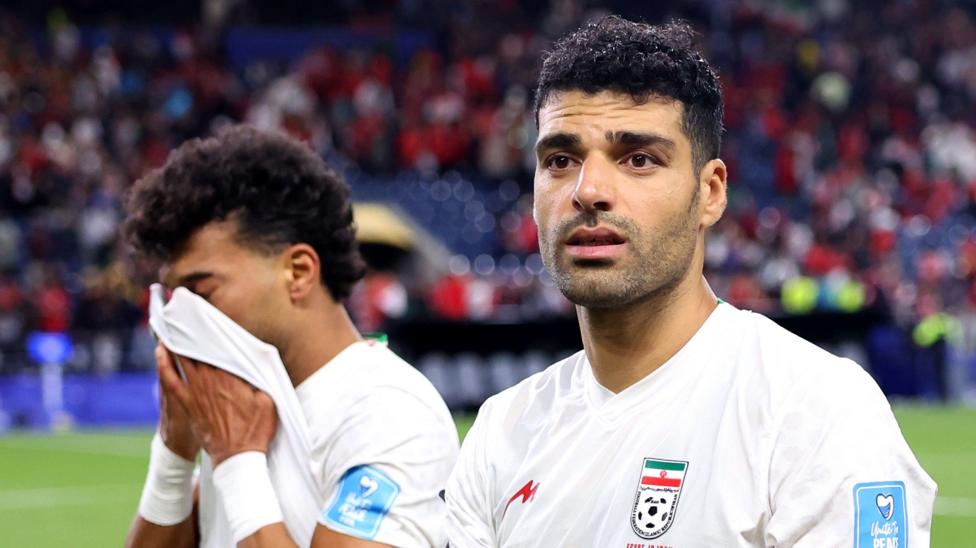
Iran's World Cup Bogey: A History Written in Stoppage Time
Twice on the brink of the knockout stages, twice denied in the dying moments. Iran's World Cup history is a masterclass in sporting cruelty.