The Global Arms Race: Inside the Six-League Women's Transfer Window
Six leagues, one window, and a sport rewriting its financial and tactical playbook in real time.
A Window That Reflects a Movement
The summer 2026 women's transfer window is open across all six of the world's top domestic leagues, and the early signals point to another escalation in ambition, spending, and tactical sophistication. From the NWSL in North America to Serie A Femminile in Italy, clubs are not merely filling roster spots. They are engineering squads with a clarity of purpose that would have seemed unthinkable even three transfer cycles ago.
What makes this window distinct is not any single marquee move. It is the structural maturity of the market itself. Recruitment departments at women's clubs now operate with dedicated analytics staff, multi-window strategic plans, and a genuine understanding of positional value. The days of signing the biggest available name regardless of tactical fit are fading. In their place is a more continental, more deliberate approach to squad construction.
For readers tracking every deal across the WSL, Liga F, Frauen-Bundesliga, Première Ligue, Serie A Femminile, and the NWSL, the sheer volume of movement can overwhelm. But behind the noise lies a coherent story about where women's football is heading.
The Financial Fault Lines
The economic landscape across these six leagues remains deeply uneven, and the transfer window exposes that reality in sharp relief. The NWSL and the WSL continue to command the highest wages and the most aggressive transfer fees, fueled by broadcast deals, corporate partnerships, and, in the NWSL's case, an ownership model that has attracted billionaire investors willing to operate at a loss in pursuit of long-term equity.
Liga F has made significant strides, particularly at Barcelona, whose dominance in the league and in European competition has created a gravitational pull that attracts elite talent from across the continent. Yet the gap between Barcelona and the rest of the Spanish top flight remains cavernous. Transfer activity at mid-table Liga F clubs tends to be modest, focused on free agents and loan deals rather than headline fees.
The Frauen-Bundesliga occupies an interesting position. German clubs benefit from the institutional infrastructure of their parent men's organizations, but the league has struggled to convert that structural advantage into competitive spending at the very top of the European market. Bayern Munich and Wolfsburg remain the primary movers, but even their budgets lag behind the richest WSL and NWSL operations.
In France, the Première Ligue (rebranded from D1 Féminine in recent seasons) is undergoing its own evolution. Lyon's historical dominance has softened slightly, and the league's newer entrants are beginning to flex modest financial muscle. The French market has traditionally been a source of talent rather than a destination for marquee signings, but that dynamic is slowly shifting.
Serie A Femminile rounds out the six. Italian women's football has grown rapidly in visibility, buoyed by the success of the national team and the increasing willingness of major men's clubs to invest in their women's sections. Yet the league remains commercially underdeveloped compared to its peers, and transfer spending reflects that constraint.
Tactical Philosophies Driving Recruitment
This is where the window becomes truly fascinating for the student of the game. The six leagues do not merely differ in budget. They differ in footballing identity, and that identity shapes every signing.
The WSL has increasingly become a tactical laboratory. The best English clubs recruit for systems that emphasize positional play, high pressing, and fluid attacking rotations. Coaches in the WSL tend to demand technical profiles that allow for quick combination play in tight spaces, which is why the league has become a magnet for creative midfielders and versatile forwards from across Europe and South America.
The NWSL, by contrast, has historically prized athleticism and directness. The league's physical demands, its travel schedule, and its playoff format all reward squads built around pace, power, and the ability to sustain high-intensity pressing over 90 minutes. Transfer windows in the NWSL often reflect a preference for players who can cover ground and win duels, though the league's tactical sophistication has undeniably increased in recent seasons.
Liga F remains Barcelona's showpiece, and Barcelona's recruitment philosophy under successive coaches has been consistent: dominate possession, press aggressively in the opponent's half, and build through technically gifted players who can execute under pressure. The challenge for other Liga F clubs is that the players best suited to this style tend to gravitate toward Barcelona, leaving the rest of the league scrambling for a different profile.
In Germany, Frauen-Bundesliga clubs have traditionally favored a structured, disciplined approach rooted in strong defensive organization and efficient transitions. The influence of German coaching education is evident in how these teams recruit: full-backs who can defend one-on-one, central midfielders with the positional discipline to protect the back line, and forwards who can press from the front.
The Première Ligue has long been associated with technical excellence and attacking flair, a legacy of Lyon's golden era. French clubs tend to prioritize players with strong individual technique and the ability to create in the final third. The league's academy systems, particularly those affiliated with Lyon and Paris Saint-Germain, produce players with a distinctive technical profile that sets them apart on the international stage.
The Competitive Dynamics Between Leagues
One of the most significant structural shifts in the women's transfer market is the increasing competition between leagues for the same pool of elite players. A decade ago, a top player in the Frauen-Bundesliga would likely move within Germany or to Lyon. Today, that same player might field offers from England, Spain, the United States, and France simultaneously.
This inter-league competition has driven up wages and transfer fees, but it has also created a more dynamic and unpredictable market. Clubs can no longer assume that their domestic rivals are their primary competition for signings. A WSL club pursuing a target may find itself in a bidding war with an NWSL franchise operating on a completely different financial timeline.
The result is a transfer window that feels genuinely global in a way that the women's game has not experienced before. Players are making decisions based not just on money, but on tactical fit, competitive environment, lifestyle considerations, and the long-term trajectory of both club and league. It is a more sophisticated marketplace, and the clubs that navigate it best will be those that understand their own identity clearly enough to recruit within it.
What to Watch as the Window Progresses
As the summer unfolds, several dynamics deserve close attention. The first is whether the WSL's spending dominance continues or whether other leagues begin to close the gap. The WSL's broadcast deal has given English clubs a structural advantage, but NWSL franchises backed by wealthy individual owners have shown a willingness to spend aggressively when they identify a target.
The second is the loan market, which has become an increasingly important mechanism in women's football. Top clubs with deep squads loan young players to smaller teams for development, while mid-table clubs across all six leagues use loans to access talent they could never afford permanently. The volume and strategic quality of loan deals this summer will tell us a great deal about the depth of each league.
The third is the South American pipeline. Players from Brazil, Argentina, Colombia, and other CONMEBOL nations have become increasingly prominent in European women's football, and this summer's window is likely to accelerate that trend. Clubs that have invested in scouting networks in South America are reaping the benefits, while those that have not are finding themselves outmaneuvered.
Finally, watch the goalkeeper market. The position has been historically undervalued in women's football transfers, but the growing tactical sophistication of the game has placed a premium on goalkeepers who can play with their feet, organize a high defensive line, and distribute under pressure. The best goalkeepers in this window will command fees that would have been unimaginable five years ago.
The Bigger Picture
The summer 2026 transfer window is more than a series of transactions. It is a snapshot of a sport in rapid, structural evolution. The six leagues covered here represent the apex of women's professional football, but they also represent six distinct models of how to build, fund, and sustain a competitive sporting ecosystem.
The deals done in the coming weeks will shape Champions League group stages, domestic title races, and international tournaments for years to come. For the tactically minded observer, the most compelling question is not who signs where, but how those signings fit into the broader strategic vision of each club and each league.
Women's football has outgrown the era of transfer windows as afterthoughts. This summer's market is proof that the sport now operates at a level of complexity and ambition that demands the same analytical attention as any other elite competition.
Editorial Integrity
This is an original SportPulse article written by our editorial team. All content is independently researched, written, and reviewed by our writers and editors before publication. We do not publish copied, aggregated, or syndicated content.
SportPulse is committed to original sports journalism. Read our editorial policy or contact us with any questions.
More Like This
All football
Scottish Premiership Summer 2026: The Transfer Landscape Taking Shape
The Scottish Premiership transfer window is open and the stakes have never been higher for clubs chasing European glory.

One Tiny Basque Club Shaped Three Premier League Managers
Arteta, Alonso, and Iraola all walked the same San Sebastián pitches before reaching England's dugouts.
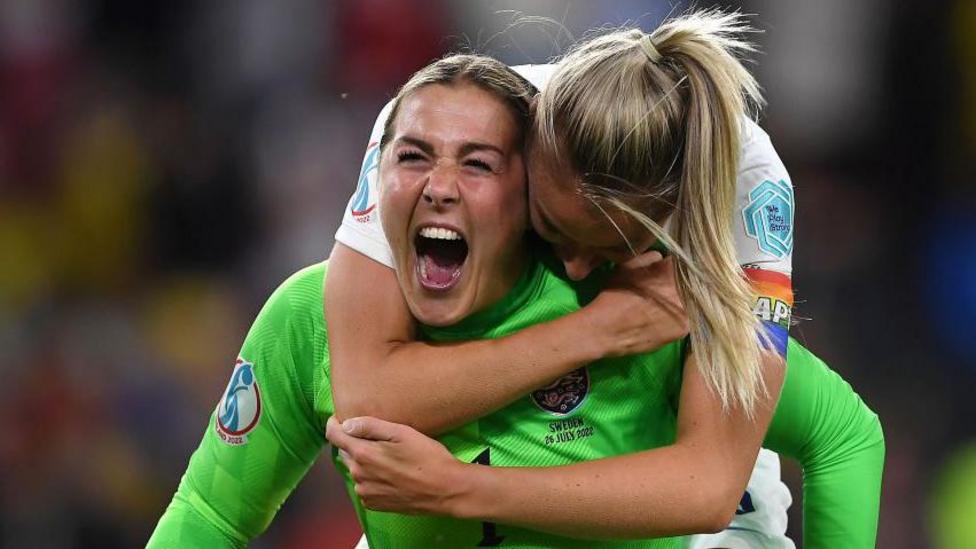
Mary Earps and the Weight of an Unwanted Spotlight
Mary Earps admits uncertainty about returning to the spotlight at London City Lionesses, a vulnerability few elite athletes dare voice.