The Beautiful Chaos of 48: Inside World Cup 2026's Group Stage Survival Game
An expanded format means more permutations, more heartbreak, and a tiebreaker system that rewards precision over power.
More Teams, More Chaos, More Math
Here is the uncomfortable truth about the expanded 2026 World Cup: FIFA gave the world more football, and the world responded by turning the group stage into a high-stakes algebra exam. With 48 nations crammed into 12 groups of four, the path to the knockout round of 32 is no longer a straightforward sprint through six points and a prayer. It is a labyrinth of permutations, tiebreakers, and scenarios that would make a game theorist sweat.
The group stage is hurtling toward its conclusion across the United States, Mexico, and Canada, and the math has become the main character. Not the goals. Not the drama. The math. Every late equalizer, every yellow card accumulation, every marginal goal difference swing sends shockwaves through spreadsheets and group chats alike. Welcome to the World Cup that football's bean counters always dreamed of.
How the New Format Rewrites the Rules
The structural shift is seismic. Previous World Cups operated on a simple binary: finish in the top two of a four-team group, or go home. The 2026 edition introduced a third lifeline. Now, the top two from each group qualify automatically, and the eight best third-place teams across all 12 groups also advance. That means 32 of 48 nations progress to the round of 32.
On paper, a 66.7% qualification rate sounds generous. It is not. Third-place qualification creates a cascading nightmare of cross-group comparisons that most players, coaches, and even some federation officials struggle to fully grasp in real time. A team sitting third in Group F with four points has to monitor results in Groups A through E and G through L simultaneously, calculating whether their tally holds up against eight other runners-up across different pools.
The result is a group stage where elimination can feel arbitrary and survival can feel accidental. A team celebrating a hard-fought draw in one stadium might walk off the pitch only to discover that a result 2,000 miles away has just rendered their effort meaningless.
The Tiebreaker Labyrinth
FIFA's tiebreaker hierarchy is the engine driving all of this chaos, and it deserves closer inspection because it fundamentally shapes how teams should approach the group stage strategically. The order is as follows:
- Head-to-head points between the tied teams
- Head-to-head goal difference between the tied teams
- Head-to-head goals scored between the tied teams
- Overall goal difference across all group matches
- Overall goals scored across all group matches
- Disciplinary points (fewer is better)
- FIFA ranking
This sequence matters enormously. The critical distinction is that FIFA prioritizes head-to-head record over overall group performance. This is a deliberate philosophical choice, and it has profound tactical implications.
Consider a scenario where Team A and Team B both finish on six points. Team A beat Team B 1-0 in their direct encounter but lost their other match 3-0. Team B beat their other opponents by a combined 6-1 but lost to Team A. Under FIFA's rules, Team A advances despite having a worse overall goal difference (-2 versus Team B's +4), because the head-to-head tiebreaker takes precedence.
This system rewards teams that win the matches that matter most between direct rivals. It incentivizes aggressive, front-foot football in the six-pointer fixtures rather than conservative, spread-the-risk approaches across all three group games. A narrow, gritty 1-0 win over a fellow contender can be worth more than thrashing the group minnow 5-0.
What the Numbers Demand
For coaches, the tactical calculus is nuanced:
- Win your head-to-head clashes. A single decisive result against a direct rival eliminates an entire branch of tiebreaker scenarios.
- Goal difference still matters for third-place comparisons. When comparing third-place teams across different groups, FIFA reverts to overall goal difference, not head-to-head (since those teams never played each other). So running up the score against weaker opposition has real value in the cross-group comparison.
- Discipline is a tiebreaker. The sixth criterion, disciplinary points, means accumulated yellow cards can literally be the difference between a round of 32 berth and an early flight home. In a format this tight, every booking has a cost.
The Bottom Line: FIFA's tiebreaker system creates a two-speed incentive structure. Head-to-head dominance within your group, combined with ruthless goal accumulation across all three matches. The teams that navigate this tension most intelligently will be the ones still standing.
The Third-Place Survival Game
The most fascinating subplot of this group stage is the invisible tournament happening between the third-place finishers. Eight out of 12 third-place teams advance, which means four go home. That four-in-twelve elimination rate for third-place teams creates a brutal secondary competition that most fans only half-understand.
Historical precedent from the expanded European Championship (Euro 2016, 2020, and 2024) offers some clues. In those tournaments, where four of six third-place teams qualified, the magic threshold was almost always four points with a positive or neutral goal difference. Three points was occasionally enough, but it required favorable results elsewhere and a solid goal difference cushion.
At the 2026 World Cup, with a larger sample of third-place finishers to compare, expect the calculus to shift slightly. The conventional wisdom around tournament camp is that four points and a goal difference of at least zero should be the target for any team harboring realistic third-place ambitions. That means at minimum a win and a draw, or potentially two wins and a loss depending on how the group unfolds.
The psychological dimension here is brutal. Coaches must decide in real time whether to chase a third goal in a match they are already winning, knowing it could be the difference in a cross-group comparison they cannot yet see. Attack or conserve energy? Push for goal difference or protect the lead? These are not abstract questions. They are split-second decisions with tournament-ending consequences.
Why This Matters Beyond the Scoresheet
The expanded format has not merely added teams. It has added layers of strategic complexity that fundamentally change how the group stage is experienced, coached, and consumed.
For federations from traditional powerhouses, the new format offers a safety net but also a trap. Nations like Brazil, Germany, or France are unlikely to be eliminated in the group stage given the generous qualification threshold, but the risk of finishing third and entering the knockout round as a lower seed facing a group winner is very real. The seeding implications cascade: a third-place finish often means a tougher round of 32 draw, which in turn means a harder path to the quarterfinals and beyond.
For smaller nations, the expanded format is both opportunity and mirage. More teams qualify, yes, but the competition for those third-place slots is fierce, and the margin for error is measured in single goals and individual bookings. A CONCACAF minnow or a rising African side that enters the tournament dreaming of a Cinderella run might find that their fate was sealed not on the pitch but in a disciplinary record compiled over three matches.
The Spectator Experience
From a fan engagement perspective, the permutations are a double-edged sword. Dedicated supporters and data-literate viewers will thrive in this environment, tracking live qualification scenarios across multiple screens and group tables in real time. The casual viewer, however, may find the opacity of third-place comparisons alienating. When you cannot explain to someone in a single sentence whether their team is in or out, you have a comprehension problem that no amount of on-pitch excitement can fully solve.
What Changes From Here
As the final group stage matches approach, the stakes crystallize. Teams that have already secured knockout berths will rotate squads and manage workloads. Teams on the bubble face existential football: every goal, every card, every tactical decision filtered through the lens of qualification math.
Keep an eye on the third-place table. It will become the most scrutinized standings board in football over the coming days. The eight teams that emerge from that secondary competition will carry a particular psychological profile into the round of 32: battle-tested, mathematically validated, and deeply aware that their presence in the knockout stage was never guaranteed.
The 2026 World Cup promised to be bigger. It has delivered on that promise. Whether bigger means better depends on your tolerance for chaos, your appetite for complexity, and your willingness to accept that in a 48-team tournament, the group stage is not a prelude. It is a survival game disguised as a round-robin.
The Bottom Line: The expanded format has transformed the World Cup group stage from a straightforward qualifying exercise into a multi-layered strategic puzzle. The teams that thrive will not just be the most talented. They will be the most tactically intelligent, the most disciplined, and the most ruthlessly efficient when the margins demand it.
Editorial Integrity
This is an original SportPulse article written by our editorial team. All content is independently researched, written, and reviewed by our writers and editors before publication. We do not publish copied, aggregated, or syndicated content.
SportPulse is committed to original sports journalism. Read our editorial policy or contact us with any questions.
More Like This
All football
Duran's Seventh Club at 22: Career Reset or Red Flag?
Jhon Duran joins Benfica on loan from Al-Nassr as his seventh club at 22, raising questions about development versus instability.

How Long Throws and Set-Piece Mayhem Sabotaged the Premier League
The Premier League's obsession with guileless set-piece routines and long throws reveals a deeper tactical regression in 2025-26.
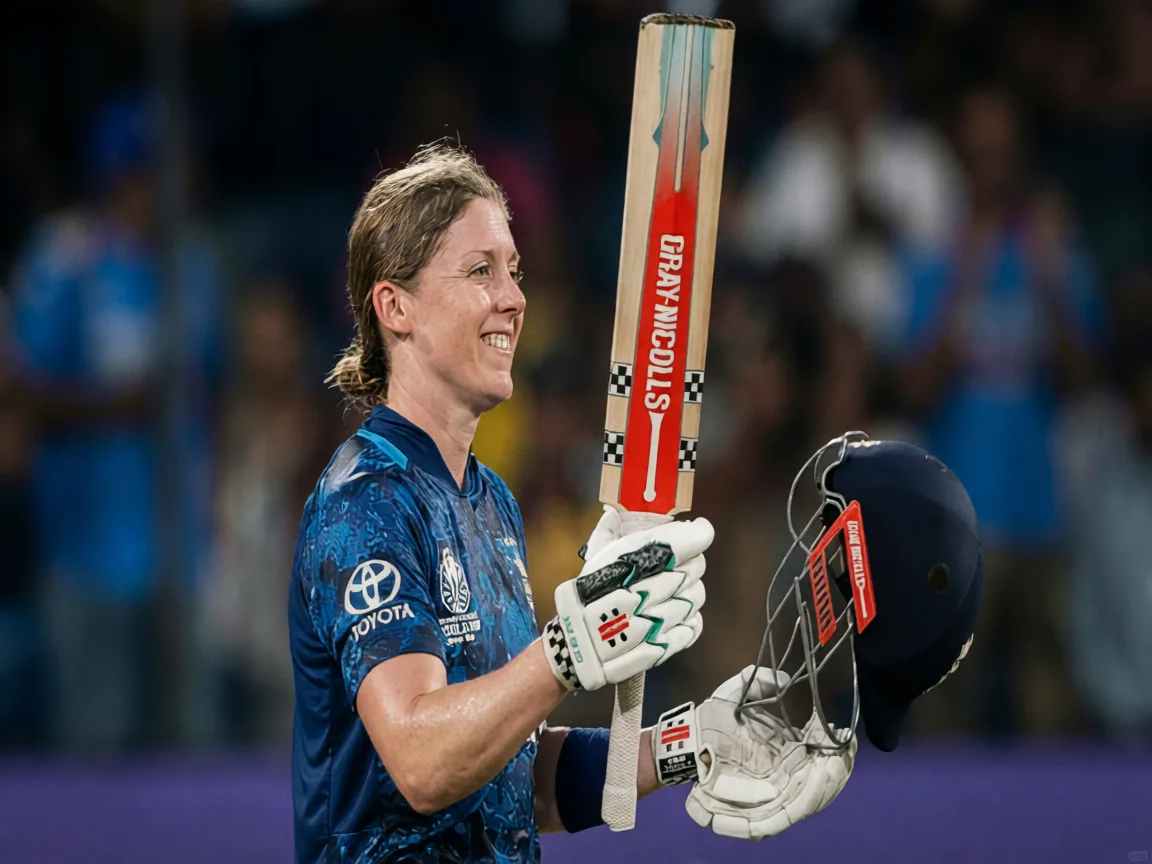
End of an Era: Knight and Beaumont Walk Away From England Cricket
Heather Knight and Tammy Beaumont retire after the India Test, closing a defining chapter for England women's cricket.