One Night, One Trophy, One Ballon d'Or: How the World Cup Final Decides Everything
The 2026 Ballon d'Or race is razor-thin, and the MetLife Stadium final could be the ultimate tiebreaker.
The Stage That Rewrites the Hierarchy
Every four years, the Ballon d'Or race undergoes a seismic recalibration. Club form, Champions League heroics, domestic dominance — all of it gets compressed into a single binary question that voters cannot ignore: who delivered when the world was watching? The 2026 World Cup final at MetLife Stadium on July 19 is shaping up to be the most consequential single match in the history of this particular individual award race, because for the first time in a generation, no clear frontrunner has separated himself from the pack.
That is not hyperbole. The current landscape features a cluster of elite performers whose statistical profiles, trophy cabinets, and eye-test credentials are so closely aligned that traditional metrics have essentially produced a dead heat. The World Cup final offers something no club fixture ever can: an irreversible, winner-take-all spectacle played under the most intense psychological pressure in the sport. For the Ballon d'Or electorate, it is the ultimate tiebreaker.
Historical Precedent: When Finals Define Legacies
The relationship between World Cup finals and Ballon d'Or coronations is not theoretical. It is deeply embedded in the award's DNA.
Consider 2006. Zinedine Zidane had been exceptional throughout the tournament, but his red card in the final against Italy — the infamous headbutt on Marco Materazzi — arguably cost him a second Ballon d'Or. The award went to Fabio Cannavaro, a defender whose entire candidacy was turbocharged by lifting the trophy in Berlin. Without that final, Cannavaro's profile would not have been nearly compelling enough.
Fast forward to 2014. Lionel Messi won the Golden Ball at the tournament, but Argentina lost the final to Germany. Messi still claimed the Ballon d'Or that year, a decision many contested precisely because the final left a sour taste. The voters remembered the image of Messi walking past the trophy with hollow eyes more than they remembered his group-stage brilliance.
In 2022, the narrative crystallized with almost scripted perfection. Kylian Mbappé scored a hat-trick in the final, yet Lionel Messi's Argentina lifted the trophy in Lusail. Messi collected his eighth Ballon d'Or months later, and while his entire calendar year warranted consideration, the emotional weight of that final — the penalty shootout, the embrace with the trophy, the arc of redemption — was the gravitational center of his candidacy.
The pattern is unmistakable. World Cup finals do not merely influence the Ballon d'Or. In tight races, they decide it.
Why 2026 Is Different: A Race Without a Leader
The 2026 cycle presents a uniquely congested field. Several players have legitimate claims to the award based on their 2025-26 club campaigns, and none has built an insurmountable lead.
The candidates broadly fall into tiers. At the top, you have players who combined Champions League deep runs with extraordinary individual output — the kind of numbers that in any normal year would make the decision straightforward. Below them sits a group of World Cup contenders whose tournament performances could vault them into serious contention if they deliver in the knockout rounds.
What makes this year distinctive is the absence of a Messi-or-Ronaldo-type figure who monopolizes the conversation by sheer gravitational pull. The post-peak era of those two icons has finally arrived, and the vacuum they left has not been filled by a single successor. Instead, we have a fragmented elite — brilliant players operating at similar altitudes, separated by margins so fine that a single 90-minute match could reorder the entire hierarchy.
This is where the World Cup final becomes not just relevant but decisive.
Tactical Shift: How the Final's Shape Elevates Certain Profiles
From a tactical perspective, the World Cup final creates conditions that disproportionately reward certain player archetypes. This matters enormously for the Ballon d'Or calculus.
The final is almost always a tactically conservative affair. Coaches who have spent the tournament pressing high, playing expansively, and taking risks suddenly revert to cautious low-block structures or disciplined mid-block containment systems. The fear of losing on the biggest stage overrides tactical ambition. This means the match tends to be decided by moments of individual brilliance rather than sustained collective dominance.
Players who thrive in these conditions are those who can produce decisive actions in condensed spaces: a dribble that unlocks a packed defense, a set-piece delivery of surgical precision, a defensive intervention of last-ditch heroism. The tactical conservatism of finals creates a spotlight on exactly the kind of high-impact, low-frequency events that stick in voters' memories.
A midfielder who dictates tempo for 120 minutes in a semi-final will earn tactical appreciation. A forward who scores the winning goal in a cagey final will earn a Ballon d'Or. That is the brutal asymmetry of the award's psychology.
Coaching philosophies also play a role. The tactical setup of each finalist will determine which players are positioned to seize the moment. A coach deploying a 4-3-3 with wide overloads gives his wingers the platform to be heroes. A manager opting for a 3-5-2 with wing-back thrusts channels the decisive action through different corridors. The tactical chess match between the two dugouts will, in effect, write the Ballon d'Or ballot for many voters.
The Weight of the Moment
There is a psychological dimension to finals that no other match replicates. The MetLife Stadium in New Jersey will hold over 82,000 spectators, with a global television audience measured in billions. Players who have performed brilliantly in relative anonymity — a Champions League quarter-final in front of 60,000, a league title decider watched by a regional audience — suddenly face a scale of scrutiny that distorts everything.
Some players shrink under this weight. Others expand. The ones who expand become Ballon d'Or winners.
This is not merely romantic narrative-building. It reflects a genuine cognitive bias in how voters evaluate performances. Research into recency bias and peak-end rule consistently shows that people disproportionately remember and overweight the final moments of an experience. The World Cup final is, by definition, the final and most vivid data point in the evaluation window. Its emotional intensity magnifies every action, every mistake, every moment of genius.
A player who has been superb for 10 months but goes quiet in the final risks having his entire candidacy overshadowed. Conversely, a player whose club season was merely excellent — not transcendent — can elevate his claim to historic levels with one iconic performance on the biggest night.
"The final is the only match where the whole world shares the same memory. Every voter watched the same 90 minutes. That shared experience carries a weight that no spreadsheet can capture." — A senior figure within the Ballon d'Or voting body, speaking about the award's evaluation criteria.
The Candidates and Their Final Scenarios
Without naming every plausible contender, the dynamic is worth sketching in tactical terms.
For a pure center-forward, the calculus is straightforward: score in the final, and you have a near-unassailable case. The scarcity of goals in World Cup finals — historically averaging fewer than 2.5 goals per match — means each one carries outsized significance. A player who has netted 30+ club goals and then adds a winner in the final presents a narrative so clean, so compelling, that voters struggle to look elsewhere.
For a creative midfielder or playmaker, the challenge is more complex. Orchestrating a final requires visibility, and finals often suppress the kind of flowing possession football that showcases a number 10's gifts. This archetype needs either an assist of extraordinary quality or a complete midfield masterclass that even the most casual viewer can recognize.
For a defender or goalkeeper, the path is narrow but not impossible. A clean sheet in the final, combined with critical interventions — think Cannavaro in 2006, or Manuel Neuer's sweeper-keeper heroics in 2014 — can crystallize a candidacy built on a full year of excellence. The challenge is that defensive brilliance is inherently less visible, and the final must provide a moment dramatic enough to make the contribution undeniable.
What This Changes Going Forward
The 2026 World Cup final does not merely conclude a tournament. It effectively closes the Ballon d'Or campaign. The months between mid-July and the award ceremony in the autumn become a confirmation exercise rather than a competition. Voters have already made up their minds. The final gave them their answer.
For the players heading to North America this summer, the implication is stark. Every training session, every tactical meeting, every recovery protocol between now and July 19 is oriented toward a single objective that transcends the trophy itself. The World Cup final is the match that defines careers, legacy, and yes — individual awards.
The tactical battle between the two finalists will determine far more than who lifts the golden trophy. It will determine who lifts the golden ball in October. In a race this tight, there is no room for a quiet final. Someone must seize the night.
The coaches know it. The players know it. The voters are counting on it.
Editorial Integrity
This is an original SportPulse article written by our editorial team. All content is independently researched, written, and reviewed by our writers and editors before publication. We do not publish copied, aggregated, or syndicated content.
SportPulse is committed to original sports journalism. Read our editorial policy or contact us with any questions.
More Like This
All football
Seven Days After the World Cup, Football's Calendar Has Already Moved On
Domestic leagues resumed within a week of the 2026 World Cup final, exposing the sport's chronic oversupply problem.
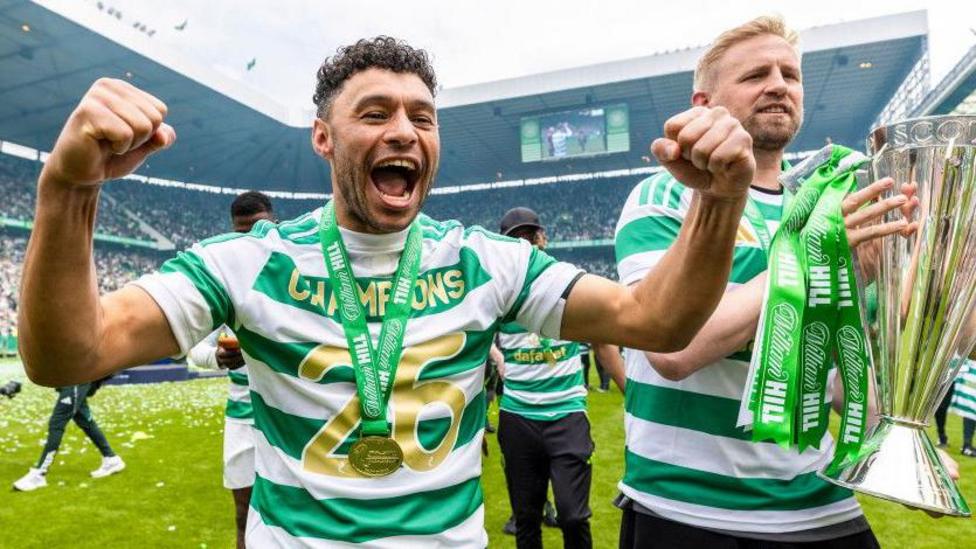
Oxlade-Chamberlain's Celtic Renewal: Calculated Gamble or Last Paycheck?
A one-year extension answers no questions about whether Oxlade-Chamberlain can recapture relevance at Celtic.

Partey's Return Reshapes Ghana's Midfield as England Rotate Back Line
Thomas Partey's visa saga ends just in time to face England, whose defensive tweaks signal a deeper tactical plan.