The Guessing Game: How World Cup Stars Become Icons Before the Whistle Blows
World Cup player quizzes captivate millions, revealing how tournament fame transcends the pitch and shapes modern football culture.
The Name on Everyone's Lips
There is a peculiar alchemy that happens during a World Cup. A player who has spent years grinding through league campaigns, earning modest recognition outside their domestic market, suddenly becomes the answer to a global guessing game.
Who am I?
That question, stripped to its barest form, is the beating heart of how we consume the World Cup. Not as a tactical exercise. Not as a statistical deep-dive. But as a shared cultural puzzle where millions of strangers try to identify a single human being from fragments of reputation, a handful of clues, and the collective memory of one tournament moment.
The "Who Am I?" format that dominates social feeds during every World Cup cycle is more than a time-killing quiz. It is a mirror held up to how the tournament manufactures stardom at a speed no domestic league can match.
Four Weeks to Immortality
Consider the math. A Champions League campaign spans 13 matches over 10 months. A Premier League season delivers 38 rounds across August to May. The World Cup? Seven matches in roughly four weeks.
Seven games. That is the entire runway a player gets to transform from "useful squad member" to "household name." And yet the tournament has produced more global icons per capita than any other competition in football history.
"The World Cup doesn't just elevate players. It compresses entire careers into a single month. A goal in the group stage can define you for decades." — Football historian Jonathan Wilson has observed repeatedly in his writing on tournament culture.
Think about the players who have become guessing-game staples across quiz platforms, pub conversations, and social media threads. James Rodriguez was a talented but relatively unknown midfielder at Monaco before the 2014 World Cup. Five goals in five matches in Brazil turned him into a €75 million Real Madrid signing and the subject of every football trivia book published that year.
Geoff Hurst remains the answer to one of football's most famous questions: Who scored a hat-trick in a World Cup final? That match was played in 1966. Nearly six decades later, Hurst is still a guessing-game staple.
The tournament creates a specific type of fame. Not the sustained, week-by-week familiarity of a domestic season. Something more concentrated. More explosive. More permanent in the collective memory.
The Anatomy of a Quiz Question
When a "Who Am I?" game presents Clue No. 16, the solver is not just recalling facts. They are navigating a psychological maze built from:
- Positional identity — Does this player operate in spaces we associate with brilliance or industry?
- Tournament narrative — Was this a player who thrived under pressure or crumbled at the critical moment?
- Visual memory — Can we picture the goal, the celebration, the tear-streaked face after elimination?
- Cultural footprint — Did this player transcend football and enter the mainstream consciousness?
The best World Cup guessing-game answers check every single one of those boxes. That is why players like Zinedine Zidane, Diego Maradona, and Ronaldo Nazario appear with such regularity. Their tournament moments are not just football memories. They are shared cultural landmarks.
Transfer Intel: The Business of Tournament Fame
Behind every guessing-game icon sits a commercial ecosystem that understands the World Cup's unique power to manufacture brand value.
Pre-tournament endorsement deals are calculated bets. Sponsors sign players based on projected exposure, knowing that a single breakout performance can multiply a player's marketability by a factor of five to ten almost overnight. Adidas, Nike, and Puma have entire departments dedicated to identifying which players might become the tournament's defining figures.
The numbers are staggering. Research from sports marketing firm Repucom (now Nielsen Sports) consistently showed that World Cup exposure increases a player's global awareness by 40-60% compared to their pre-tournament baseline. For players from smaller footballing nations, the jump can be even more dramatic.
Son Heung-min was already well-known in the Premier League. But South Korea's World Cup campaigns transformed him into one of the most marketable athletes on the entire Asian continent. His commercial value is not measured in goals or assists. It is measured in the number of people who can identify him in a three-clue guessing game.
Clubs understand this dynamic perfectly. The modern transfer market has become increasingly influenced by tournament performance, even when the sample size is dangerously small.
"Clubs are not buying World Cup performances. They are buying the attention those performances generate. That distinction matters enormously, and it is frequently ignored until the signing disappoints." — A recurring theme in transfer analysis from outlets tracking post-tournament market inflation.
The phenomenon has a darker side. Enner Valencia, Asamoah Gyan, and numerous others have seen their transfer valuations spike based on tournament moments that bore little resemblance to their sustained club-level output. The guessing game remembers the highlight. It rarely remembers the context.
Why We Keep Playing
There is something fundamentally human about the desire to identify. To point at a screen, a name, a clue, and say: I know who that is.
The World Cup guessing game taps into our deepest competitive instincts. Not the competition between nations on the pitch. The competition between ourselves and the puzzle. Between what we think we know about football and what we actually know.
Clue 16 in any given quiz is designed to be the sweet spot. Not so obvious that anyone can solve it. Not so obscure that only a specialist stands a chance. It demands exactly the right blend of general knowledge and tournament-specific recall.
This is where the World Cup's magic truly lies. Not in the tactics or the refereeing controversies or the endless debates about format. It lies in the ability of a single tournament to create moments so vivid, so emotionally charged, that they become permanently encoded in the public consciousness.
A player who scores a last-minute winner in the group stage of a World Cup becomes part of a global guessing game in a way that a player who scores a last-minute winner in a Champions League group stage simply does not. The tournament's reach is unmatched. Its emotional intensity is unmatched. And the memories it creates are, for better or worse, unmatched.
The Next Name on the Card
Every World Cup cycle produces a new generation of guessing-game staples. The 2026 tournament, spread across three nations for the first time, will be no exception.
Which player will step out of relative anonymity and into the permanent trivia rotation? Who will score the goal that ensures their name appears on quiz cards, pub challenges, and social media threads for the next 30 years?
Nobody knows yet. That is the entire point.
The beauty of the guessing game is that the answer is always a surprise. The World Cup does not consult form tables or expected goals models. It finds the player who is ready for the moment, elevates them with breathtaking speed, and then leaves the rest of us scrambling to remember their name.
Who am I? You will know soon enough.
Editorial Integrity
This is an original SportPulse article written by our editorial team. All content is independently researched, written, and reviewed by our writers and editors before publication. We do not publish copied, aggregated, or syndicated content.
SportPulse is committed to original sports journalism. Read our editorial policy or contact us with any questions.
More Like This
All football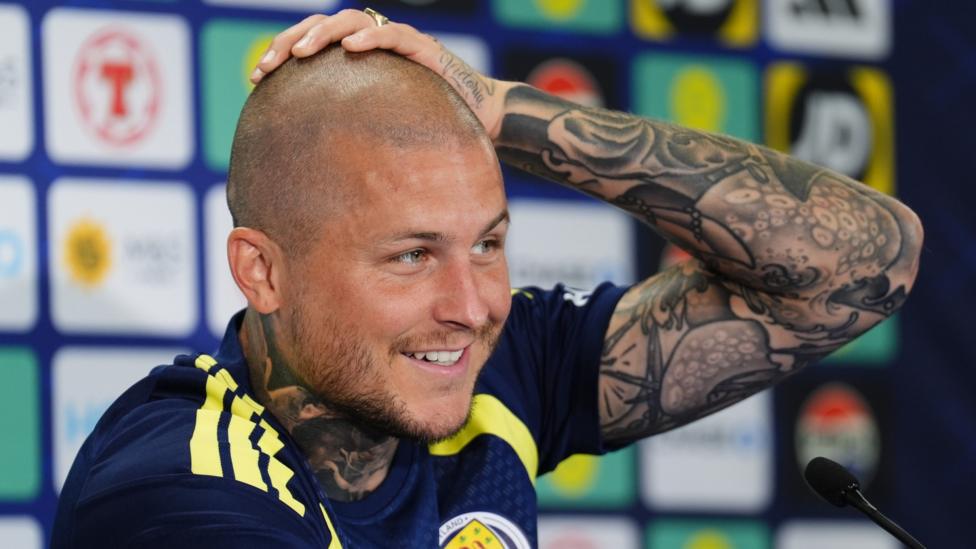
The Bald, Belligerent Striker Scotland Can't Do Without
Lyndon Dykes doesn't score often, but when he does, Scotland almost always win — and he's ready for Morocco.
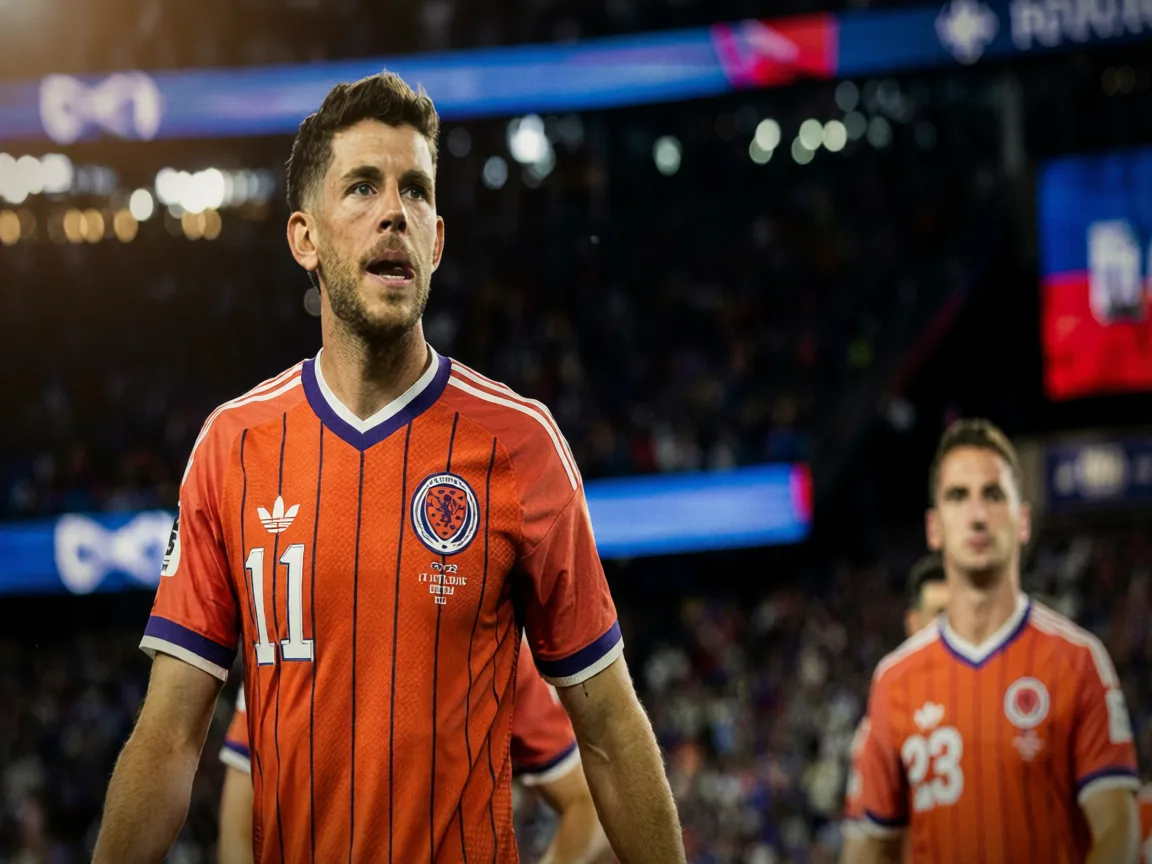
Christie's World Cup Agony Fuels Scotland Mission
At 31, Ryan Christie channels World Cup devastation into a relentless drive to deliver Scotland more major tournament moments.

Seven Days That Shook Football: Test Your Knowledge
From Champions League drama to World Cup final entertainment, the past week delivered storylines nobody saw coming.