Decoding World Cup Stars Through Tactical Signatures
World Cup guessing games reveal how modern tactical systems forge unique player identities beyond raw statistics.
The opening whistle of any World Cup encounter immediately establishes a specific tactical tempo, a chess match between opposing philosophies that dictates the rhythm of the tournament. When fans engage in daily guessing games to identify World Cup stars based on fragmented clues, they are rarely relying on trivial pursuits. They are tapping into a deep well of tactical literacy, identifying players by the spaces they occupy, the pressing triggers they respond to, and the structural roles they fulfill within their national team setups.
Modern international football demands extreme specificity in possession phases and defensive morphology. A player's identity is no longer merely tied to their passport or their goal tally. It is fundamentally linked to their positional profile within a 4-3-3 or a 3-4-2-1. When a guessing game strips away the name and the face, leaving only a career trajectory and a set of statistical benchmarks, what remains is the tactical skeleton of a footballer. The manner in which a forward drops to receive between the lines, or how a full-back inverts to create a back three in the attacking phase, becomes the ultimate identifying fingerprint.
National team football amplifies these tactical signatures because the time constraints of tournament play force managers into rigid, easily recognizable patterns. Unlike the weekly rhythm of domestic club football where mechanisms of play are refined over months, the World Cup requires automatisms that must click instantly. A winger cutting inside onto a favored foot is a elementary clue, but understanding why he cuts inside, perhaps to drag a opposing full-back inside to create a wide corridor for an overlapping center-back, separates the casual observer from the tactical connoisseur.
Consider the modern midfield triangle. The distinction between a single pivot operating as a pure regista and a double pivot sharing the defensive burden dictates the entire flow of a nation's transition play. When a guessing game hints at a player's passing volume and progressive distances, it is implicitly asking you to identify their coach's philosophy. A midfielder attempting 85 passes per 90 minutes at a 92% completion rate operates in a fundamentally different ecosystem than a ball-carrying eight who prioritizes line-breaking carries over lateral circulation. The statistics are the shadow cast by the tactical system.
The Anatomy of a Tactical Clue
The clues offered in these identification puzzles are inherently tactical, even when disguised as biographical trivia. A player's height and weight often telegraph their role in a zonal marking scheme or their capacity to execute rest-defence responsibilities during high counter-pressing sequences. Consider the interpretive layers hidden within common clue structures:
- Positional data: A player consistently receiving the ball in the left half-space signals a manager's intent to cậud the opposition's midfield block, a hallmark of proactive possession systems.
- Distance covered: Midfielders exceeding 12 kilometers per match typically operate in mannorientierte Raumdeckung, a complex spatial coverage system demanding relentless positional shifts.
- Shot locations: A high volume of attempts from outside the penalty area often indicates a tactical mandate to stretch low blocks, forcing deep defensive lines to step out and create channels.
- Interception rates: A striker averaging 3.5 recoveries in the final third is the primary trigger for a coach's gegenpressing trap.
Each of these data points constructs a mosaic of a player's functional reality on the pitch. The guesser is not merely matching a name to a statistic; they are reverse-engineering a tactical blueprint.
"The system gives the player the platform, but the player's spatial awareness gives the system its soul. You identify the player by how they interpret the space." — A core principle of continental tactical analysis.
The World Cup environment compresses these identities into their most potent forms. A wing-back who plays as a wide center-back domestically may find themselves thrust into an advanced attacking flank role for their nation, their statistical output shifting dramatically as the morphological structure of the team changes. This tournament-induced flexibility is precisely what makes guessing a World Cup star a rigorous exercise in contextual analysis rather than a simple test of trivia recall. You must understand the game state dependencies that alter a player's output.
Tactical Shift
The most difficult guessing scenarios always revolve around players who undergo a role metamorphosis between the group stage and the knockout phase. As tournaments progress, the tactical shift from expansive possession to calculated transition football fundamentally alters a player's statistical footprint. An inside forward who dominates the ball in a 3-0 group stage victory over a deep-lying opponent may suddenly transform into a defensive winger tasked with pinning back an overlapping full-back in a tense round of 16 eliminations.
This tournament-induced evolution is the downfall of linear statistical thinking. A forward's Expected Goals (xG) might plummet in the knockout rounds, but their Expected Threat (xT) contribution through cover-shadowing and space-creation might spike exponentially. The astute observer recognizes that a lack of conventional attacking output in the latter stages often correlates with winning tactical performances against superior opposition. Decoding a player based on their knockout stage metrics requires an appreciation for off-ball occupation and the invisible labor of defensive access that enables devastating transition moments.
When you successfully pinpoint a World Cup star from a handful of cryptic clues, you are demonstrating an understanding of how tactical architectures function under extreme pressure. You recognize that a high tackle success rate in the final third belongs to a specific archetype of pressing forward, deployed by coaches who refuse to cede spatial control even when defending deep. The game within the game is a celebration of systemic intelligence.
National coaches select players not merely for their individual brilliance, but for their compatibility within a specific macro-block. A player featured in a daily guessing game is a representative of a broader tactical doctrine. The solution to the puzzle is rarely the most famous name, but rather the individual whose positional behavior perfectly aligns with the cryptic statistical riddle presented. The clue pointing toward a defender with a high progressive passing volume but low interception rate immediately narrows the field to a ball-playing center-back operating behind a relentless midfield press, eliminating the need to guess traditional defensive destroyers entirely.
As the next World Cup cycle approaches, the tactical sophistication of participating nations will only deepen. Coaches will continue to innovate with inverted full-backs, false nines, and asymmetrical pressing shapes, creating even more nuanced player profiles for analytical observers to decode. The guessing games will inevitably become harder, demanding an even greater familiarity with positional play principles and transitional geometries. The ability to identify a player solely through the lens of their tactical utility is the true measure of modern football literacy, a skill that transforms passive highlight consumption into active structural interpretation.
Looking ahead to the upcoming qualifying campaigns and the eventual tournament itself, the key tactical narrative will revolve around how traditional footballing nations adapt to the evolving meta of international play. The next generation of World Cup stars will be defined not by their physical dominance, but by their cognitive flexibility to execute multi-phase tactical instructions. Identifying them will require watching the spaces they manipulate rather than the ball they strike.
Editorial Integrity
This is an original SportPulse article written by our editorial team. All content is independently researched, written, and reviewed by our writers and editors before publication. We do not publish copied, aggregated, or syndicated content.
SportPulse is committed to original sports journalism. Read our editorial policy or contact us with any questions.
More Like This
All football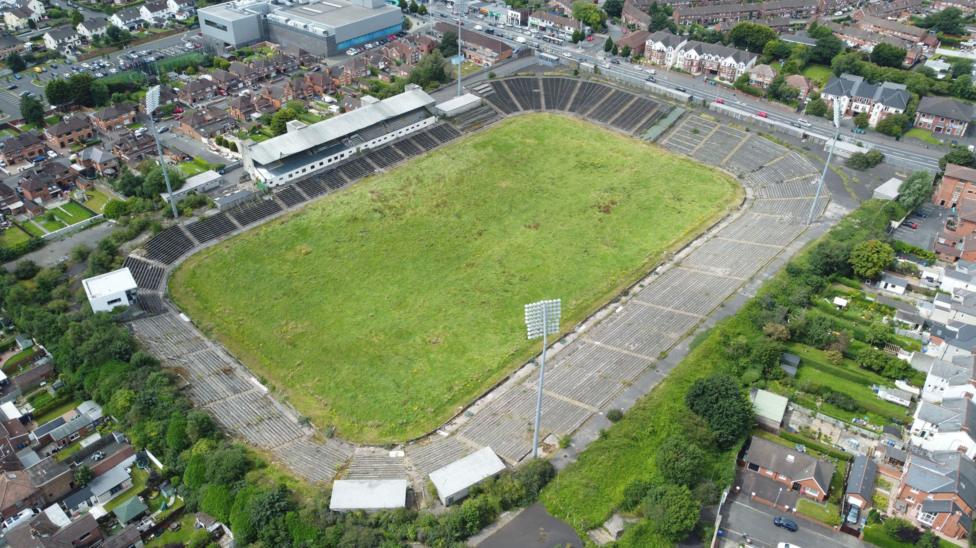
Casement Park Dreams Downsized as GAA Set to Slash Capacity
GAA expected to dramatically reduce Casement Park's planned 34,000 capacity, dealing a blow to Ulster's flagship stadium ambitions.

Huddersfield Giants Snap 12-Match Super League Losing Run at York
Huddersfield Giants finally halt a 12-game losing streak with a spirited away victory against the York Knights.

Shapoor Zadran Dies Aged 38: The Quiet Architect of Afghan Cricket
The death of Shapoor Zadran marks the end of an era for Afghan cricket, silencing a foundational voice too soon.