When Four Weeks Rewrote a Transfer Market
World Cup performances collapse years of scouting into a single month, and clubs pay溢价 for the privilege of chasing the glow.
Luka Modric walked into the Tottenham Hotspur Stadium in July 2008 carrying a reputation built on roughly 360 minutes of international football. Spurs paid £16.5 million to sign him from Dinamo Zagreb. The fee had been agreed months earlier. But the announcement, the timing, the sudden urgency from supporters and media alike, all traced back to a summer tournament where the narrative around a player can compress years of evaluation into a handful of matches.
World Cups distort transfer markets. They always have. A player evaluated across a full domestic season, scouted dozens of times, analysed by data departments, suddenly gets re-priced based on three or four performances against varying levels of opposition. Sometimes the repricing is justified. Sometimes a club pays a premium for a mirage that fades by October.
The pattern repeats with enough regularity to be predictable, yet clubs keep falling for it. And when the tournament lands in the middle of a transfer window, as it did in 2018 in Russia and 2022 in Qatar, the frenzy intensifies because the market is already open and sporting directors are already in deal-making mode.
James Rodríguez: How Monaco Turned €45m Into €80m in Twelve Months
James Rodríguez arrived at AS Monaco in 2013 for €45 million from Porto. A significant fee, certainly, but one built on three strong seasons in Portugal and a Champions League campaign where he scored against Atlético Madrid. Monaco had bought the player. What they sold to Real Madrid twelve months later was a World Cup star.
James scored six goals in five matches at the 2014 World Cup in Brazil. He won the Golden Boot outright. Every goal was dissected and replayed: the volley against Uruguay, the finishes against Japan and Greece. Real Madrid paid Monaco €80 million for him. That is a €35 million appreciation on a player in a single year, driven primarily by one tournament played on club soil.
Monaco's sporting strategy has long involved buying young talent, developing it, and selling at a profit. James was the cleanest execution of that model they ever produced. He was already a gifted playmaker. But the World Cup did not just raise his profile. It forced Real Madrid's hand, because Florentino Pérez does not ignore a Golden Boot winner when the entire football public is talking about him and the commercial logic of the signing writes itself.
Modric and the Croatia Premium
Modric's case was in some ways more complex because the 2008 European Championship, not a World Cup, was the tournament that accelerated his trajectory. Croatia reached the quarter-finals, Modric ran the midfield, and Tottenham moved quickly. But the broader principle holds: international tournaments create an urgency that domestic football cannot match.
What matters in these scenarios is not always the statistical output. Modric did not score at Euro 2008. He did provide two assists and demonstrated a control of tempo that caught the attention of clubs who had not tracked him closely in the Croatian league. Tottenham's then Sporting Director, Damien Comolli, had been aware of Modric before the tournament. The tournament validated the scouting rather than initiating it.
The clubs that do best out of tournament-driven transfers are the ones who had already done the work. They use the World Cup as confirmation, not as a discovery mechanism.
That distinction matters. Clubs who react purely to a World Cup, buying a player because he scored two goals against weakened opposition, are the ones who tend to regret the purchase. The clubs who had the player on a shortlist, watched him across a full season, and then saw their judgment confirmed on the biggest stage are the ones who extract value.
Thomas Lemar: How One Summer in Russia Cost Atlético €70m
Thomas Lemar was a Monaco player when the 2018 World Cup began. He had been part of the Monaco side that won Ligue 1 in 2016-17 and reached the Champions League semi-finals. His league form that season: two goals, seven assists in 27 appearances. Useful numbers, not extraordinary ones.
Then came Russia. France won the tournament. Lemar started three matches and came off the bench in three more. He did not score. He provided one assist. His total tournament output was modest.
Atlético Madrid paid €70 million for him in the summer of 2018. The fee was structured with add-ons that could push it higher. Diego Simeone wanted a left-footed attacker who could play across the frontline. Monaco wanted to sell before the market window narrowed.
Lemar's career at Atlético never reached the level his transfer fee suggested it should. Across six seasons in Madrid, he scored six league goals. Injuries limited him. The positional role shifted. The fee, in hindsight, looked like a tournament premium applied to a player whose actual ceiling was lower than one summer of international football had implied.
Antonio Valencia: From 35 Minutes at Villarreal to £16m at Old Trafford
Antonio Valencia played 35 minutes for Villarreal in La Liga before the 2006 World Cup. He was 20 years old, on loan from El Nacional in Ecuador, and effectively invisible to European football's broader consciousness.
At the World Cup in Germany, Valencia started all three of Ecuador's group matches. He scored against Costa Rica. He was named man of the match in that same game. Ecuador reached the Round of 16.
Wigan Athletic paid Villarreal £5 million for him in January 2006, six months before the tournament began, but the deal was structured as a loan with an obligation to buy that would activate after a number of appearances. Valencia's World Cup display did not trigger the transfer. It did, however, confirm to Wigan that they had made the right call. Valencia spent three and a half years at Wigan before Manchester United paid £16 million for him in 2009.
The second fee, the one United paid, was the one shaped by tournament exposure. Valencia's World Cup, combined with nearly 100 Premier League appearances for Wigan, gave United enough evidence to justify the investment. Had the World Cup not happened, Valencia still would have gone to Wigan, still would have played well, and might still have ended up at United. The tournament accelerated the timeline and raised the initial fee.
Mesut Özil: How South Africa Concentrated the Market
Mesut Özil had played one full season at Werder Bremen when the 2010 World Cup in South Africa began. He was 21. His reputation in Germany was established, but outside the Bundesliga, the broader football public had limited exposure to his game.
Özil started all seven of Germany's matches in South Africa. He scored one goal, against Ghana, and registered three assists. Germany reached the semi-finals before losing to Spain. Özil's technique, his passing range, his ability to find pockets of space between opposition lines, all of it played out on television screens across the world.
Real Madrid paid £12.4 million for him in August 2010. The clause in his Bremen contract meant the fee was lower than his market value might otherwise have been. The German club needed to sell. Özil had one year remaining on his deal and had made it clear he wanted to leave.
But the World Cup determined the destination. Real Madrid were not the only club interested. The tournament performance brought English clubs into the conversation. It brought Italian clubs. It concentrated demand. And when multiple elite clubs compete for a player, the selling club's leverage increases even if the release clause is fixed.
Why the Tournament Premium Persists
Every four years, sporting directors and chief executives sit in meeting rooms and agree that World Cup performance should not override a full season of data. Every four years, several of them ignore their own advice.
The reason is structural. A World Cup concentrates attention. Every major club has scouts at the tournament, but the decisions are also influenced by what the sporting director sees on television, what the manager sees on television, what the board members see on television. The shared experience of watching a player perform against high-level opposition in a high-pressure environment creates a consensus that six months of domestic scouting cannot replicate.
The clubs that handle tournament-driven transfers best are the ones who treat the World Cup as the final piece of a scouting puzzle, not as the first piece. They have the data from the domestic season. They have the video. They have the medical information. The tournament confirms what they already suspected.
The clubs that fail are the ones who watch a player score twice in a World Cup group stage, check their budget, and start negotiating. The record shows that those purchases tend to produce anxiety by November.
Editorial Integrity
This is an original SportPulse article written by our editorial team. All content is independently researched, written, and reviewed by our writers and editors before publication. We do not publish copied, aggregated, or syndicated content.
SportPulse is committed to original sports journalism. Read our editorial policy or contact us with any questions.
More Like This
All long-reads
Why Esperanto Refused To Die
A language invented for world peace never achieved it, yet its annual congress still draws young believers, freethinkers, and counter-cultural drifters.

North vs South: Rugby's Power Balance Has Never Been This Fragile
The Nations Championship promises a genuine cross-hemisphere war for the first time — and the old hierarchy is crumbling.
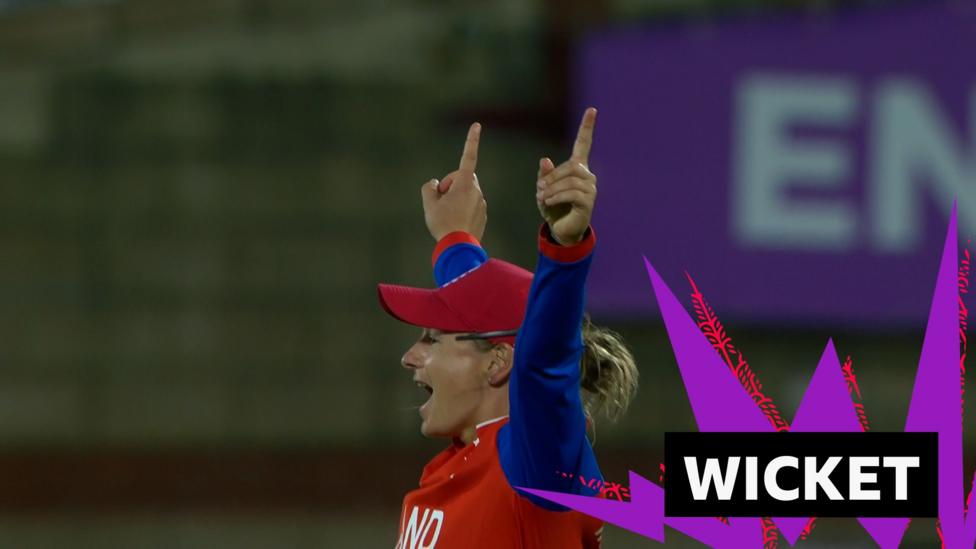
The Run Out That Sent England to a World Cup Final
Danni Wyatt-Hodge's moment of fielding brilliance crushed South Africa's resistance and launched England into the T20 World Cup final.