The Water Break Paradox: How 90 Seconds Reshape World Cup Tactics
Mandatory hydration breaks are more than a health measure — they are a tactical weapon that rewards certain coaches and punishes certain styles.
A Pause That Is Never Just a Pause
When the fourth official raises the electronic board and the referee blows the whistle around the 30th minute, the broadcast typically cuts to players gulping water and towelling sweat. It looks mundane. It is anything but. Those 90 seconds have become one of the most strategically significant windows in modern World Cup football, and the coaches who understand their true value are the ones gaining an invisible edge every match.
Hydration breaks were formally embedded into FIFA's tournament regulations during the 2014 World Cup in Brazil, driven by extreme heat concerns in venues like Manaus and Recife. The rationale was medical: wet-bulb globe temperature thresholds would trigger mandatory pauses at approximately the 30th and 75th minute of each half. Since then, they have persisted across subsequent tournaments, including Qatar 2022, where air-conditioned stadiums reduced but did not eliminate their use. What began as a player welfare protocol has evolved into something far more complex — a structural disruption that reshapes the rhythm, psychology, and tactical architecture of every match in which it appears.
The core tension is simple. Football is a game of momentum. Coaches spend weeks designing pressing triggers, transition patterns, and positional automatisms that rely on sustained intensity and collective rhythm. A hydration break, inserted arbitrarily into the first half, shatters that rhythm. For the team that has spent 25 minutes building pressure, forcing errors, and stretching the opponent's defensive block, it is an unwelcome interruption. For the team that has been pinned back, struggling to establish any foothold in the match, it is a lifeline — a free timeout that would never exist in the Premier League, La Liga, or the Champions League.
The Coaches Who Thrive in the Pause
Not all managers treat the hydration break equally, and the tactical literature around it has grown significantly over the past decade. The coaches who benefit most tend to fall into two categories: the system builders who use the pause to recalibrate, and the reactive tacticians who treat it as a reset button.
Consider a manager who has prepared extensively for a specific opponent. His pre-match plan identified the opponent's build-up tendencies, their weak-side vulnerabilities, their pressing triggers. But the opening 28 minutes revealed something unexpected — perhaps the opponent is overloading the half-spaces differently than the video analysis suggested, or a key midfielder is drifting higher than anticipated. In a normal league match, the coach must wait until half-time to address this. At the World Cup, he gets a dress rehearsal at the 30-minute mark.
Didier Deschamps was a master of this during France's 2018 World Cup campaign. Deschamps, often criticised for his conservative approach, used hydration breaks to reinforce defensive discipline and subtly adjust his 4-2-3-1 block. The footage from France's semi-final against Belgium is instructive. After a breathless opening in which Belgium's movement between the lines caused problems, Deschamps gathered his midfield during the break, and France emerged with a visibly tightened structure around N'Golo Kanté and Paul Pogba. Belgium created significantly fewer dangerous entries into the final third after the pause.
Luis Enrique represents a different archetype. A coach whose positional play depends on automatisms and spatial relationships, Enrique has spoken openly about the challenge of hydration breaks disrupting his team's rhythm. For managers whose systems are built on high pressing, sustained possession phases, and coordinated movement patterns, the break can be destructive. The press is a collective verb. It requires synchronised aggression, shared distances, and a mutual understanding of when to trigger and when to hold. A 90-second interruption allows the opponent to reset distances, receive tactical instructions from the bench, and reorganise their build-up shape. The pressing team must then re-establish its press from scratch, often against an opponent now forewarned of the specific pressing angles being used.
Momentum: The Intangible Currency
The concept of momentum is contentious in football analytics. Statisticians have long debated whether momentum is a measurable phenomenon or a cognitive bias imposed by commentators on random variance. But even the most sceptical analyst will concede that psychological pressure accumulates during sustained phases of dominance. When a team concedes three corners in succession, when their centre-backs are being turned repeatedly, when their goalkeeper has made two reflex saves in two minutes, there is a tangible pressure that affects decision-making. Players make safer passes. Defenders drop deeper. The team under siege begins to make reactive rather than proactive choices.
The hydration break intervenes precisely at these moments. It forces a collective exhale. The team that was dominating must re-find its intensity. The team that was suffering receives a coach's calm voice, a tactical adjustment, a psychological reset. In this sense, the hydration break structurally disadvantages attacking football and rewards defensive pragmatism — a dynamic that sits in direct tension with FIFA's stated desire for an exciting, open World Cup.
This is not a theoretical concern. Data from recent World Cup tournaments shows a measurable pattern in match events surrounding hydration breaks. In the five minutes immediately following the first-half hydration break, there is typically a measurable increase in fouls and a decrease in successful pressing sequences. Teams that were dominating possession pre-break tend to see their share drop by 3-5 percentage points in the 10 minutes following the pause. The sample sizes are small, and tournament football introduces countless confounding variables, but the directional trend is consistent enough to warrant attention.
The Set-Piece Coaches
There is another, less discussed dimension to the hydration break: its impact on set-piece preparation. Modern World Cup squads employ dedicated set-piece coaches, and the hydration break provides an opportunity that half-time alone cannot replicate. A coach can walk a specific player through a near-post run, adjust the positioning of a blocker on a corner routine, or instruct a full-back on the angle of a throw-in delivery. These are micro-adjustments that might seem trivial but accumulate into decisive advantages.
During the 2022 World Cup in Qatar, several teams were observed using hydration breaks for targeted set-piece briefings. The practice is not new — club sides do it during drinks breaks in pre-season friendlies — but the competitive stakes of a World Cup amplify its importance. When a single set-piece goal can decide a knockout tie, the ability to refine a routine mid-half is a genuine competitive advantage.
Structural Solutions and the Debate Ahead
FIFA faces a genuine dilemma. Player welfare in extreme heat is non-negotiable, and the medical evidence supporting mandatory breaks in high-temperature environments is robust. Heat-related illness is a real and serious risk, particularly for players from cooler climates competing in tropical or desert venues. No tactical analysis should minimise this reality.
But the governing body must also recognise that the hydration break is not a neutral intervention. It changes the game. It favours certain tactical profiles over others. It provides an asymmetric advantage to teams that are losing or under pressure. And it removes one of football's most fundamental challenges: the ability to sustain pressure and intensity without external interruption.
Several proposals have circulated in coaching circles. Some advocate for longer half-time intervals as compensation, allowing coaches additional time for tactical work while preserving the in-game rhythm. Others suggest that hydration breaks should be discretionary rather than mandatory, triggered only when specific temperature thresholds are met — a model that already exists in theory but is applied broadly in practice. A more radical proposal would allow hydration breaks only for the team that requests them, preventing the current dynamic where both sides benefit equally regardless of match state.
What This Means for the Next Tournament
As FIFA plans for the 2026 World Cup across the United States, Canada, and Mexico, the hydration break question will resurface with particular urgency. Several host cities — Dallas, Houston, Miami, Monterrey — will present genuine heat challenges during the June-July window. The breaks will almost certainly be a regular feature of the tournament.
Coaches preparing for 2026 are already factoring this into their tactical planning. The smartest analysts are modelling hydration breaks as a structural feature of the match timeline, not an anomaly. They are designing pressing systems that can be re-established quickly after a pause. They are building set-piece routines that can be communicated in 60 seconds. They are preparing substitute patterns that account for the tactical reset the break provides.
The coaches who treat the hydration break as an inconvenience will lose to those who treat it as an opportunity. In tournament football, where margins are measured in centimetres and seconds, the 90-second pause is no longer a footnote. It is a tactical frontier.
Editorial Integrity
This is an original SportPulse article written by our editorial team. All content is independently researched, written, and reviewed by our writers and editors before publication. We do not publish copied, aggregated, or syndicated content.
SportPulse is committed to original sports journalism. Read our editorial policy or contact us with any questions.
More Like This
All football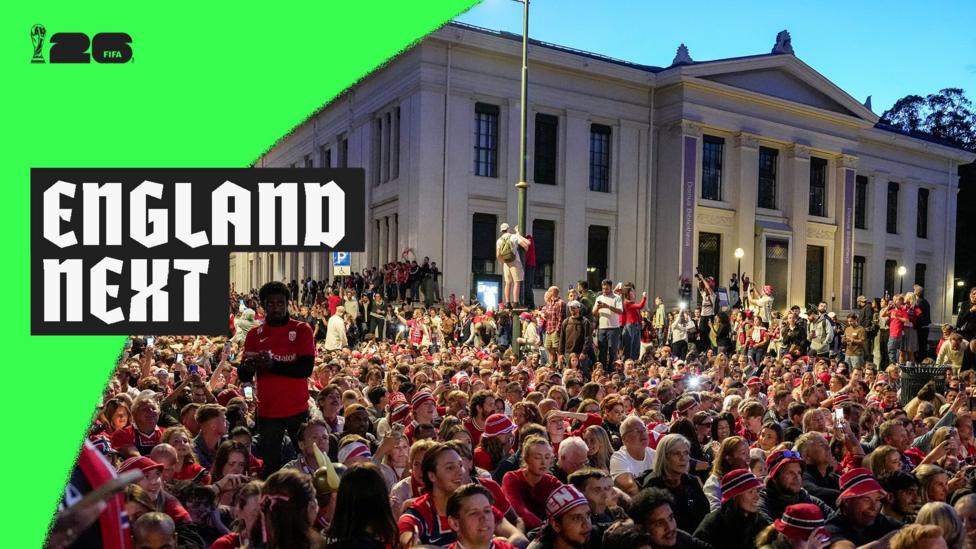
Norway vs England: The Biggest Event in Norwegian Football History
Norwegian pundits call their quarter-final against England the biggest event ever in Norwegian football history.
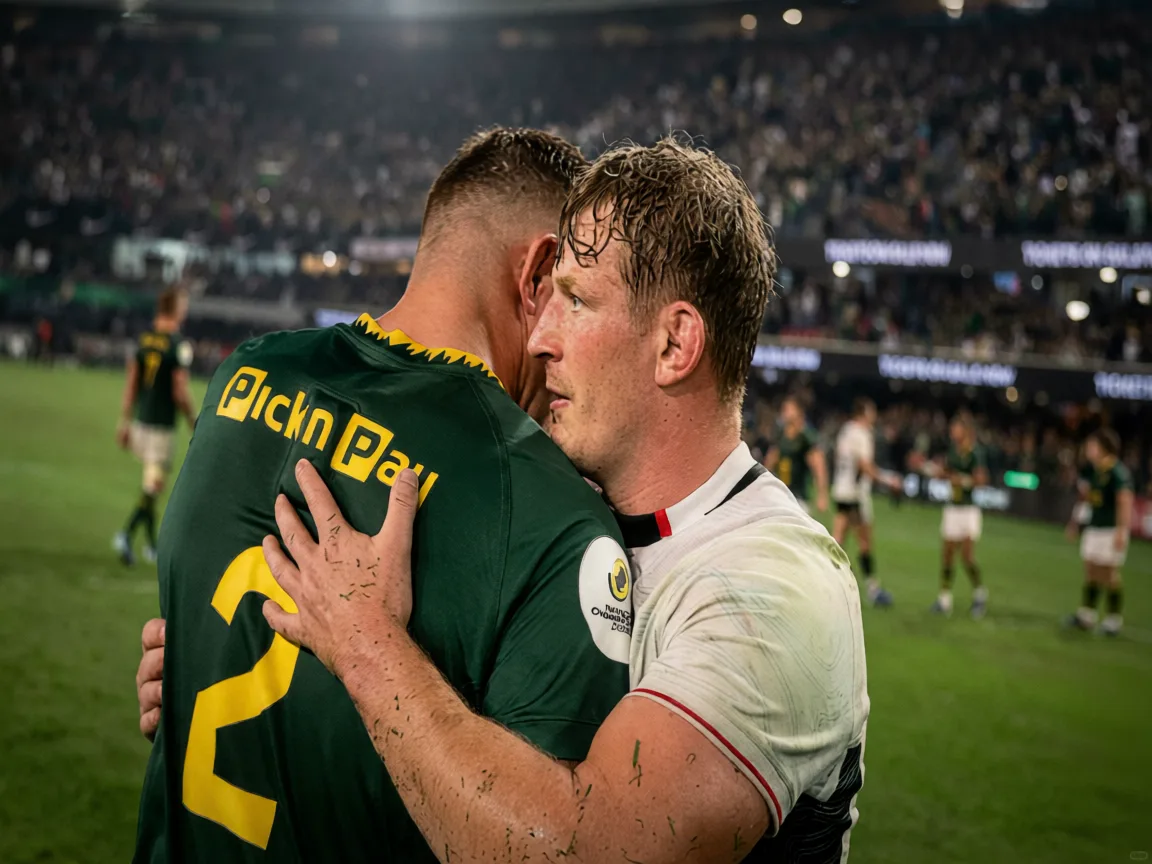
Morgan Defiant: Wales Closing Gap Despite Springbok Destruction
Jac Morgan insists Wales are edging closer to rugby's elite despite another bruising loss to South Africa.
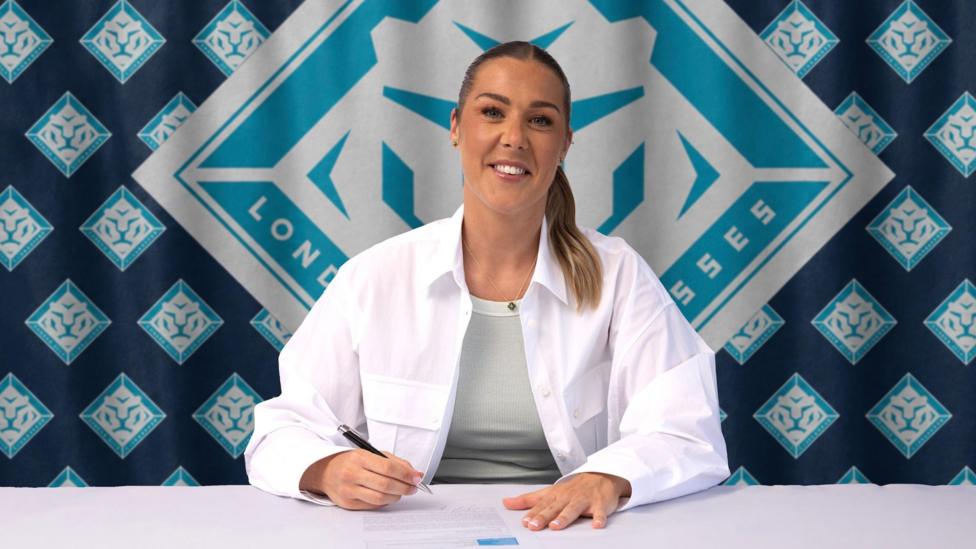
Earps Drops to Championship in Shock London City Move
Former England No. 1 Mary Earps joins London City Lionesses on a two-year deal after leaving PSG.