Twelve Yards of Torture: The World Cup's Penalty Politics
Since 1982, 342 players have faced the ultimate psychological test from the spot. This is the anatomy of World Cup shootout cruelty.
The Loneliest Walk in Football
Imagine the noise. 80,000 people screaming, whistling, praying, cursing. Now imagine absolute silence inside your own skull. That is the reality for the man standing on the penalty spot.
You have twelve yards of grass between you and immortality. Or infamy.
Since France midfielder Alain Giresse struck the World Cup's first shootout penalty in 1982, a total of 342 players have made that walk. Some became legends. Most just became footnotes in someone else's story of resilience.
The penalty shootout is football reduced to its most brutal, beautiful essence. No tactics. No teammates to hide behind. Just you, the ball, the goalkeeper, and the crushing weight of a nation's expectations.
"You walk to the spot and the world disappears. There is only the ball and the path to the goal. Everything else is noise you must learn to silence." — A veteran of shootout heartbreak
The drama is unscripted, but the trauma is always the same. For the taker, it is a test of nerve. For the goalkeeper, it is a license to gamble.
A Brief History of Spot-Kick Warfare
The World Cup had existed for over half a century before the shootout arrived. Replay after replay, coin toss after coin toss. The sport needed a resolution. It found one in 1982, and it has been breaking hearts ever since.
West Germany eliminated France in that infamous semi-final in Seville. It was a night that carved the shootout into football's mythology. A night of pure psychological warfare.
Harald Schumacher, the German goalkeeper, became the villain of the piece. Not for the challenges that crippled Patrick Battiston earlier in the match, but for the cold, calculating manner in which he broke French hearts.
Since that night in Spain, the shootout has evolved from a novel tiebreaker into the tournament's defining narrative device. Brazilian tears in 1986. English heartbreak, repeatedly, on the biggest stages. Italian redemption, and Italian despair, depending on the year.
The Anatomy of a Shootout
What actually happens when a player places the ball on the spot? The mechanics are simple. The psychology is anything but.
- The Walk: Often lasting fewer than 15 seconds. Felt like a lifetime by the accounts of those who have endured it.
- The Placement: Tapping the ball, spinning it,寻找 the perfect blade of grass. Pure superstition masking pure terror.
- The Breathing: Goalkeepers and takers alike trying to slow their heart rates, which can spike to 170 beats per minute in the moments before the whistle.
- The Run-Up: A stuttered approach designed to unnerve, or a sprint designed to overwhelm.
- The Strike: A split-second decision that defines a legacy.
The shootout exposes something tactics cannot. It strips away the team and isolates the individual completely.
The Keeper's Gambit
The goalkeeper knows the odds are stacked against them. A well-struck penalty is virtually unstoppable. So they resort to gamesmanship. They wave their arms. They point to corners. They talk to themselves. They attempt to shrink the goal in the taker's mind.
The save is rarely about reflexes. It is about reading body language, studying hours of tape, and making a calculated guess. A leap into the dark.
When the keeper guesses right and the taker hesitates, the dynamic shifts entirely. The power flips. It becomes a battle of wills, and the goalkeeper only needs to win that battle once to swing the entire shootout.
The 342: A Brotherhood of Broken Hearts
342 players. That is the entire fraternity of those who have stepped up in a World Cup shootout since Giresse's pioneering strike.
Some are remembered for their nerve. Others are remembered for their concession.
Think of Roberto Baggio in 1994. The Divine Ponytail, who had carried Italy to the final, sending his penalty over the bar in Pasadena. The image of him standing alone, head bowed, after eclipsing his entire legacy in one kick.
Think of David Batty in 1998. Or Chris Waddle in 1990. Or the entire Brazilian nation holding its collective breath every time the tournament goes to spot kicks.
"You can practice penalties a thousand times on the training ground. But nothing prepares you for the moment when 60,000 people go silent and you know a nation is watching your feet." — A player who missed in a World Cup quarter-final
These men are not villains. They are volunteers. They stepped forward when others did not, when others could not.
The shame of missing exists only because the courage of taking is invisible. Football eulogizes the saves but rarely forgives the misses, a fundamental injustice in how we remember these moments.
##rande: The Psychology of the Spot Kick
Sports psychologists have studied the World Cup shootout extensively. The findings are as fascinating as they are terrifying.
- Conversion rates drop significantly in tournament finals compared to earlier rounds.
- Players who take longer than three seconds from the whistle to the strike miss more frequently.
- 70% of penalties are struck to the taker's natural side, making the goalkeeper's job marginally easier if they know the data.
- Younger players, counterintuitively, often perform better than veterans. They lack the full comprehension of the weight of the moment.
The shootout is a test of emotional regulation as much as technical skill. The heart races. The palms sweat. The mouth goes dry. And still, you must execute a precise motor skill under extreme duress.
The Unforgettable Nights
Certain shootouts burn brighter in the memory than others. They become reference points for football history itself.
The 2006 final in Berlin. Italy versus France. Fabio Grosso's strike sent Italy to the title and left the world wondering what might have been for a French side missing the suspended Zinedine Zidane.
The 2014 semi-final. Argentina defeating the Netherlands on penalties after 120 minutes of tactical stalemate in São Paulo. Maxi Rodríguez coolly slotting home the winner, the weight of a nation lifted in a single kick.
The 2022 final. The greatest World Cup final ever played, and yet it came down to penalties again. Kingsley Coman and Aurélien Tchouaméni faltering for France. Gonzalo Montiel converting for Argentina. Lionel Messi's career validating finally, and cruelly, at the expense of a teammate and a friend.
"When Montiel stepped up, I wasn't watching. I couldn't watch. I was on my knees. I only knew we had won when I heard the stadium erupt."
These images define the World Cup. They are the tournament's unique contribution to the sport's tableau.
Why We Cannot Look Away
The penalty shootout is the ultimate drama because it is the ultimate simplicity.
Everything else in football has nuance. A tactical system can be debated. A referee's decision can be replayed and re-litigated. A transfer can be praised or questioned.
A penalty in a shootout is binary. It goes in or it doesn't. There is no gray area. No interpretation. No what-if.
That binary quality is what makes it so agonizing for the taker and so intoxicating for the spectator. The fan gets pure, unadulterated emotion in a single packet.
The Penalty Future
The shootout has evolved. There is more data than ever before. There are psychologists dedicated solely to spot-kick preparation. There is a tactical sophistication now that makes shootouts into their own sub-discipline of the sport.
Yet for all the science, the preparation, the tape study, and the breathing exercises, the penalty shootout remains stubbornly, beautifully, agonizingly human.
A player can have the best technique in the world. They can strike the ball perfectly into the top corner. And a goalkeeper can guess correctly, dive early, and pull off a miracle anyway.
Conversely, a player can slip, scuff their shot, and see it trickle over the line because the goalkeeper went the wrong way entirely.
That is the cruelty and the ecstasy. The preparation matters. The data helps. The psychology is real.
But in the end, twelve yards of grass decides everything. It always has. Since 1982, since Giresse struck that first penalty, the sport has found no better way to separate the conquerors from the conquered and no more devastating test of a player's spirit.
The walk is lonely. The silence is deafening. And the legacy is permanent.
342 men have taken that walk. Many more will. They will practice for hours, but when the moment comes, practice will only take them so far.
The rest is nerve. The rest is character. The rest is football at its most naked, its most ruthless, and its most unforgettable.
Editorial Integrity
This is an original SportPulse article written by our editorial team. All content is independently researched, written, and reviewed by our writers and editors before publication. We do not publish copied, aggregated, or syndicated content.
SportPulse is committed to original sports journalism. Read our editorial policy or contact us with any questions.
More Like This
All long-reads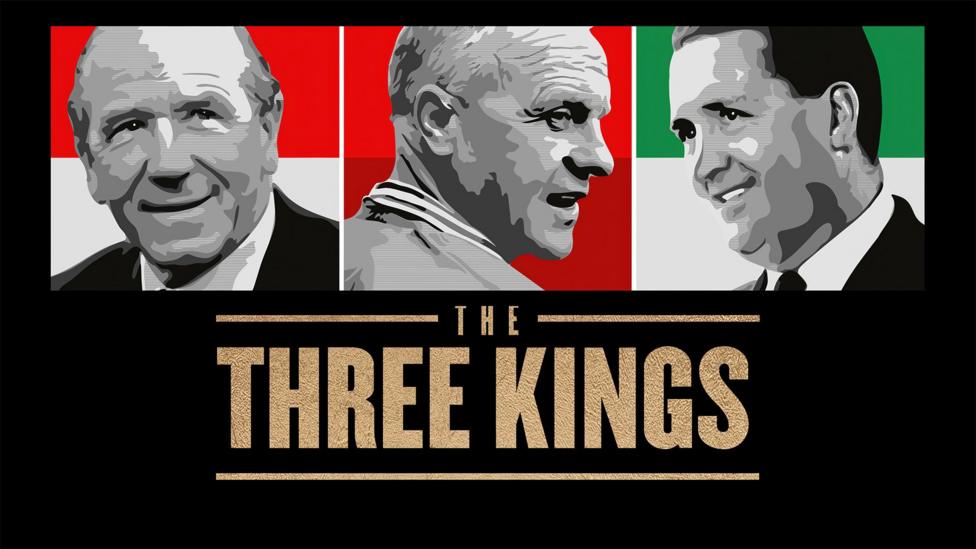
Three Scots Who Built Modern Football From the Coalfields
Busby, Shankly and Stein emerged from the same brutal Scottish mining villages to reshape world football forever.

Korda Six Back as Yoon Seizes Control at Women's PGA
Nelly Korda trails Ina Yoon by six shots at the Women's PGA Championship midway point, putting her major hat-trick bid in serious jeopardy.

The Devil's Child: Inside the Fall of the Yakuza's Only Woman
Mako Nishimura broke into Japan's male-dominated underworld, only to be consumed by the same forces she sought to master.