Player No 33: The World Cup Puzzle Nobody Expected
A cryptic World Cup identity quiz reveals deeper truths about how football erases and immortalizes its own heroes.
The Mystery of Number 33
There is a peculiar cruelty in how football remembers its World Cup heroes. We mythologize the Bicycle Kick That Wasn't, the penalty that sailed into the upper deck, the red card that defined a generation. Yet for every Maradona in Mexico '86 or Zidane in '98, there exists a tier of player whose World Cup legacy is reduced to a trivia question, a guess-the-man parlour game, a silhouette with the number 33 stamped beneath it.
The prompt is simple. "Will you get today's player in as few attempts as possible?" No name. No photograph. No date of birth. Just a number, a tournament graphic, and an implicit challenge to the audience: prove you actually know football, not just Bundesliga Fantasy picks and Premier League xG threads.
That challenge is harder than it looks.
The Economy of Memory
World Cup quizzes operate on a strange economy. The format rewards not tactical literacy but nostalgic recall. You do not need to explain why a 4-2-3-1 fell apart against a mid-block in the round of sixteen. You need to remember that a left-back from 2002 once scored a free-kick against Belgium and then largely vanished from the public consciousness.
That is the trap. Football's global spectacle generates hundreds of protagonists every four years. Only a fraction survive the editing process of collective memory. The rest become Player No 33: identifiable to the hardcore, invisible to the casual, and genuinely puzzling even to those who consider themselves students of the game.
Why This Specific Player Matters
The genius of withholding the identity is that it forces the reader into forensic mode. You begin with the tournament. Which World Cup? The font of the graphic, the style of the kit, the era of the design. All of these are clues, deliberately seeded to reward the viewer who watches with attention rather than with scrolling thumbs.
Then comes the positional inference. Was this a striker, a winger, a defender pressed into emergency midfield duty? The absence of context is itself the puzzle. You are not being asked to recall a name. You are being asked to reconstruct a career from fragments.
That reconstruction is where the quiz transcends its novelty. It becomes a commentary on football's information density. In an era where we can pull up a player's pass completion rate under pressure in the final third with three clicks, the idea that a World Cup participant can become genuinely difficult to name is almost rebellious. It suggests that despite all the data, all the coverage, all the 24-hour content cycles, the sport still has corners that resist easy cataloguing.
The Statistics of Forgetting
Consider the scale of the problem:
- 1,072 players appeared at the 2022 World Cup in Qatar alone.
- Across the past five tournaments, approximately 5,500 players have represented their nations on football's biggest stage.
- Of those, perhaps 150 maintain what you would call household recognition among casual fans.
- That leaves over 5,300 players occupying a memory grey zone, ranging from cult heroes to genuine unknowns.
Player No 33 sits somewhere in that grey zone. Not obscure enough to be unjustified as quiz material. Not famous enough to be guessed on the first attempt by anyone outside the devoted minority.
The players we forget are not always the ones who failed. Often, they are the ones who succeeded just enough to warrant a silhouette, and not enough to warrant a statue.
The Tactical Anonymity
There is a tactical dimension to this anonymity that deserves attention. certain positions are simply more visible than others. A striker who scores in a World Cup quarter-final enters the highlight reel forever. A full-back who neutralizes a winger across 90 minutes of exhausting tactical discipline might earn a passing mention and then a slow drift into archival obscurity.
Player No 33 likely belongs to the latter category. Not because of a lack of quality, but because of a structural mismatch between what football rewards and what audiences notice. The modern game has attempted to correct this with advanced metrics. Progressive carries, defensive actions in the middle third, aerial duel win rate on set-pieces. These are the numbers that tell you a player mattered even when the camera did not linger.
Yet quizzes like this one remind us that the gap between analytical recognition and popular recognition remains wide. You can be a statistically significant World Cup performer and still become a question mark.
The Verdict on Visibility
The quiz format works precisely because it exposes this gap. It forces the audience to confront not just what they know, but what the sport has trained them to value. A great guesser is not necessarily a great analyst. They are someone with an unusually well-indexed memory for faces, names, and tournament brackets.
The Bottom Line: Player No 33 is not just a puzzle. He is a mirror, reflecting the sport's uneven attention economy.
The Broader Implications
There is something culturally significant about the persistence of this quiz format. In an era of infinite content, the guess-the-player game is one of the few football formats that still rewards patience over speed, knowledge over engagement metrics. It does not go viral because it is sensational. It goes viral because it is genuinely difficult, and difficulty has become a稀缺 commodity in modern sports media.
The format also serves an archival function. Each quiz entry is a small act of preservation, rescuing a player from the slow erosion of collective memory. Whether the audience guesses correctly on the first attempt or the fifth, the player has been briefly returned to the conversation. That matters, even if only in a minor key.
For the football obsessive, these quizzes are a calibration tool. They reveal the boundaries of your knowledge in concrete terms. You either know Player No 33 or you do not, and there is no algorithmic feed to soften the sting of not knowing.
What This Says About the Modern Fan
The modern football fan has access to more information than any scout from the 1990s could have imagined. Tactical breakdowns, heat maps, expected goals models, and granular possession data are available for free across dozens of platforms. Yet the quiz suggests that information access and genuine football literacy are not the same thing.
Knowing that a team averaged 1.47 xG per match in a group stage tells you something. Knowing who wore number 14 for Ecuador in 2014 tells you something else entirely. The quiz values the latter, and in doing so, it quietly argues that the sport's soul still lives in its human details rather than its spreadsheets.
That argument is worth taking seriously. Tactical analysis has enriched the way we watch football. But it has also narrowed the vocabulary of appreciation. We judge midfielders by their progressive pass volume and wingers by their 1v1 success rate. Player No 33 reminds us that there was a time when we judged footballers simply by whether we remembered them, and that some of the most memorable figures in World Cup history defied every metric we now use to quantify their worth.
The Verdict: These quizzes are not trivia. They are resistance against a sport that increasingly wants to reduce players to data points.
The Final Guess
If you have not yet attempted to identify Player No 33, the advice is straightforward. Start with the tournament. Narrow by continent, then by position, then by the visual cues embedded in the graphic itself. If you solve it in three attempts, you belong to a small and slightly obsessive minority. If you solve it in five, you are still well above the median. If you cannot solve it at all, you are in good company.
The point is not the answer. The point is the process. In a football media landscape that increasingly delivers answers before you have time to form questions, the World Cup quiz remains one of the few formats that asks you to think before it tells you what to think.
That is rare. That is valuable. And Player No 33, whoever he turns out to be, has already served his purpose simply by making you wonder.
The Bottom Line: The quiz survives because football is not just a game of numbers. It is a game of names, and some of those names deserve to be remembered even when the algorithm has moved on.
Editorial Integrity
This is an original SportPulse article written by our editorial team. All content is independently researched, written, and reviewed by our writers and editors before publication. We do not publish copied, aggregated, or syndicated content.
SportPulse is committed to original sports journalism. Read our editorial policy or contact us with any questions.
More Like This
All football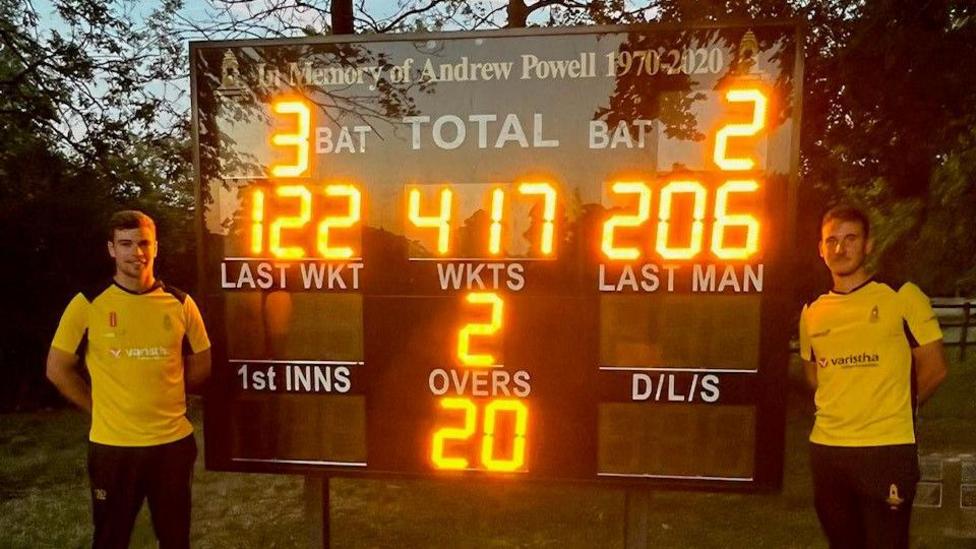
417-2: The Tactical Anatomy of a Potential T20 World Record
A Gloucestershire club side posted 417-2, redefining amateur T20 strategy with a relentless power-hitting blueprint.
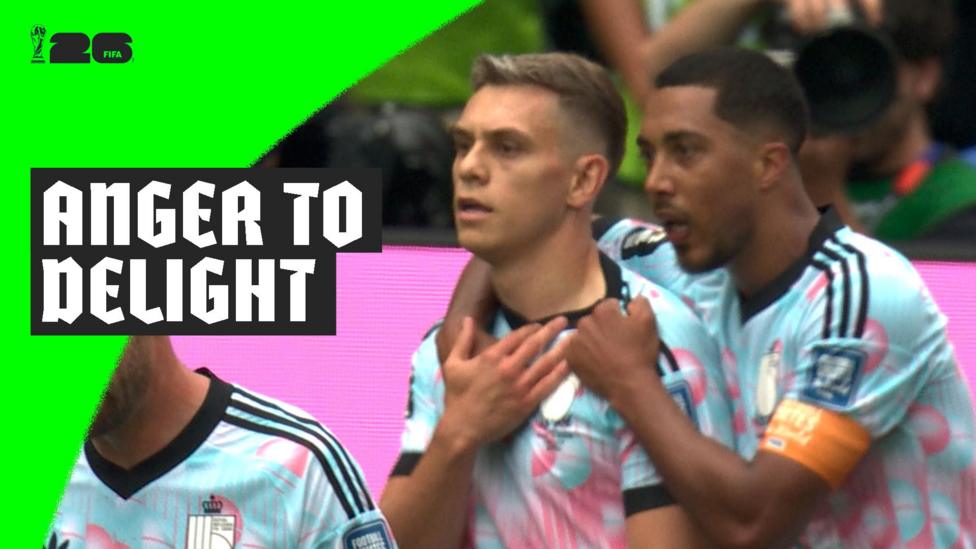
From Feud to Function: Tielemans and Trossard Rescue Belgium
Youri Tielemans and Leandro Trossard transformed a heated hydration-break row into a crucial equaliser against Senegal in Seattle.

Borthwick Rolls the Dice on Slade as England Stare Into the Abyss
Henry Slade's resurrection from Six Nations exile to starting XV captures a desperate England regime chasing salvation against Fiji.