The Kings of the World Cup: Record-Holders Who Defined Football
From Pelé's three crowns to Klose's sixteen goals, the World Cup's greatest record-holders set the stage for 2026.
The FIFA World Cup has produced the most iconic records in all of sports. From legendary goal-scorers to iron-fisted managers, these benchmarks separate the greats from the immortals. Here is the definitive portrait of the tournament's record-book giants ahead of the expanded 2026 tournament.
Miroslav Klose sits alone at the summit of goal-scoring. The German striker netted 16 goals across three World Cups, overtaking Ronaldo's 15 goals during a legendary 7-1 semifinal demolition of Brazil in 2014. That record survived thanks to calculated efficiency rather than pure athletic explosion.
Klose started his World Cup journey with five goals in 2002, added five more in 2006, and scored four in 2010. He was the perfect tournament striker, peaking every four summers when the lights burned brightest.
Just behind him sits Ronaldo Nazário with fifteen goals, a player who briefly made goal-scoring look like a casual art form. Gerd Müller ranks third with fourteen goals, an astonishing mark achieved across just two tournaments in 1970 and 1974.
The distance between the top scorers underscores a persistent truth: domination requires political stability within a national team setup. Klose was environmental perfection in human form.
No player has lifted the World Cup trophy more than Brazil's legend Pelé. He hoisted the iconic gold trophy three times in 1958, 1962, and 1970, creating a standard of greatness that шесть decades of future superstars have failed to match.
Pelé emerged as a global superstar at 17 years and 239 days old, scoring twice in the final against Sweden. That youthful spark remains the foundational image of how a single tournament can launch an entire religion in the modern age.
Twenty other World Cup-winning players have two medals, a list including quiet giants like Cafu, Ronaldo, and Italian icon Giuseppe Meazza. A select group of footballers have reached consecutive finals across multiple eras, including Vittorio Pozzo, who won back-to-back titles as Italy's manager in 1934 and 1938.
Lothar Matthäus holds the record for the most World Cup appearances, taking the pitch 25 times for West Germany and Germany across five tournaments. His streak of participations began in Euro 1980 and ran through 1998, a testament to his physical resilience.
Antonio Carbajal of Mexico was the first player to appear at five World Cups, debuting in 1950 and exiting in 1966. His record of five tournament appearances stood unmatched for decades, representing a feat of sustained national relevance.
Four elite players share the record for appearing at five World Cups: Carbajal, Matthäus, goalkeeper Gianluiggi Buffon, and evergreen Mexican icon Rafael Márquez.
Just Fontaine holds the most untouchable record in World Cup football. The French striker scored thirteen goals in the 1958 tournament alone, establishing a single-tournament record that has survived for sixty-six years.
With the tournament expanding for the modern era, the 2026 edition could shatter participation records. The 48-team format will produce 104 matches across Mexico, the United States, and Canada, opening new frontiers for statistical immortality.
Tactical Eras and Historical Shifts
Statistics are shaped by the eras that produce them. When Just Fontaine scored thirteen goals in six games at the 1958 World Cup, defenses were catastrophically unorganized, and tactical structures were entirely primitive by today's metric-driven standards.
Modern football compresses space, demanding a grueling physical toll to separate a single attacker from a low defensive block. For a player to break Fontaine's single-tournament mark of thirteen goals, they would need to survive a maximum of eight matches with an extreme scoring average.
Even the most elite attackers of the modern era have fallen short. Kylian Mbappé scored eight goals in a single tournament, falling five goals short of Fontaine's historical mark despite showcasing explosiveness that transcends any era.
When looking at the 16 goals scored by Miroslav Klose, it is critical to view them as a separate record. His goals came in the expanded era of international football, making the feat a surgical study in positioning.
Lionel Messi played in 26 World Cup matches across five tournaments, finally claiming his first winner's medal. He fell one appearance short of Matthäus, but his transformation from a squad player to a tactical focal point over fifteen years was a marvel.
The legendary governing axis building Klose in a single international team cannot be overstated. The German national team won successive World Cup semifinal matches by shocking scorelines, rounding out Klose's villainous domination.
The Italian symbol of Vittorio Pozzo lives on as well. Guiding Italy to consecutive World Cup titles in the 1930s, Pozzo set the standard of building tactical flexibility in an era of political pressure.
Coaches like Franz Beckenbauer and Mario Zagallo carefully dispatched against a tactical footballing establishment that had confined The World Cup. It balances global prestige against structural frustrations of the modern football calendar.
Modern teams are also changing their approach to tournament-year goal-scoring records. Squads build resilience into the fabric of the modern game, and player workload is a more critical flaw.
What the dressing room reveals
The weight of a World Cup record hits differently inside the sanctity of the national team dressing room. The air is heavy with the accumulated history of a century of international football, a pressure that bends the emotional gravity of a single match into a career-defining moment.
When the final whistle blows on a tournament-altering performance, knowledge of where a performance ranks in the pantheon of World Cup greats filters through the tactical discussions of the coach's office.
Even hardened veterans whisper about the ghosts of past tournaments like a secular religion. Breaking individual records is celebrated in fitful bursts of adrenaline, a moment of awareness of footballing immortality.
"You don't play for the record. You play for the trophy. But when the record comes, you feel the weight of every player who ever wore the shirt before you."
The standard mental preparation of players hinges on an acceptance of collective history. A manager like Joachim Löw, architect of Germany's 2014 triumph, obsessively protected his players from the growing burden of public expectation.
For a player like Miroslav Klose, the private moments after a game were spent reaffirming tactical discipline, a ritual that insulated him from the growing public obsession with overtaking Ronaldo Nazário.
The construction of a modern World Cup hero is as psychologically engineered as it is physical, demanding the absolute suppression of public pressure serving as a distraction.
The raw numbers are staggering, but the silence inside the locker room frames the reality of a record-setting career. To wear the jersey of a World Cup legend is to shoulder the emotional burden of an entire nation's fragile hopes.
What It Means
The 2026 World Cup will offer the most expansive statistical opportunity in the tournament's history. A 48-team field means more matches, more minutes, and traditionally weaker opponents available for elite players to exploit in the group stage.
For ambitious forwards, the chance to chase history is greater than ever. A top-level player operating at peak speed can now expect up to eight matches to break the single tournament record, a mathematical anomaly in the physics of World Cup football.
However, this opportunity comes with a severe physical cost. The expanded format stretches every elite player deeper into the summer, straining the structural limits of modern football psychology.
For a global audience, the record-book chase adds spice to a tournament that produces magical cultural moments. Watching Mbappé or emerging forwards chase Klose's mark of sixteen goals gives the casual viewer a narrative spine.
The legends whose records face assault in 2026 built their legacies through foundational devastation rather than a single moment of magic on the world stage. Their statistics are monuments to entire eras of tactical approach, from Pelé's sublime creativity to Fontaine's opportunism in a less structured time.
The 2026 World Cup will add new chapters to the record books across forty-eight nations, but it also demands a deep respect for the foundation of footballing achievement.
Editorial Integrity
This is an original SportPulse article written by our editorial team. All content is independently researched, written, and reviewed by our writers and editors before publication. We do not publish copied, aggregated, or syndicated content.
SportPulse is committed to original sports journalism. Read our editorial policy or contact us with any questions.
More Like This
All football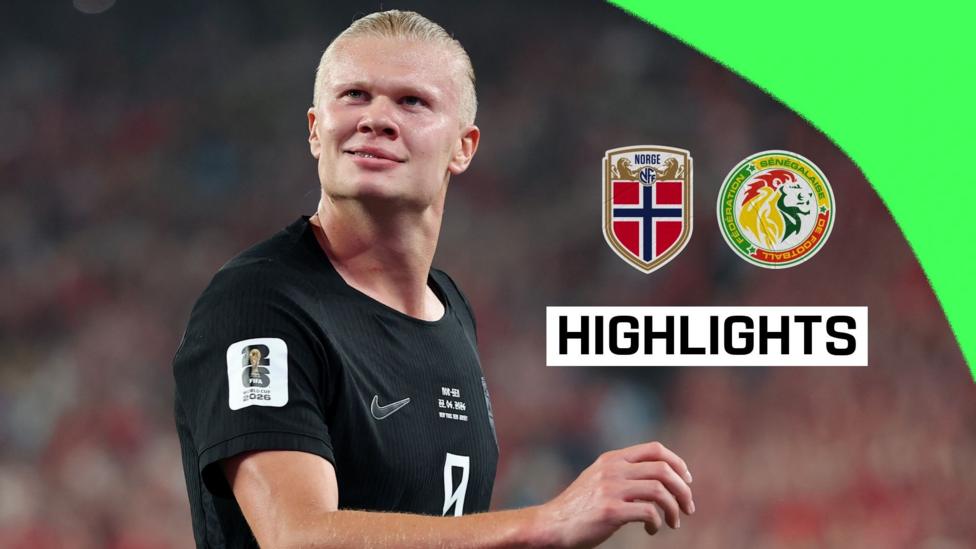
Haaland's Brace Fires Norway Past Senegal in World Cup Thriller
Erling Haaland delivered when it mattered most as Norway survived a Senegal fightback to reach the last 32.
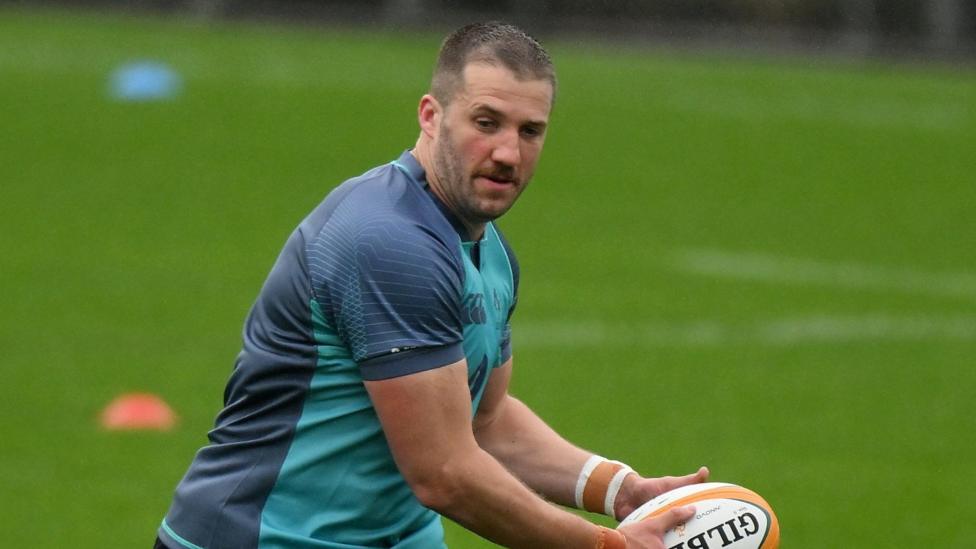
Ireland's Clean Bill of Health Changes the Sydney Equation
Paul O'Connell confirms a fully fit Irish roster ahead of the Nations Championship opener, handing Andy Farrell a rare luxury Down Under.
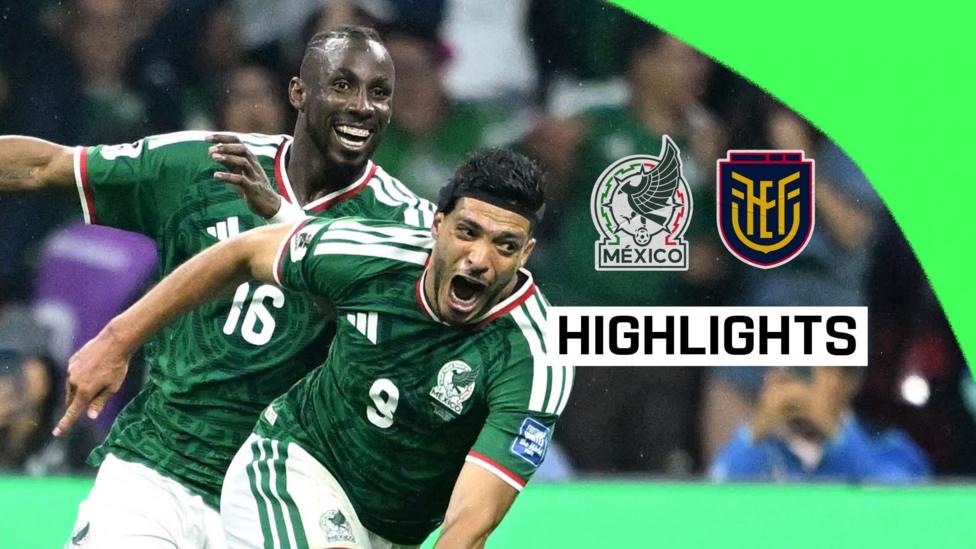
Azteca Roars: Mexico March Into Last 16
Mexico dispatched ten-man Ecuador at a stormy Azteca to book a last-16 clash against England.