The World Cup Card Rules That Can Gut a Nation's Dream Overnight
FIFA's red and yellow card suspension rules have shaped World Cup history and forced managers into agonizing gambles.
Every Card Carries a Price
The World Cup is a tournament where one moment can define a career, collapse a campaign, or launch a country into delirium. And nothing accelerates that chaos quite like the referee reaching into his pocket.
FIFA's disciplinary framework for the World Cup operates differently from domestic leagues. The stakes, the compressed schedule, and the knockout format all collide to create a system where a single caution in matchday two can sideline a player for a semi-final. Managers know it. Players know it. And yet, the suspensions keep coming.
Here's how it works, why it matters, and where it has burned teams the hardest.
The Basics: Red and Yellow
A straight red card at the World Cup triggers a minimum one-match suspension. That player is automatically banned for their team's next fixture, whether it's a dead rubber group game or a World Cup final. FIFA's Disciplinary Committee can extend the ban depending on the severity of the offense. Violent conduct, serious foul play, or spitting can push suspensions to two, three, or even more matches.
A second yellow card within the same match produces a red and the same one-match ban. But here is where it gets strategic: yellow cards accumulate across matches.
If a player receives a yellow card in one group game and another yellow in a separate group game, they are hit with a one-match suspension for the next fixture. This is the rule that haunts squad planning. A player walking a disciplinary tightrope in the group stage could find themselves watching the round of sixteen from the stands.
The Wipe-Clean Reset
FIFA introduced a critical safeguard to prevent the most painful outcomes. Yellow card accumulations are wiped after the quarter-final stage. This means that no player enters the semi-final carrying the threat of a suspension earned in the group phase or the round of sixteen.
The logic is straightforward. FIFA wants the best players available for the tournament's showpiece moments. The semi-finals and the final deserve the strongest possible lineups. But the wipe doesn't protect players from straight red cards in the knockout rounds, and it does nothing to help teams navigating the group-to-quarter-final gauntlet.
For Qatar 2022, this rule was front and center. Heading into the quarter-finals, several high-profile players were sitting on one yellow card, meaning a second booking would have ruled them out of a potential semi-final. Coaches faced the brutal calculation of resting a key man in the quarters or trusting him to stay disciplined for ninety minutes.
When the Rules Changed the Tournament
The yellow card wipe was not always in place, and its absence created some of the World Cup's most agonizing moments.
In Brazil 2014, Thiago Silva picked up a second yellow card during Brazil's quarter-final win over Colombia. The Brazil captain was suspended for the semi-final against Germany. What followed was one of the most devastating results in football history: 7-1. Would Silva's presence at the back have prevented the collapse? Probably not entirely. But his absence stripped Brazil of their defensive organizer and emotional leader at the worst possible time.
In Russia 2018, the system bit hard across multiple teams. Heading into the semi-finals, France had Blaise Matuidi and N'Golo Kanté both on one yellow. Belgium's Thomas Meunier was in the same position. These weren't fringe players. They were starters in the spine of the team. The wipe rule helped them, but the anxiety in those camps during the quarter-finals was real.
The 2006 tournament in Germany remains the gold standard for disciplinary drama. Zinedine Zidane received a straight red in the final for his infamous headbutt on Marco Materazzi. The suspension that would have followed became irrelevant because the match was the tournament's last. But the moment crystallized how a red card doesn't just end a game. It can end an era.
Straight Red: The Nuclear Option
A straight red card suspension carries no early wipe. FIFA's Disciplinary Committee reviews every straight red and determines the length of the ban. For the most common offenses, violent conduct and serious foul play, the standard is a one-match ban, but it can escalate.
If a player receives a straight red in the final group match, that suspension carries into the round of sixteen. If it happens in the round of sixteen, the player misses the quarter-final. There is no appeal mechanism that shortens the ban to zero.
This matters enormously because knockout football magnifies every absence. Lose a centre-back to a straight red in the round of sixteen, and you enter the quarter-final without your defensive anchor. There are no second legs to recover. The margin for error is gone.
Two Yellows in One Match: The Double Jeopardy
When a player receives two yellow cards in a single match, it results in a red card and a one-match ban. This is the same punishment as a straight red for violent conduct, but the two scenarios are treated differently by FIFA's Disciplinary Committee in terms of further sanctions.
A two-yellow sending off is considered a non-violent dismissal. The standard one-match ban applies, and extensions are rare unless the second yellow involved genuinely reckless behavior. A straight red, by contrast, opens the door to enhanced punishment.
The Strategic Layer
Squad rotation at a World Cup is never purely tactical. It is always partly disciplinary. A manager holding three players on one yellow heading into a group decider faces an impossible choice: play them and risk losing them for the knockout round, or rest them and weaken the team that needs to win.
This is where the tournament's format creates mind games. The group stage runs three matches across roughly nine days. A player booked in match one and match two serves their ban in match three, which might be the most important group game.
Coaches have learned to plan for this. In Qatar 2022, several managers made late substitutions in group matches specifically to protect players carrying a yellow. The calculus is cold but logical: a ten-minute cameo off the bench reduces the chance of a second booking while technically keeping the player active.
"You are always counting cards. You know exactly who is on a yellow and what the risk is. It never leaves your mind during a match." — A senior international manager, speaking about World Cup tournament management.
What Happens After the Final
Suspensions do not evaporate when the tournament ends. A red card in the World Cup final carries over into the player's next competitive international fixture. That means Nations League matches, World Cup qualifiers, or the next major tournament opener could be affected.
This rarely generates headlines because the immediate emotion of the final overshadows everything. But for the player involved, the consequences linger. A defender sent off in a World Cup final might miss the first match of the next qualifying campaign, a gap of months.
What It Means
FIFA's suspension rules are not arbitrary. They are a deliberate balance between competitive integrity and spectacle preservation. The yellow card wipe after the quarter-finals exists to protect the tournament's biggest games. The accumulation rules exist to punish reckless play across the competition.
For managers, the system demands constant vigilance. Every booking is a data point that reshapes the next team sheet. For players, the message is simple: discipline is not optional when the margins are this thin.
The next time a World Cup referee reaches for a yellow card, understand what is actually happening. A player's tournament might just have shifted irrevocably, and a manager somewhere on the touchline is already doing the math.
Editorial Integrity
This is an original SportPulse article written by our editorial team. All content is independently researched, written, and reviewed by our writers and editors before publication. We do not publish copied, aggregated, or syndicated content.
SportPulse is committed to original sports journalism. Read our editorial policy or contact us with any questions.
More Like This
All football
2014 World Cup Brazil vs Germany: The 7-1 Shock That Defined a Generation
Ten years on, revisiting the 2014 World Cup semifinal where Germany humiliated Brazil 7-1 in Belo Horizonte.

Rooney Walks Away: The Weight of a Managerial Career Built on Sand
Wayne Rooney admits regrets and sees no return to management — a cautionary tale for England's golden generation.
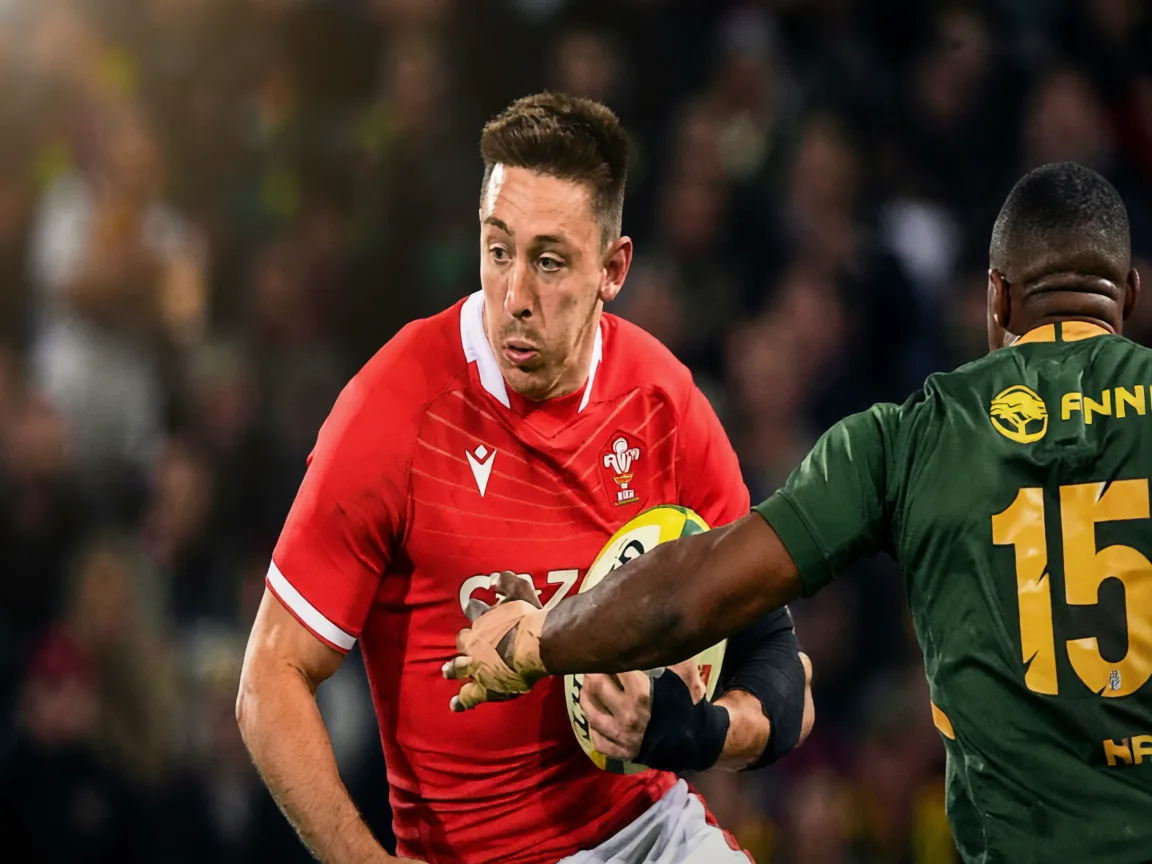
Wales Face Ultimate Test Against Springboks in Nations Championship
Josh Adams calls South Africa the toughest test of Wales' Steve Tandy era as the Nations Championship looms.