Football's Final Four: Every World Cup Semi-Finalist and What They Revealed
From Uruguay's pass-and-move to Croatia's midfield triangulation, a tactical chronicle of every nation to reach a World Cup semi-final.
Every four years, the World Cup strips away the guardrails of club football and forces coaches to solve the most complex tactical puzzle in the sport.deploy a mid-block or press high, you have weeks, not months, to instil a system. Reaching the semi-finals of this tournament is the ultimate vindication of a coach's philosophy under extreme time constraints. The nations who have reached this stage form a revealing cross-section of football's tactical evolution.
When we catalogue every World Cup semi-finalist, we are not just listing successful teams. We are tracing the shifting balance of power, from the 2-3-5 formations of the interwar period to the fluid 4-3-3 structures that dominate the modern era. As you attempt to name every nation to have reached this stage, consider what each arrival represented.
The South American Primacy and the Firstcheidkopf
The inaugural World Cup in 1930 hosted only 13 teams, but the semi-finalists established the foundational tactical templates of international football. Uruguay, Argentina, the United States, and Yugoslavia comprised the final four. Uruguay's triumph was built on a 2-3-5 system that prioritized the passing and movement of their midfield trio, a concept that would define the continent's footballing identity for decades.
The United States reaching the semi-final was not merely a quirk of the draw. Their squad featured recent European immigrants and operated with a robust physical pressing that overwhelmed opponents unaccustomed to such intensity. Yugoslavia, meanwhile, was the sole European representative, playing an early interpretation of the Danubian School of short passing and positional interchange that would later influence the great Hungarian side.
The Mid-Century Tactical Revolution
The 1950s witnessed the most critical tactical shift in World Cup history: the rise and legacy of the Mighty Magyars. Hungary's advance to the 1954 final, and therefore the semi-finals, represented a paradigm shift. Gusztáv Sebes implemented a 3-2-5 formation with Nándor Hidegkuti operating as a deep-lying centre-forward. This innovation dragged opposition centre-backs out of their natural positions, creating channels for the inside forwards to exploit. It was the first time a World Cup was decided by a structural innovation rather than individual brilliance.
West Germany, who stunned Hungary in the final, offered the counter-argument. Coach Sepp Herberger utilized a flexible 3-2-2-3 or WM structure, prioritising defensive solidity and rapid transitions. The German school of tactical discipline and early counter-pressing instincts was born in this tournament. Alongside them, Austria and Uruguay completed the semi-final lineup, both sides still clinging to variations of the traditional 2-3-5 that was rapidly becoming obsolete.
By 1974, the tournament moved to a second group stage format. The Netherlands, Sweden, Brazil, and Poland reached the final four. The Netherlands, under Rinus Michels and Johan Cruyff, introduced Total Football to the global stage. Their 4-3-3 structure was revolutionary. When a defender stepped forward, a midfielder dropped back. They effectively eliminated fixed positions and created a system of constant spatial recycling.
Poland, often overlooked in this historical quiz, had a brilliant tactical setup of their own. Coach Kazimierz Górski launched rapid counter-attacks using a 4-2-4 that transitioned into a 4-4-2 out of possession. Grzegorz Lato's finishing was devastating, but it was the structural discipline of the team that allowed him to thrive in space.
The Italian Catenaccio and the European Ascendancy
The 1970s and 1980s marked a period where European tactical rigidity began to consistently overcome South American flair on the global stage. The 1970 World Cup in Mexico remains a tactical anomaly. Brazil, Italy, Uruguay, and West Germany reached the semi-finals. Brazil's attacking 4-2-4 triumphed, but Italy's route to the final four was built on catenaccio. Their 5-3-1-1 structure prioritised the libero and extreme defensive density.
In 1982, Italy's tactical parochialism was rewarded with the trophy, but the semi-final lineup included Poland and France. Michel Hidalgo's France played a beautiful 4-3-3 with Michel Platini operating as a false nine, years before the term entered common lexicon. They lost the semi-final to West Germany in a clash of_styles: French romance against German pragmatism.
1990 brought a tactical nadmorass. Argentina, Italy, West Germany, and England reached the final four. The average goals per game plummeted. Teams deployed sweeper systems and aggressive man-marking. Alfredo Di Stéfano's vision of attacking football felt distant. In 1994, Bulgaria's arrival in the semi-final was a triumph of verticality. Dmitri Penev's side used a 4-4-2 with direct forward passes to Hristo Stoichkov, bypassing midfield build-up entirely.
Tactical Shift: The 21st Century Paradigm
The turn of the millennium brought a synthesis. The 2002 semi-finalists: Germany, Brazil, South Korea, and Turkey. South Korea, under Guus Hiddink, shocked the world with relentless high-pressing and a 3-4-3 that suffocated opposition build-up. It was the prototypical modern aggressive block.
By 2010, the final four of Spain, Netherlands, Germany, and Uruguay reflected the zenith of possession-heavy 4-3-3 systems. Vicente del Bosque's Spain was the ultimate expression of positional play, with a false nine in Cesc Fàbregas against Italy in the semi-final (and later in the final) allowing the wide forwards to attack the half-spaces. The Netherlands, under Bert van Marwijk, had abandoned their historic attacking principles for a pragmatic 4-2-3-1 designed for low-block counter-attacking.
"We don't wait for the perfect moment. We build the shape that creates the moment." — A philosophy defining the modern possession game.
The 2018 World Cup provided perhaps the most fascinating semi-final lineup tactically: France, Belgium, England, and Croatia. Didier Deschamps won the tournament with a 4-2-3-1 that operated as a 4-4-2 defensively. Unlike Spain in 2010, France did not seek to control the ball. They controlled space, sitting deep and asking Kylian Mbappé to attack the vacant channels behind the opponent's full-backs. It was a tournament won by transition logic rather than positional control.
Belgium's Roberto Martínez reached the semi-final with an innovative 3-4-2-1 that used Kevin De Bruyne as a false right wing-back drifting centrally to create numerical overloads. England, under Gareth Southgate, utilised a 3-1-4-2 specifically to exploit set-pieces, scoring from a remarkably high percentage of dead-ball situations. Every semi-finalist had a distinct, meticulously planned systemic identity.
The Geography of Four
Naming every semi-finalist is an exercise in remembering forgotten stories. You must recall Austria in 1954, Chile in 1962, Portugal in 1966, and Poland in 1974 and 1982. These teams succeeded not merely through talent, but because their coaches engineered a system that maximized their resources within a short timeframe.
The list of semi-finalists reveals which federations have successfully exported tactical methodology. The CONMEBOL countries appear frequently, but their presence is dominated by Brazil and Argentina. European dominance is stark, reflecting the systematic development of coaching education across the continent.
What's Next: The 2026 Expansion and Beyond
The expanded 48-team World Cup in 2026 will challenge this dynamic. More teams from CONCACAF, AFC, and CAF will participate. Tactically, we may see greater variation in the semi-final lineup. Will a team from outside Europe and South America finally break the final four ceiling? Morocco came agonizingly close in 2022, defeated by France in the semi-final, deploying a 4-1-4-1 mid-block that neutralised Spain and Portugal through disciplined zonal marking and rapid vertical transitions.
The next tactical shift is already underway. The rise of hybrid formations that shift between 3-box-3 and 4-2-3-1 depending on the phase of play is becoming standard at the elite level. As nations prepare for 2026, the coaches who reach the semi-finals will be those who can synthesize positional play with aggressive counter-pressing. The quiz of the future will not just ask you to remember the nations who reached the final four, but the tactical innovations that carried them there.
Editorial Integrity
This is an original SportPulse article written by our editorial team. All content is independently researched, written, and reviewed by our writers and editors before publication. We do not publish copied, aggregated, or syndicated content.
SportPulse is committed to original sports journalism. Read our editorial policy or contact us with any questions.
More Like This
All long-reads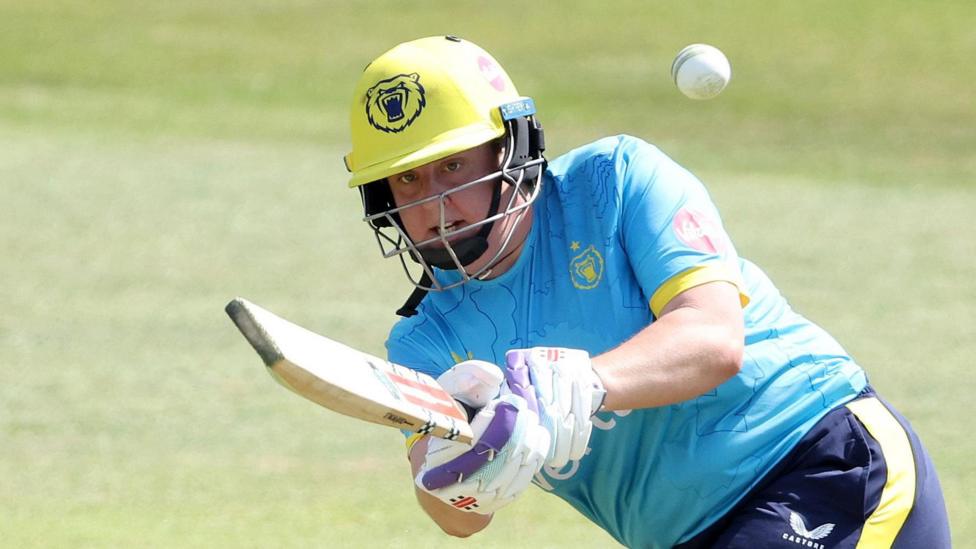
Warwickshire Pull Off Season-Defining Upset Over High-Flying Surrey
Bottom-dwellers Warwickshire shock Surrey in Women's T20 Blast, reshaping the title race as Hampshire surge to the summit.
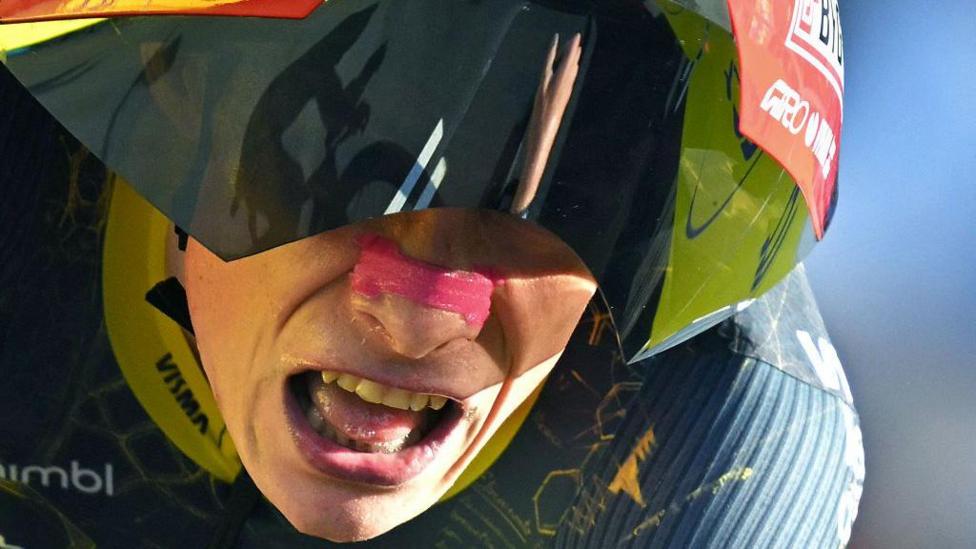
VingegaardDeniesPogacarinTourdeFranceOpeningStageTimeTrial
Jonas Vingegaard snatched yellow from Tadej Pogacar in a tense Tour de France opening team time trial.

Langton cleared of serious injury after frightening Commonwealth Games fall
English gymnast Gabriel Langton avoids major damage after a sickening fall during Commonwealth Games competition on Friday.